CASP Exchange Compliance Checker
Check Exchange Compliance
Enter a crypto exchange name to see if it meets the Philippines' CASP regulatory requirements.
Requirements:
- Registered Philippine corporation
- Minimum 100 million pesos capital ($1.8M USD)
- Physical office in Manila or major Philippine city
- Customer funds separate from company funds
- Monthly financial reports
- No leverage trading without approval
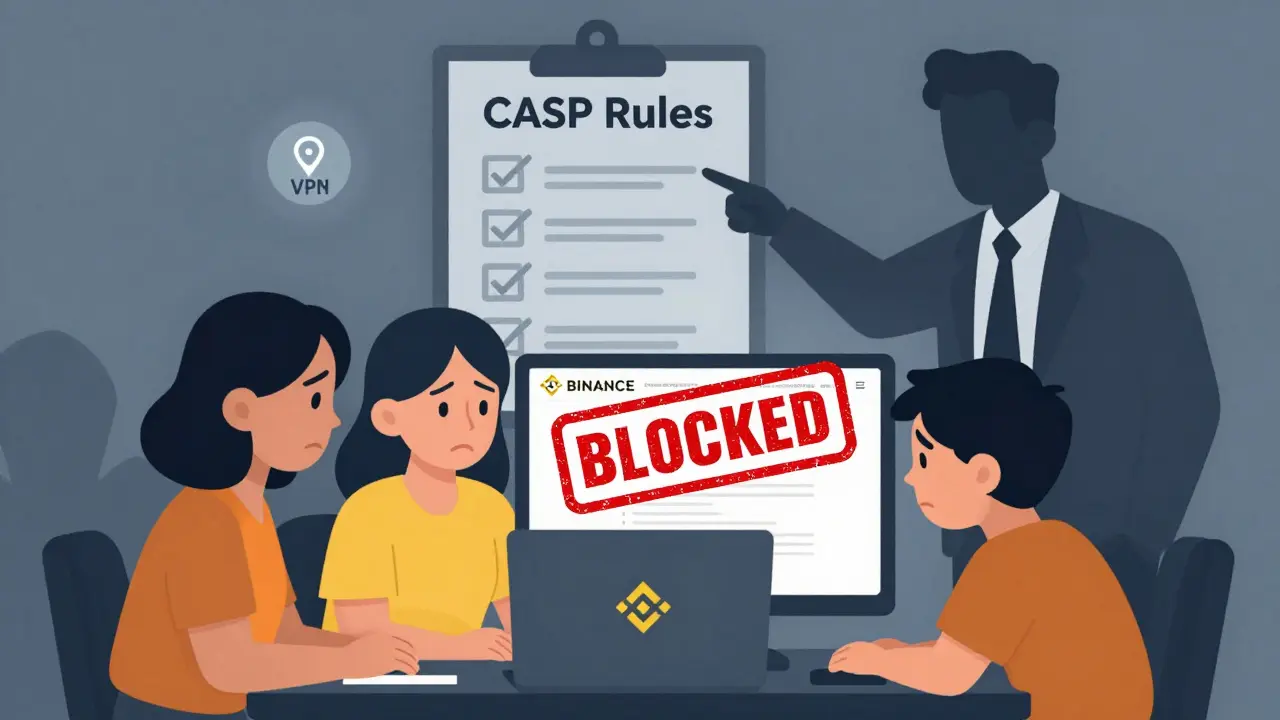
Since March 2024, Binance has been completely blocked in the Philippines. The Securities and Exchange Commission (SEC) ordered internet service providers to shut off access to its website and trading platform after the exchange refused to register as a legal business in the country. By May 2025, the rules got even stricter. The SEC introduced the Crypto Asset Service Provider (CASP) framework - a new set of laws that apply to every single crypto exchange serving Filipino users, whether they’re based in Singapore, the U.S., or China.
Why Binance Got Banned
Binance didn’t break any local laws overnight. It just ignored them for years. The SEC first warned the company in November 2023 that it was operating illegally. Binance kept running its platform, running ads on Facebook and TikTok, and even sponsoring local influencers to recruit new users. The regulator saw this as a direct threat to ordinary Filipinos who had no legal recourse if their funds disappeared. By March 2024, the SEC acted. With help from the National Telecommunication Commission (NTC), they blocked Binance’s domain names. Users trying to visit binance.com were met with an error page. The SEC gave people 90 days to withdraw their money. After that, access was permanently cut off. What made this different from other countries? The Philippines didn’t just block the site - they made it clear that anyone helping Binance reach new customers could be held criminally responsible. That includes social media influencers, YouTube reviewers, or even friends who told others to sign up. The message was simple: if you’re promoting an unlicensed exchange, you’re breaking the law.Bitget and Other Exchanges: Are They Next?
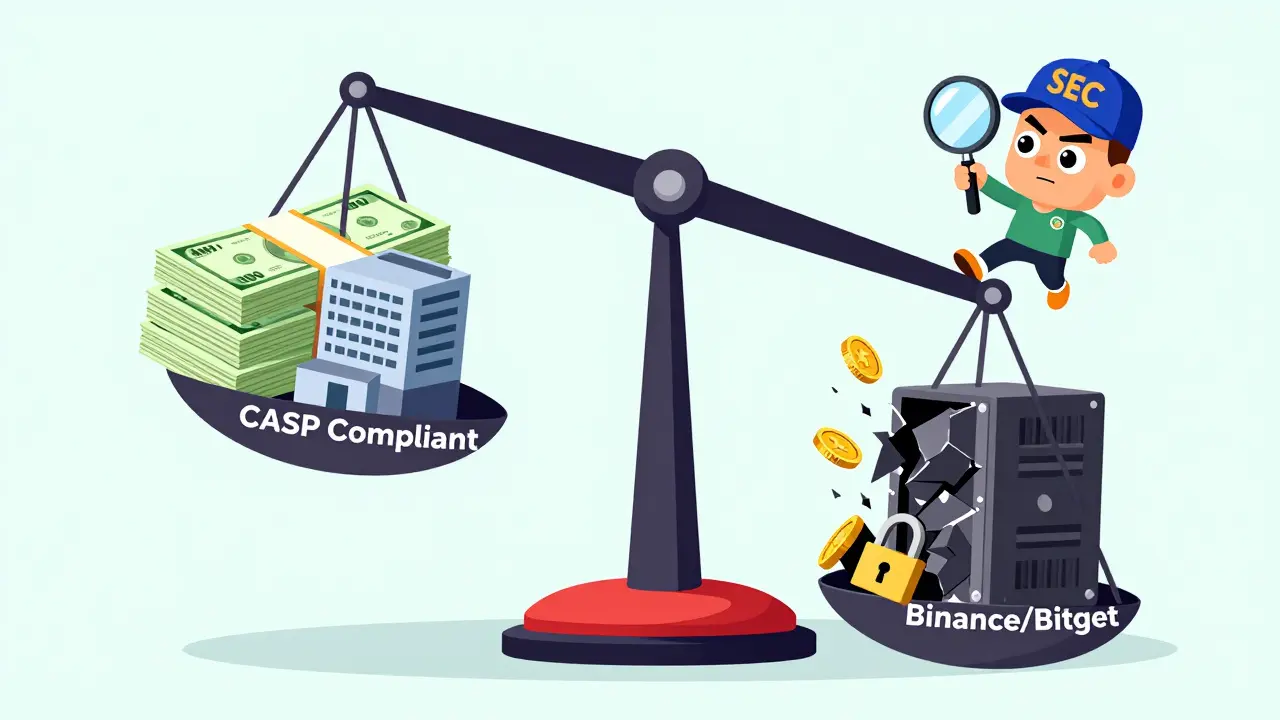
Bitget isn’t officially named in the SEC’s August 2025 enforcement list, but that doesn’t mean it’s safe. The new CASP rules apply to every foreign exchange serving Philippine customers. There’s no loophole. If you’re a crypto platform and Filipinos are trading on your site, you must register as a domestic corporation with a minimum capital of 100 million pesos (about $1.8 million USD), have a physical office in the Philippines, and submit monthly financial reports. Bitget has never applied for registration. It doesn’t have a local office. It doesn’t file reports. And it still lets Filipinos trade. That puts it in the same legal category as OKX, Bybit, KuCoin, and Kraken - all of which were publicly named by the SEC in August 2025 as operating illegally. The SEC didn’t just issue warnings. They started enforcing penalties. Companies caught violating the CASP rules face fines between 50,000 and 10 million pesos per violation. If they keep breaking the rules? An extra 10,000 pesos per day. That’s not a slap on the wrist - it’s a financial death sentence for unlicensed exchanges. So while Bitget hasn’t been blocked yet, it’s only a matter of time. The SEC has made it clear: they’re going after all major international exchanges one by one. Binance was the first. The rest are next.The New Rules: What CASP Actually Means
The CASP framework, effective July 5, 2025, is the Philippines’ first real attempt to control the crypto wild west. Before this, anyone with a website could claim to be a crypto exchange. Now, there are hard rules:- You must be a registered Philippine corporation
- You need at least 100 million pesos in capital
- You must have a physical office in Manila or another major city
- Your customer funds must be kept separate from your company’s money
- You must report all transactions monthly
- You cannot offer leverage trading, derivatives, or staking unless specifically approved
People Are Still Using Binance and Bitget - How?
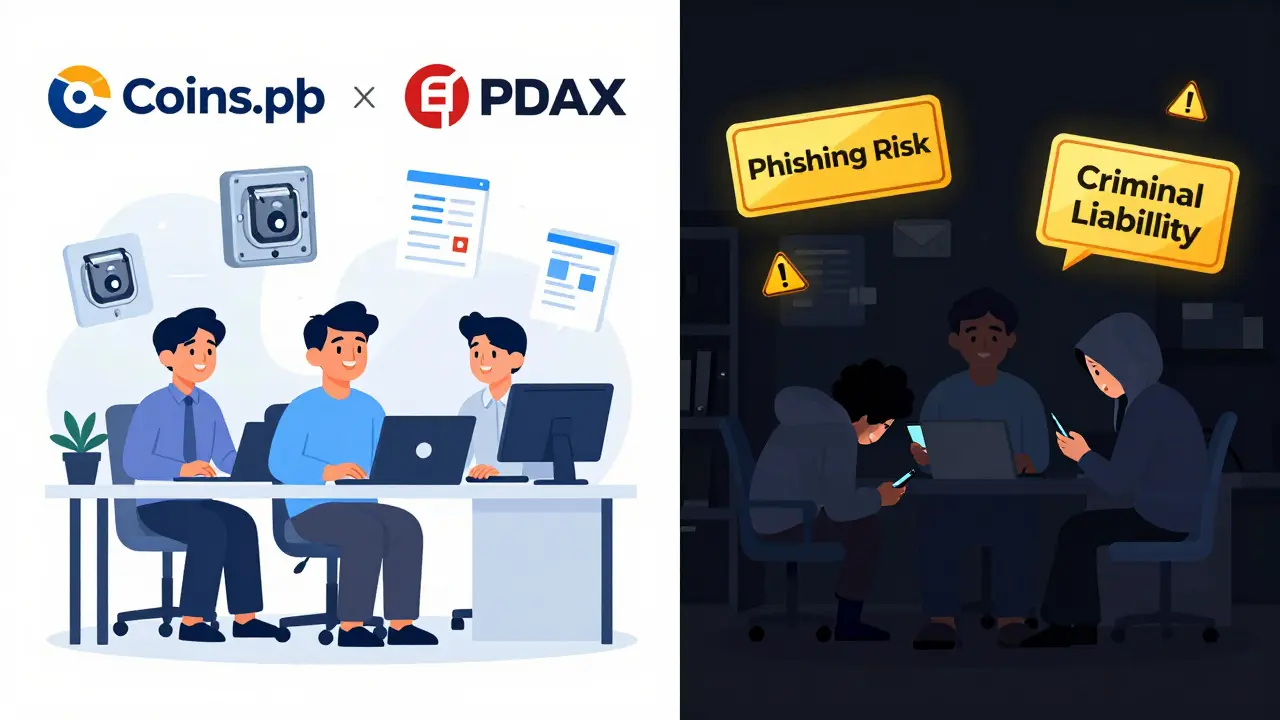
Despite the bans, crypto trading hasn’t disappeared in the Philippines. In fact, demand is still high. Many users are turning to Virtual Private Networks (VPNs) to bypass the blocks. A simple Google search for “Binance VPN Philippines” returns dozens of ads promising “unrestricted access” and “military-grade encryption.” VPNs let users connect to servers in countries where Binance and Bitget are still available. Once connected, they can log in and trade as if they’re in Thailand or Canada. Some even use mobile apps that auto-detect and switch to a working server. But here’s the problem: using a VPN to access a banned exchange isn’t just technically risky - it’s legally risky. The SEC has stated that anyone who helps users evade the ban - including VPN providers - could be considered an enabler of illegal activity. While no one has been arrested yet, the legal threat is real. If you’re caught actively promoting or facilitating access to Binance, you could face criminal charges. Also, VPNs don’t make you safe from scams. Many fake Binance sites now use VPN ads to lure victims. You think you’re logging into the real platform, but you’re on a phishing page that steals your keys. There’s no customer support, no recovery, no recourse.What Should Filipino Crypto Users Do Now?
If you’re using Binance or Bitget right now, you have three choices:- Withdraw your funds and move to a licensed platform - The only legal way forward. Look for exchanges that have applied for CASP registration. Some local platforms like Coins.ph and PDAX are already compliant and offer peer-to-peer trading, fiat on-ramps, and wallet services.
- Stop trading entirely - If you’re not comfortable with the legal gray area, this is the safest option. The Philippines has a growing number of regulated DeFi platforms and blockchain-based savings tools that don’t require you to use offshore exchanges.
- Keep using VPNs - You can, but you’re playing with fire. The SEC is watching. The penalties are rising. And the next enforcement wave could include arrests.
What’s Happening in Other Countries?
The Philippines isn’t alone. Thailand blocked five major exchanges in May 2025, including Bybit and OKX. Indonesia raised taxes on offshore crypto trades from 0.2% to 1%. Singapore is requiring all exchanges to apply for licenses by the end of 2025. This is part of a regional shift. Southeast Asia used to be a haven for unregulated crypto platforms. Now, it’s becoming one of the toughest markets for them. Countries are realizing that letting foreign exchanges operate without oversight invites fraud, money laundering, and mass financial losses. Binance’s global troubles reflect this. It’s been banned in the U.S., the U.K., Canada, the Netherlands, Nigeria, and Belgium. It paid $4.3 billion to settle U.S. charges for breaking anti-money laundering laws. The Philippines ban isn’t an outlier - it’s part of a global cleanup.Will Binance or Bitget Ever Return?
Technically, yes - but only if they comply. If Binance sets up a legal entity in Manila, hires local staff, deposits 100 million pesos in capital, and starts filing monthly reports, the SEC will welcome them. The same goes for Bitget. But neither has shown any sign of doing that. Binance has been silent since the ban. Bitget hasn’t even acknowledged the CASP framework. That suggests they’re not planning to return - at least not anytime soon. For now, the Philippines has made its choice: safety over convenience. Legality over access. Protection over profit.Frequently Asked Questions
Is it illegal to use Binance in the Philippines?
Yes. Binance has been officially blocked by the Philippine SEC since March 2024. Using it, even through a VPN, violates the law. Promoting or helping others use Binance can lead to criminal charges.
Is Bitget banned in the Philippines too?
Bitget isn’t officially blocked yet, but it’s operating illegally under the new CASP rules. Like Binance, it hasn’t registered as a Crypto Asset Service Provider. The SEC has already targeted other unregistered exchanges, and Bitget is next on the list.
Can I still trade crypto in the Philippines?
Yes - but only through SEC-licensed platforms. Coins.ph, PDAX, and other local exchanges are fully compliant and offer Peso trading, wallet services, and peer-to-peer options. You can still buy Bitcoin, Ethereum, and other assets legally.
What happens if I get caught using a VPN for Binance?
There’s no public record of arrests yet, but the SEC has warned that anyone enabling access to banned platforms may be held criminally liable. Using a VPN doesn’t make you safe - it makes you harder to track, which increases your risk.
Why did the Philippines ban Binance but not local exchanges?
Local exchanges like Coins.ph are registered with the SEC, follow all CASP rules, and keep customer funds separate. They’re accountable. Binance and Bitget are foreign companies with no physical presence, no reporting, and no accountability. The ban isn’t about crypto - it’s about control and protection.