LEOPARD (LEOPARD) isn't a coin you hear about on CNBC or see listed on Coinbase. It's not the next Bitcoin. It's not even the next Dogecoin. It's a BEP-20 token on the BNB Chain that's been quietly trading at around $0.012 since late 2023 - with almost no one talking about it, and even fewer people knowing what it actually does.
What is LEOPARD actually?
LEOPARD is a token with a total supply of one quadrillion (1,000,000,000,000,000,000) units. That sounds huge - and it is. But here’s the catch: no one knows how many are actually in circulation. CoinMarketCap lists its market cap as $0. CoinGecko says the data isn't available. That’s not a glitch. It’s a red flag.
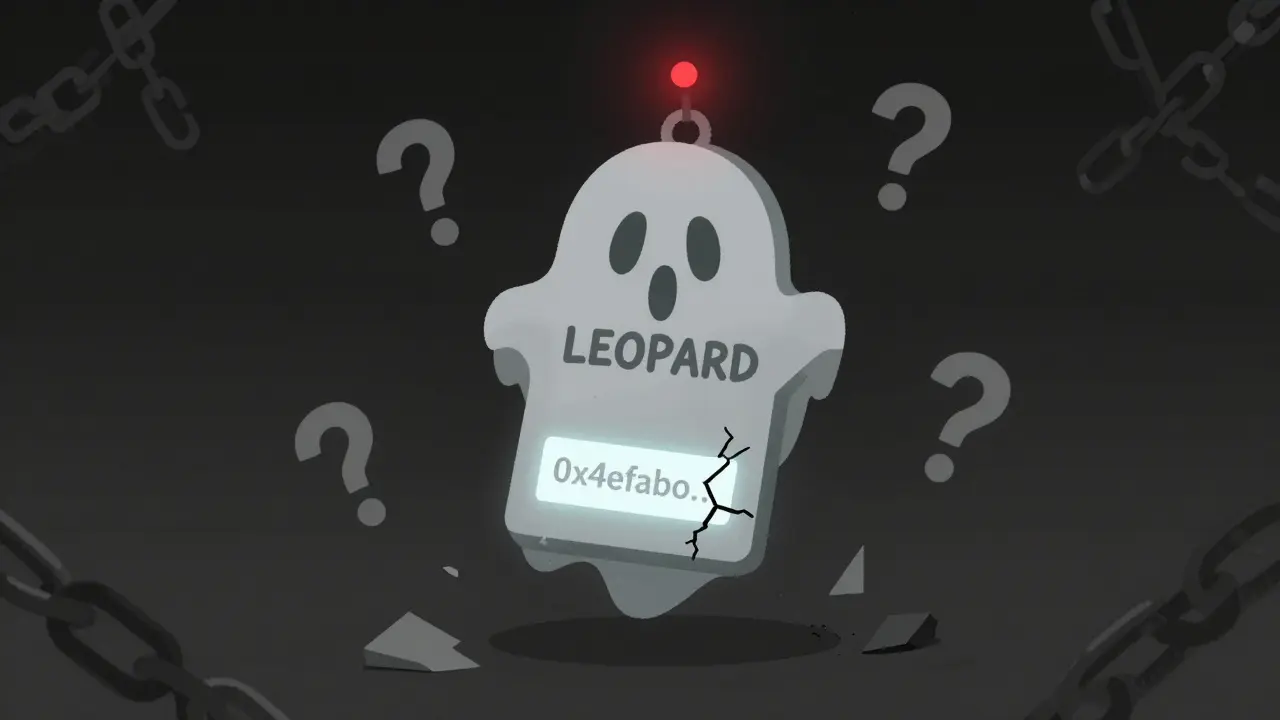
The token was launched in mid-2021 with vague promises: "building an independent exchange and wallet." Four years later, there’s no exchange. No wallet. No website. No GitHub repo. No team names. No LinkedIn profiles. Just a contract address: 0x4efab39b14167da54aebed2094a61aa1fd384056. That’s it.
Some exchanges like KuCoin and PancakeSwap list it. But they don’t vouch for it. They just let you trade it. Like a flea market stall with no signs, no receipts, and no return policy.
Why does LEOPARD even exist?
LEOPARD fits a pattern you’ve seen before: the "meme token with locked liquidity" scam. It’s a formula that’s been recycled thousands of times since 2021:
- Create a token with a ridiculous supply (quadrillions are popular).
- Lock a tiny fraction of liquidity on PancakeSwap - claim it’s "forever."
- Allocate 5% for "marketing" - no one ever sees the ads.
- Launch with zero documentation.
- Wait for pump-and-dump traders to move in.
- Disappear.
LEOPARD ticks every box. The contract hasn’t been renounced. The liquidity isn’t provably locked - there’s no verified smart contract lock on any blockchain explorer. The team didn’t burn their wallets. They didn’t even publish a whitepaper. There’s no roadmap update since 2022.
Price chaos and data contradictions
Here’s where things get weird. CoinGecko says LEOPARD trades at $0.012461. But Bybit listed it at $0.000000000000403521 in November 2025 - that’s 30 billion times lower. CoinMarketCap shows yet another price: $0.0000000000004616.
That’s not a price difference. That’s a data disaster. It means either:
- Multiple tokens are using the same symbol (LEOPARD), or
- Exchanges are pulling data from the wrong contract, or
- Someone’s feeding fake data into the system.
Either way, you can’t trust any price you see. Even if you buy it, you won’t know if you’re buying the real LEOPARD - or a copycat.
Who’s holding it?
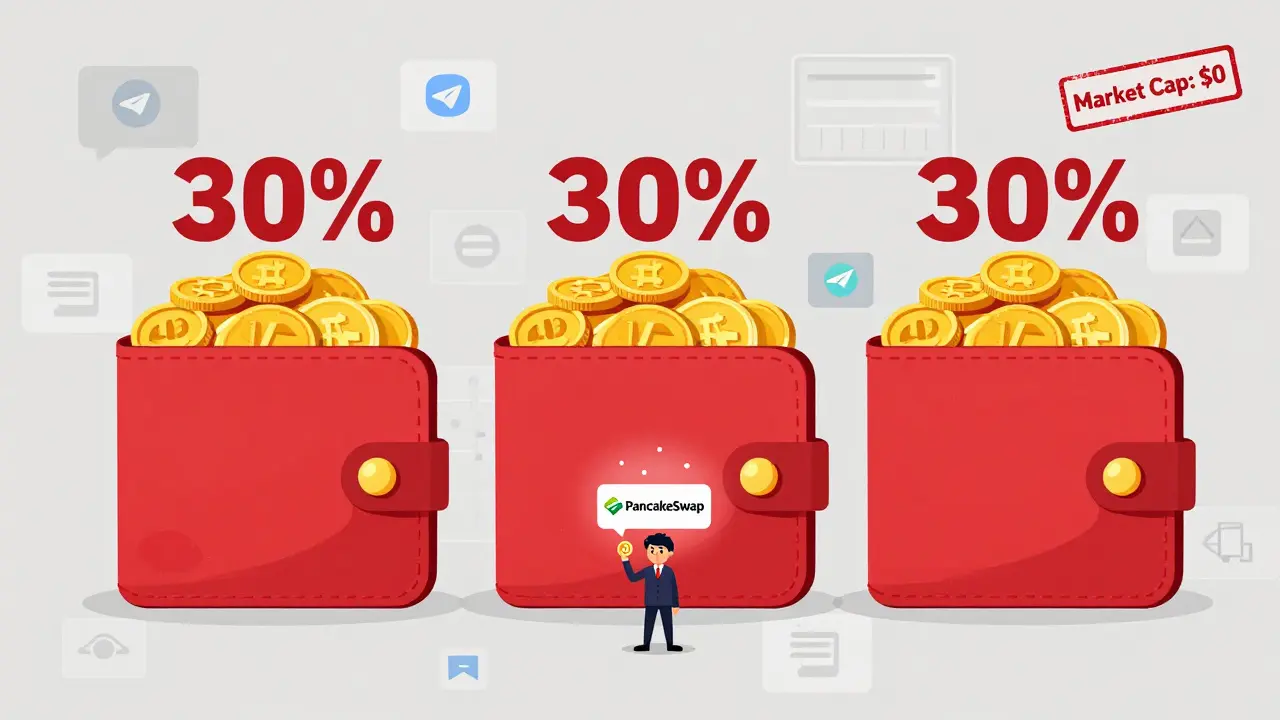
Etherscan data from January 2026 shows only 37 unique wallets hold LEOPARD. And 92% of the entire supply is in just three wallets. That’s not decentralization. That’s a pump-and-dump waiting to happen.
When 92% of a token is controlled by three addresses, it’s not a currency. It’s a controlled experiment. One of those wallets could dump 50% of the supply tomorrow - and there’s no liquidity to absorb it. The price would crash to near zero in seconds.
Trading volume? Around $25,000 a day. That’s less than what a single tweet from Elon Musk moves in Dogecoin. PancakeSwap handles 100% of the volume - and even there, the order book depth at +2% is only $596. That means if you tried to buy $1,000 worth, your trade would likely move the price by 20% or more.
No audits. No reviews. No credibility.
Has LEOPARD been audited? No. Not by CertiK. Not by Hacken. Not by PeckShield. No security firm has touched it.
Industry analysts at Messari and VanEck call it a "dead token." VanEck’s January 2026 report says projects with zero development for two years have a 98.7% chance of being abandoned or fraudulent. LEOPARD fits that perfectly.
Reddit threads like "LEOPARD token - another scam?" have over 40 comments - all saying the same thing: "No utility. No team. No website. Don’t touch it."
On Telegram, the official group has 247 members. The last real message? October 3, 2023. Since then? Only automated price bots. No answers. No updates. No engagement.
Why you should avoid LEOPARD
Here’s the bottom line:
- It has no utility - it doesn’t power anything, pay for anything, or solve anything.
- It has no team - you don’t know who’s behind it.
- It has no transparency - no code repo, no whitepaper, no roadmap.
- It has no liquidity - you can’t sell big amounts without crashing the price.
- It has no regulation - the SEC would classify it as an unregistered security.
- It has no exchange support - not on Binance, Coinbase, Kraken, or any major platform.
LEOPARD isn’t an investment. It’s a gamble on a ghost. And the odds are stacked against you.
What’s the future of LEOPARD?
There isn’t one.
Four years after its launch, there’s been no progress. No upgrades. No partnerships. No community growth. Just a slow, quiet fade.
The token’s fully diluted valuation (FDV) is around $413,700 - meaning if every single one of those quadrillion tokens were in circulation, it would be worth less than a small DeFi project. But they’re not in circulation. They’re locked in wallets nobody uses.
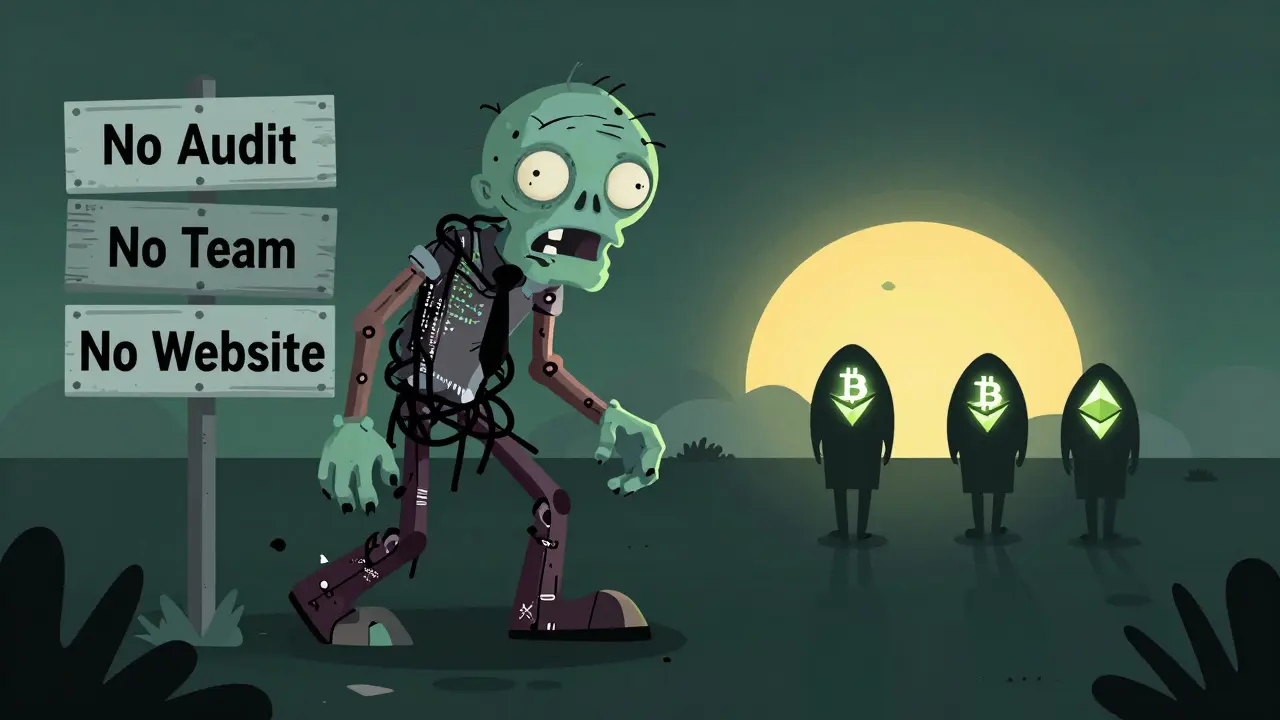
LEOPARD is a zombie token. It’s not dead - but it’s not alive either. It’s just hanging around, waiting for someone to mistake its price chart for a signal.
If you’re looking to invest in crypto, there are hundreds of projects with real teams, audited code, working products, and active communities. LEOPARD isn’t one of them. It’s a distraction. A trap. A warning sign.
Don’t buy it. Don’t trade it. Don’t even look at it twice.
Is LEOPARD coin a scam?
Yes, LEOPARD exhibits all the hallmarks of a scam token: no identifiable team, no utility, no audits, no active development, and misleading claims about "locked liquidity." Its price data is inconsistent across exchanges, and the majority of tokens are held by just three wallets - classic signs of a pump-and-dump scheme.
Can I buy LEOPARD on Coinbase or Binance?
No. LEOPARD is not listed on any major centralized exchange like Coinbase, Binance, or Kraken. It only trades on decentralized platforms like PancakeSwap, which means you’re dealing with higher risk, lower liquidity, and no investor protection.
What’s the contract address for LEOPARD?
The official contract address for LEOPARD is 0x4efab39b14167da54aebed2094a61aa1fd384056. However, be cautious - other tokens may use the same symbol (LEOPARD) with different addresses. Always verify the contract before trading.
Why is LEOPARD’s market cap listed as $0?
LEOPARD’s market cap is listed as $0 because there’s no reliable data on circulating supply. Without knowing how many tokens are actually being traded, platforms like CoinMarketCap can’t calculate a valid market cap. This is a red flag - legitimate projects always disclose circulating supply.
Is LEOPARD worth investing in?
No. LEOPARD has no technical innovation, no community, no development activity, and no credible backing. It’s a low-cap token with extreme risk and zero upside potential. Even if the price rises temporarily, there’s no reason to believe it will sustain. Most experts classify it as a dead or abandoned project.
How do I add LEOPARD to MetaMask?
To add LEOPARD to MetaMask, go to "Add Token," then "Custom Token," and enter the contract address: 0x4efab39b14167da54aebed2094a61aa1fd384056. Set the token symbol as LEOPARD and decimals to 9. But remember - adding it doesn’t mean it’s safe. Always assume any token without an audit is risky.
Final thought: Don’t chase ghosts
The crypto market is full of noise. There are real projects building real things. LEOPARD isn’t one of them. It’s a footnote in the history of speculative tokens - a reminder that if it looks too easy, sounds too good, and has no substance, it’s probably not worth your time.