
XMS Token Value Calculator
Calculate XMS Token Value
Based on current market data
Current Market Value
Based on Binance price ($0.000297)
Based on CoinMarketCap price ($0.0004989)
Did you hear about the XMS airdrop that suddenly flooded the wallets of 40,000 crypto enthusiasts? The hype was real, the rewards were tiny, and the lesson for anyone eyeing a future drop is worth dissecting. Below you’ll find everything you need to know about the token behind the buzz, how the past airdrop campaigns operated, and what the current market landscape looks like for XMS.
What is XMS (Mars Ecosystem Token)?
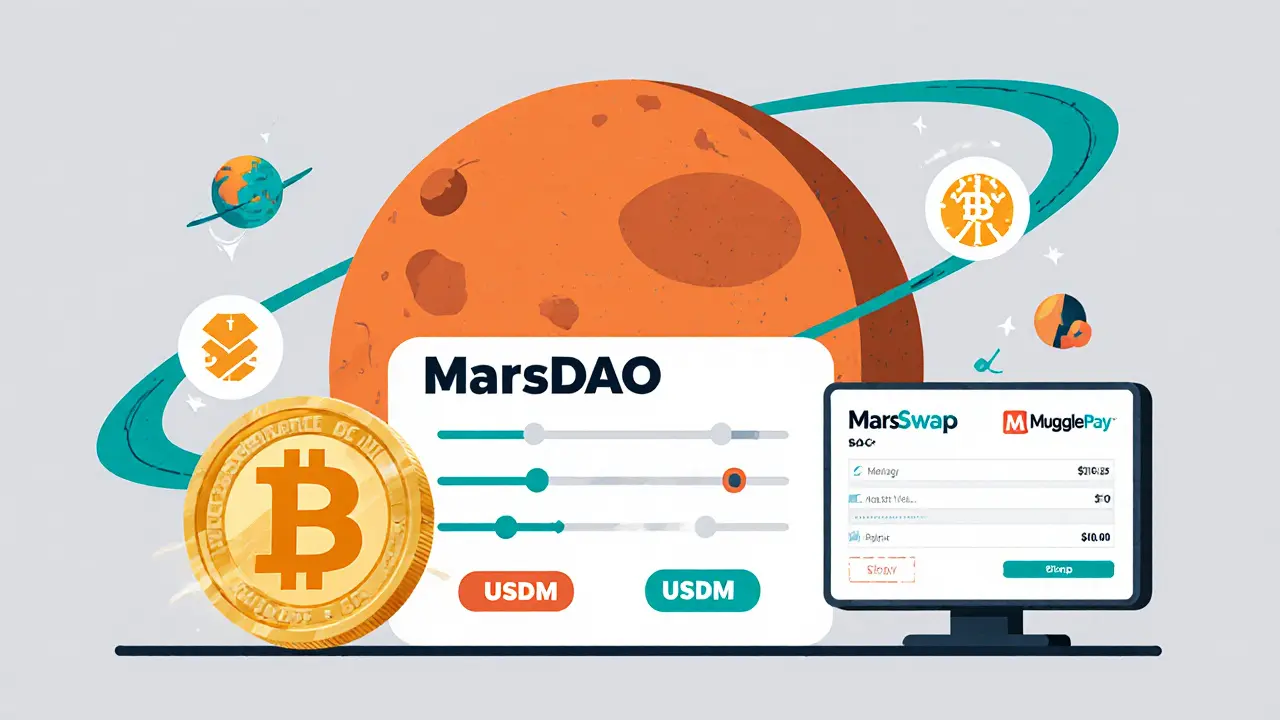
XMS (Mars Ecosystem Token) is the governance token that fuels the Mars Ecosystem, a suite of DeFi tools built on the Binance Smart Chain. Holders can vote on protocol upgrades, participate in MarsDAO decisions, and earn a slice of the ecosystem’s fee revenue. The project brands itself as the “central bank” for DeFi, aiming to create a stablecoin‑centric environment where USDM (the native stablecoin) powers everything from swaps on MarsSwap to lending markets.
Two Major Airdrop Campaigns - What Went Down?
The Mars team has run two high‑visibility airdrop events so far. Both are closed now, but their structure still informs how future distributions might be designed.
- Initial Mars Ecosystem Airdrop: 50 XMS tokens were handed out to 1,000 randomly selected participants. The campaign required users to hold a Binance Smart Chain (BSC) wallet and complete a quick KYC form. Distribution happened within three days of the snapshot.
- CoinMarketCap Learn & Earn Collaboration: This was the larger blast, featuring a $200,000 prize pool split among 40,000 winners. Participants needed a CoinMarketCap account, a Binance account, and a BEP‑20 wallet. After watching a series of short videos about the Mars Ecosystem and passing a 10‑question quiz with perfect scores, each user earned $5 worth of XMS - roughly 10‑12 tokens at the time.
Both campaigns required users to submit a BEP‑20 address, confirming the token lives on the Binance Smart Chain network.
How the Airdrop Worked - Step‑by‑Step (For Reference)
- Sign up on CoinMarketCap and verify your email.
- Create or link an existing Binance account (KYC‑completed).
- Connect a BEP‑20 compatible wallet (Metamask configured for BSC, Trust Wallet, etc.).
- Watch the Mars Ecosystem educational videos - each about 2‑3 minutes long.
- Complete the quiz; you must answer every question correctly to qualify.
- Enter your wallet address in the final form and wait for the distribution window.
The entire process took about 15‑20 minutes, but the strict “perfect score” rule filtered out casual participants.
Current Market Snapshot - Prices, Volume, and Rankings
Because XMS trades on a handful of BSC‑based exchanges, price data can vary widely. Below is a snapshot pulled from the two most commonly referenced sites.
| Source | Price (USD) | 24‑h % Change | 24‑h Volume (USD) |
|---|---|---|---|
| Binance | $0.000297 | +1.24% | $1,850 |
| CoinMarketCap | $0.0004989 | +0.96% | $2,303 |
The discrepancy between the two prices highlights the low liquidity-only about $2,300 of daily turnover according to CoinMarketCap, which means even modest trades can swing the price noticeably.
Market‑cap figures are equally modest: roughly $315 k on CoinGecko, placing XMS in the sub‑6000 rank range among all cryptocurrencies.
Technical Backbone - Why the Mars Ecosystem Claims It’s Different
Binance Smart Chain is the blockchain where XMS lives, offering low‑fee, high‑throughput transactions. The team argues that most stablecoin protocols suffer from a “positive externality” problem: costs of minting and maintaining stability are borne by the protocol while the upside goes to external actors. Mars addresses this by funneling fee revenue back to XMS holders via DAO‑controlled treasury moves.
Four core characteristics underpin the platform:
- High stability: USDM is pegged to the US dollar via collateral pools.
- Capital efficiency: The system aims to maximize the amount of capital that can be locked while still maintaining the peg.
- Scalability: Leveraging BSC’s fast block times (≈3 seconds) to support high‑frequency swaps.
- Decentralization: Governance decisions are routed through MarsDAO which allows XMS holders to vote on proposals ranging from fee adjustments to new product launches.
Security isn’t ignored either. The project runs a bug bounty program through Immunefi that offers rewards up to $10,000 for discovered vulnerabilities, covering attack vectors such as malicious wallet interactions and contract address substitution.
Strategic Partnerships - Building Real‑World Use Cases
The most visible partner is MugglePay, dubbed “the world’s leading crypto C2B payment service provider”. MugglePay leverages MarsSwap to facilitate stablecoin exchanges for merchants and plans to integrate the USDM stablecoin directly into its checkout flow. This partnership showcases the ecosystem’s ambition to move beyond speculation and into everyday payments.
Other collaborations include liquidity providers on BSC and a handful of analytics firms that list XMS, but none have captured the same market‑ready attention as MugglePay.
Risks, Liquidity Constraints, and Future Outlook
Even with a solid technical foundation, XMS faces several hurdles:
- Liquidity scarcity: Daily volume under $3k means large orders will cause slippage, discouraging institutional interest.
- Price reporting inconsistencies: The gap between Binance and CoinMarketCap prices can confuse newcomers and affect arbitrage opportunities.
- Community size: With only a few thousand active participants on Discord and Telegram, governance proposals may suffer from low voter turnout.
- Regulatory environment: As a stablecoin‑centric protocol, XMS could be impacted by future Australian or global stablecoin regulations.
On the upside, the active bug bounty program signals ongoing development, and the MarsDAO structure ensures token holders retain a voice in future upgrades. If the team can attract larger liquidity providers or list XMS on a major DEX aggregator, price stability could improve dramatically.
Quick Checklist - Should You Keep an Eye on XMS?
- Do you already use Binance Smart Chain wallets? (Metamask, Trust Wallet, etc.)
- Are you comfortable with low‑liquidity tokens and the associated price swings?
- Do you want governance rights in a DeFi‑focused DAO?
- Is exposure to a stablecoin‐backed ecosystem part of your diversification strategy?
- Can you stay updated on Mars announcements via their Discord or Twitter?
If you answered “yes” to most of these, XMS might be worth a small position in your portfolio-just don’t expect massive short‑term gains.
Is there any current XMS airdrop I can join?
No. Both the initial 1,000‑user airdrop and the large CoinMarketCap Learn & Earn program have closed. The Mars team hasn’t announced any new distribution schedule as of October 2025.
Where can I buy or trade XMS?
XMS is primarily listed on Binance’s BSC spot market and a few smaller decentralized exchanges that support BEP‑20 tokens, such as PancakeSwap. Because volume is low, you may need to use limit orders to avoid excessive slippage.
What is the benefit of holding XMS?
Holding XMS grants you voting power in MarsDAO, allowing you to influence protocol upgrades, fee structures, and the allocation of treasury funds. Some proposals also include token‑based rewards for active participants.
How does XMS differ from other governance tokens like COMP or MKR?
XMS is built on BSC, giving it lower transaction costs than Ethereum‑based COMP or MKR. Its focus is on a stablecoin‑centric ecosystem rather than a broad DeFi lending platform, which makes its use‑case narrower but potentially more integrated with the Mars stablecoin (USDM).
Is XMS considered a security in Australia?
As of now, the Australian Securities & Investments Commission has not classified XMS as a security. However, regulatory views on governance tokens are evolving, so keep an eye on official announcements.




Comments (11)