Substratum isn't just another cryptocurrency. It’s a network built to fix how the internet works today. While most of us think of the web as something we just use, Substratum is trying to rebuild it from the ground up - not with big companies in charge, but with everyday people sharing their computers. The SUB coin is the fuel that makes this whole system run.
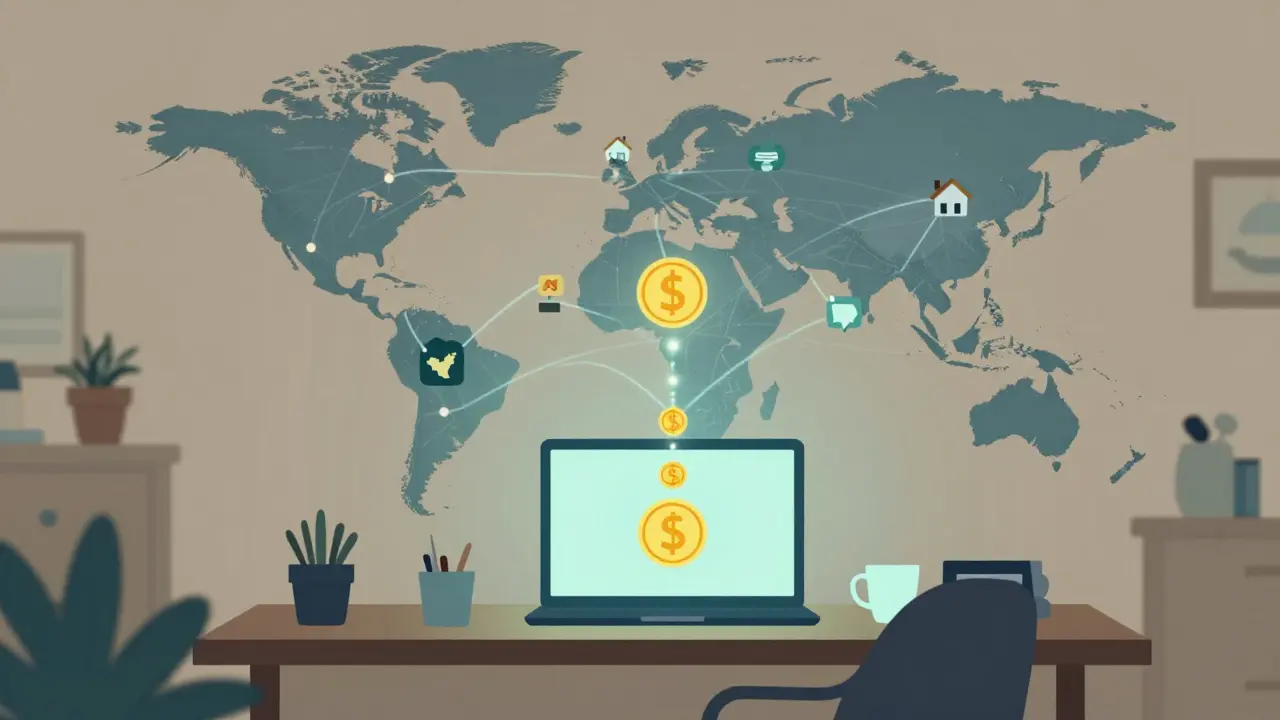
Imagine you’re sitting at home, your laptop is idle, and you’re not using much of your internet bandwidth. Substratum lets you turn that unused power into something useful: helping others load websites faster. In return, you earn SUB tokens. No need for special hardware, no complex setup. Just download the software, and your device becomes part of a global network.
Why does the internet need fixing?
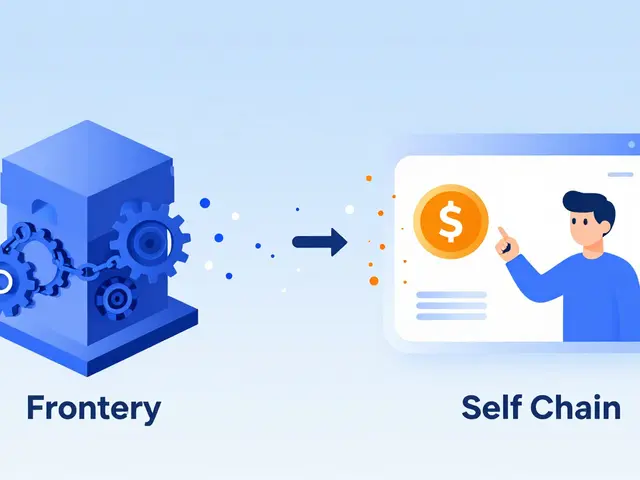
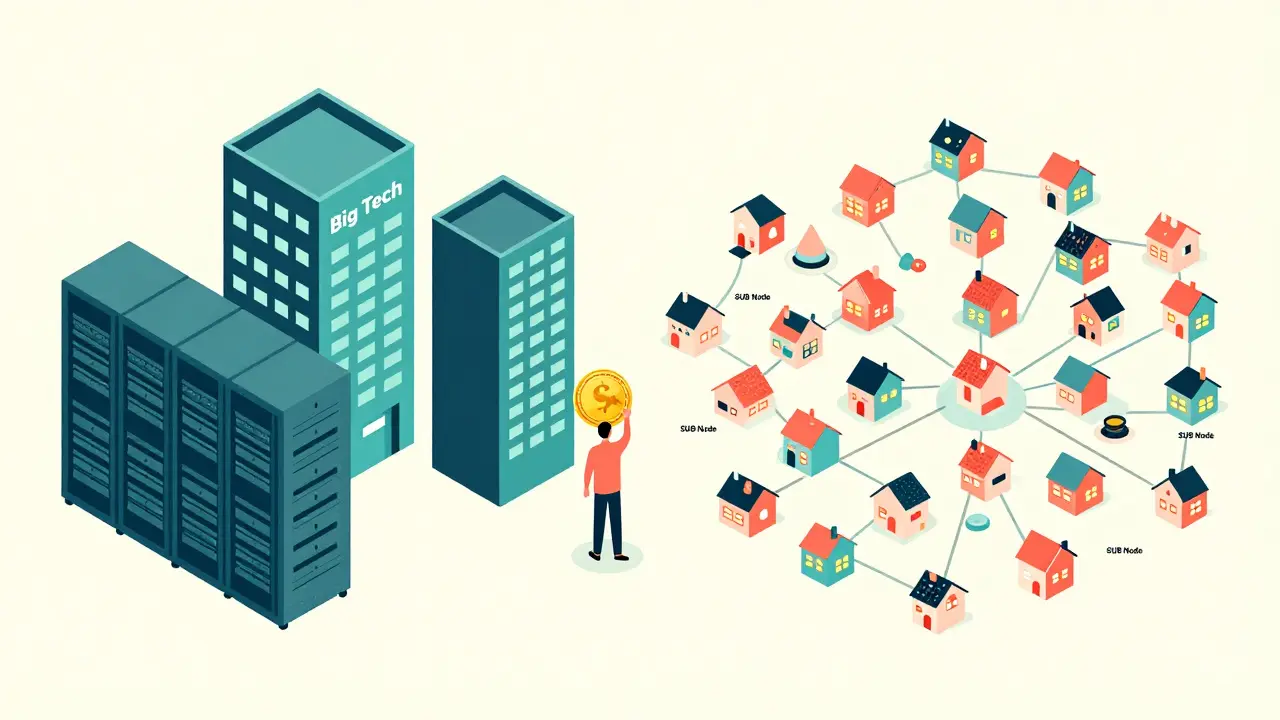
Right now, the internet is controlled by a handful of giants. Big tech companies own the servers, the domain systems, and the gateways. If a government wants to block a website, they just tell the ISP to cut it off. If a company wants to charge you $50 a month to host a blog, they can - because they’re the only ones with the infrastructure.
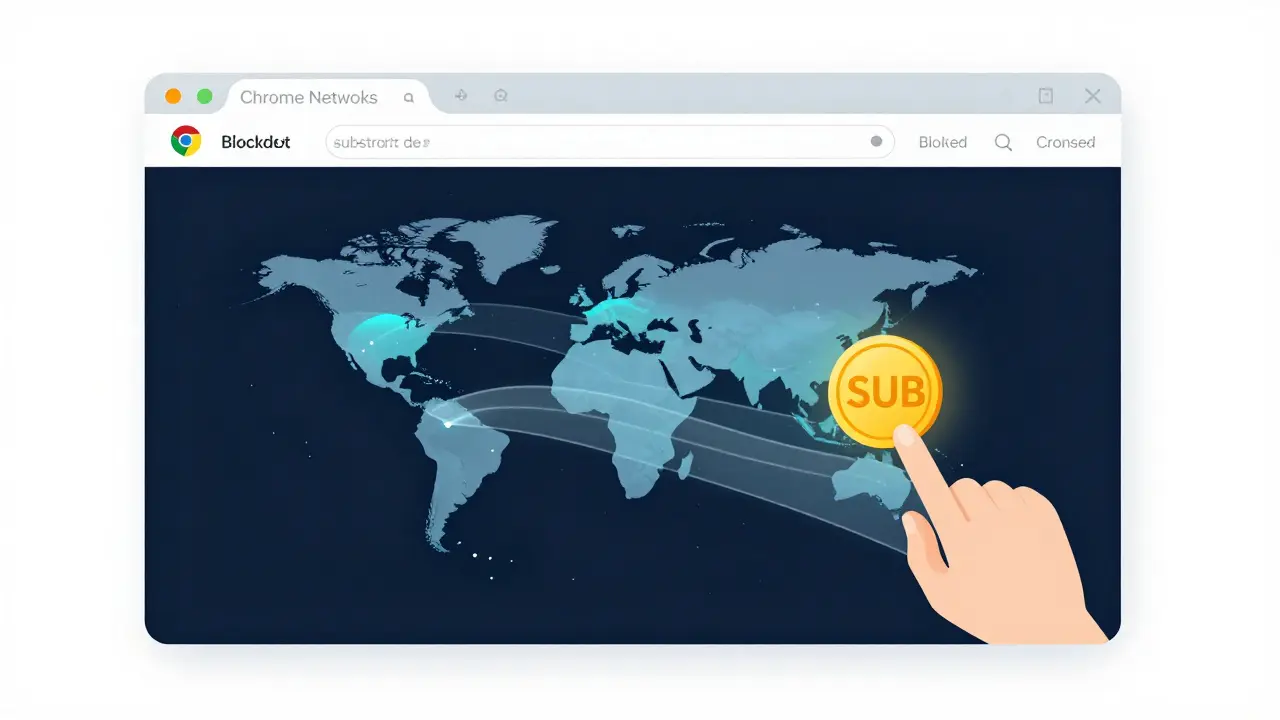
Substratum flips that model. Instead of one company hosting your site, thousands of regular users do. Your website doesn’t live on a single server in Silicon Valley. It’s broken into tiny pieces and spread across devices in Japan, Brazil, Nigeria, and Australia. If one node goes down, another picks up the slack. No single point of failure. No central authority to censor.
How does Substratum actually work?
The network runs on three core parts: SUB Host, SUB Node, and SUB DNS.
- SUB Host is anyone who wants to publish content - a blogger, a business, a news site. They pay in SUB coins only when someone actually visits their site. No monthly fees. No overcharges. You pay per click. If your site gets 100 visitors a day, you pay for 100 visits. If it gets 10,000, you pay more. Simple.
- SUB Node is what you run on your computer. These are the volunteers who help route traffic. When someone in Germany tries to load a website hosted in Canada, the request doesn’t go straight there. It hops through multiple nodes, each one forwarding a piece of the data. This isn’t just about speed - it’s about privacy. No single node sees the full request. No one can track what you’re looking at.
- SUB DNS handles domain names without relying on traditional domain registrars like GoDaddy. It translates web addresses into network paths using blockchain records. This means no one can seize a domain because there’s no central registry to hack or shut down.
All of this happens in the background. You don’t need a special browser. No Tor. No VPN. Just open Chrome or Firefox like normal. The Substratum software handles the rest.
How is SUB coin used?
SUB is an ERC-20 token built on the Ethereum blockchain. That means it’s compatible with most wallets and exchanges. But it’s not just a trading coin - it’s a utility token. You need it to do things on the network.
- If you’re a host, you use SUB to pay nodes for serving your content.
- If you’re a node, you earn SUB every time you help load a website.
- If you’re a user, you don’t pay anything to browse. The network is free for viewers.
There’s also a feature called Crypto Pay that lets websites accept Bitcoin, Ethereum, or any other crypto as payment - and automatically convert it to SUB for the host. This makes it easy for businesses to get paid without dealing with multiple currencies.
Who’s behind Substratum?
The project was started by Justin Tabb, a software developer who got frustrated with how expensive and censored the web had become. He built OverridePro, a web development firm, and realized most of his clients were stuck paying high hosting fees or getting blocked in certain countries. That’s when he started Substratum.
The team includes experienced engineers who’ve worked on large-scale systems. The original ICO distributed 472 million SUB tokens. About 10 million went to Justin, 1 million to each of the five lead developers, and 25% to advisors. The rest was sold to the public. As of now, around 383 million SUB are in circulation.
What makes Substratum different from Tor or VPNs?
Many people think of Tor or VPNs when they hear "decentralized internet." But Substratum is not a tool you use to hide. It’s a replacement for the whole system.
Tor routes your traffic through encrypted relays - but it’s slow. VPNs tunnel your traffic through one company’s servers - but they’re still centralized. Both are workarounds. Substratum doesn’t work around the internet. It rebuilds it.
With Substratum:
- You don’t need to install anything to browse - it works automatically.
- Content creators aren’t locked into one hosting provider.
- There’s no single server to shut down.
- Security comes from splitting data, not just encrypting it.
It’s like comparing a single bridge (centralized hosting) to a network of thousands of small footbridges (Substratum). If one bridge breaks, traffic finds another. No single point of control.
What’s the catch?
Substratum isn’t perfect. The software interface is still basic. It’s not as polished as a commercial hosting service. The network isn’t massive yet - there aren’t millions of nodes running like there are with Bitcoin. That means speed can vary depending on where you are and how many nodes are active nearby.
Also, the SUB coin has low trading volume. You won’t find it on Coinbase or Binance. It’s mostly traded on smaller exchanges. That makes it harder to buy and sell. It’s not a get-rich-quick crypto. It’s a long-term project.
And yes - because the network is open, some people worry about illegal content. Substratum’s answer? No central authority. Instead, they’re building tools for users to flag harmful material. The community decides, not a government or corporation.
Is Substratum still active?
Yes. The website is live. The software still downloads and runs. The team still posts updates. The network is operational. There’s no official shutdown. No bankruptcy. No abandoned codebase.
They’ve moved slowly, which is common for deep-tech projects. They didn’t chase hype. They didn’t promise moonshots. They focused on building something real - even if it takes years.
As of 2026, Substratum is still one of the few projects trying to solve the core problem of internet centralization - not just adding crypto on top of it.
Who should care about Substratum?
If you’re:
- A blogger tired of paying $30/month for hosting that can be shut down anytime
- A developer who wants to build apps without relying on AWS or Google Cloud
- Someone living in a country where websites are blocked
- A tech enthusiast who believes the internet should be open and fair
Then Substratum matters. It’s not the fastest or flashiest crypto. But it’s one of the few trying to fix the web - not just make money from it.
What is SUB coin used for?
SUB coin is the utility token that powers the Substratum Network. Hosts pay in SUB to serve their websites, nodes earn SUB for routing traffic, and developers use SUB to access network tools. It’s not a speculative asset - it’s the currency that keeps the decentralized internet running.
Can I earn SUB by running a node?
Yes. If you run a SUB Node on your computer, you earn SUB every time your device helps load a website on the network. The more traffic you route, the more you earn. It’s passive income based on real network usage, not speculation.
Do I need a VPN to use Substratum?
No. Substratum replaces the need for a VPN. You access websites through your regular browser. The network handles encryption and routing automatically. There’s no need to connect to a separate service.
Is Substratum legal?
Substratum itself is legal. It’s open-source software that runs on personal devices. However, like any platform, it can be used for illegal purposes. The network doesn’t police content - it relies on community reporting. Users should follow local laws regarding online activity.
Where can I buy SUB coin?
SUB is traded on smaller cryptocurrency exchanges like Hotbit, BitTrex, and CoinExchange. It’s not listed on major platforms like Coinbase or Binance. Always check the official Substratum website for the latest exchange partners before buying.
Does Substratum have its own blockchain?
Not yet. SUB is currently an ERC-20 token on the Ethereum blockchain. The team has talked about launching their own blockchain in the future, but no timeline or technical details have been confirmed as of 2026.