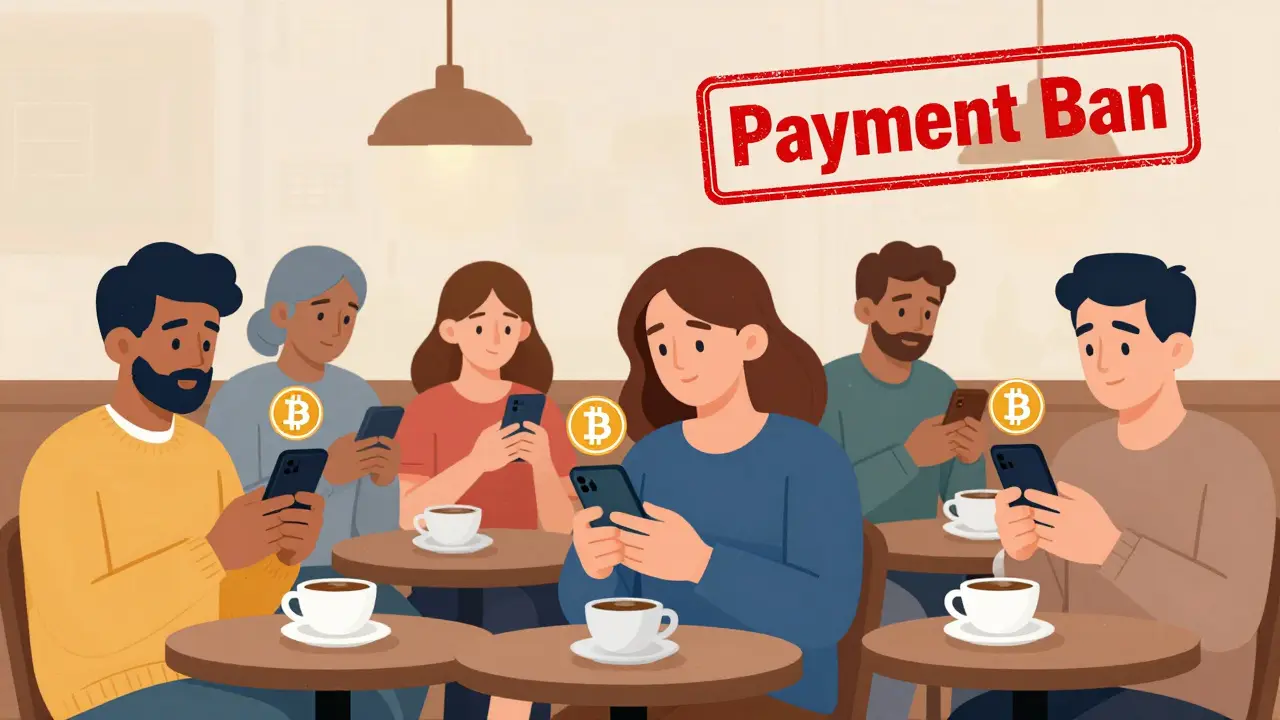
When Turkey banned using cryptocurrency for payments in April 2021, most people assumed it would kill the market. Instead, it sparked a quiet revolution. Turkish citizens didn’t stop trading crypto-they just found new ways to do it. Today, over 19.5 million Turks, nearly half the adult population, hold or trade digital assets. They’re not breaking the law. They’re working around it. And they’ve built one of the most active crypto markets in the world, even with a government that says they can’t use crypto to buy coffee or pay rent.
What the Ban Actually Means
The Central Bank of Turkey didn’t ban crypto. It banned using it to pay for goods and services. Holding Bitcoin, Ethereum, or USDT is still legal. Trading on exchanges is legal. You can buy, sell, and store crypto without fear of arrest. But if you try to use it to pay at a store, a restaurant, or even online, you’re violating the rules. The goal? Protect people from wild price swings and stop money laundering. But the result? People found ways to trade without ever touching the payment system.How People Trade Legally: Licensed Exchanges
The safest route is through exchanges licensed by Turkey’s Capital Markets Board (CMB). As of early 2025, only a handful made the cut: Binance Turkey, Paribu, and Bitlo are the big three. These platforms require full KYC-your ID, selfie, and sometimes even proof of address. Once verified, you can deposit Turkish lira and buy crypto instantly. But there’s a catch. Since February 2025, any transaction over 15,000 Turkish lira (about $425) triggers extra scrutiny. The system flags it. Your account might get reviewed. If you do this too often, MASAK (Turkey’s financial crimes unit) can freeze your account for up to 30 days. So what do people do? They split their trades. One person buys 14,000 TL worth of Bitcoin. Their sibling buys another 14,000 TL. Together, they get the amount they need-without triggering the system. These exchanges are reliable. Withdrawals to Turkish banks take under two hours. Fees are low: 0.05% to 0.25%. But they only offer a limited selection of coins. You won’t find obscure tokens here. If you want something like Solana or Shiba Inu, you need another way.The Rise of Peer-to-Peer (P2P) Trading
This is where the real action is. P2P trading exploded after the ban. Platforms like LocalBitcoins and Telegram groups became the go-to for Turks who want more coins, more privacy, or faster deals. There’s no KYC. No limits. No oversight. You find a seller, agree on a price, and pay via bank transfer, cash deposit, or even mobile wallet. The price? It’s usually 0.5% to 2% higher than on licensed exchanges. That’s the tax you pay for freedom. In late 2024, Turkish P2P platforms were processing over $1.2 billion in monthly trades. That’s not small change. It’s a shadow economy built on trust, reputation, and WhatsApp screenshots. One common tactic? Buying Bitcoin on Paribu at the official rate, then selling it on LocalBitcoins at a premium. Users report consistent 3-5% profits just by playing the gap between regulated and unregulated markets. It’s not illegal-it’s arbitrage. And it’s everywhere.Accessing Global Exchanges with VPNs
Want to trade on Coinbase or Kraken? Turkey blocks those sites. But a VPN changes everything. A 2024 study by TÜBİTAK found that 68% of Turkish crypto users use a VPN to access international exchanges. It’s not hacking. It’s just routing your internet through a server in Germany or the U.S. Once connected, you sign up with a foreign email, deposit via crypto wire, and trade freely. No Turkish lira needed. No 15,000 TL limit. You can buy any token, use margin trading, or even stake your assets. Kraken even partnered with AKBank in April 2025 to let users deposit TRY legally-but only through their licensed partner. Most still prefer the freedom of a VPN. The downside? You lose legal protection. If something goes wrong, you can’t call the CMB. No recourse. No customer service in Turkish. You’re on your own.
DeFi and the Rise of Wallets
The most technical users skip exchanges entirely. They use wallets like MetaMask or Trust Wallet and connect directly to decentralized exchanges like Uniswap or PancakeSwap. But after February 2025, the CMB banned 46 DeFi platforms-including PancakeSwap. So users switched to custom RPC endpoints. Instead of connecting to Turkey-based servers, they point their wallet to a node in Singapore or the Netherlands. It’s like using a secret backdoor into the blockchain. According to TÜİK, over 3.7 million Turkish crypto addresses interacted with DeFi protocols in Q1 2025. That’s more than the entire population of Finland. These users aren’t just trading. They’re lending, staking, and earning interest-all outside the reach of Turkish regulators. The learning curve is steep. Setting up a wallet, adding a custom RPC, and avoiding scams takes 15-20 hours of research. But for those who do it, the payoff is total control.The Two-Tier Market
Turkey’s crypto scene isn’t one market. It’s two. The first is the compliant tier: licensed exchanges, KYC, limits, and oversight. The second is the shadow tier: P2P, VPNs, wallets, and anonymity. Here’s how they break down:| Feature | Licensed Exchanges | Unregulated Methods (P2P, VPN, DeFi) |
|---|---|---|
| Legal Status | Compliant with CMB | Technically gray area |
| Transaction Limits | 15,000 TL triggers review | No limits |
| Verification | Mandatory KYC | No ID required |
| Token Selection | 10-20 major coins | Thousands of tokens |
| Fees | 0.05% - 0.25% | 0.5% - 2% (P2P premium) |
| Customer Support | Turkish language, 24/7 | None |
| Dispute Resolution | CMB can intervene | No recourse |
Licensed exchanges handle 58% of the total volume but only serve 35% of users. The shadow market handles 42% of volume with 65% of users. That tells you everything: most people care more about freedom than rules.
Why People Keep Doing It
The Turkish lira has lost over 60% of its value against the dollar since 2020. Inflation hit 85% in 2023. People aren’t trading crypto for fun. They’re protecting their savings. Stablecoins like USDT are especially popular-38.7% of all crypto transactions in Turkey involve them. That’s not speculation. That’s survival. Young Turks, especially in Istanbul and Ankara, see crypto as the only way to build wealth outside a broken system. The average user is between 25 and 44. Urban areas have 42% adoption. Rural areas? Just 18%. It’s not just a financial move. It’s a cultural one.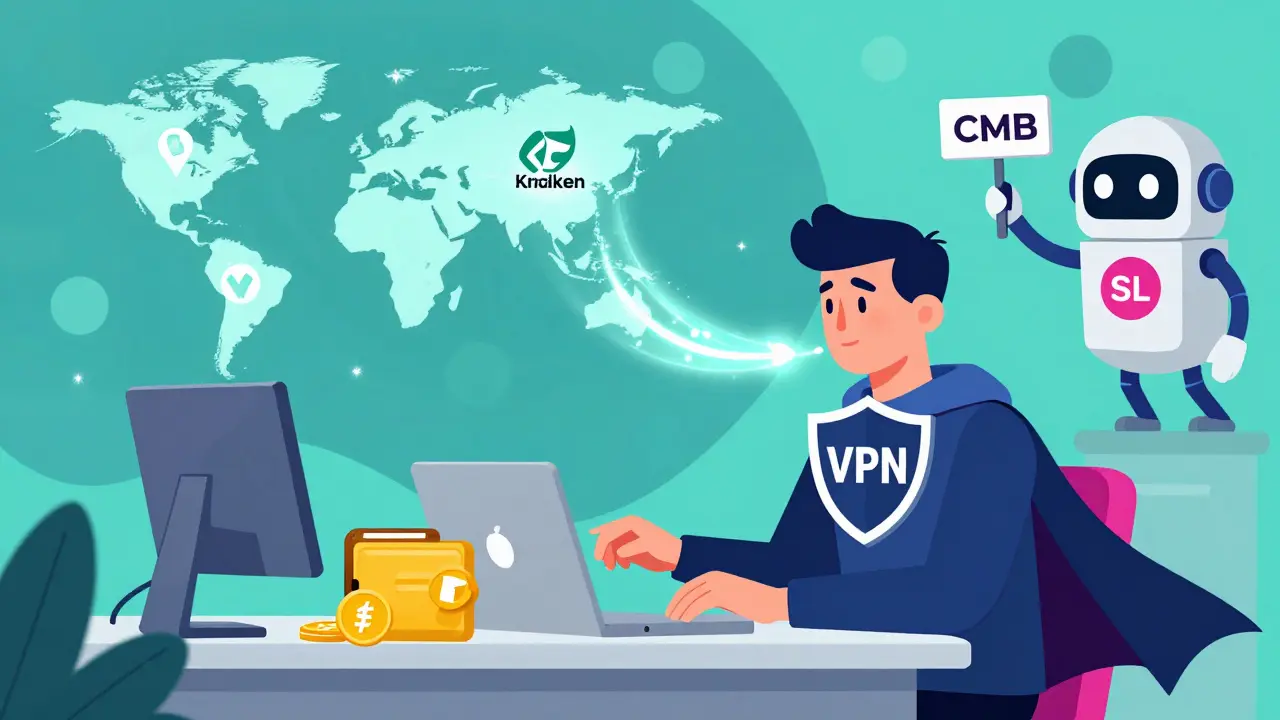
The Hidden Costs
This system isn’t perfect. Over 22% of users have had their accounts frozen by MASAK. It takes weeks to get them back. Some lose money during the freeze. Others get flagged just because they sent money to a friend’s wallet. And then there’s the risk of scams. Telegram groups are full of fake sellers. One wrong transfer, and your money’s gone. No chargeback. No refund. You learn fast-or you lose. There’s also the emotional toll. Constantly splitting transactions. Worrying about the next regulation. Setting up new wallets. It’s exhausting. But for many, it’s worth it.What’s Next?
The CMB says it’s working on a “Crypto Asset Gateway” by mid-2026. The idea? Centralize all on-ramps and off-ramps under one system. More control. Less chaos. But experts like Dr. Hasan Yılmaz predict it won’t stop the market. “As long as trading is allowed but payments are banned,” he says, “people will find a way.” The World Bank estimates Turkey’s crypto volume will hit $102 billion in 2025. That’s up from $85.3 billion in 2024. The ban didn’t kill crypto. It made it smarter.How to Get Started (If You’re in Turkey)
If you’re thinking about joining, here’s the realistic path:- Start with a licensed exchange like Paribu. Complete KYC. Buy a small amount of Bitcoin or USDT.
- Use a trusted VPN if you want access to international exchanges or DeFi.
- Learn how to use MetaMask and connect to non-Turkish RPCs if you want full DeFi access.
- Join a few active Telegram groups to find reliable P2P sellers.
- Never send more than 14,000 TL in one transaction to avoid triggers.
- Split large purchases across family accounts if needed.
- Never trust someone who asks for your private key.
It’s not easy. But it’s possible. And millions are already doing it.
Is it legal to trade crypto in Turkey?
Yes, buying, selling, and holding cryptocurrency is completely legal in Turkey. The ban only applies to using crypto as a payment method for goods and services. You can trade on licensed exchanges, use P2P platforms, or access global markets via VPN-all without breaking the law.
What happens if I exceed the 15,000 TL transaction limit?
Exceeding the 15,000 TL limit doesn’t make your transaction illegal, but it triggers automatic review by MASAK. Your account may be temporarily frozen while they check for suspicious activity. Most users resolve this within 14-30 days by submitting documentation. Many now split transactions across multiple accounts to avoid this entirely.
Can I use Binance or Coinbase in Turkey?
Binance Turkey is a licensed local platform and fully operational. The global Binance.com and Coinbase.com are blocked by Turkish ISPs. However, using a VPN to access them is common and technically not illegal-though you lose legal protections and customer support. Many users use VPNs to trade tokens not available on local exchanges.
Are P2P crypto trades safe in Turkey?
P2P trades are risky but widely used. Since there’s no KYC or escrow on most platforms, you rely on seller reputation. Always use platforms with verified sellers, check reviews, and never release crypto until you’ve confirmed the payment. Telegram groups are popular but full of scams. Stick to well-known traders with long histories.
Why do so many Turks use stablecoins like USDT?
Turkish inflation has eroded the lira’s value by over 60% since 2020. Stablecoins like USDT are pegged to the U.S. dollar, so they act as a digital savings account. People use them to protect their income, avoid currency loss, and move money internationally without bank restrictions. Over 38% of all crypto transactions in Turkey involve stablecoins.
Is using a VPN to access crypto exchanges illegal in Turkey?
Using a VPN itself is not illegal in Turkey. The government blocks certain websites, but using a tool to bypass those blocks isn’t against the law. However, accessing banned platforms may violate their terms of service. While users rarely face legal consequences, they do lose consumer protections and risk account freezes if they’re flagged for suspicious activity.
What’s the future of crypto in Turkey?
The government wants more control, not less. A planned “Crypto Asset Gateway” by 2026 aims to centralize all on-ramps, making it easier to monitor transactions. But experts believe the market will keep adapting faster than regulation can keep up. As long as the lira remains unstable and crypto offers real value, Turks will find ways to trade-even if the rules change again.