BLAST Reward Calculator
How this works
Based on article findings: Rewards only work on PancakeSwap, gas fees are high, and most users lose money. This calculator shows net results after gas fees.
Real-World Results
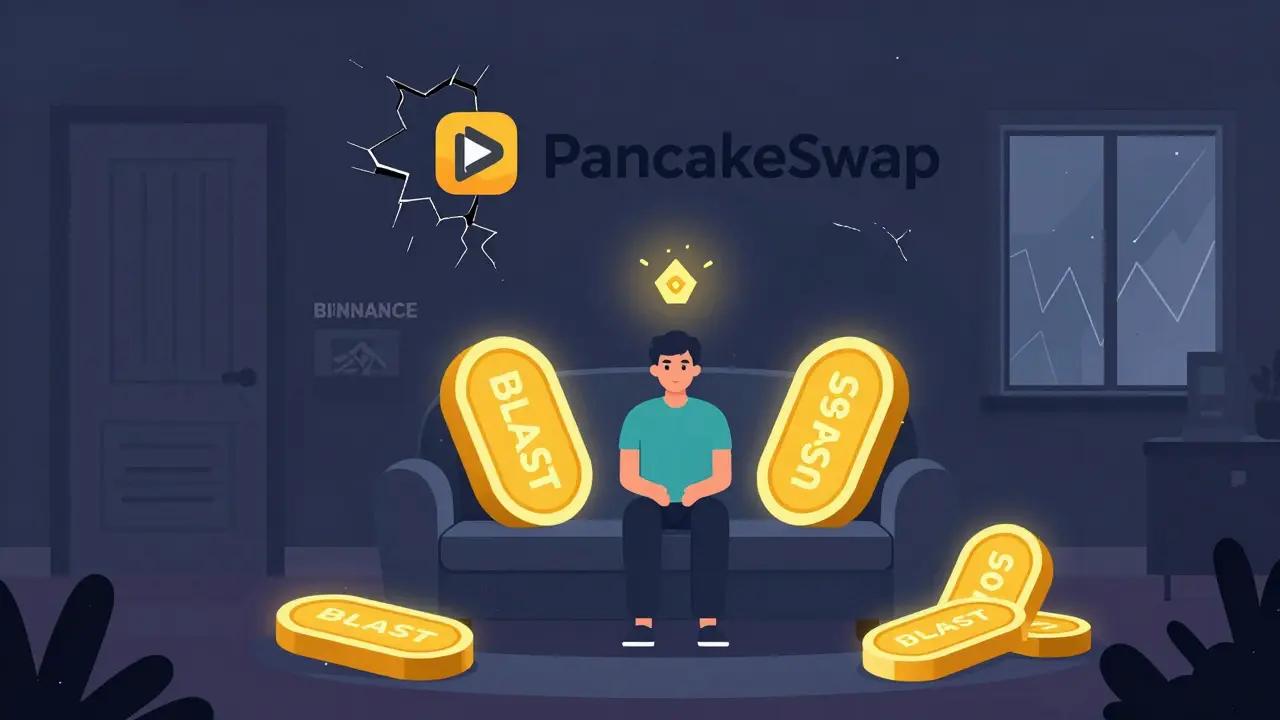
SafeBlast (BLAST) isn't another Bitcoin or Ethereum. It doesn't power a network. It doesn't have a team of developers building real software. What it does have is a promise: hold this coin, and you'll earn more just by sitting on it. Sounds too good to be true? That's because it is.
How SafeBlast (BLAST) actually works
SafeBlast is a token that exists on multiple blockchains - mostly Binance Smart Chain and Ethereum. Every time someone buys or sells BLAST on PancakeSwap, 2% of the transaction gets burned (destroyed), and 3% gets distributed to everyone else holding the coin. That’s the core mechanic. No mining. No staking. Just automatic rewards.
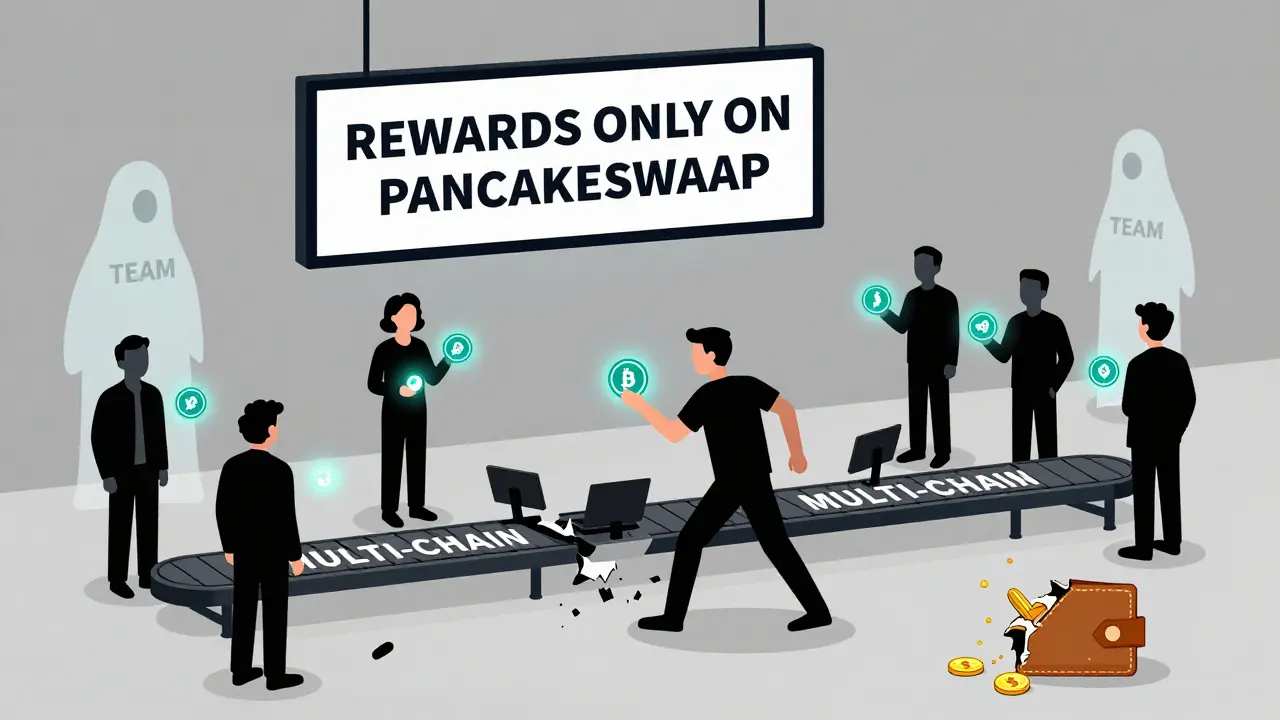
It sounds simple, but here’s the catch: this reward system only works on PancakeSwap. If you trade BLAST on Binance, Coinbase, or even Uniswap, you get nothing. Not a single extra token. Your holdings stay the same. That means if you bought BLAST on a centralized exchange, you’re not earning anything - even though the website says you are.
The total supply is capped at 1 quadrillion BLAST tokens. That’s a 1 followed by 15 zeros. But here’s the twist: over 99% of those tokens were never meant to be used. They’re just numbers on a contract. The actual circulating supply? Nobody really knows. Different tracking sites show wildly different numbers. One says 450 trillion. Another says 380 trillion. That kind of inconsistency is a red flag.
The price you see isn’t real
On CoinGecko, BLAST is listed at $0.085. Sounds like a steal, right? But look closer. The 24-hour trading volume is $1.08. That’s less than the cost of a coffee. For comparison, SafeMoon - a similar token - trades over $14 million in the same period. BLAST doesn’t move. People aren’t buying or selling it. They’re just holding, hoping the price will go up.
Here’s the kicker: Kriptomat, another price tracker, lists BLAST at €0.000000004779. That’s 17,000 times lower. Why? Because one site is using the wrong number of decimals. The other is using the right one. But neither can be trusted. When a coin’s price varies by factors of thousands across platforms, it means there’s no real market. It’s just noise.
Why your rewards probably never arrived
Thousands of users claim they’re earning BLAST rewards every day. But most of them are wrong. The rewards only show up if you’re holding the token in a wallet that’s interacting with PancakeSwap. If you bought BLAST on Binance and transferred it to your MetaMask, you’re not earning anything. The contract doesn’t track you unless you’re trading on the right platform.
And even then, it’s unreliable. Trustpilot reviews show a 1.2 out of 5 rating. Users report holding for months and seeing zero rewards. One person said they tried to sell 500,000 BLAST - and the transaction failed four times. Each failed attempt cost them $3-$5 in gas fees. After $15 down the drain, they gave up.
Reddit threads are full of similar stories. Users describe transaction failures, slippage errors, and wallets that won’t show rewards even after days. The project has no official support. No email. No live chat. No help center. The only place to ask questions is a Telegram group with under 1,300 members - down from nearly 3,000 in early 2024. And the last post? October 3, 2024.
The multi-chain lie
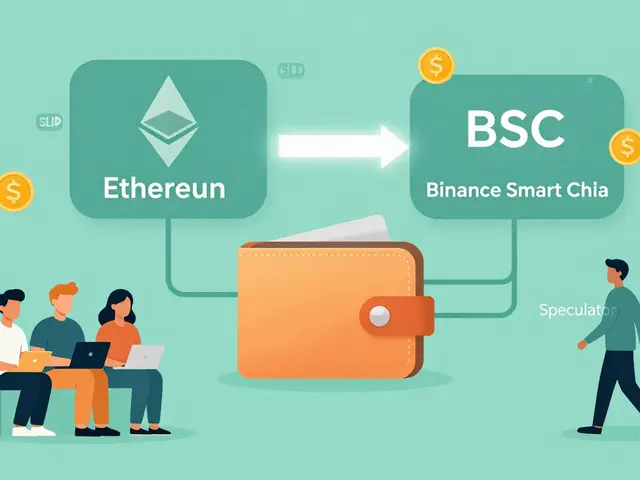
SafeBlast claims to work on eight blockchains: Binance Smart Chain, Ethereum, Avalanche, Polygon, Fantom, Arbitrum, Cronos, and Optimism. That sounds impressive. But here’s the truth: the token exists on those chains, but only as a mirror. No trading happens there. No liquidity. No users. No activity.
Token Terminal reports only 87 unique wallets interacted with BLAST across all chains in the last 30 days. Compare that to Uniswap, which has over a million. SafeBlast’s multi-chain presence isn’t innovation - it’s a marketing trick. It makes the project look bigger than it is. In reality, it’s just one small, broken system pretending to be everywhere.
Who’s behind it? No one knows
There’s no team. No whitepaper. No GitHub. No developer activity. No press releases. No interviews. The website looks like a template from a crypto marketing agency - flashy, full of promises, and empty of substance. The domain was registered in 2023. No history. No credibility.
Delphi Digital, a respected blockchain research firm, called SafeBlast “a liquidity trap.” They said tokens with under $50,000 in daily volume can’t survive long-term. BLAST’s volume? $1.08. That’s not a coin. That’s a ghost.
The U.S. SEC has already warned that tokens with automatic reward systems like SafeBlast’s may be classified as securities. That means if you’re in the U.S., holding BLAST could put you in legal gray territory. No one’s been prosecuted yet - but the risk is real.

Why people still buy it
People buy SafeBlast because they see the price go up. Sometimes. CoinCodex shows 53% of the past 30 days were “green days” - meaning the price rose. But that’s not because demand is growing. It’s because a few wallets are buying small amounts, pushing the price up slightly. Then they sell. The cycle repeats. It’s called pump-and-dump, and it’s happening right now.
One Reddit user said they bought BLAST at $0.06 and sold at $0.09. Made $15 profit. Sounds great? Until you realize they spent $20 in gas fees trying to sell it. Net loss: $5.
There’s no real use case. You can’t pay for anything with BLAST. No merchants accept it. No apps use it. No wallets support it beyond basic storage. It’s not money. It’s not tech. It’s just a number that occasionally ticks up - and then crashes.
What happens next?
History doesn’t lie. CoinGecko’s data shows 98.7% of tokens with under $10 daily volume disappear within 18 months. SafeBlast has been around for over a year. It’s already in the danger zone.
There are no updates. No roadmap progress. No partnerships. No new features. The last update was in December 2023. Nothing since. The team is gone. The community is fading. The liquidity is gone.
If you’re holding BLAST, you’re not investing. You’re gambling. And the house always wins.
Final verdict
SafeBlast (BLAST) is not a cryptocurrency. It’s a speculative token with broken mechanics, zero liquidity, and no real team. The rewards are unreliable. The price is manipulated. The support doesn’t exist. The multi-chain claims are fake. The market is dead.
If you bought it hoping to get rich, you’re already losing. If you’re thinking of buying it now, don’t. There’s no upside - only risk. And when the last buyer walks away, this token will vanish without a trace.