Frog Token Slippage Calculator
Extreme Risk Warning
This tool calculates potential slippage for Frog tokens, which have extremely thin liquidity. According to the article, spreads can exceed 18% and trading can result in significant losses. Use only with small amounts.
Trade Impact Analysis
Based on current market conditions described in the article
Key Takeaways
- Frog (FROG) is a fragmented memecoin existing on multiple blockchains, most notably Binance Smart Chain.
- Prices swing wildly: the main FROG token traded around $0.09 on Oct 25 2025, while other variants hover in the nanodollar range.
- Liquidity is extremely thin - 24‑hour volume is under $120k, making large trades risky.
- Community support is tiny compared with Dogecoin or Shiba Inu, and most users report difficulty cashing out.
- If you decide to trade, verify the contract address, use a reputable DEX, and expect very high spreads.
Frog (FROG) cryptocurrency token is a meme‑driven digital asset that popped up in early 2024 and quickly split into multiple versions across different blockchain networks. It carries no clear utility beyond speculation, and its branding - a cartoon frog - is meant to attract the same crowd that bought Dogecoin or Shiba Inu. The token’s ticker, FROG, appears on several explorers, each with a different contract address, which is the root of most confusion for traders.
What Exactly Is Frog (FROG)?
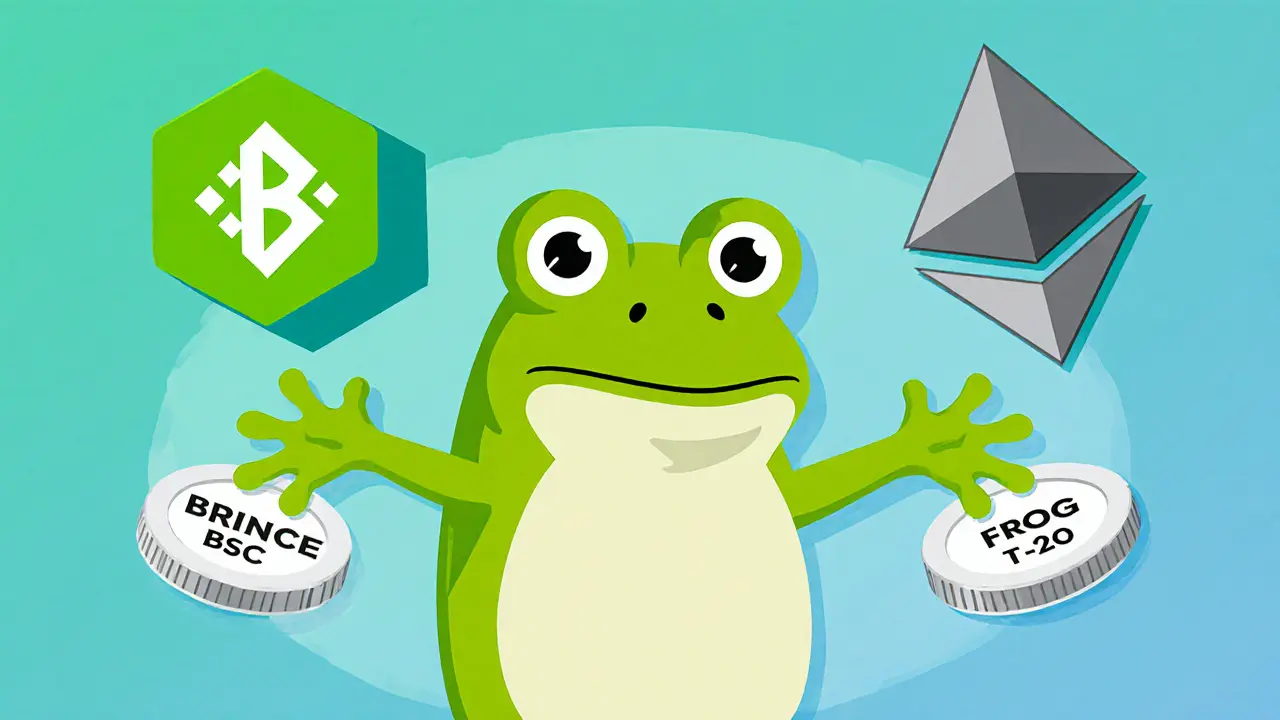
In simple terms, Frog is a collection of memecoins that share the same name but live on separate chains. The most commonly cited versions are:
- FROG (BSC) - a BEP‑20 token on Binance Smart Chain.
- FROG (ERC‑20) - an Ethereum‑based version that follows the ERC‑20 standard.
- Frog Frog - a hyper‑micron token with prices measured in fractions of a nanodollar.
- Major Frog (MAJOR) - a derivative that borrowed the frog brand but uses a different ticker.
- Frodo the virtual samurai (FROG) - a short‑lived variant that was delisted by Gate.io in May 2025.
All of these tokens share the same visual mascot but operate with separate smart‑contract code, supply totals, and market data. Because of this fragmentation, a price quote for “FROG” on one site may refer to a completely different asset than a quote on another.
Technical Foundations
From a technical standpoint, each Frog variant is a plain token contract with no special features. The BSC version follows the BEP‑20 standard, which is a fork of ERC‑20, meaning it supports basic functions like transfer, approve, and balanceOf. There are no built‑in governance mechanisms, staking rewards, or on‑chain utility.
Because the contracts are simple, they can be deployed on any EVM‑compatible chain. However, the lack of innovation also means the token does not benefit from upgrades such as layer‑2 scaling, privacy extensions, or cross‑chain bridges. In practice, this makes the token a pure speculative vehicle.
Current Market Snapshot (Oct 25 2025)
Data from CoinGecko on the day of writing shows the most actively traded FROG variant priced at $0.09164 with a 24‑hour volume of roughly $113,610. That volume represents less than 0.01% of the daily turnover of major memecoins like Shiba Inu, which moves over $5.8 billion in the same period.
Other variants paint a different picture. The BSC version listed on Swapspace trades at about $0.05834, while Frog Frog hovers around $0.00000000006. This nine‑order‑of‑magnitude spread illustrates why checking the contract address is a non‑negotiable step before buying.
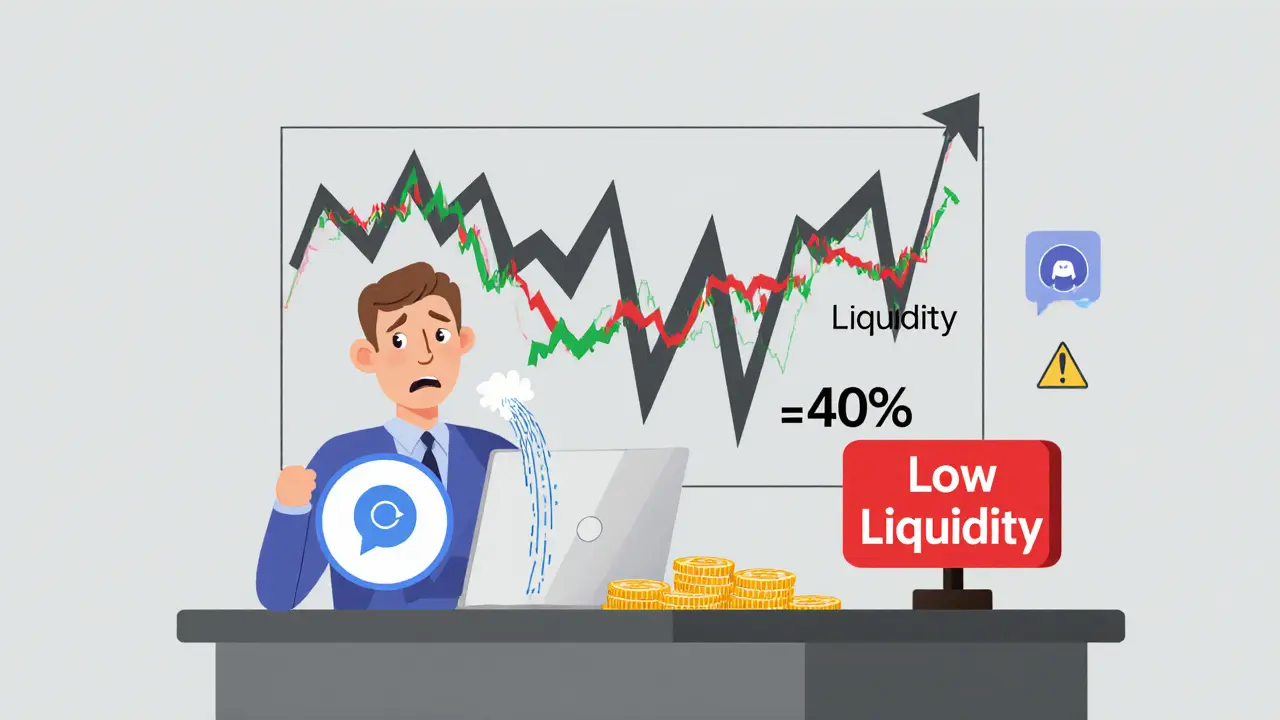
Volatility is extreme: price swings of ±40% within 24 hours are common, and the overall market cap for all Frog tokens combined is well under $1 million - a figure that places them in the “micro‑cap” risk bucket.
Red Flags & Risks
Several factors make Frog tokens a high‑risk proposition:
- Liquidity crunch - The thin trading volume creates spreads that can exceed 18 %, meaning you may lose a large chunk just on the spread.
- Contract confusion - Multiple tokens share the same ticker. Accidentally sending funds to the wrong contract leads to a total loss.
- Community size - Telegram groups average just over 1,200 members, and Discord is virtually silent. Low engagement reduces price support.
- Exchange support - Only a handful of DEXes list Frog, and most centralized exchanges have delisted the variants due to low volume or regulatory concerns.
- Regulatory scrutiny - The SEC’s “Project Polo” targets tokens with deceptive naming and liquidity manipulation, and Frog’s fragmented branding fits the profile.
How Frog Stacks Up Against Other Memecoins
| Metric | Frog (main BSC version) | Dogecoin (DOGE) | Shiba Inu (SHIB) |
|---|---|---|---|
| Price | $0.05834 | $0.0742 | $0.000012 |
| 24‑h Volume | $113,610 | $4.3 B | $5.8 B |
| Market Cap | ≈$0.9 M | $9.3 B | $6.7 B |
| Telegram Members | ≈1,200 | ≈3,200,000 | ≈2,400,000 |
| Liquidity Rating (independent) | Very Low | High | High |
The table makes it clear: Frog’s market depth and community backing are dwarfed by the giants. While the price looks cheap, the risk of price manipulation is proportionally huge.
Safe Trading Practices for Frog Tokens
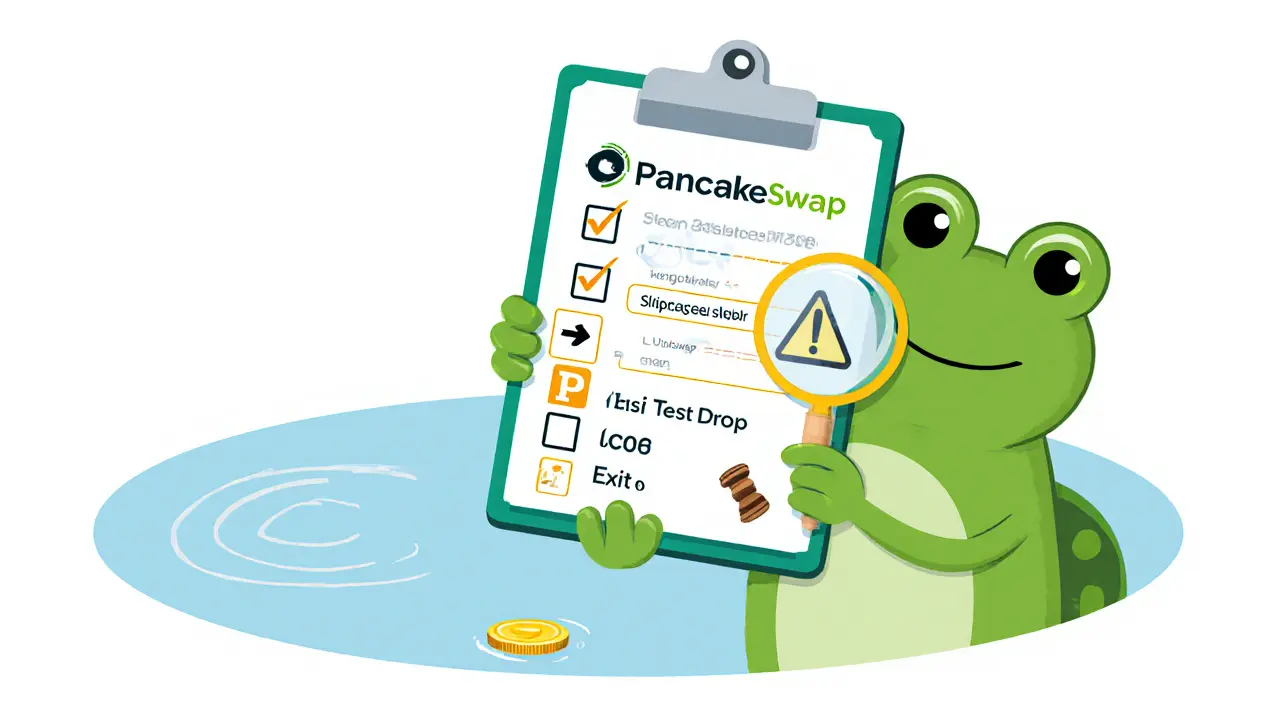
If you still want to dip a toe in, follow this checklist:
- Confirm the contract address. Use a block explorer (BSCScan for BSC, Etherscan for ERC‑20) and compare it with the address listed on a trusted source such as CoinGecko.
- Pick a reputable DEX. PancakeSwap (for BSC) and Uniswap (for ERC‑20) have the deepest pools for Frog, but even there the slippage can exceed 15 %.
- Set a high slippage tolerance. Many traders report that transactions fail unless they allow at least 20 % slippage.
- Test with a small amount. Send 0.001 BSC or the equivalent in ETH first to confirm the token is received.
- Watch the spread. The bid‑ask difference can eat up half of your intended profit.
- Have an exit plan. Decide beforehand at what price you will sell, because the market can crash in minutes.
Community Sentiment & Real‑World Experiences
Reddit threads from r/CryptoMoonShots show dozens of users who bought Frog only to see liquidity vanish overnight. One user wrote, “I tried to sell my FROG holdings but the order never filled - I lost 78 % of my investment in two hours.” Similar complaints appear on Trustpilot reviews of exchanges listing the token, with average ratings of 1.8/5.
Telegram groups are small and rarely moderated, so rumors and pump‑and‑dump schemes spread quickly. The prevailing vibe is cautionary, and many participants advise newcomers to stay away unless they enjoy gambling‑style risk.
Future Outlook & Regulatory Landscape
Analysts from CoinCodex and Bitscreener both assign a bearish rating for 2025, projecting the highest price for the main BSC variant to stay below $0.10. Longer‑term forecasts suggest a maximum of $0.000027 by 2030, which is effectively negligible compared to major tokens.
Regulators are also paying attention. The SEC’s “Project Polo” targets projects that use similar naming to popular assets to mislead investors. While no formal action has been taken against Frog yet, the risk of an enforcement notice or forced delisting remains real.
Development activity is stagnant - the GitHub repos for each variant have recorded zero commits in the past year. Without updates, new features, or a clear roadmap, it’s unlikely that community interest will revive.
Quick Checklist Before You Trade
- Verify the exact contract address on BSCScan or Etherscan.
- Check 24‑hour volume and order‑book depth on the DEX you plan to use.
- Set slippage tolerance ≥20 %.
- Start with a test transaction of less than $10.
- Know your exit point - both profit target and stop‑loss.
- Stay updated on any SEC announcements related to “Project Polo.”
Frequently Asked Questions
What blockchain does the Frog (FROG) token run on?
Frog has versions on several EVM‑compatible chains. The most frequently traded one is on Binance Smart Chain (BEP‑20), but there are also ERC‑20 versions on Ethereum and a few niche variants on other networks.
How can I tell the difference between Frog variants?
Check the contract address. BSC’s explorer (BSCScan) lists the BEP‑20 address, while Etherscan shows the ERC‑20 address. Never rely on the ticker alone because many tokens share the same “FROG” symbol.
Is Frog a good investment?
Most analysts rate Frog as a high‑risk, low‑reward speculation. Its micro‑cap size, poor liquidity, and lack of utility make it more of a gambling token than a long‑term hold.
Where can I safely buy or sell Frog?
PancakeSwap (for BSC) and Uniswap (for ERC‑20) have the deepest pools. Use a reputable wallet, set a high slippage tolerance, and test with a tiny amount first.
Are there any upcoming developments for Frog?
Development activity has stalled. No new commits have been recorded in the past 12 months, and there are no announced roadmap milestones. Expect the token to stay as‑is.
In short, Frog (FROG) is a fragmented meme token with high volatility, low liquidity, and a lot of confusion around its contracts. If you’re comfortable with high‑risk, short‑term trading and you double‑check every contract address, you can experiment with it. Otherwise, the safer route is to stick with more established memecoins that have real community support and deeper markets.


Comments (15)