The SXP airdrop by Solar Network in late 2023 wasn’t just another free token giveaway. It was a carefully designed push to get people off Ethereum and Binance Smart Chain-and onto Solar’s own blockchain. If you missed it, you’re not alone. Thousands did. But for those who followed the rules, 10 SXP tokens landed in their wallets within days. Here’s exactly how it worked, what went wrong for some, and why it mattered.
What Was the Solar SXP Airdrop?
In October 2023, Solar Network teamed up with CoinMarketCap to give away 50,000 SXP tokens. That’s $5,000 total at the time, or $1 per person. Sounds small? Maybe. But this wasn’t about handing out cash. It was about moving users to Solar’s new mainnet. Before this, most SXP tokens were locked on ERC-20 or BEP-20 chains. Solar had built its own Layer-1 blockchain with 53 Block Producers using Delegated Proof of Stake. But no one was using it. The airdrop forced people to create new wallets-and that’s where the real win was.How to Qualify for the Airdrop
You couldn’t just sign up with any wallet. You had to follow a strict checklist:- Have a CoinMarketCap account older than 30 days. No exceptions. Accounts created just before the campaign got rejected.
- Download the official Solar desktop wallet (version 2.0.1). The link? Only solar.org/desktop-wallet. No third-party sites.
- Generate a brand-new mainnet wallet address. Testnet addresses were useless. Many people messed this up.
- Complete a 10-question quiz about Solar’s tech: token standards, NFT marketplace, metaverse plans, and DeFi features.
- Submit your mainnet address through CoinMarketCap’s airdrop form before the deadline.
Why the Mainnet Wallet Rule Was a Big Deal
Most airdrops let you use any wallet. Binance, Coinbase, MetaMask-they all work. Solar didn’t. They demanded a new mainnet address. Why? Because they needed data. Every new wallet created was a metric investors cared about. If you held SXP on Ethereum, you weren’t helping Solar’s chain grow. But if you downloaded their wallet and generated a new address? That meant real adoption. According to Bitget’s analysis, 87% of existing SXP holders were stuck on older chains. This airdrop was Solar’s way of saying: “If you want these tokens, you need to move.” And it worked. Over 15,000 new mainnet wallets were created during the campaign. That’s more than the number of winners. Many people tried, failed, and tried again. Each attempt created a new wallet.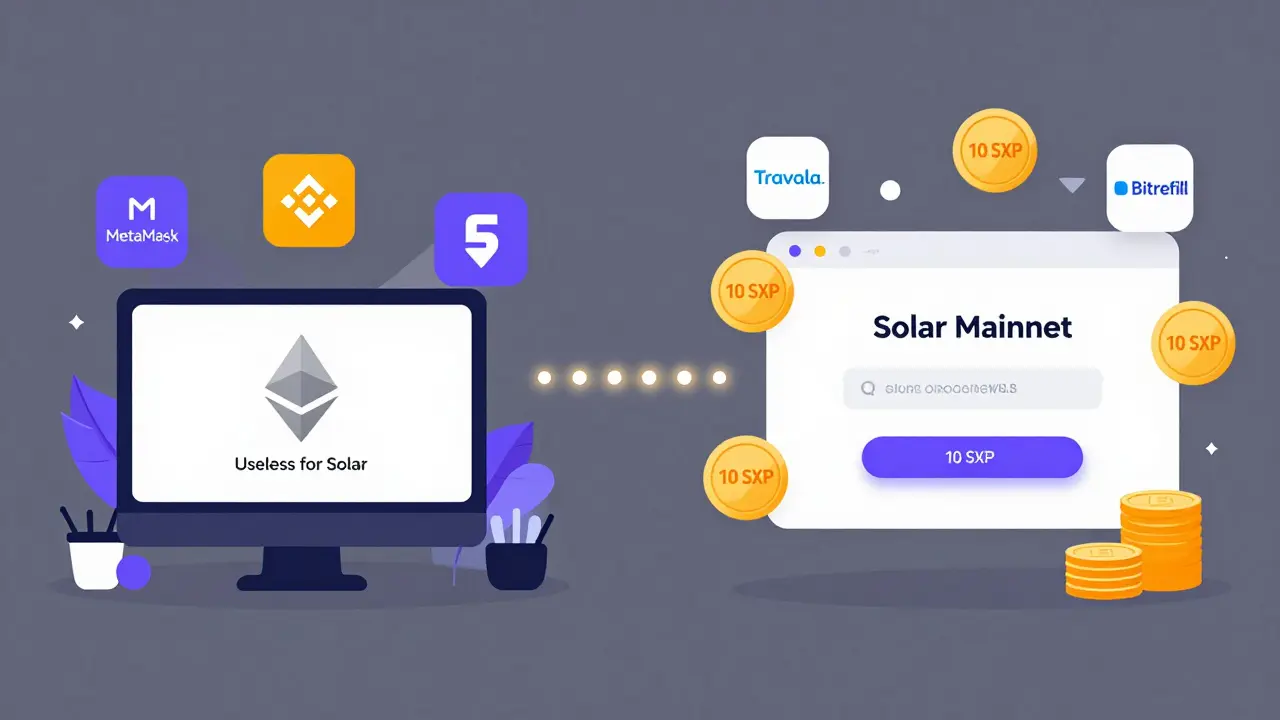
What Went Wrong for People
The biggest complaint? The 30-day CoinMarketCap rule wasn’t clear enough. User u/AirdropHunter88 on Telegram said they got disqualified because their account was 25 days old. They’d been active for months, but the system only counted the account creation date. No warning. No grace period. Others struggled with the wallet setup. The Solar desktop app took 20+ minutes to sync on first launch. Some users thought it was broken and reinstalled it-losing their address in the process. The app had no clear indicator that syncing was normal. It just sat there. No progress bar. No message. That confused a lot of beginners. Then there was the quiz. People assumed it was a formality. It wasn’t. The average person took 2.3 tries to pass. Questions weren’t easy: “What consensus mechanism does Solar use?” or “Which protocol allows SXP to power NFT marketplaces?” You had to read the materials. No guessing.How Winners Got Paid
Winners didn’t get a notification. No email. No app alert. The tokens just appeared in their mainnet wallet. On-chain records show all 5,000 recipients received exactly 10 SXP each between November 1 and November 10, 2023. Some got theirs in under 48 hours. Others waited the full 14 days. No one got more. No one got less. The winners were announced on Solar’s Twitter and Telegram. No private messages. No exceptions. If you didn’t see your name, you didn’t win.Was It Worth It?
At $0.10 per SXP, 10 tokens = $1. That’s a coffee. But here’s the catch: SXP isn’t just a token. It’s the fuel for Solar’s ecosystem. You can use it to pay for travel bookings on Travala.com, buy gift cards on Bitrefill, or trade on gaming platforms like tymt.com. If you held those 10 SXP and didn’t sell, and if Solar hits its 2025 price target of $0.61 (as CoinPedia predicted), you’d have turned $1 into $6.10. That’s a 510% return. But that’s not guaranteed. Bitget’s conservative model says SXP might only hit $0.32 by end of 2025. Still, even that’s a 220% gain. And Solar’s roadmap includes Ledger hardware wallet support (launched December 15, 2023) and a staking program starting January 10, 2024. Staking could earn you 8-12% annual yield. So holding SXP isn’t just speculation-it’s utility.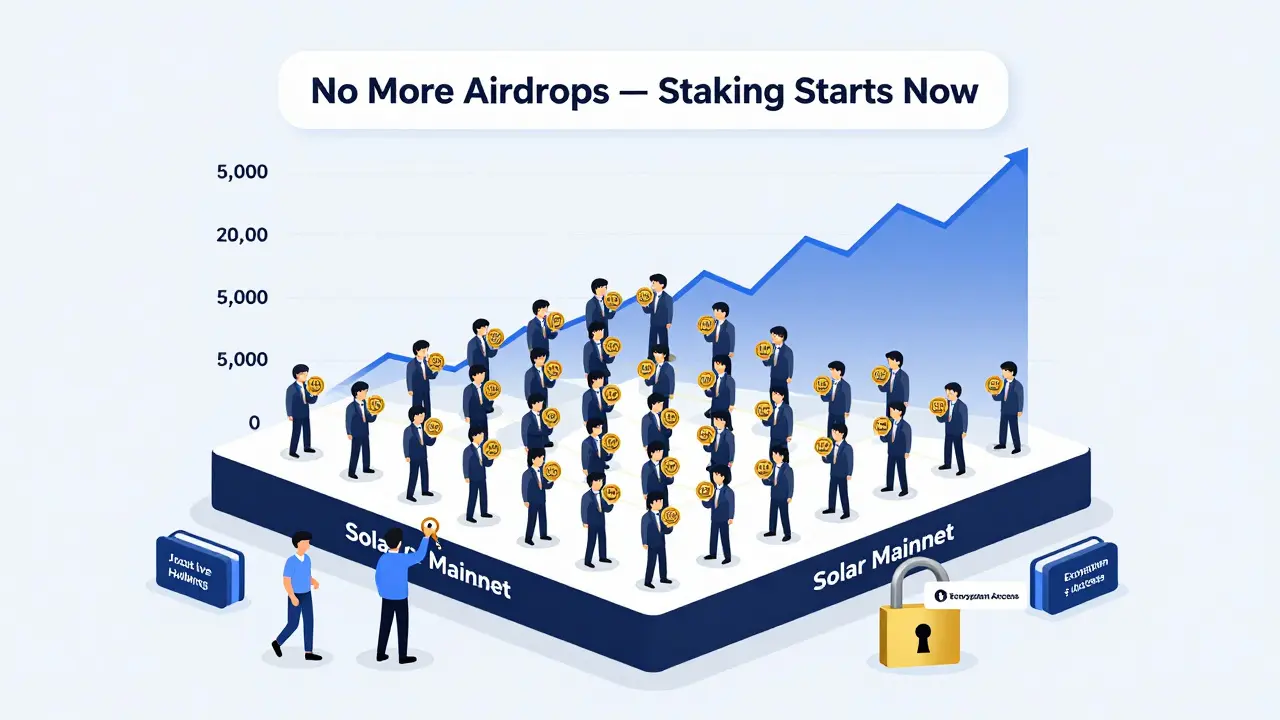
What Happened After the Airdrop
The campaign ended cleanly. All tokens distributed. No disputes. No delays. Solar used feedback to improve. Version 0.8.3 of their wallet, released in November 2023, added a progress indicator during sync and simplified address generation. They also started requiring users to join their Telegram or Discord channel 72 hours before applying-just to filter out bots. The real win? Solar’s mainnet now has over 20,000 active wallets. Before the airdrop, it had about 5,000. That’s a 300% jump in three months. And with staking live, that number is growing fast.Should You Wait for Another One?
Maybe. But don’t count on it. Solar’s team has said they’re shifting focus to ecosystem growth, not more airdrops. The next big push is staking rewards. If you want SXP now, buy it on a supported exchange-like Gate.io or MEXC-and move it to your own mainnet wallet. That’s the real lesson from this campaign: SXP only has value if you use Solar’s chain. Holding it on Binance or Coinbase doesn’t help you-or Solar.What’s Next for Solar Network
Solar isn’t chasing hype. They’re building infrastructure. Their blockchain handles 1,200 transactions per minute. That’s not Solana-level, but it’s solid for a new Layer-1. Partnerships with Travala.com and Bitrefill give real-world use cases. The staking program will lock up more SXP, reducing supply. And if they can onboard 100,000 users in the next year, their market cap could jump from $133 million to over $500 million. For now, the airdrop is over. But the network is just getting started.Did the Solar SXP airdrop still give out tokens after December 2023?
No. The airdrop ended on October 31, 2023. All 50,000 SXP tokens were distributed to 5,000 winners by November 10, 2023. There are no ongoing distributions from that campaign. Any website claiming to still offer SXP from the CoinMarketCap airdrop is a scam.
Can I still get SXP tokens today?
Yes, but not through an airdrop. You can buy SXP on exchanges like Gate.io, MEXC, or KuCoin. Once you buy it, you can transfer it to your own Solar mainnet wallet to use it for staking, payments, or NFTs. Holding it on an exchange means you can’t earn rewards or use it in Solar’s ecosystem.
Why was the CoinMarketCap account required to be 30 days old?
To prevent bot accounts and sybil attacks. Many airdrop hunters create hundreds of fake accounts in minutes. CoinMarketCap’s 30-day rule made it harder to game the system. Accounts created right before the campaign were flagged and disqualified. This kept the airdrop fair for real users.
Can I use MetaMask or Binance Wallet for the Solar airdrop?
No. The campaign only accepted new mainnet wallet addresses generated through the official Solar desktop wallet. MetaMask, Binance Wallet, Trust Wallet, and other wallets on Ethereum or BSC were not eligible. Even if you had SXP in those wallets before, you still couldn’t enter them. This was the core requirement to drive adoption of Solar’s own blockchain.
What’s the difference between SXP on Ethereum and SXP on Solar mainnet?
SXP on Ethereum is an ERC-20 token. It’s just a digital IOU. SXP on Solar mainnet is the native currency of Solar’s blockchain. It powers transactions, staking, NFTs, and DeFi apps on Solar’s network. You can’t use ERC-20 SXP to stake or pay for services on Solar’s ecosystem. You must move it to the mainnet wallet to unlock real utility.
Is the Solar desktop wallet safe to use?
Yes, if you download it from the official site: solar.org/desktop-wallet. Third-party sites or links from Telegram/Discord are scams. The wallet has been audited and is used by over 20,000 active users. Some report slow sync times on first setup, but this is normal for new blockchain wallets. Never share your private key or seed phrase.
Will there be another Solar airdrop in 2025?
There are no announced plans for another airdrop in 2025. Solar’s team has shifted focus to staking rewards, hardware wallet integrations, and expanding real-world use cases. Future token distributions are more likely to come through staking or ecosystem incentives, not free giveaways. Don’t wait for another airdrop-focus on using SXP on the mainnet instead.