Naira to Stablecoin Value Calculator
Calculate how much value you'd lose by holding Naira versus converting to stablecoins (USDC) during periods of high inflation. Based on Nigeria's economic conditions.
Results will appear here after calculation
Crypto adoption in Nigeria is reshaping how everyday people store value, send money, and access financial services. With more than 22 million users by 2025 - roughly 10% of the population - the country now stands as the world’s second‑largest crypto market behind India. This article walks through the economic forces, regulatory twists, and on‑the‑ground realities that have turned digital currencies into a survival tool for millions.
Key Takeaways
- Inflation above 24% and a weakening naira drive Nigerians toward crypto as a hedge.
- The Central Bank of Nigeria (CBN) lifted its banking ban in late‑2023, opening the door for licensed exchanges.
- Fintech unicorns like Moniepoint and the NIBSS‑Zone blockchain partnership are institutionalizing crypto.
- Peer‑to‑peer (P2P) platforms remain the entry point for most users, but regulated exchanges are gaining trust.
- Risks include regulatory back‑slides, exchange downtime, and security lapses for newcomers.
Why the Nigerian Economy Fuels Crypto Growth
Since 2016 the naira has lost more than 75% of its value against the US dollar. Coupled with a 24% inflation rate in 2023, ordinary wages barely keep up with price hikes. Traditional banks reach only 64% of adults; the remaining 36% are unbanked, often living in rural areas with limited cash‑deposits.
These pressures create a perfect storm: people need a store of value that isn’t eroded daily, and they need a way to move money without costly remittance fees (up to 8% per transaction). Cryptocurrencies, especially stablecoins pegged to the dollar, satisfy both needs.
Regulatory Milestones Shaping the Landscape
The Central Bank of Nigeria (CBN) first warned banks against servicing crypto firms in early 2021, effectively banning formal crypto activity. In late 2023 the bank reversed course, lifting the ban and issuing licences to a handful of exchanges that meet AML/KYC standards. This shift sparked a surge in licensed platforms such as Binance Nigeria, Quidax, and Yellow Card.
Regulatory clarity has attracted foreign investors, as seen when Google‑backed fintech Moniepoint hit unicorn status with a $1 billion valuation in 2025. Meanwhile, the Nigeria Inter‑Bank Settlement System (NIBSS) teamed up with Zone’s blockchain network to modernize inter‑bank settlements, proving that legacy finance can coexist with distributed ledger tech.
From P2P Trading to Institutional‑Grade Platforms
In 2022‑2023 the vast majority of Nigerian crypto activity happened on peer‑to‑peer (P2P) marketplaces. Users would post offers on Telegram groups or local forums, match with a counter‑party, and settle via mobile money or cash. This model bypassed banks entirely and kept transaction fees low.
Today, regulated exchanges offer similar price competitiveness, plus insurance, custodial wallets, and fiat on‑ramps. The shift is evident in the 2025 on‑chain volume spike: a single month recorded almost $25 billion in transactions, driven by a rapid naira devaluation that pushed users toward digital assets as a hedge.
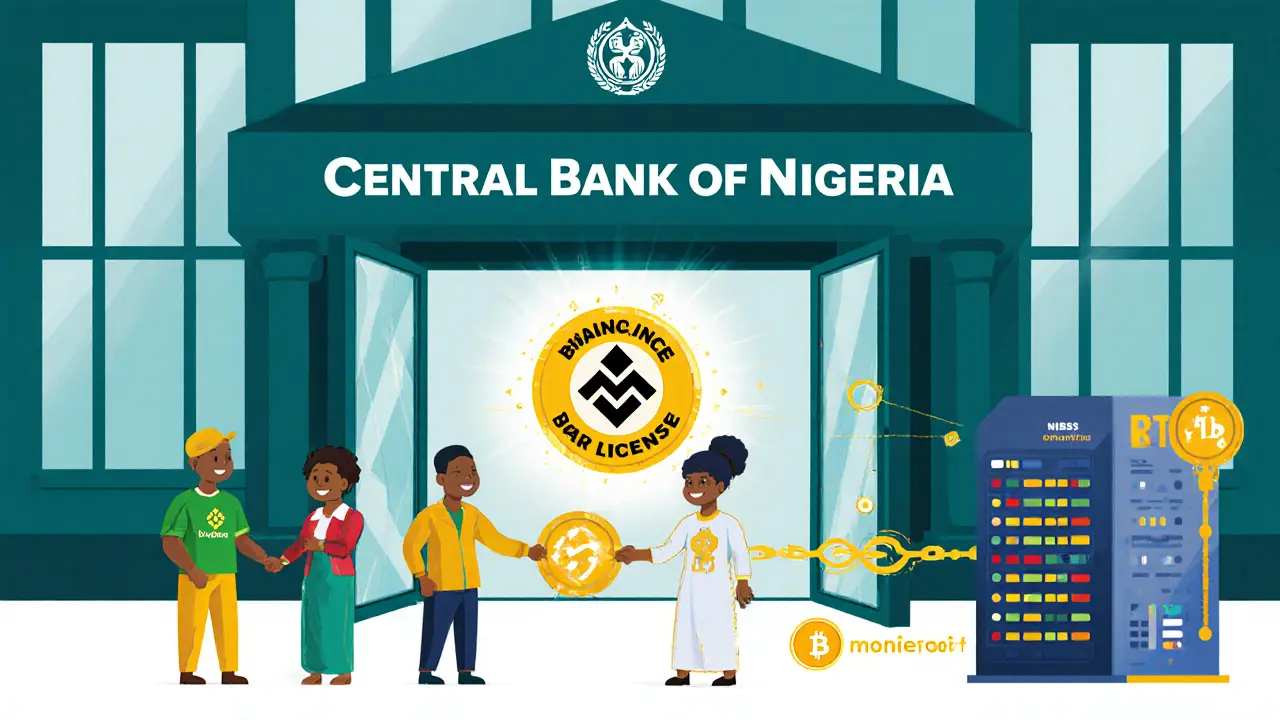
Who’s Using Crypto in Nigeria?
Surveys show three primary user groups:
- Retail hedgers: Small‑business owners and salaried workers who buy Bitcoin or USDC to preserve buying power.
- Freelancers and remote workers: They receive payments in stablecoins, cutting remittance fees dramatically.
- Emerging institutional players: Fintechs, payment processors, and even some banks experimenting with blockchain for settlement.
Community chatter on Reddit and local WhatsApp groups highlights both enthusiasm (“Crypto saved my family during the last devaluation”) and pain points (exchange downtime during market spikes, lingering regulatory uncertainty).
Step‑by‑Step Guide for New Nigerians
If you’re thinking about jumping in, here’s a practical roadmap that reflects the on‑ground reality:
- 1. Choose a reputable exchange: Start with a licensed platform like Binance Nigeria, Quidax, or Yellow Card. Look for KYC verification, local support in Pidgin English, and clear fee tables.
- 2. Secure a mobile wallet: Apps such as Trust Wallet or the exchange’s native wallet work fine for basic trading. For larger holdings, consider a hardware wallet (Ledger Nano S) and store the seed phrase offline.
- 3. Fund your account: Use a mobile money service (e.g., Paga, OPay) to buy dollars in stablecoins or directly purchase Bitcoin. P2P offers can be cheaper but require trust.
- 4. Learn the basics of private keys: Never share your seed phrase. Join Telegram channels where experienced users walk newcomers through security best practices.
- 5. Start small: Allocate no more than 5% of your monthly income until you feel comfortable with price volatility and transaction fees.
The average learning curve is 2‑4 weeks for technically literate Nigerians, according to local surveys. The biggest hurdle isn’t the tech; it’s getting accustomed to thinking in digital assets rather than cash.
Comparing Local vs. International Exchanges
| Exchange | License Status | Supported Fiat Methods | Average Trading Fee | Local Customer Support |
|---|---|---|---|---|
| Binance Nigeria | Licensed (CBN) | Bank transfer, mobile money, cash deposit | 0.10% maker / 0.15% taker | English & Pidgin, 24‑hr chat |
| Quidax | Licensed (CBN) | Bank transfer, USSD, cash | 0.12% maker / 0.20% taker | English, phone support |
| Yellow Card | Licensed (CBN) | Bank, mobile money | Flat 0.25% per trade | English, ticket system |
| Binance Global | Not locally licensed | International bank, credit card | 0.10% maker / 0.15% taker | English only, slower response for NG users |
Local licensed exchanges tend to have faster fiat on‑ramps, lower fees for small transactions, and support in local languages - crucial for the majority of users who are not fluent in English.

Risks, Challenges, and How to Mitigate Them
Even with a friendlier regulatory climate, risks remain:
- Regulatory reversal: The CBN could re‑impose restrictions if political pressure mounts. Stay updated via official CBN communiqués and diversify holdings across multiple exchanges.
- Exchange downtime: High‑volatility periods often see platform outages. Keep a small emergency stash in a hardware wallet.
- Security lapses: Phishing attacks target new users. Verify URLs, enable two‑factor authentication, and never share private keys.
- Market volatility: Bitcoin can swing 10% in a day. Use stablecoins for everyday transactions and allocate only a risk‑tolerant portion to speculative assets.
Community groups on Telegram, WhatsApp, and Discord serve as early‑warning networks. Many users share real‑time outage alerts and tips on safe trading practices.
Future Outlook: From Grassroots to Institutional Mainstream
Looking ahead, three trends will likely shape Nigeria’s crypto future:
- DeFi and tokenized services: As users become comfortable with basic trading, interest in lending, yield farming, and tokenized assets is growing. Expect local fintechs to bundle DeFi options into mobile apps.
- CBDC experiments: The Central Bank is piloting a digital naira. While the CBDC will coexist with crypto, its rollout could introduce new compliance layers for exchanges.
- Cross‑border settlement hubs: Partnerships like NIBSS‑Zone hint at a future where African remittances settle instantly on blockchain, lowering costs for diaspora families.
Unless a drastic policy reversal occurs, the economic drivers - inflation, limited banking, and high remittance fees - will keep pushing Nigerians toward digital money. The ecosystem is maturing fast, moving from a chaotic P2P market to a regulated, institution‑friendly environment.
Frequently Asked Questions
Is crypto legal in Nigeria?
Yes. After the CBN lifted its 2021 ban on banks serving crypto businesses, licensed exchanges can operate legally. However, the central bank still warns about risks and does not endorse any specific token.
What is the cheapest way to buy Bitcoin in Nigeria?
Peer‑to‑peer (P2P) platforms like Binance P2P or local WhatsApp groups often offer the lowest fees, especially when you pay with mobile money or cash. Licensed exchanges add a small service fee but provide better security.
How can I protect my crypto from hacks?
Store large amounts in a hardware wallet, enable two‑factor authentication on exchange accounts, and never share your seed phrase. Use reputable exchanges that offer insurance on custodial balances.
Will the Central Bank’s digital naira replace cryptocurrencies?
The digital naira is intended for domestic payments and will likely coexist with existing crypto. It may introduce new KYC requirements for exchanges, but it won’t eliminate the demand for decentralized assets that hedge inflation.
What are the best Nigerian exchanges for beginners?
Binance Nigeria, Quidax, and Yellow Card are all licensed, offer local language support, and have simple mobile apps that guide new users through buying, storing, and sending crypto.



Comments (16)