Crypto Exchange Comparison Tool
Select Exchange 1
Select Exchange 2
Comparison Results
Key Comparison
| Criteria | First Exchange | Second Exchange |
|---|---|---|
| Regulatory Compliance | ||
| Security Features | ||
| User Base (2025) | ||
| Monthly Trading Volume | ||
| Deposit/Withdrawal Options |
Risk Assessment
Key Takeaways
- INRTOKEN Exchange has no verifiable security, fee, or user‑experience data.
- Major Indian exchanges like WazirX, CoinDCX, ZebPay and CoinSwitch dominate the market with clear regulatory compliance.
- Without KYC, UPI integration or proof‑of‑reserves, INRTOKEN appears dormant or non‑compliant.
- For most traders, choosing a well‑documented platform reduces risk and ensures access to support.
- Stay away from exchanges that lack any community presence or independent reviews.
When you type INRTOKEN Exchange is a centralized cryptocurrency trading platform registered in Delhi, India, that launched in March 2020, the first thing you’ll notice is the silence. Unlike WazirX, CoinDCX, ZebPay or CoinSwitch, there are no detailed fee tables, no mobile‑app screenshots, and absolutely no user feedback on Reddit, Trustpilot or Twitter. That vacuum is the core of this review: we’ll sift through the few crumbs of public data, compare them against the benchmarks set by the Indian crypto ecosystem in 2025, and tell you whether the platform is a hidden gem or simply a ghost.
What We Know About INRTOKEN Exchange
The only concrete information comes from a basic listing on CoinMarketCap, which confirms the exchange’s registration date and its location in Delhi. The profile does not list trading volume, supported coins, fee schedules, or even the status of its financial reserves - the field simply shows “--”. No security whitepaper, no insurance policy, no KYC flow is described. In short, the platform provides the bare minimum to appear on a market data aggregator and nothing more.
How It Stacks Up Against Established Indian Exchanges
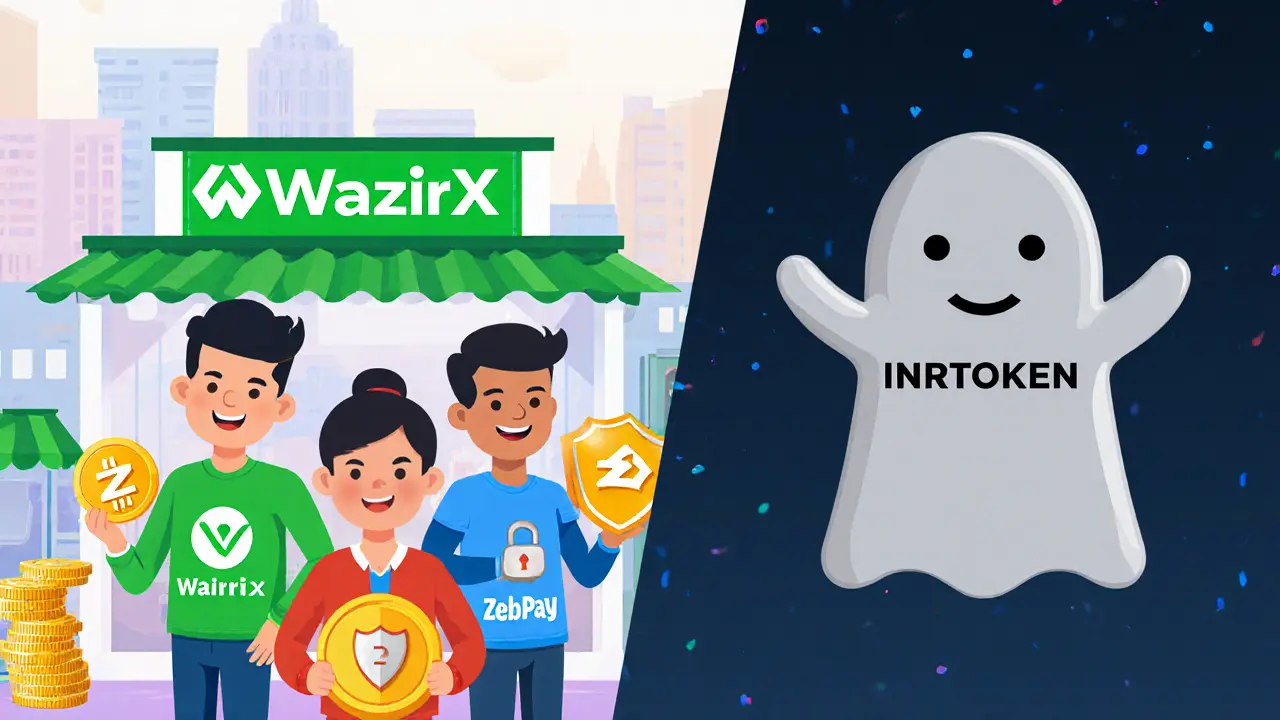
To gauge relevance, we compare INRTOKEN against the four exchanges that dominate Indian crypto trading in 2025. The comparison focuses on five criteria that most traders check before signing up: regulatory compliance, user base, trading volume, security features, and deposit/withdrawal options.
| Criteria | INRTOKEN Exchange | WazirX | CoinDCX | ZebPay | CoinSwitch |
|---|---|---|---|---|---|
| Registration & Licensing | Delhi registration, no public compliance documents | SEBI‑registered, GST‑compliant | SEBI‑registered, DADMA certification | SEBI‑registered, proof‑of‑reserves published | SEBI‑registered, GST‑compliant |
| Active Users (2025) | Not disclosed | ~6 million | ~3.4 million | ~2.1 million | ~1.8 million |
| Monthly Trading Volume (USD) | - | $5.4 billion | $2.2 billion | $1.1 billion | $0.9 billion |
| Security Measures | Undocumented | 2FA, cold storage, insurance on assets | Cold storage, audit‑ready proofs | Multi‑sig wallets, regular audits | 2FA, IP whitelisting |
| Deposit/Withdrawal Options | None publicly listed | UPI, bank transfer, crypto deposits | UPI, bank transfer, fiat gateways | UPI, bank transfer, crypto wallets | UPI, bank transfer, crypto wallets |
The table makes the gaps obvious. Where the big players flaunt numbers, INRTOKEN offers a dash. The lack of any listed deposit method or security protocol is a red flag, especially when Indian regulators now require clear KYC and GST compliance for crypto services.
Regulatory Landscape in 2025 and Why It Matters
Since the 2022 crypto tax guidelines, every Indian exchange must:
- Register with the Ministry of Corporate Affairs and obtain a GST number.
- Implement KYC (PAN, Aadhaar, or passport verification).
- Deduct 1% TDS on each crypto transaction.
- Maintain proof‑of‑reserves and, for larger platforms, secure an insurance cover.
These requirements are publicly verified on the SEBI portal and on each exchange’s compliance page. No such documentation appears for INRTOKEN, nor does a search of the Ministry of Corporate Affairs database return a matching company filing that includes the necessary crypto‑exchange clauses. That omission suggests the platform is either operating outside the legal framework or has failed to update its public profile.
Community Sentiment - The Missing Piece
When you search Reddit’s r/CryptoIndia, Trustpilot, or Twitter for “INRTOKEN”, the result count is zero. In contrast, WazirX alone generated over 1,200 Reddit threads in September 2025, while CoinDCX has a Trustpilot rating of 4.2/5 from more than 800 reviews. Community feedback is a proxy for reliability: users share withdrawal issues, FAQ gaps, and security concerns that a solid platform addresses quickly. The total silence around INRTOKEN means you have no way to gauge real‑world performance, customer support response times, or even whether the exchange is still active.
Risk Assessment - Should You Trade on INRTOKEN?
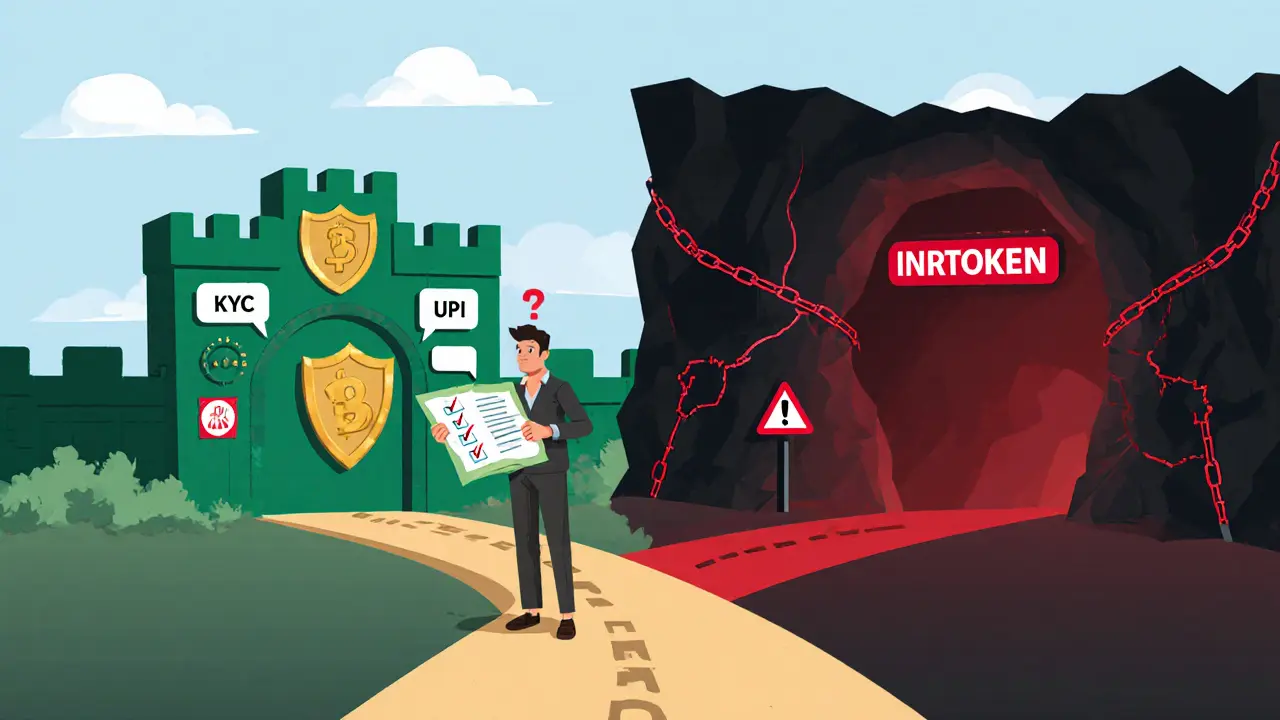
Based on the evidence (or lack thereof), the risk profile looks like this:
- Operational Risk: No public API, mobile app, or onboarding guide - high chance of non‑functional services.
- Regulatory Risk: Absence of KYC, GST, and SEBI filings - potential for sudden shutdown or fines.
- Security Risk: No disclosed cold storage, 2FA, or insurance - assets could be vulnerable.
- Liquidity Risk: No volume data - you may face slippage or inability to withdraw.
If you value capital protection, stick with exchanges that publish these details. The safest move is to treat INRTOKEN as a “watch‑only” ticker until more transparent information surfaces.
How to Verify an Exchange Before Signing Up (Pro Tips)
Even if you spot a new platform that looks promising, run these checks first:
- Search the company name on the Ministry of Corporate Affairs portal for registration and GST numbers.
- Look for a dedicated security page - it should mention cold storage percentages, two‑factor authentication, and insurance coverage.
- Check independent review sites (CoinLedger, Koinly, Mudrex) for inclusion in their latest rankings.
- Scan social media for active user groups; a healthy community usually has at least a few hundred members.
- Test the support channel with a simple inquiry - response time and tone matter.
Applying this checklist to INRTOKEN fails at step 1 (no public registration) and step 2 (no security page), confirming the red flags we outlined.
Bottom Line
INRTOKEN Exchange looks more like a name on a spreadsheet than a functioning marketplace. The absence of any verifiable data, community chatter, or regulatory filings puts it in the “high‑risk” bucket. For traders in 2025, especially those handling sizable crypto holdings, the prudent choice is to stay with platforms that are transparent, audited, and actively discussed by the community.
Is INRTOKEN Exchange still operational?
There is no public evidence of active trading, support channels, or recent updates. The lack of any community posts or official statements suggests the platform may be dormant or operating without proper licensing.
How does INRTOKEN compare to WazirX in terms of security?
WazirX publishes a security framework that includes two‑factor authentication, cold‑storage of 95% of funds, and an insurance policy. INRTOKEN provides no public security details, making a direct comparison impossible and leaving users in the dark.
Can I deposit INR via UPI on INRTOKEN?
No official deposit methods are listed. Leading Indian exchanges all support UPI, but INRTOKEN does not mention any fiat onboarding option.
What regulatory filings should an Indian exchange have?
A compliant exchange must be registered with the Ministry of Corporate Affairs, hold a GST number, enforce KYC (PAN/Aadhaar), and follow the 1% TDS rule on crypto transactions. It should also publish proof‑of‑reserves or an audit report.
Should I keep my crypto on INRTOKEN?
Given the lack of security disclosures, user reviews, and regulatory compliance, it is safer to keep funds on a well‑known, audited exchange or in a personal hardware wallet.





Comments (14)