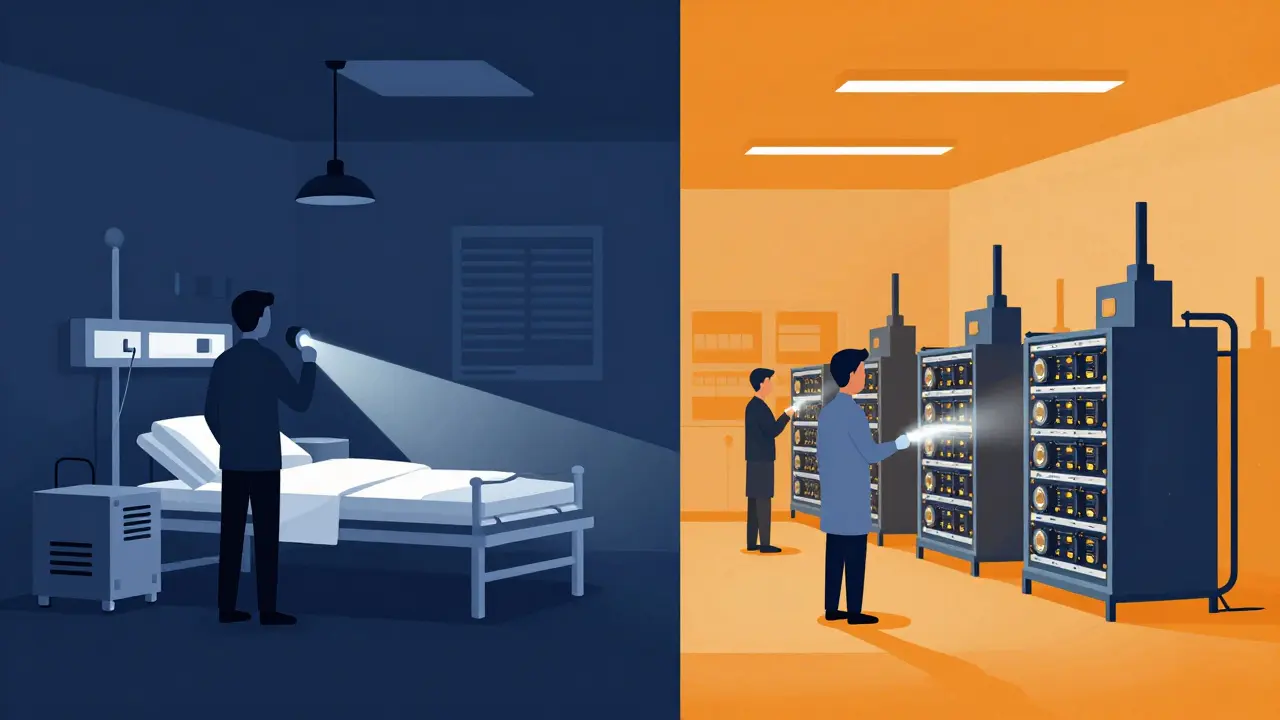
In 2023, Angola’s power grid collapsed repeatedly. Hospitals ran on generators while mining farms used industrial transformers. The government had to act.
Why Angola Banned Crypto Mining
Angola’s cryptocurrency mining ban was implemented on April 15, 2024, to address severe electricity shortages that were causing blackouts in hospitals and homes. The ban criminalizes mining operations and equipment possession with penalties of one to five years imprisonment and mandatory confiscation of all related hardware.
Angola’s national grid has a capacity of just 5,500 megawatts for 39 million people. During peak demand in 2023, cryptocurrency mining consumed 15% of the country’s electricity-enough to power 300,000 households. The government’s March 2024 technical report showed Bitcoin mining alone used 1,440 kilowatt-hours per coin, 40 times more energy than traditional banking transactions. This was unsustainable when 60% of urban households faced daily blackouts.
What the Ban Entails
The Angolan National Electricity Agency (INE) is the regulatory body responsible for monitoring electricity consumption and enforcing mining restrictions in Angola. defines illegal mining as any operation using over 10 kilowatts of continuous power without authorization. Industrial-scale operations exceeding 100 kilowatts face the strictest penalties. The ban specifically targets proof-of-work cryptocurrencies like Bitcoin, which require massive computational power.
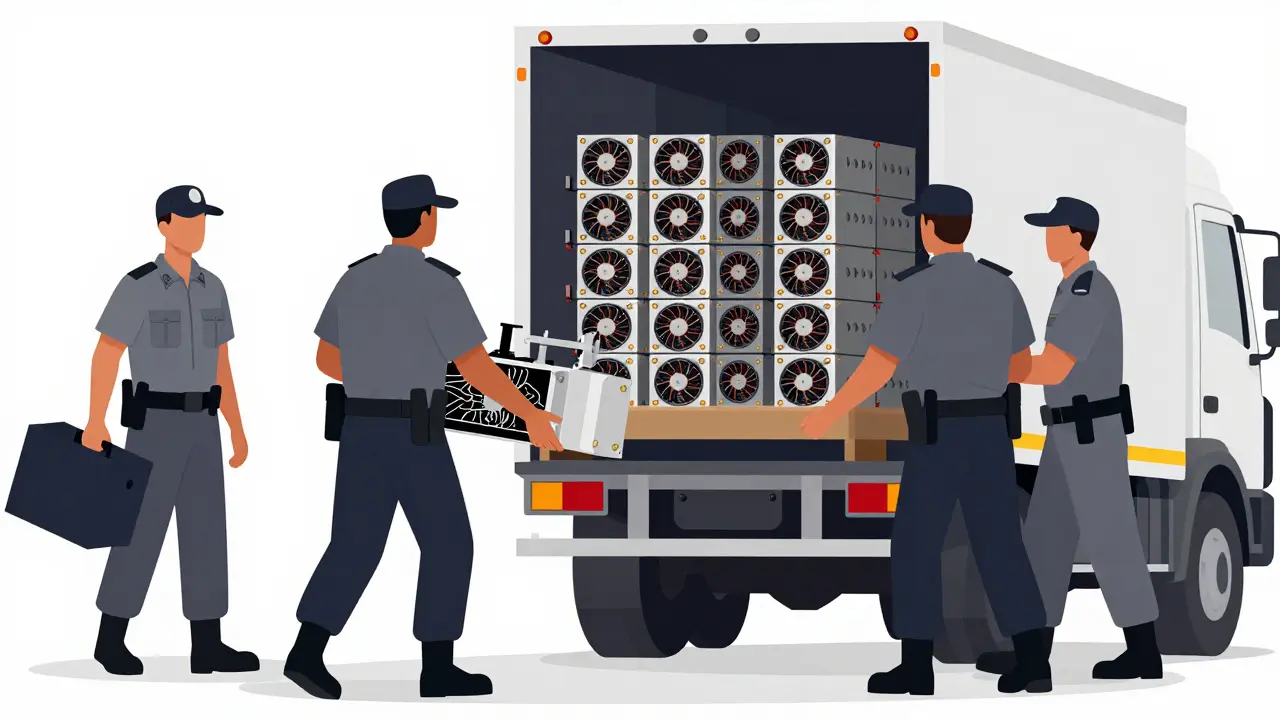
Seized equipment included ASIC miners Application-Specific Integrated Circuit devices operating at 3,200 watts each, which were part of the 8,300 units confiscated during the August 2025 crackdown. and GPU rigs graphics processing units consuming 1,500 watts per unit, totaling 15,000 units seized.. These machines were often powered by illegal connections to the national grid.
Enforcement Actions
During Interpol Operation Serengeti 2.0 a coordinated cybercrime initiative from June to August 2025 involving 18 African nations and the UK, Angolan authorities dismantled 25 illegal mining centers operated by Chinese nationals., Angolan authorities dismantled 25 illegal mining centers operated by 60 Chinese nationals. They seized mining equipment valued at $37.2 million and confiscated 45 illicit power stations that were diverting electricity from the national grid.
| Item | Quantity | Value |
|---|---|---|
| Illegal mining centers | 25 | - |
| Arrests | 60 Chinese nationals | - |
| Seized mining equipment | 8,300 ASIC units, 15,000 GPUs | $37.2 million |
| Illicit power stations | 45 | - |
The Angolan government established a whistleblower program in May 2024, offering 5% of seized equipment value (capped at $50,000) for verified tips. This led to 73% of the 25 August 2025 raids originating from community reports. Confiscated equipment is inventoried using blockchain-based tracking systems before redistribution to public institutions.
Impact on Communities
Local residents in Sambizanga district reported frequent transformer explosions that blacked out hospitals for hours. Small business owners in Luanda’s Benfica neighborhood said electricity tariffs increased by 22% in 2023 due to grid strain from mining farms. A Reddit user in r/CryptoMining noted: "The ban made sense when I saw our local clinic operating on generators while mining farms used industrial transformers." That post received 1,247 upvotes.
Expert Perspectives
Dr. Elena Mwamba, Senior Energy Analyst at the African Development Bank, explained: "Angola’s grid loses 28% of generated electricity through transmission inefficiencies, making large-scale mining operations unsustainable." The International Energy Agency confirmed per capita electricity consumption in Angola was just 420 kWh annually-less than 10% of the global average.
Cybersecurity expert Dmitri Alperovitch noted during Operation Serengeti 2.0: "The 45 illicit power stations seized were bypassing grid meters and safety controls, creating fire hazards in Luanda and Benguela provinces." Energy Minister João Baptista Borges countered industry criticism by stating: "With 15 million citizens lacking reliable grid access, we cannot permit energy diversion for speculative digital assets." A July 2025 national survey showed 78% of respondents supported the ban.

Current Developments and Future Outlook
The Ministry of Energy deployed 200 smart grid sensors in July 2025 capable of detecting hash rate signatures through electromagnetic emissions. This reduced illegal operation identification time from weeks to 72 hours. Interpol’s Operation Serengeti 2.0 established a permanent Angola Cybercrime Task Force with $2.3 million in EU funding.
President João Lourenço met with Solax Power a renewable energy company exploring solar-powered mining pilot projects in Angola. to discuss solar-powered mining. However, Energy Minister Borges clarified any future authorization would require 100% off-grid renewable energy with no grid connection. Standard Bank’s Head of Digital Assets projects Angola won’t consider regulated mining until grid reliability exceeds 90%-a threshold unlikely before 2027.
Global Context
While Nigeria and Kenya allow cryptocurrency exchanges, 7 of 15 Southern African Development Community nations have implemented mining restrictions since 2022. Angola’s ban is the strictest. The country’s reliance on hydropower makes it vulnerable: during the 2023-2024 dry season, reservoir levels at the Cambambe Dam a major hydropower facility in Angola that supplies 40% of the country’s electricity. fell to 38% capacity, reducing output by 30%. The $4.5 billion Cambambe III expansion, set to add 1,150 megawatts by 2028, could eventually support regulated mining if grid modernization progresses.
Why did Angola ban cryptocurrency mining?
Angola banned cryptocurrency mining in April 2024 due to severe electricity shortages that were causing blackouts in hospitals and critical public services. Mining operations consumed 15% of the national grid’s peak electricity, equivalent to the power needs of 300,000 households. The government prioritized redirecting energy to essential services over speculative digital assets.
What penalties exist for mining in Angola?
The ban carries penalties of one to five years imprisonment and mandatory confiscation of all mining equipment. Industrial-scale operations (over 100 kilowatts) face the strictest enforcement. Illegal mining is defined as any operation using over 10 kilowatts without authorization from the Angolan National Electricity Agency (INE).
How did authorities enforce the ban?
During Interpol’s Operation Serengeti 2.0 in August 2025, Angolan authorities dismantled 25 illegal mining centers operated by Chinese nationals. They seized 8,300 ASIC units, 15,000 GPU rigs, and 45 illicit power stations. Whistleblower tips triggered 73% of raids, with rewards of up to $50,000 for verified information.
Did the ban affect local communities?
Yes. Residents in Sambizanga reported transformer explosions that blacked out hospitals for hours. Business owners in Luanda’s Benfica neighborhood saw electricity tariffs increase by 22% in 2023 due to grid strain from mining farms. Community surveys showed strong public support for the ban as essential for maintaining reliable power access.
Is there any chance Angola will allow mining again?
The government has signaled potential future authorization only for 100% off-grid renewable energy operations. However, experts estimate grid reliability must exceed 90% before any regulatory changes-likely not before 2027. The $4.5 billion Cambambe III hydropower expansion, completing in 2028, could provide the necessary capacity for regulated mining if infrastructure improvements progress.