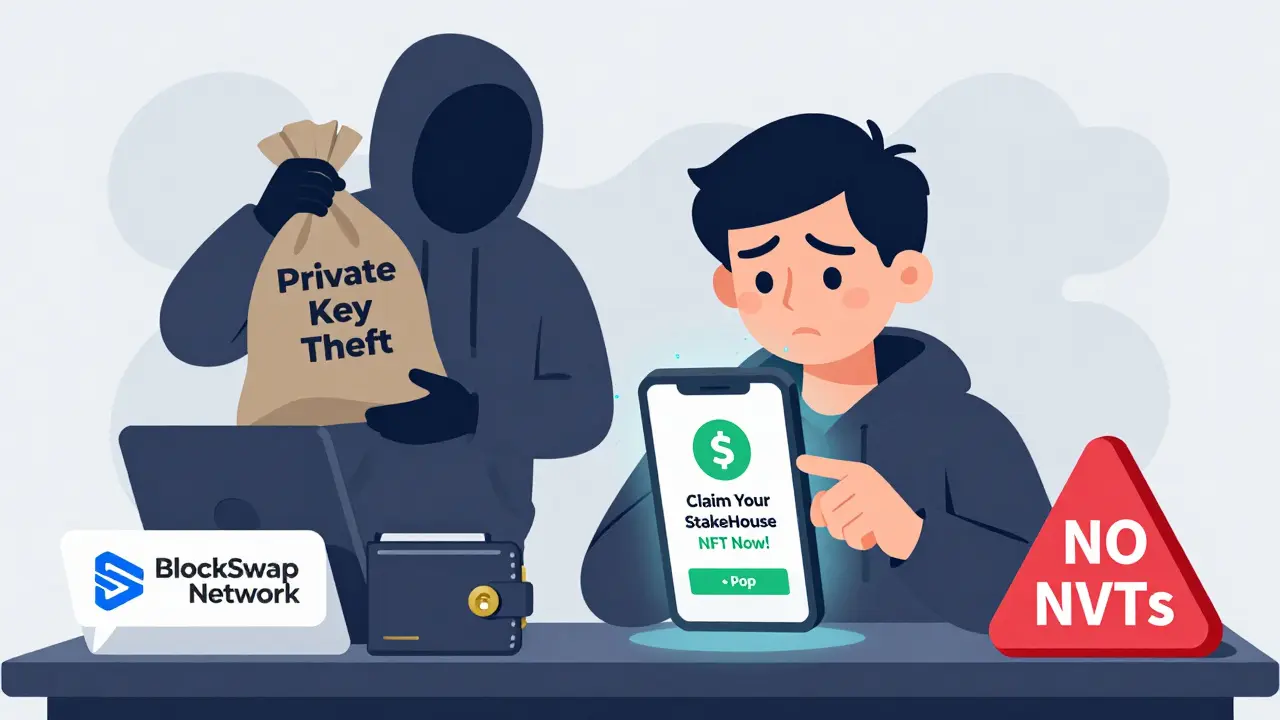
There’s no official StakeHouse NFT airdrop from BlockSwap Network as of December 2025. Despite rumors circulating in Discord servers and Telegram groups, no verified announcement, smart contract, or claim portal has been released by the team. If you’ve seen a post saying "Claim your free StakeHouse NFT now!" - it’s likely a scam. BlockSwap has never distributed NFTs as part of its reward structure, and their entire focus remains on liquid staking infrastructure, not collectibles.
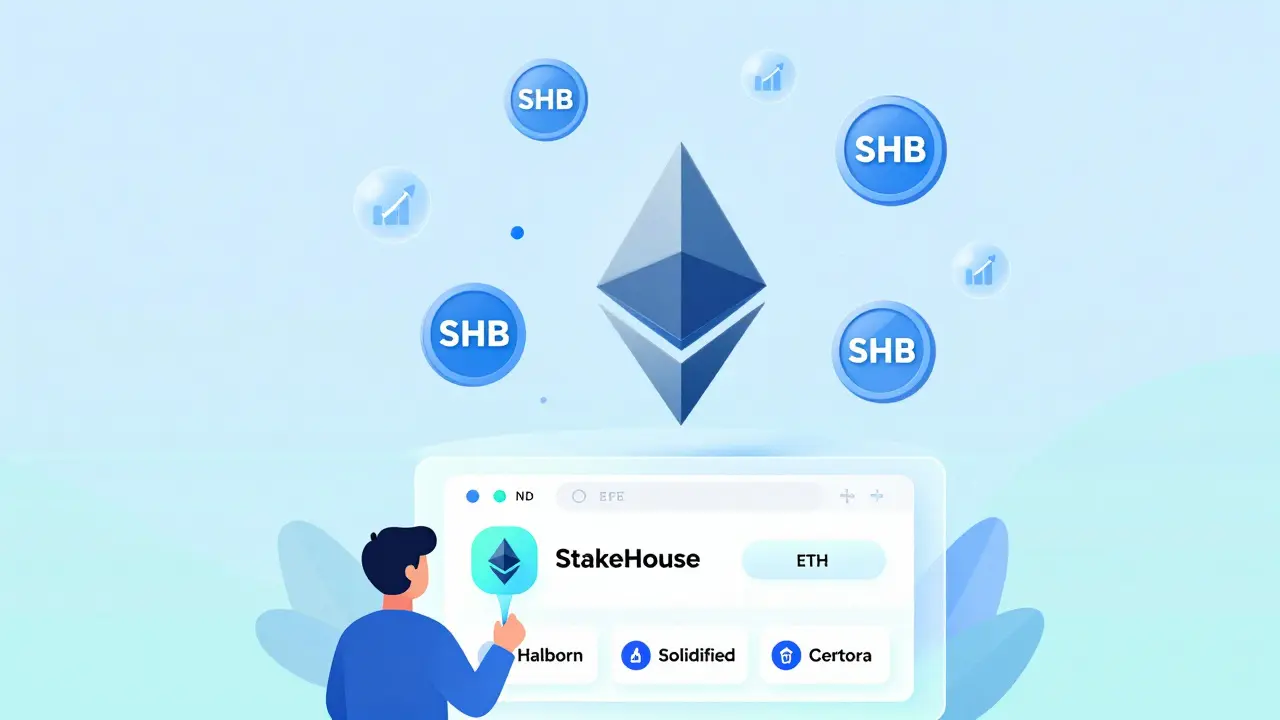
BlockSwap Network is built around CBSN, its native token, and StakeHouse - a decentralized liquid staking protocol that lets users stake ETH and get liquid tokens in return. These liquid tokens, called SHB (StakeHouse Batch), represent 32 ETH deposits and earn staking rewards automatically. But SHB isn’t an NFT. It’s an ERC-20 token, fungible like USDC or DAI. There’s no rarity, no art, no digital collectible attached. The protocol was designed to make Ethereum staking simple, not to create a marketplace for digital art.
So where did the NFT airdrop myth come from? It started with a small $2,500 CBSN token airdrop in 2023, targeting early participants in BlockSwap’s CommunityNet. That was purely token-based - no NFTs involved. Some users misread the announcement, assumed "reward" meant "NFT," and the rumor spread. Now, fake websites are popping up claiming you can claim an NFT by connecting your wallet. They ask for your private key or seed phrase. That’s how you lose everything.
BlockSwap’s actual airdrop history is simple: they distributed CBSN tokens to users who actively tested StakeHouse’s smart contracts during its early stages. These weren’t random giveaways. You had to deposit ETH into their testnet environment, simulate validator operations, and report bugs. Only those who contributed technical feedback got tokens. No sign-up forms. No social media tasks. No Discord roles. Just real, hands-on participation.
As of now, CBSN has a total supply of 5 billion tokens, but zero are in circulation. That’s because the team hasn’t launched the mainnet token yet. The TGE (Token Generation Event) happened in April 2021, but the token remains locked in smart contracts while the protocol undergoes stress testing. The only way to get CBSN is to be part of the active testnet - and even then, you’re not guaranteed anything. It’s not a lottery. It’s a reward for helping build the system.
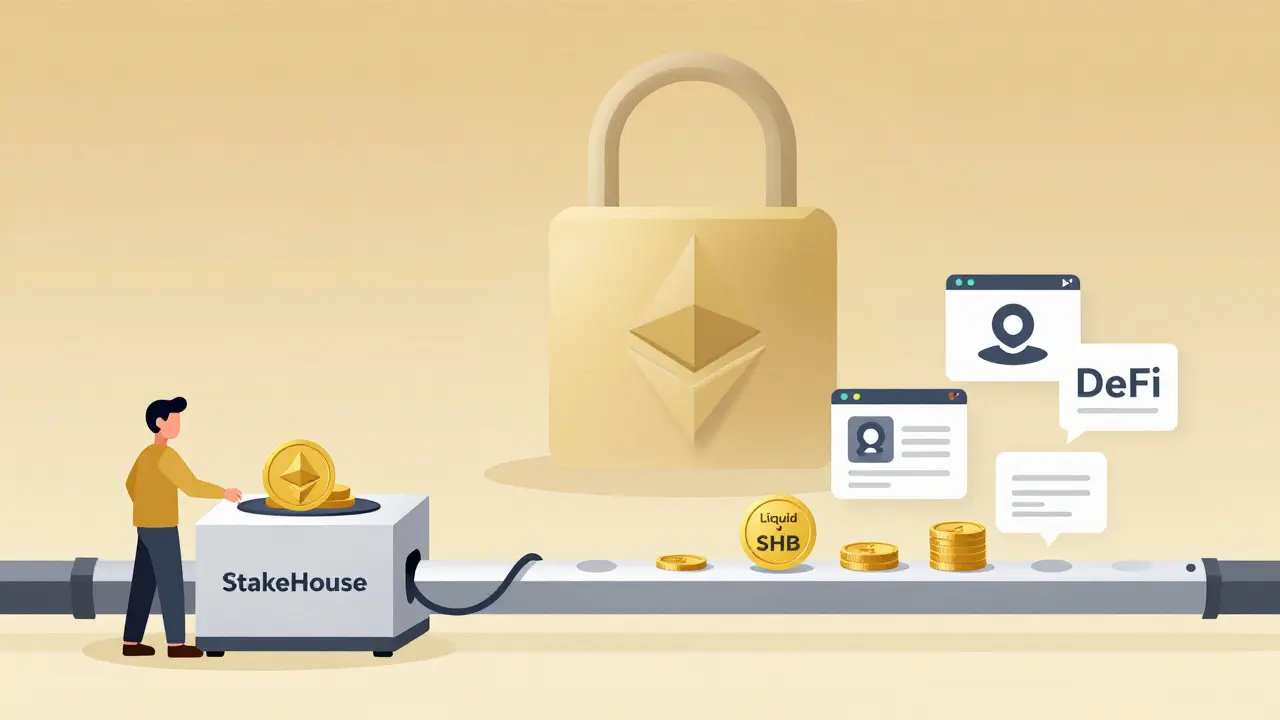
StakeHouse works by turning your staked ETH into a liquid asset. Instead of locking your ETH for months while you wait for staking rewards, StakeHouse gives you an SHB token that tracks your yield in real time. You can trade SHB, lend it, or use it in other DeFi apps - all while your original ETH keeps earning rewards. It’s like having a digital IOU that grows over time. And because it’s built on Ethereum with audits from Halborn, Solidified, and Certora, it’s one of the most secure liquid staking systems available.
BlockSwap doesn’t need NFTs. Their product isn’t about owning digital art - it’s about owning a share of Ethereum’s staking economy. They’ve built OpenSaver, a feature that lets users earn 7% annual yield in USD terms using any native currency, without touching crypto. That’s the real innovation. They’re not chasing hype. They’re solving a real problem: making staking accessible to people who don’t understand validators, key management, or slashing risks.
If you’re looking to participate in BlockSwap’s ecosystem, here’s what actually works:
- Visit the official website: blockswap.network - not a Discord link, not a Twitter bot, not a mirror site.
- Connect your Ethereum wallet (MetaMask, Rabby, etc.) to the StakeHouse dashboard.
- Deposit ETH into the testnet environment. You’ll get SHB tokens in return.
- Monitor your yield. Track your SHB balance. Report any bugs or inconsistencies.
- Wait for official announcements about CBSN token distribution. If it happens, it’ll be on their blog, not a random Telegram channel.
Don’t fall for fake airdrops. They’re not free money - they’re theft in disguise. Scammers know people are desperate for crypto rewards. They’ll copy BlockSwap’s logo, use their whitepaper text, and even mimic their website layout. But here’s the tell: real projects never ask for your seed phrase. Real projects don’t send you links to claim NFTs. Real projects don’t pressure you with countdown timers.
BlockSwap’s roadmap is clear: build reliable infrastructure for Ethereum’s Proof of Stake future. They’ve raised $7 million across four funding rounds. They’ve partnered with major staking infrastructure providers. They’re not chasing trends. They’re building the plumbing behind the next wave of DeFi.
So if you want to get involved, do it right. Engage with the protocol. Understand how liquid staking works. Learn why SHB tokens matter more than NFTs. And wait for official updates - not rumors. The real reward isn’t a picture of a pixelated cat. It’s being part of a system that lets anyone earn ETH staking rewards without running a node.
Right now, the only thing you can claim from BlockSwap is a better understanding of how Ethereum staking works. And that’s worth more than any NFT.
How BlockSwap’s StakeHouse Differs From Other Liquid Staking Protocols
Most liquid staking platforms - like Lido, Rocket Pool, or Coinbase Staking - give you a token that represents your staked ETH. But they’re centralized in key ways. Lido controls most of the validator keys. Rocket Pool requires you to lock up RPL as collateral. Coinbase holds your keys entirely.
BlockSwap’s StakeHouse is different. It’s permissionless. Anyone can run a validator node. Anyone can mint SHB batches. The system uses automated coordination contracts that don’t rely on a central operator. Your ETH is never transferred to a third party. You keep control. The protocol just simulates the staking process and issues a token that mirrors your rewards.
That’s why SHB tokens are valuable. They’re not just IOUs. They’re proof of participation in a fully decentralized system. And because they’re built for composability, you can use them in other DeFi apps - lending, borrowing, yield farming - without ever unstaking your ETH.
Why CBSN Has No Circulating Supply Yet
Even though the TGE happened in 2021, CBSN tokens are still locked. Why? Because BlockSwap is still testing. They’re running real-world stress tests using SHB tokens to simulate validator behavior under load. They’re checking how the system reacts when 10,000 users try to mint batches at once. They’re measuring gas costs, latency, and failure rates.
Releasing CBSN too early would risk the entire ecosystem. If the token launched and the protocol crashed under pressure, the value would collapse. That’s why they’re taking their time. This isn’t a pump-and-dump project. It’s infrastructure. And infrastructure needs to be bulletproof before it goes live.
What Happens When CBSN Finally Launches
When CBSN enters circulation, it won’t be available on exchanges. It’ll be distributed directly to participants who helped test the protocol. The team has said they’ll use a merit-based system - more participation = more tokens. No airdrop bots. No social media contests. Just proof of contribution.
There’s no public schedule for the launch. But if you’re active in CommunityNet, you’ll be the first to know. The team posts updates on their GitHub, their blog, and their official Discord. That’s it.
Is BlockSwap Safe?
Yes - but only if you use the official channels. The protocol has been audited by Halborn, Solidified, Runtime Verification, and Certora. These are top-tier security firms that also audit Chainlink, Uniswap, and Aave. Their reports are public. You can read them.
But safety ends at the door of your wallet. If you click a link from a stranger, connect your wallet to a fake site, or enter your seed phrase anywhere - you’re on your own. No audit can protect you from that.
Can You Still Join StakeHouse?
Yes. The CommunityNet is still active. You can deposit ETH, mint SHB tokens, and help test the system. You won’t get rich. You won’t get an NFT. But you’ll get something better: a front-row seat to the future of Ethereum staking.
What to Do If You’ve Already Lost Funds
If you sent ETH or tokens to a fake StakeHouse airdrop site, there’s no recovery. Blockchain transactions are irreversible. Report the scam to the platform you used (MetaMask, Trust Wallet, etc.) and warn others in your community. BlockSwap doesn’t have a support team for scams - they don’t even know about them until you report them.
Where to Find Official BlockSwap Updates
- Website: blockswap.network
- Blog: blog.blockswap.network
- GitHub: github.com/blockswap-network
- Discord: discord.gg/blockswap (only this link - verify it on their website)
Never trust links from Twitter, Telegram, or Reddit. Always go to the official site first.