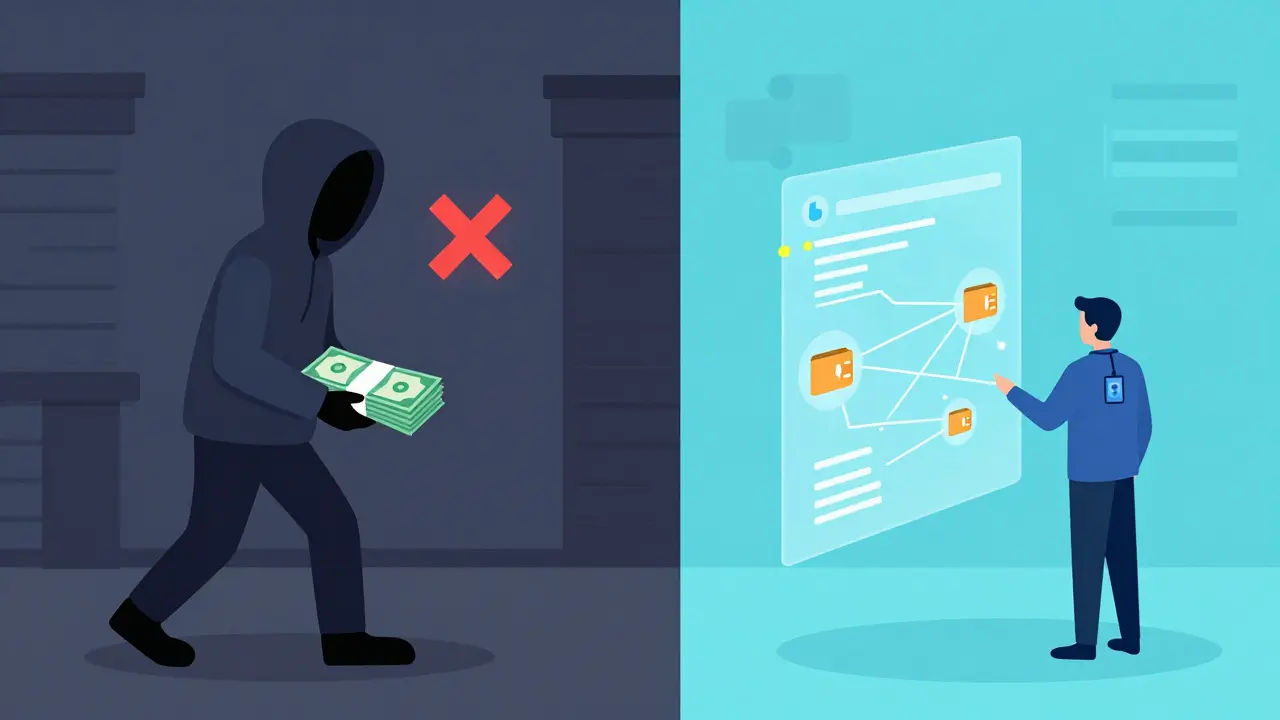
You might think that sending Bitcoin or Ethereum is like passing a stack of cash in a dark alley-anonymous and untraceable. But if you believe that, you are walking into a trap. Every transaction on public blockchains is recorded forever. It is an open ledger, visible to anyone who knows how to look. For law enforcement and financial regulators, this transparency is not a bug; it is their greatest weapon.
Today, authorities do not just guess who is behind a wallet address. They use sophisticated blockchain forensics is a specialized investigative discipline that enables agencies to trace, analyze, and attribute cryptocurrency transactions to identify illicit activity and enforce sanctions compliance. This technology has evolved from manual spreadsheet tracking to AI-driven systems that can spot complex money laundering patterns in seconds. If you are trying to evade international sanctions using crypto, the clock is ticking, and the net is closing fast.
The End of Anonymity: How Tracing Works
To understand why sanctions evasion is so hard today, you have to look at the basic architecture of the blockchain. When you send funds, they move from one digital wallet to another. Each step leaves a permanent mark. In the early days of Bitcoin, investigators had to manually review thousands of transactions to find connections. It was slow, tedious work.
Consider the Helix case, which began in 2016. Larry Dean Harmon operated a mixing service designed to obscure the origin of Bitcoin. Investigators had to painstakingly track commission payments across the blockchain to link the anonymous operator to his real identity. It took years. Harmon eventually pleaded guilty to conspiracy to launder monetary instruments and received a three-year prison sentence in November 2024. That case was a turning point. It proved that even "mixers" could be cracked with enough persistence.
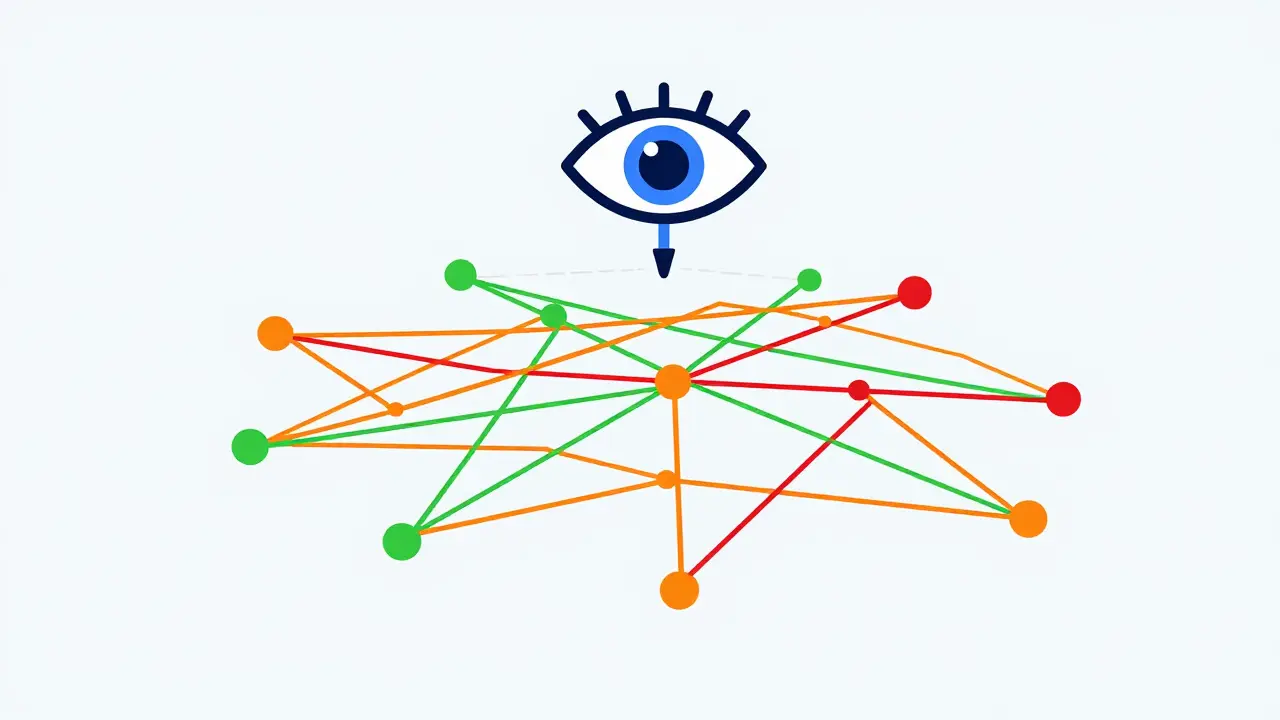
Today, we do not rely on persistence alone. We rely on automation. Modern platforms use graph theory and machine learning to visualize fund flows instantly. Instead of looking at single transactions, analysts see entire ecosystems. They can watch how funds split, merge, and hop between different cryptocurrencies. This shift from manual review to automated pattern recognition means that what once took months now takes minutes.
Detecting Complex Laundering Patterns
Criminals know they are being watched, so they get creative. They do not just send money directly from Wallet A to Wallet B. They use techniques like "fan-in/fan-out," where many small deposits are consolidated and then scattered again. They use "bipartite" structures to create layers of separation. These methods are designed to confuse human eyes.
However, new algorithms are catching up. Recent research introduced the MPOCryptoML method, an end-to-end system designed specifically for identifying multiple laundering patterns in off-chain operations. This system uses a multi-source Personalized PageRank (PPR) algorithm. Think of it as a heat map that highlights suspicious paths across cross-platform transaction graphs.
| Metric | Traditional Baselines | MPOCryptoML Approach | Improvement |
|---|---|---|---|
| Precision | Standard Detection Rates | Enhanced Accuracy | +9.13% |
| Recall | Missed Complex Patterns | Broad Coverage | +10.16% |
| F1-Score | Average Performance | Optimized Balance | +7.63% |
| Accuracy | Baseline Systems | High-Fidelity Results | +10.19% |
This data comes from testing against real-world datasets from Ethereum fraud detection and other major networks. The improvement is significant. By ranking suspects based on behavioral and topological features, these tools solve the scalability problem. Law enforcement no longer gets overwhelmed by noise; they get clear signals.
Sanctions Evasion: The New Battleground
One of the most critical applications of this technology is detecting sanctions evasion. Countries impose economic sanctions to restrict trade with specific entities or regions. Criminals try to bypass these rules using cryptocurrency because it crosses borders without traditional banking channels.
TRM Labs is a leading provider of blockchain intelligence solutions that helps organizations identify, trace, and block sanctioned activity in real-time. They have identified five common techniques used by illicit actors to circumvent sanctions. While they keep the specific details private to prevent abuse, the general strategies involve layering transactions through decentralized exchanges, using privacy coins, or routing funds through jurisdictions with weak regulatory oversight.
The landscape is evolving rapidly. Compliance programs must stay ahead of these circumvention techniques. This requires more than just checking a blacklist. It requires understanding the context of every transaction. Is this wallet associated with a known sanctioned entity? Is it receiving funds from a high-risk jurisdiction? Automated systems flag these risks instantly, allowing businesses to freeze assets before damage occurs.
Who Uses Blockchain Forensics?
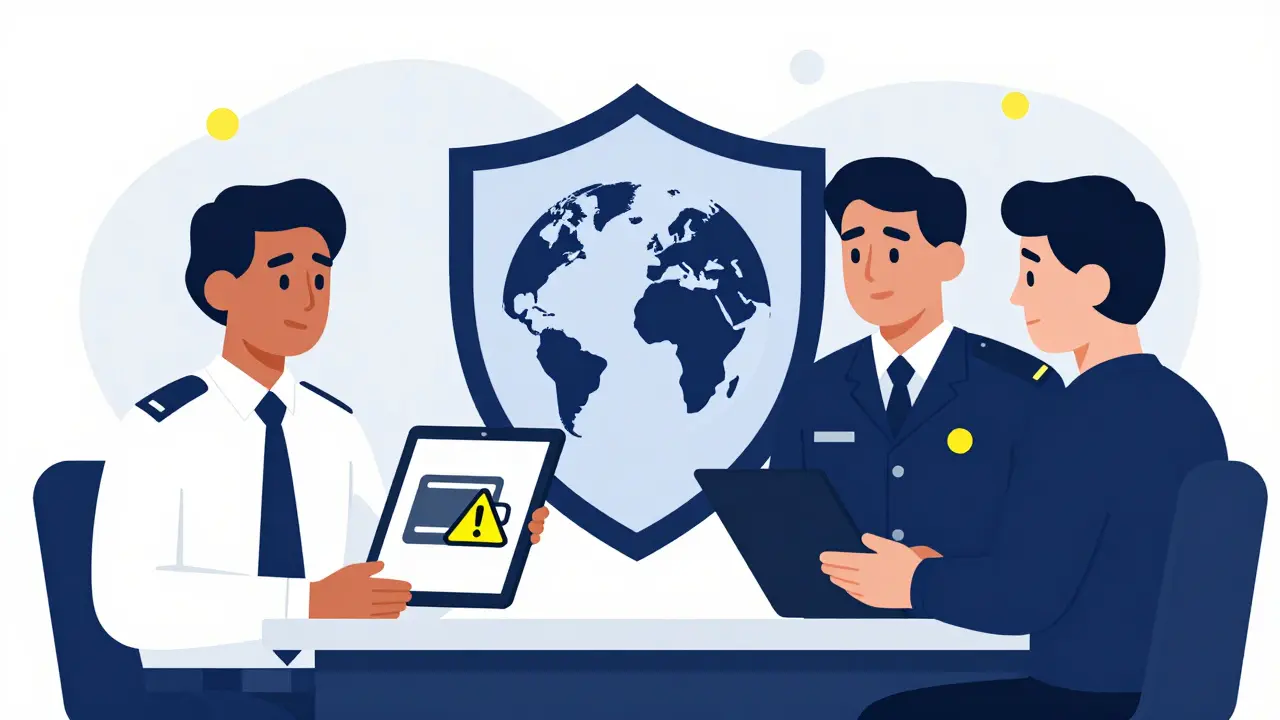
You might assume only police use these tools. In reality, the ecosystem is much broader. Three main groups drive the demand for forensic capabilities:
- Law Enforcement Agencies: They trace illicit funds, attribute criminal activity to specific threat actors, and build evidentiary case files. They also identify the use of privacy-enhancing tools like Wasabi Wallet or Tornado Cash.
- Cryptocurrency Businesses: Exchanges like Bitget use platforms such as Elliptic to screen wallets. They need to maintain exchange integrity by flagging high-risk transactions. This protects them from regulatory fines and reputational damage.
- Regulatory Bodies: They monitor systemic risks tied to illicit flows. They oversee the effectiveness of Virtual Asset Service Provider (VASP) compliance programs. They also coordinate with law enforcement on high-impact investigations.
Take the Internet Watch Foundation (IWF). They identify child sexual abuse imagery on websites that profit from such content. By collaborating with forensic vendors, they can track the cryptocurrency payments made by offenders. This disrupts the financial incentive for criminals. It shows that blockchain forensics extends far beyond simple money laundering; it tackles some of the most serious crimes imaginable.
The Role of Privacy Tools and Mixers
Privacy tools are often misunderstood. Some users view them as essential for security. Others see them as shields for crime. The truth lies in the middle, but the regulatory stance is clear. If you use a mixer to hide the source of funds derived from illegal activities, you are engaging in money laundering.
Investigative processes typically begin with traditional techniques. An undercover agent might transfer bitcoin from a darknet market through a mixing service. Investigators then follow the commission payment trail across the blockchain to exchanges and payment processors. The pseudo-anonymous nature of crypto creates challenges, but advanced analytics illuminate cross-chain trails.
Services like Tornado Cash have been sanctioned by the U.S. Treasury Department. Using them now carries severe legal risks. Forensic tools can detect when funds interact with these protocols. Even if the direct link is obscured, the statistical probability of illicit origin remains high. Algorithms assign risk scores based on this interaction. High scores trigger automatic freezes or reports to authorities.
Implementation Challenges for Organizations
For companies wanting to integrate these solutions, the path is not easy. It requires significant technical expertise. You cannot just plug in a software tool and walk away. You need specialized compliance teams trained in blockchain analysis.
Providers like Elliptic offer tailored resources and training programs. They help upskill compliance and law enforcement personnel. The learning curve involves understanding both traditional financial crime investigation and the technical aspects of blockchain protocols, smart contracts, and mixing services.
Enterprise-level deployments take months. They require configuration, integration with existing core banking systems, and ongoing maintenance. The complexity varies by organization size. However, the cost of non-compliance is far higher. Fines for failing to report suspicious transactions can reach millions of dollars. Jail time for executives is also a possibility.
Future Trends: Cross-Chain and Real-Time Monitoring
The future of blockchain forensics is cross-chain. Criminals do not stick to one network. They move from Bitcoin to Ethereum, then to Solana, and perhaps to stablecoins on Layer 2 solutions. Forensic tools must follow them seamlessly.
New integrations, such as those for the Internet Computer Protocol (ICP), enable institutions to manage emerging digital assets confidently. As more chains launch, the need for unified analytics grows. The goal is real-time monitoring. Instead of reviewing transactions after they settle, systems will flag risks before confirmation.
The permanent nature of blockchain records ensures that forensic capabilities will only improve. Patterns become clearer with more data. Relationships between wallets are mapped with greater precision. For those trying to hide, the walls are closing in. For legitimate businesses, these tools provide the safety net needed to operate in a global digital economy.
Can I truly remain anonymous on the blockchain?
No. While addresses do not contain your name, they are linked to your behavior. Once you connect your wallet to a centralized exchange or make a purchase with your real identity, all past and future transactions can potentially be attributed to you. Blockchain forensics links these data points together.
What is the difference between blockchain forensics and standard auditing?
Standard auditing checks if books balance and procedures are followed. Blockchain forensics investigates specific transactions to uncover hidden relationships, trace illicit funds, and identify criminal networks. It is an investigative tool, not just a compliance check.
How do authorities detect sanctions evasion?
Do mixers like Tornado Cash still work to hide funds?
They obscure the immediate path, but they do not erase the history. Forensic tools flag interactions with mixers as high-risk. If funds enter a mixer and exit to a regulated exchange, the exchange will likely freeze the account due to the high suspicion of illicit origin.
Why is cross-chain analysis important?
Criminals move funds across different blockchains to break the trail. Cross-chain analysis connects these disparate networks, allowing investigators to see the full journey of funds from origin to destination, regardless of how many hops occur.
What should a crypto business do to comply with regulations?
Implement robust KYC (Know Your Customer) and AML (Anti-Money Laundering) procedures. Integrate blockchain analytics platforms to screen wallets in real-time. Train staff to recognize suspicious patterns and report them promptly to relevant authorities.