If you are looking into the world of digital assets, you might have stumbled upon Vodra (VDR), a utility token designed to revolutionize how content creators get paid. Unlike many cryptocurrencies that focus solely on speculation, VDR has a specific job: fixing the broken payment systems for streamers, vloggers, and educators. Launched in March 2021, this project targets the massive gap between creators and their audiences, aiming to cut out the middlemen who usually take a large cut of the earnings.
By now, you might be wondering if this is just another meme coin or if it has actual use. The short answer is that it is built for utility. It operates on the Ethereum blockchain using the ERC-20 standard, but it uses bridges to keep costs low. This article breaks down exactly what VDR is, how it works, and whether it fits into your portfolio or creator toolkit.
The Problem with Traditional Creator Platforms
Before understanding the solution, you need to see the problem. Platforms like YouTube and Twitch dominate the streaming space, but they come with heavy restrictions. Most of the revenue on these platforms goes to the platform itself, not the creator. If you are a small streamer, you might find yourself in the "unpartnered" zone, where you earn nothing despite having an active audience.
Data suggests that between 45% and 65% of active channels on major platforms operate without official partnership status. These creators cannot monetize through ads or subscriptions effectively. They rely on tips, but even tipping services charge fees. Vodra steps in to remove these barriers. It allows for direct compensation where the audience sends value straight to the creator without a 30% platform fee or algorithmic gatekeeping.
How Vodra (VDR) Works
The core function of the Vodra platform is simple: it is a decentralized donation system. Instead of using PayPal or credit cards which charge transaction fees, users buy VDR tokens and send them directly to a creator's wallet address. This process is peer-to-peer.
The platform supports several key utilities that make the token valuable beyond just holding it:
- Zero-Fee Donations: When you donate VDR, the network handles the transfer without the high overhead costs of traditional payment processors.
- Governance Participation: Token holders can vote on platform decisions, ensuring the community has a say in the future direction.
- Project Funding: Creators can use the token for crowdfunding specific projects, like a new gaming setup or an educational course.
- NFT Rewards: The ecosystem includes exclusive Non-Fungible Tokens that supporters can unlock, adding a layer of gamification to the donation process.
This creates a direct participation model. The audience isn't just watching; they are investing in the creator's success directly. This shifts the power dynamic away from big tech companies and back to the individuals producing the content.
Technical Architecture and Blockchain Integration
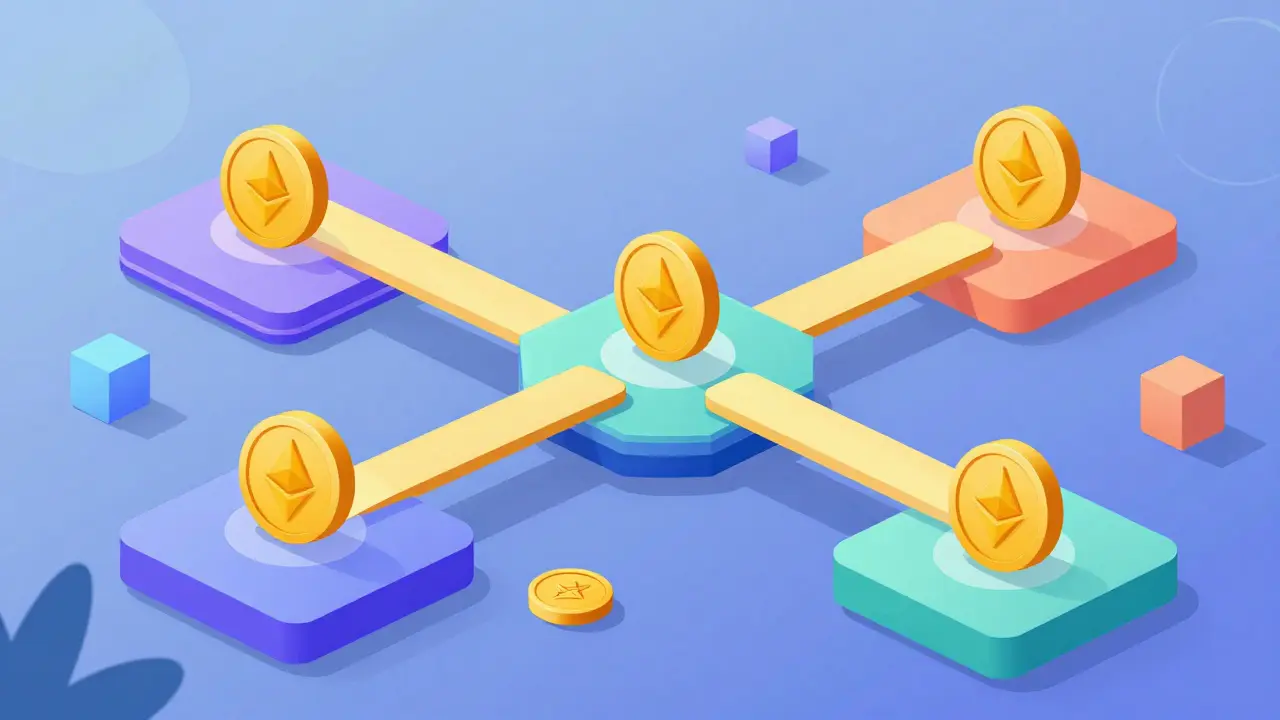
Technology is the backbone of any crypto project. Vodra was initially deployed on the Ethereum network. While Ethereum is secure, transaction fees (gas fees) can be expensive, which is a dealbreaker for small donations. To solve this, the project integrated a Polygon Proof-of-Stake bridge.
This bridge allows users to transfer VDR tokens to the Matic/Polygon blockchain. Polygon is a Layer-2 scaling solution that offers faster transactions and negligible fees. This means a viewer can send $5 worth of VDR to a streamer without worrying about paying $10 in gas fees to do it. The technical setup ensures that the token remains compatible with standard Ethereum wallets while offering the speed and cost benefits of Polygon.
Looking at the roadmap and recent developments, the project has also moved toward incorporating Solana for payment capabilities. Solana is known for its high throughput and low latency. Adding Solana-based payments expands the ecosystem, allowing for even faster settlement times. This multi-chain approach shows a commitment to accessibility, ensuring that creators and fans aren't locked into a single network that might be slow or expensive.
Tokenomics and Supply Details
Understanding the supply and distribution of a token is crucial for assessing its long-term value. Vodra has a fixed supply model, which is generally positive for scarcity. The total supply was set at 2 billion tokens at launch. Unlike Bitcoin or other coins that are mined, VDR is non-mineable and non-premined. This means there is no inflation mechanic that will suddenly flood the market with new tokens.
| Category | Amount | Percentage |
|---|---|---|
| Total Supply | 2,000,000,000 | 100% |
| Circulating Supply (Initial) | 22,000,000 | 1.10% |
| Private/Pre-sale | 155,000,000 | 7.75% |
| Public Sale | 20,000,000 | 1.00% |
The initial distribution included a private sale allocation of 155 million tokens and a public sale of 20 million tokens. According to data from tracking sites like CoinGecko, the total supply stands at roughly 1,999,999,794 VDR tokens. The fully diluted valuation (FDV) has fluctuated based on market conditions, but the fixed cap ensures predictability for long-term holders. There is no hidden inflation, which is a common pitfall in many other utility tokens.
Where to Trade and Market Performance
If you are interested in acquiring VDR, you need to know where it is listed. The token is primarily available on specific cryptocurrency exchanges. Major platforms like Gate.io and Uphold have hosted the token. On Gate.io, you can typically find USDT trading pairs, which allows for stablecoin swaps.
However, liquidity is a factor to consider. Trading volume can vary significantly. At times, the 24-hour trading volume has been reported around $15,000 to $20,000 USD. This indicates that while the token is tradable, it is not as liquid as major coins like Bitcoin or Ethereum. You should be prepared for potential slippage if you are trying to move large amounts quickly.
Price history shows significant volatility, which is standard for smaller cap assets. The all-time high was recorded around November 2021, reaching approximately $0.10 per token. Since then, the price has corrected and stabilized at lower levels, often trading in the range of $0.002 to $0.007 depending on the exchange and market sentiment. This variance across exchanges like Crypto.com and LiveCoinWatch highlights the importance of checking multiple sources before executing a trade.
Adoption and Ecosystem Growth
Utility tokens live or die by their adoption. Vodra has managed to attract over 2,000 livestream creators to the platform since its inception. This is a tangible metric that shows the project is not just a whitepaper idea. These creators use the platform to accept direct support, bypassing the restrictions of traditional streaming sites.
The platform is agnostic, meaning creators don't have to leave their favorite streaming service. They can stream on Twitch, YouTube, or anywhere else, and still accept VDR donations through the Vodra interface. This flexibility is a major selling point. It solves the "multi-streaming" problem where creators want to be everywhere but don't want to manage multiple payment gateways.
Furthermore, the integration of NFT rewards adds a layer of exclusivity. Supporters who donate can receive unique digital assets. This encourages higher engagement because the donation becomes a collectible item, not just a transaction. It turns a passive viewer into an active stakeholder in the creator's community.
Risks and Considerations for Investors
Like any cryptocurrency investment, there are risks. The token ranks lower in the overall market, often sitting outside the top 2,000 by market capitalization. This lower ranking means it is more susceptible to market swings and has less institutional interest than top-tier assets. Liquidity depth can be thin, meaning large buy or sell orders might impact the price significantly.
Additionally, the project's success is tied to the broader creator economy. If major streaming platforms change their policies or if the utility of the platform declines, the token's value could be affected. It is essential to do your own research and understand that this is a high-risk, high-reward asset compared to established blue-chip cryptocurrencies.
Conclusion on Vodra's Utility
Vodra represents a specific niche in the crypto world: the creator economy. It is not designed to be the next Bitcoin; it is designed to be a tool for streamers and fans. The combination of Ethereum security, Polygon speed, and Solana integration creates a robust technical foundation. The fixed supply and non-inflationary model provide a clear economic structure.
For creators, it offers a way to monetize without middlemen. For investors, it offers exposure to the growing market of digital content monetization. Whether you are a fan looking to support your favorite streamer or an investor analyzing utility tokens, VDR provides a concrete use case that goes beyond simple speculation. The platform continues to operate and evolve, maintaining its position as a functional solution for the decentralized content space.
What is the main purpose of the Vodra (VDR) token?
The main purpose of the Vodra token is to facilitate direct donations from audiences to content creators. It aims to eliminate high fees and platform restrictions found on sites like YouTube and Twitch, allowing for zero-fee transfers and direct compensation.
Which blockchain does Vodra operate on?
Vodra is an ERC-20 token originally deployed on the Ethereum blockchain. It utilizes a bridge to the Polygon network to reduce transaction fees and is integrating Solana for faster payment settlements.
Where can I buy VDR tokens?
VDR tokens are primarily available on cryptocurrency exchanges such as Gate.io and Uphold. You can typically trade them against USDT or other major cryptocurrencies on these platforms.
Is Vodra a mineable cryptocurrency?
No, Vodra is non-mineable and non-premined. The total supply is fixed at 2 billion tokens, ensuring there is no inflation from new mining activities.
How does Vodra benefit content creators?
Creators benefit by receiving direct payments without platform fees. It allows unpartnered creators to monetize their audience, provides governance rights, and enables the distribution of exclusive NFT rewards to supporters.
Next Steps for Creators and Investors
If you are a content creator, the first step is to set up a compatible wallet that supports ERC-20 and Polygon tokens. You can then register on the Vodra platform to generate your donation address. This allows you to display your address on your streaming overlay or social media bio. Ensure you understand the tax implications of receiving cryptocurrency donations in your jurisdiction.
For investors, start by checking the current liquidity on exchanges like Gate.io. Look at the trading volume to ensure you can enter and exit positions without significant slippage. Consider the project's long-term roadmap, specifically the Solana integration, as a potential growth driver. Always diversify your portfolio and never invest more than you can afford to lose, especially with assets in the mid-to-low cap range.
The creator economy is shifting toward decentralization. Tools like Vodra are paving the way for a more equitable internet where value flows directly to the people creating the content. Whether you are here to support a streamer or analyze the token, understanding the mechanics of VDR gives you a clearer picture of this evolving landscape.