Have you stumbled upon the ticker Lumoz (MOZ) and wondered if it’s the next big thing or a total red flag? In June 2026, Lumoz sits in an interesting, albeit precarious, spot in the cryptocurrency market. It trades on major platforms like Gate Exchange and Bybit, yet lacks the clear project narrative that usually defines successful digital assets. If you are looking at your portfolio and seeing this token, you need to know exactly what you are holding before you decide to keep it or sell it.
This guide cuts through the noise. We will look at the hard data: where Lumoz trades, how much it costs, who backs it, and why there is so little information about its actual purpose. You’ll learn how to assess the risks of low-cap tokens and whether Lumoz fits into a diversified crypto strategy.
The Basics: What Is Lumoz (MOZ)?
At its core, Lumoz is a cryptocurrency token identified by the ticker symbol MOZ. Unlike Bitcoin, which has a decentralized network of miners securing transactions, or Ethereum, which hosts thousands of applications, Lumoz appears primarily as a tradable asset rather than a platform with widespread utility-at least based on publicly available data as of mid-2026.
Here is the snapshot of Lumoz’s fundamental metrics:
- Token Symbol: MOZ
- Blockchain: Arbitrum One (confirmed via Uniswap V3 listings)
- Total Supply: 10 Billion MOZ
- Circulating Supply: Approximately 1.1 to 1.4 Billion MOZ
- Market Rank: #1054 (as reported by Coinbase data)
- All-Time High (ATH): ~$0.08 USD
The most striking aspect of Lumoz is the gap between its trading activity and its public documentation. Major aggregators like CoinGecko and CoinMarketCap list its price and volume but offer no whitepaper links, team profiles, or technical roadmaps. This lack of transparency is common among micro-cap tokens but serves as a significant warning sign for investors seeking long-term value.
Lumoz Price Performance and Market Data (June 2026)
Price action tells part of the story. As of May and early June 2026, Lumoz has experienced significant volatility and a steep decline from its peak values. Understanding these numbers helps you gauge market sentiment and liquidity health.
| Metric | Value / Status | Source Context |
|---|---|---|
| Current Price Range | $0.0012 - $0.0015 USD | Varies by exchange (Bybit, Gate, KuCoin) |
| 24-Hour Volume | ~$361,000 - $4.4M EUR | High discrepancy between sources; Gate dominates |
| 7-Day Change | -2.6% to -12.5% | Downward trend across major trackers |
| Distance from ATH | ~98.5% Down | Fell from ~$0.08 to current levels |
| Market Cap | $270K - $30M USD | Wide variance due to supply/price data inconsistencies |
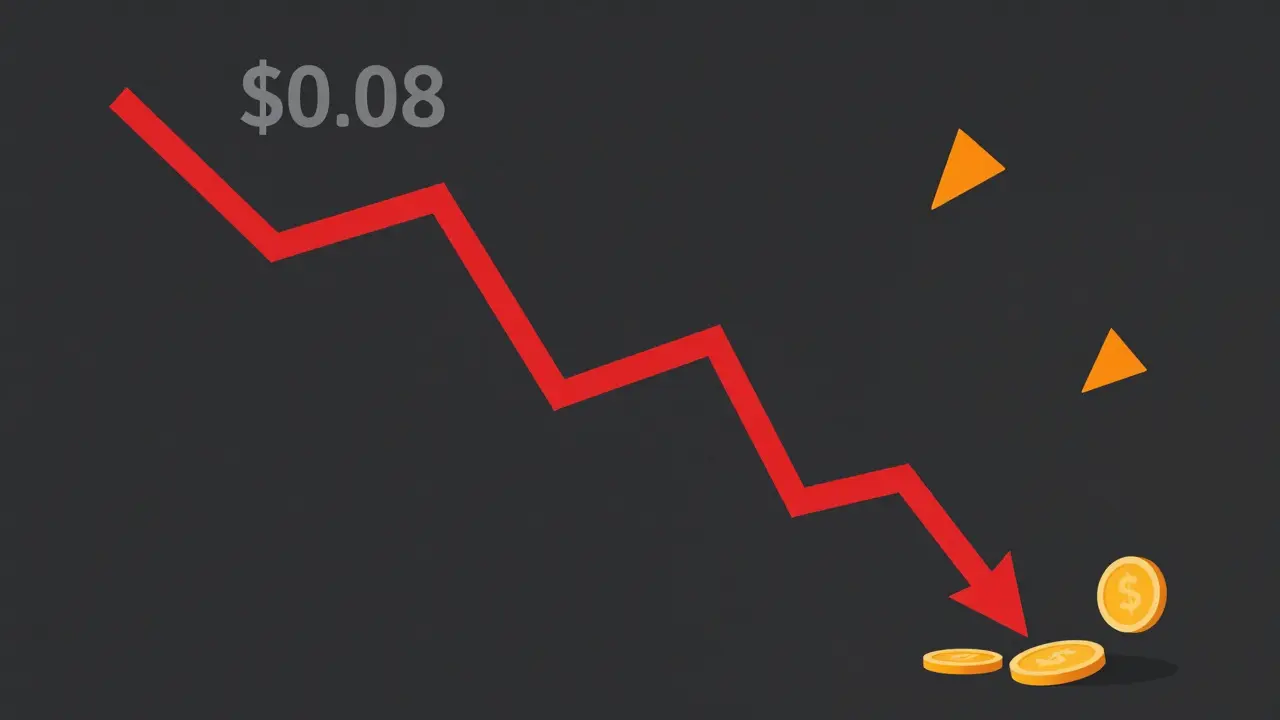
Notice the massive drop from its all-time high of roughly $0.08. A 98%+ decline means early investors have likely exited, leaving retail traders to pick up the pieces. The price currently hovers around one-tenth of a cent ($0.0012). While this sounds cheap, remember that the total supply is 10 billion. For the price to return to $0.08, the market cap would need to explode to nearly $800 million-a monumental task for a token with limited visibility.
Where to Buy and Trade Lumoz
If you want to trade Lumoz, you have options, but they come with caveats. Liquidity is concentrated, meaning you might struggle to sell large amounts without affecting the price.
Centralized Exchanges (CEXs):
- Gate Exchange: This is the primary hub for Lumoz trading, accounting for over 70% of reported volume. If you are buying or selling significant amounts, Gate is likely your best bet for execution speed.
- Bybit: Offers MOZ/USDT pairs with decent depth compared to smaller venues. Spreads are tight (~0.4%), making it efficient for small trades.
- KuCoin: Lists Lumoz but notes it is "officially unsupported." This means while you can trade it, KuCoin may delist it without warning or provide minimal customer support for issues related to the token.
- Inactive Venues: Platforms like BitMart, BingX, and Phemex show zero or near-zero order book depth. Avoid trading here; you risk getting stuck with unsold tokens or facing anomalous pricing errors.
Decentralized Exchanges (DEXs):
You can also swap Lumoz on Uniswap V3, specifically on the Arbitrum One network. However, liquidity is extremely thin (under $50 in 24-hour volume). Slippage will be high, and gas fees on Arbitrum, while low, could eat into profits for small trades. DEX trading is only recommended for advanced users comfortable managing wallet connections and smart contract interactions.
The Missing Piece: Project Fundamentals and Utility
Here is the uncomfortable truth: nobody really knows what Lumoz *does*. In the crypto world, utility drives long-term value. Does Lumoz power a gaming ecosystem? Is it a governance token for a DeFi protocol? Does it represent real-world assets?
As of June 2026, public records are silent. There is no widely recognized whitepaper, no active development team social media presence, and no announced partnerships. This absence of information creates several risks:
- No Roadmap: Without a plan, there is no reason for the price to appreciate organically.
- Regulatory Vulnerability: Securities regulators often target tokens that promise returns without underlying utility. A token with no clear use case is easier to classify as a security.
- Community Weakness: Successful cryptos build communities. Lumoz lacks visible forums, Discord servers, or Twitter engagement metrics that signal grassroots support.
This doesn’t mean Lumoz is a scam outright-it trades on reputable exchanges-but it behaves like a speculative shell. Speculative shells rely entirely on hype and new buyers entering the market. Once the hype dies, the price collapses, as seen in its journey from $0.08 to $0.0012.
Risk Assessment: Should You Invest in Lumoz?
Investing in low-cap, low-info tokens like Lumoz is akin to buying lottery tickets. You might win big if a sudden catalyst emerges (e.g., a surprise partnership or listing on Binance), but the odds are heavily stacked against you. Let’s break down the specific risks.
1. Liquidity Risk
With most volume on Gate Exchange and shallow order books elsewhere, selling large positions can cause slippage. If you try to sell $10,000 worth of MOZ on a day with low volume, you might crash the price locally, ending up with far less cash than expected.
2. Data Discrepancy Risk
Notice how CoinGecko reports a market cap of ~$270k while Coinbase shows ~$30M? This massive inconsistency suggests data feed errors or manipulated reporting. Relying on inaccurate data can lead to poor investment decisions. Always cross-reference multiple sources.
3. Delisting Risk
KuCoin’s “unsupported” status is a precursor to delisting. If major CEXs remove Lumoz, trading becomes restricted to DEXs with poor liquidity, effectively trapping your capital.
Who Is Lumoz For?
- Not For: Long-term holders, conservative investors, or those seeking stable yields.
- Potentially For: Day traders who understand technical analysis, can monitor order books in real-time, and are willing to lose their entire position in pursuit of short-term volatility gains.

How to Safely Store Lumoz Tokens
If you decide to hold Lumoz despite the risks, proper storage is non-negotiable. Since Lumoz operates on the Arbitrum One network, you need a wallet compatible with EVM (Ethereum Virtual Machine) chains.
- Hot Wallets (For Active Trading): Use MetaMask or Trust Wallet. Connect these to Arbitrum One to receive and send MOZ. Keep only small amounts here.
- Hardware Wallets (For Security): Ledger or Trezor devices support Arbitrum. Transfer your tokens to a hardware wallet address if you plan to hold long-term. This protects against exchange hacks.
- Avoid Paper Wallets: While secure, paper wallets are difficult to manage for ERC-20/Arbitrum tokens unless you are technically proficient in importing private keys back into a software interface later.
Never share your seed phrase. Never click links in DMs claiming to be Lumoz support. Legitimate projects do not ask for your private keys.
Conclusion: Proceed With Extreme Caution
Lumoz (MOZ) is a highly speculative asset with significant red flags. Its 98% drop from all-time highs, lack of fundamental utility, and inconsistent market data make it a dangerous play for most investors. While it offers trading opportunities on platforms like Gate Exchange and Bybit, these are purely driven by short-term volatility rather than project growth.
If you are curious about crypto investments, consider allocating funds to established assets with transparent teams, active development, and clear use cases. Treat Lumoz as entertainment money-only invest what you are prepared to see vanish completely. Stay informed, check multiple data sources, and prioritize safety over speculation.
Is Lumoz (MOZ) a good investment in 2026?
Lumoz is considered a high-risk, speculative asset. With a 98% decline from its all-time high and no clear utility or development roadmap, it lacks the fundamentals for long-term growth. It may suit aggressive day traders but is generally unsuitable for conservative investors.
Where can I buy Lumoz (MOZ) tokens?
You can trade Lumoz on centralized exchanges like Gate Exchange (highest volume), Bybit, and KuCoin. It is also available on Uniswap V3 via the Arbitrum One network, though liquidity is very low on the DEX.
Why is there so little information about Lumoz?
Public data aggregators do not list a whitepaper, team, or use case for Lumoz. This opacity is common among micro-cap tokens and suggests the project may lack active development or a clear value proposition, increasing investment risk.
What blockchain does Lumoz use?
Lumoz operates on the Arbitrum One blockchain. This allows for faster and cheaper transactions compared to the main Ethereum network, and it is compatible with standard EVM wallets like MetaMask.
Is Lumoz listed on Binance or Coinbase?
No, Lumoz is not listed on major tier-one exchanges like Binance or Coinbase Centralized Exchange. It is primarily traded on Gate Exchange, Bybit, and KuCoin. Coinbase tracks its price but does not facilitate direct trading.
What is the maximum supply of Lumoz?
The maximum total supply of Lumoz (MOZ) is 10 billion tokens. As of mid-2026, approximately 1.1 to 1.4 billion tokens are in circulation.