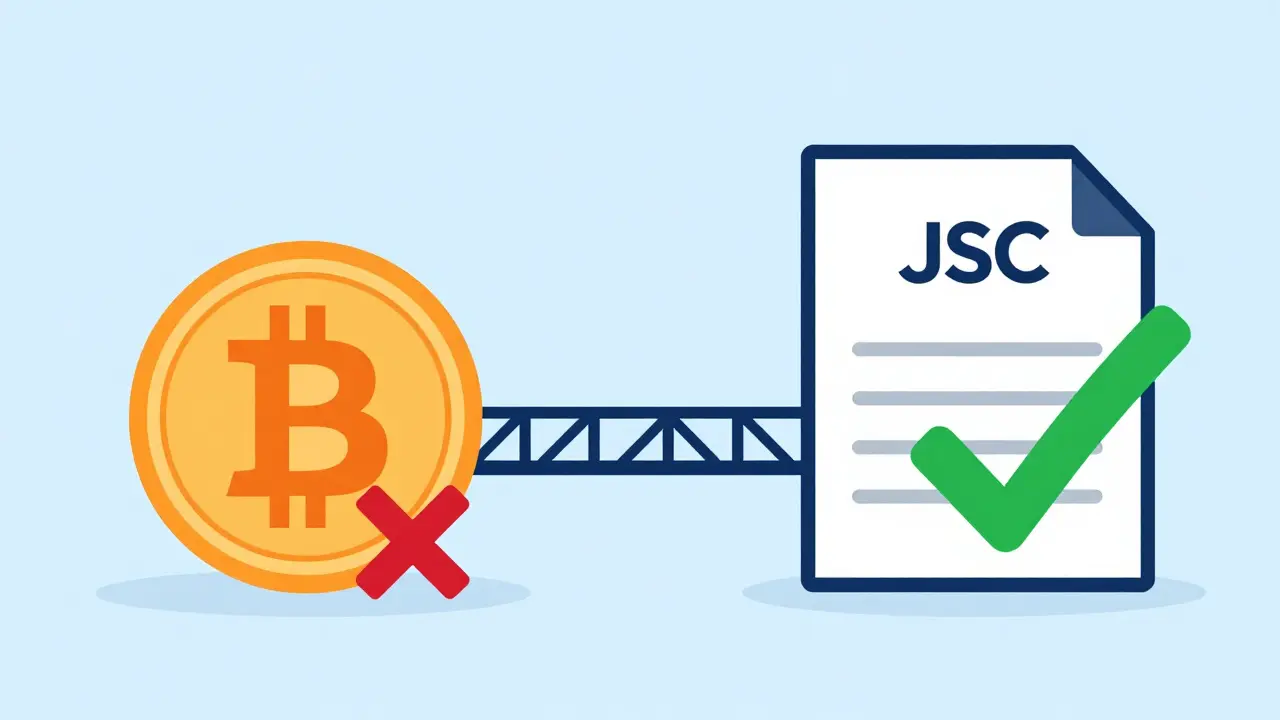
The Jordan crypto regulations framework has transformed from outright prohibition to structured oversight. This shift began with the Central Bank of Jordan's (CBJ) initial ban on Bitcoin transactions in 2014 and culminated in Law No. 14 of 2025, which took effect on September 14, 2025. This article explains the current rules, penalties, compliance requirements, and what they mean for businesses and users in Jordan.
From Ban to Regulation: The Policy Evolution
In February 2014, the CBJ issued Circular No. 2014-02-20, prohibiting financial institutions from dealing with Bitcoin. This strict stance lasted nearly a decade. However, Jordan's placement on the Financial Action Task Force (FATF) grey list in 2023 due to money laundering risks forced a rethink. The government responded with Law No. 14 of 2025, officially the Virtual Assets Transactions Regulation Law. Published in the Government Gazette in October 2025, it became effective 90 days later on September 14, 2025.
This law marks a complete policy reversal. Instead of banning crypto outright, it creates a legal framework for regulated activity. The move addresses FATF concerns while positioning Jordan as a digital asset hub in the Middle East.
Key Provisions of the New Law
The Virtual Assets Transactions Regulation Law No. 14 of 2025 is Jordan's comprehensive legal framework for virtual assets, replacing previous prohibitions with a structured licensing system. The Jordan Securities Commission (JSC) now serves as the primary regulator for virtual asset service providers (VASPs). The law explicitly prohibits any individual or organization from conducting crypto activities in Jordan without a license. This includes setting up a business presence, operating within the country, or marketing services to Jordanian customers.
Violations carry severe penalties. Article 28 of the law states offenders face a minimum one-year prison sentence and fines up to $141,000 (100,000 Jordanian Dinars). This strict enforcement aims to deter illegal activity while ensuring compliance with international standards.
Compliance Requirements for Crypto Businesses
To operate legally, VASPs must meet rigorous compliance standards. The law requires adherence to Jordan's AML/CFT Law No. 46 of 2007. This includes Customer Due Diligence (CDD) for all clients, Enhanced Due Diligence (EDD) for high-risk individuals like Politically Exposed Persons (PEPs), and transaction monitoring.
Large transactions over JOD 10,000 must be reported to the Anti-Money Laundering Unit (AMLU), Jordan's authority for monitoring suspicious financial activity. Businesses must appoint a dedicated AML compliance officer and maintain records for five years. They also need to comply with the Travel Rule, which requires sharing transaction details between service providers.

Regional Comparison: How Jordan Stacks Up
Compared to other Middle Eastern countries, Jordan's approach is a middle path. While the UAE has a well-established regulatory framework hosting over 500,000 daily crypto traders, Jordan's system is newer but aligns closely with FATF recommendations. Unlike Kuwait, Egypt, and Iraq, which still ban crypto entirely, Jordan offers a licensing pathway. However, the UAE's more mature market and infrastructure give it an edge in attracting institutional investors.
| Country | Regulatory Approach | Key Features | Challenges |
|---|---|---|---|
| UAE | Comprehensive framework | Multiple licenses, federal oversight, strong investor protections | High compliance costs for startups |
| Kuwait | Complete ban | No legal crypto activity allowed | Black market trading, no consumer protection |
| Egypt | Complete ban | No legal framework for crypto | Unregulated P2P trading risks |
| Iraq | Complete ban | Prohibition on all crypto transactions | High risk of fraud and scams |
| Jordan | Licensing-based regulation | Strict AML/CFT rules, JSC oversight, clear penalties | Recent implementation, limited regulatory capacity |
Expert Opinions and Market Feedback
Experts have mixed views on Jordan's regulatory shift. Dr. Mohammad Al-Husseini, Director of the National Council for Future Technology, called it "a critical step toward addressing FATF concerns while unlocking blockchain's potential for public services." However, analyst Layla Mansour warned of "significant adaptation challenges for regulators and market participants during the transition period."
User feedback shows similar duality. On Reddit, 'AmmanTrader87' noted: "After years of P2P trading in the shadows, finally having a legal framework is reassuring, but the $141,000 fine seems excessive for small operators." Meanwhile, 'BlockchainDevelopr_Jo' said: "The regulatory clarity will attract institutional investment, but the 90-day implementation window is too short."

Implementation Challenges and Market Impact
Getting licensed under the new law isn't easy. The process involves JOD 30,000 in fees (about $42,250) for application, documentation, and assessment. Businesses face a 6-8 month adaptation period to comply fully. Many fintech startups cite integrating transaction monitoring tools as their biggest hurdle.
Market data shows promise. With 1.2 million crypto users (10.8% of the population), Jordan's market could grow from $150 million in 2024 to $750 million by 2027. However, competition from the UAE ($1.2 trillion annual volume) and Bahrain ($450 million in Q3 2025) remains fierce.
What's Next for Jordan's Crypto Policy?
Current developments point to further evolution. The ministerial committee is working on supplementary regulations for DeFi (Decentralized Finance) platforms by Q1 2026. The Central Bank of Jordan plans to pilot a Central Bank Digital Currency (CBDC) with a launch scheduled for Q3 2026. Experts also see potential for Jordan to become a hub for Sharia-compliant digital assets , leveraging its 42 Islamic financial institutions.
Despite progress, risks remain. Regulatory arbitrage could occur if users migrate to neighboring countries with more established frameworks. The JSC currently has only 12 staff dedicated to virtual assets oversight, which may strain enforcement capacity.
Is crypto legal in Jordan under the new law?
Yes, but only for licensed entities. The Virtual Assets Transactions Regulation Law No. 14 of 2025 allows crypto activities only under strict licensing by the Jordan Securities Commission. Unlicensed operation is illegal and carries severe penalties including prison time and fines up to $141,000.
What are the main compliance requirements for crypto businesses?
Businesses must follow AML/CFT laws, including Customer Due Diligence (CDD), Enhanced Due Diligence (EDD) for high-risk clients, transaction monitoring for transactions over JOD 10,000, appointing a dedicated AML officer, and maintaining records for five years. They also need to comply with the Travel Rule for virtual asset transfers.
How does Jordan's crypto policy compare to the UAE?
The UAE has a more mature regulatory framework with federal oversight and higher transaction volumes. Jordan's approach is similar in structure but is newer and less established. The UAE hosts over 500,000 daily traders, while Jordan's market is smaller but growing rapidly under its new licensing regime.
What penalties exist for violating the law?
Violations carry a minimum one-year prison sentence and fines up to $141,000 (100,000 Jordanian Dinars). This applies to unlicensed operation, failure to comply with AML rules, or any other breach of the Virtual Assets Transactions Regulation Law.
Is there a Central Bank Digital Currency (CBDC) planned in Jordan?
Yes. The Central Bank of Jordan has announced plans for a CBDC pilot program scheduled for Q3 2026. This follows the successful implementation of the virtual assets regulatory framework and aligns with Jordan's broader National Blockchain Strategy for public service modernization.
How does the law address decentralized finance (DeFi) platforms?
The current law does not specifically regulate DeFi platforms. However, the ministerial committee led by the Minister of Digital Economy and Entrepreneurship plans to develop supplementary regulations for DeFi by Q1 2026. This will clarify how decentralized platforms must comply with AML/CFT requirements and licensing rules.
What happens to existing crypto businesses during the transition?
Existing operators must apply for licensing within 90 days of the law's effective date. The JSC offers a dedicated Help Desk for guidance, but many face challenges due to unclear capital requirements and technical hurdles in implementing transaction monitoring systems. Over 70% of surveyed fintech startups reported needing additional time to meet compliance standards.