You might have heard of Bitcoin for its scarcity or Ethereum for its smart contracts. But what if you wanted a coin that lets you keep your transactions private, earn passive income by staking, and vote on how the network develops-all without burning tons of electricity? That’s the pitch behind PIVX, which stands for Protected Instant Verified Transaction. It’s an open-source cryptocurrency that has been around since 2016, focusing on optional privacy and community governance.
If you’re wondering whether PIVX is just another forgotten altcoin or a serious player in the privacy niche, you need to look past the marketing fluff. This article breaks down exactly how PIVX works, why it switched from one privacy tech to another, and whether its current market position makes sense for you. We’ll cover the technical side, the money mechanics, and the real-world risks involved.
The Core Value Proposition: Privacy and Power
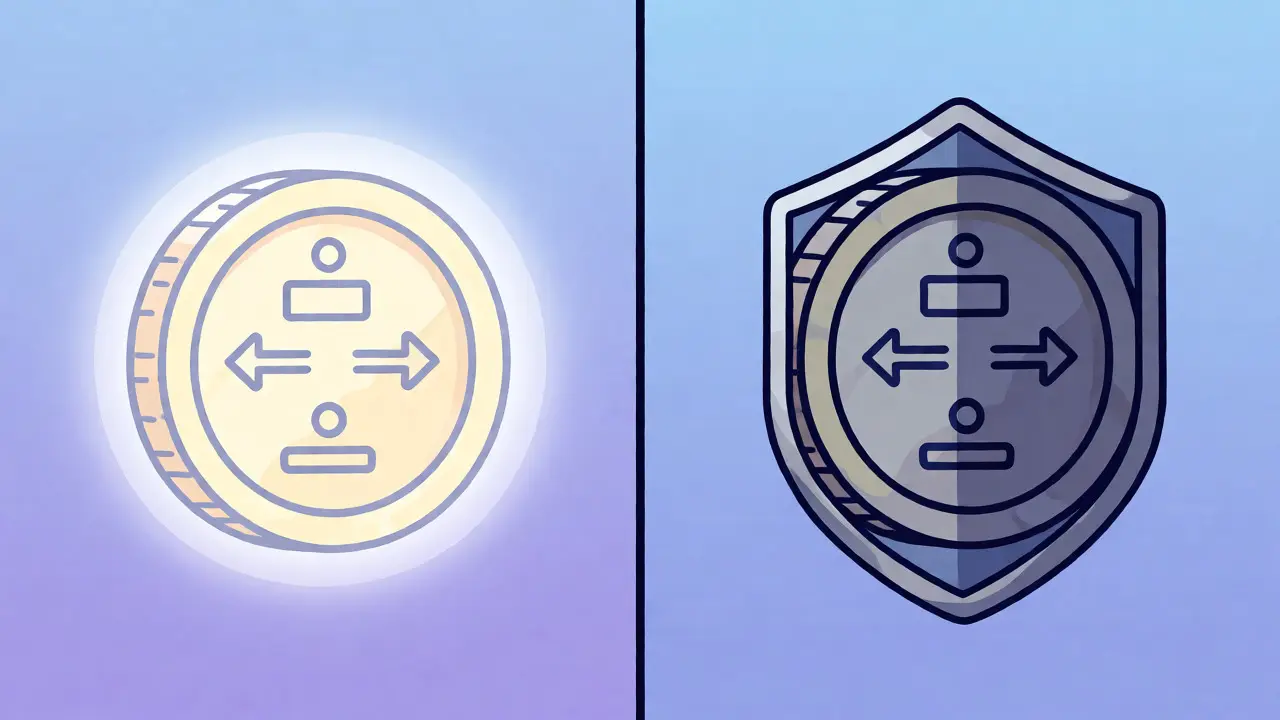
Most people think privacy coins are all-or-nothing. You either hide everything (like Monero) or you show everything (like Bitcoin). PIVX takes a different approach: optional privacy. You can send money transparently when you want to prove a payment to a friend or an exchange, and you can shield it when you want anonymity. This flexibility is its biggest selling point.
Beyond privacy, PIVX runs on Proof of Stake (PoS). Unlike Bitcoin, which uses energy-hungry miners, PIVX relies on users who lock up their coins to secure the network. This means it’s much greener and cheaper to run. But it’s not just about securing blocks; it’s about governance. The network is managed by a Decentralized Autonomous Organization (DAO), meaning no single company owns it. Users with enough stake can vote on proposals, funding development directly through a built-in treasury system.
| Feature | PIVX | Monero | Zcash |
|---|---|---|---|
| Privacy Model | Optional (Transparent/Shielded) | Mandatory (Always Private) | Optional (Transparent/Shielded) |
| Consensus Mechanism | Proof of Stake (PoS) | Proof of Work (PoW) | Proof of Work (PoW) |
| Governance | On-chain DAO & Treasury | Community-driven (Off-chain) | Foundation-led (Moving to DAO) |
| Energy Efficiency | High | Low | Low |
A Rocky History: From Zerocoin to SHIELD
To understand where PIVX is today, you have to know where it stumbled. Originally launched as "Darknet" in January 2016, it rebranded to PIVX in 2017. Early on, it used a privacy technology called Zerocoin. Think of Zerocoin like mixing your cash in a giant blender so nobody knows which bill came from whom. In 2019, this system faced a major crisis. A vulnerability allowed attackers to create fake coins out of thin air because of a flaw in the underlying code library.
The team acted fast, disabling the privacy feature (zPIV) to stop the bleeding. While the network survived, the incident hurt trust. They didn’t give up, though. They rebuilt their privacy layer from scratch using SHIELD, which is based on zk-SNARKs-the same cryptographic tech used by Zcash. This new system allows for faster, more efficient private transactions without the heavy computational load of the old method.
How Staking and Masternodes Make Money
Here is where things get interesting for investors. You don’t just buy PIVX and hope the price goes up. You can put it to work. There are two main ways to earn rewards:
- Staking: You leave your wallet unlocked and online. Your coins help validate transactions, and you earn a small percentage back. It’s like earning interest on a savings account, but the rate depends on how many other people are staking.
- Masternodes: This is the big leagues. To run a masternode, you need to lock up 10,000 PIVX. In return, you get a larger share of block rewards and voting power. Masternodes also provide extra services to the network, like instant transaction confirmations.
Let’s do some quick math. If there are roughly 1,600 masternodes active, and each block pays out 6 PIV to a masternode, you can estimate your earnings. With a 60-second block time, you’d receive payments roughly every 16 days. Over a month, that could amount to around 160 PIV per node, depending on network changes. It’s predictable income, unlike the random luck of mining.

The Economics: Inflation and Supply
Crypto economics can be messy, and PIVX is no exception. Don’t expect a hard cap like Bitcoin’s 21 million. PIVX has a dynamic supply model. New coins are created with every block to pay stakers and masternodes. However, transaction fees are burned (destroyed), which helps offset inflation.
As of late 2026, the circulating supply sits around 108 million coins. The project doesn’t have a fixed end date for emission, but the goal is stability. Some older documents mention a change in block rewards from 6 PIV to 20 PIV per block in 2023, splitting between stakers, nodes, and the treasury. Always check the latest whitepaper, as these numbers shift to balance incentives. The key takeaway? PIVX is inflationary by design, but fee burning acts as a deflationary pressure valve.
Governance: Who Runs the Show?
One of PIVX’s coolest features is the Treasury System. Instead of relying on donations or a central company fund, the network automatically sets aside part of each block reward into a public treasury. Developers, marketers, or infrastructure providers can submit proposals to spend this money. Masternode owners then vote on whether to approve them.
This creates a self-sustaining ecosystem. Need a new mobile app? Propose it. Want to hire a security auditor? Propose it. If the community agrees, the money flows directly from the network to the workers. It’s democratic, but it does favor those with wealth. Since only masternode owners (holding 10k PIV) can vote, regular holders have less direct say. It’s a trade-off between efficiency and pure decentralization.

Market Position and Risks in 2026
Let’s be real: PIVX isn’t a top-100 coin anymore. As of November 2026, it trades at fractions of a cent, with a market cap hovering in the low millions. Liquidity is thin, meaning large buys or sells can swing the price wildly. You won’t find it on every major exchange, and some regulatory bodies view privacy coins with suspicion.
The risks are clear. First, competition is fierce. Monero dominates the mandatory privacy narrative, while Zcash offers similar zk-SNARK tech with higher brand recognition. Second, the 2019 hack still casts a shadow, even though the new SHIELD system is robust. Third, adoption is slow. Few merchants accept PIVX, so it’s mostly held for speculation or staking yields rather than daily spending.
However, the upside exists too. The tech works. The community is active. And if privacy regulations tighten globally, coins with flexible privacy options like PIVX might see renewed interest as users seek compliance-friendly anonymity.
Getting Started: What Do You Need?
If you want to try PIVX, here’s your checklist:
- Wallet: Download the official PIVX Core wallet or use MyPIVXWallet for a browser-based option. Back up your seed phrase immediately.
- Acquisition: Buy PIVX on exchanges like CoinEx or via peer-to-peer swaps. Be aware of lower liquidity.
- Staking Setup: For simple staking, keep your wallet open and encrypted. For masternodes, you’ll need a VPS server and technical skills to configure the collateral.
- Privacy Choice: Decide if you want transparent or shielded balances. Remember, shielded funds often don’t earn staking rewards, so plan accordingly.
PIVX is a niche asset. It’s not for everyone. But for those who value control over their financial data and want to participate in decentralized governance, it offers a unique blend of features that few other coins match.
Is PIVX completely anonymous?
No, PIVX offers optional privacy. Transactions are transparent by default, meaning anyone can see the sender, receiver, and amount. You must explicitly choose to make a transaction "shielded" to gain anonymity. This differs from Monero, which is private by default.
How many PIVX do I need to run a masternode?
You need to lock up exactly 10,000 PIVX as collateral. These coins remain yours, but they cannot be moved or spent while the masternode is active. You also need a dedicated server (VPS) to host the node software.
Can I earn staking rewards on shielded PIVX?
Historically, no. Shielded funds did not earn staking rewards because the protocol couldn't easily verify ownership without breaking privacy. While newer updates aim to improve this, many users still keep their funds transparent to maximize yield, switching to shielded mode only when spending privately.
What happened to PIVX's original privacy system?
The original system, called zPIV (based on Zerocoin), was disabled in 2019 after a vulnerability allowed attackers to mint fake coins. The team replaced it with SHIELD, which uses zk-SNARKs for better performance and security.
Is PIVX a good investment in 2026?
It depends on your risk tolerance. PIVX is a small-cap coin with high volatility and low liquidity. It has strong technology and active governance, but it faces stiff competition from larger privacy coins. It’s best suited for long-term believers in decentralized privacy who can handle significant price swings.