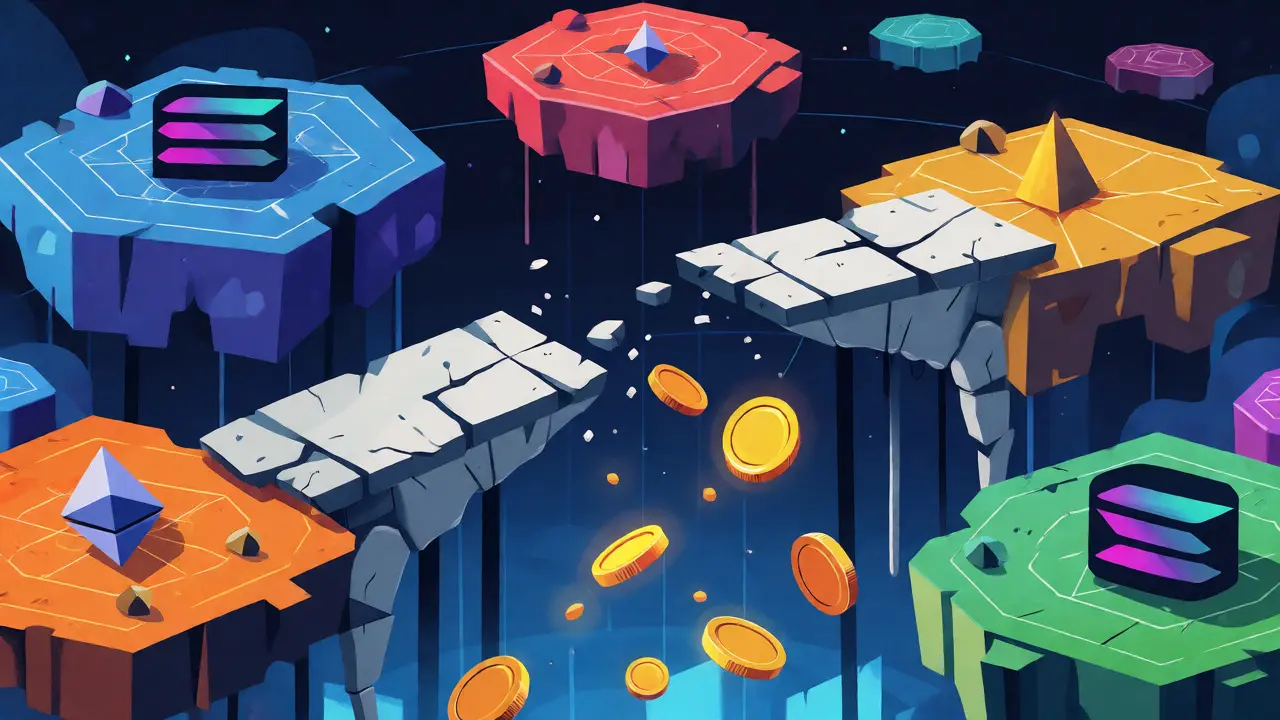
You’ve probably heard the term "interoperability" thrown around in crypto circles like it’s a magic wand that fixes everything. But let’s be real: moving assets between blockchains has historically been a nightmare of locked funds, centralized bridges, and security hacks. LayerZero is an omnichain interoperability protocol that allows smart contracts on different blockchains to send messages to each other without relying on a single centralized bridge. It’s not just another blockchain; it’s infrastructure designed to make the fragmented crypto world feel like one unified network. And at the heart of this system sits ZRO, the native governance token that gives holders a say in how the protocol evolves.
If you’re wondering whether ZRO is just another hype-driven coin or a fundamental piece of the next generation of decentralized applications, you’re asking the right questions. This article breaks down exactly what LayerZero does, how its unique architecture works, and why ZRO matters for investors and developers alike. We’ll skip the jargon-heavy fluff and focus on what actually drives value here.
The Core Problem LayerZero Solves
Before LayerZero, if you wanted to move tokens from Ethereum to Arbitrum, you typically used a bridge. Most early bridges were "lock-and-mint" systems: you lock your ETH on Ethereum, and a centralized operator mints wrapped ETH on Arbitrum. The problem? You had to trust that operator. If they got hacked, your money was gone. Remember the Ronin Network hack? That was a bridge issue.
LayerZero Labs was founded in 2021 by Bryan Pellegrino, Ryan Zarick, and Caleb Banister to solve this fragmentation without forcing every app to build its own liquidity-heavy bridge. Their solution wasn’t to create another blockchain but to create a messaging layer. Think of it as the TCP/IP of blockchains. Instead of moving actual tokens through a central vault, LayerZero sends a message saying, "Hey Chain B, Chain A sent X amount of Y token." Then, the destination chain handles the logic. This approach reduces reliance on single points of failure and allows for arbitrary data transfer, not just simple token swaps.
How the Architecture Actually Works
To understand ZRO’s value, you need to grasp the tech stack. LayerZero isn’t a monolith; it’s modular. In the original V1 model, two components handled verification: an Oracle (which provided block header info) and a Relayer (which delivered the message payload). If both agreed, the message went through. Simple, but risky if those two entities colluded.
Enter LayerZero V2 , which launched on mainnet in January 2024 and introduced Decentralized Verification Networks (DVNs). This was a game-changer. Now, developers can choose their own security providers. Imagine you’re building a high-stakes DeFi app. You might select three independent DVNs-say, Chainlink, Google Cloud, and a specialized validator-and require all three to agree before executing a transaction. For a low-risk meme coin transfer, you might pick cheaper, faster verifiers. This configurability is LayerZero’s superpower. It shifts the burden of security from a single protocol-wide guarantee to application-specific choices.
| Feature | LayerZero V1 | LayerZero V2 |
|---|---|---|
| Verification | Fixed Oracle + Relayer pair | Configurable DVN sets (X-of-Y) |
| Flexibility | Low (one-size-fits-all) | High (app-specific security) |
| Trust Assumption | Oracle & Relayer must not collude | Select DVNs must remain independent |
| Cost Efficiency | Standardized fees | Tunable based on security needs |
What Does the ZRO Token Do?
Here’s where many people get confused. ZRO is not the gas fee for LayerZero. You don’t pay ZRO to send a message across chains; you pay the native gas of the source and destination blockchains, plus execution fees. So, what is it for?
ZRO is primarily a governance token with a total supply of 1 billion, allocated across community, partners, and contributors. Its main job is voting rights. Holders decide on critical protocol upgrades, such as activating the "fee switch." When the fee switch is on, a portion of the transaction fees generated by the protocol flows back to the treasury or potentially to stakers. This creates a direct link between protocol usage and token value. If more apps use LayerZero, more fees are generated, and if governance decides to distribute those fees, ZRO holders benefit.
However, it’s crucial to note that ZRO is not equity. Owning ZRO doesn’t mean you own a piece of LayerZero Labs, the company behind the code. It’s a utility and governance asset within the ecosystem. The token launch in June 2024 was controversial because users had to contribute $0.10 per token claimed, a move the team framed as supporting Ethereum core developers via Protocol Guild. Critics called it a tax, but it also served as an anti-Sybil measure to filter out farmers.
Key Applications and Ecosystem Growth
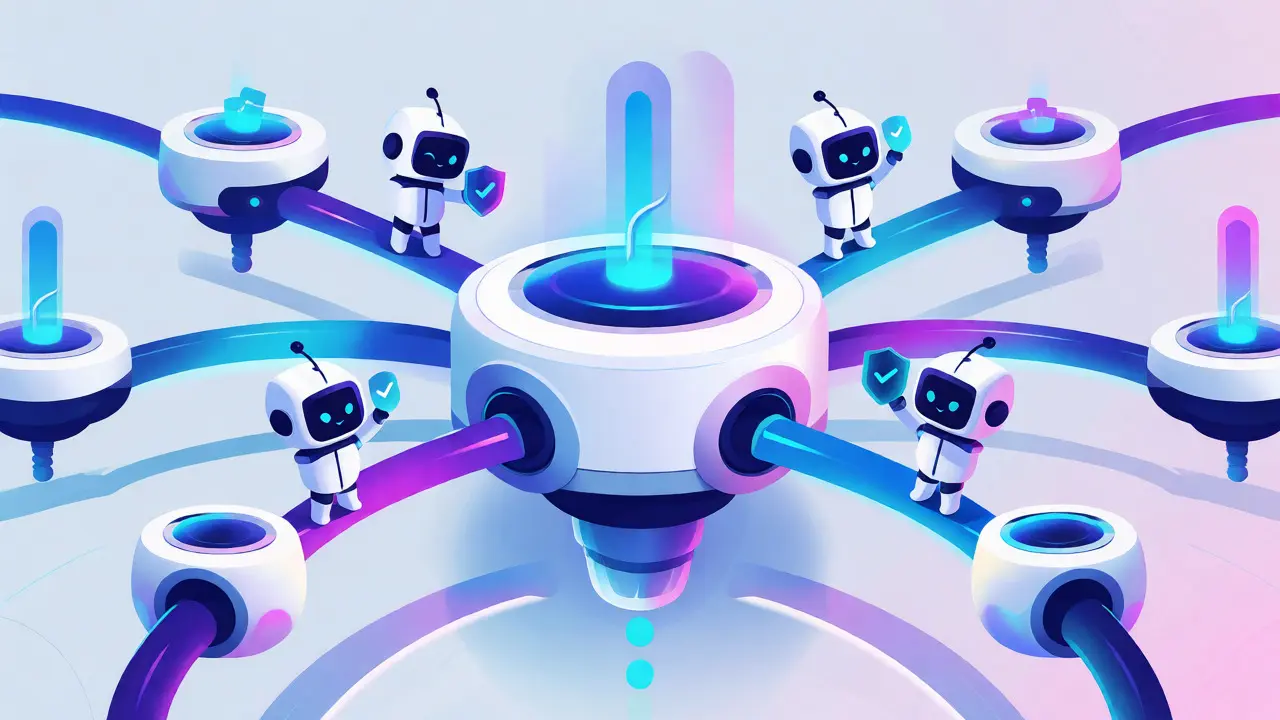
Infrastructure is useless without apps. The most prominent example is Stargate Finance , a cross-chain liquidity protocol built directly on LayerZero that enables seamless asset transfers without wrapping. Stargate proves that LayerZero can handle complex financial operations, not just simple messages.
Beyond Stargate, developers are using LayerZero for:
- Omnichain NFTs: Minting an NFT on Ethereum and having it instantly appear on Solana or Polygon.
- Cross-Chain Governance: Voting on DAO proposals using assets held on multiple chains.
- Data Oracles: Fetching price data from one chain and delivering it to another without latency.
As of late 2026, LayerZero supports over 30 major networks. This breadth is significant because it means developers can write code once and deploy it everywhere, rather than rewriting contracts for every new L2 or alt-L1.
Investment Risks and Market Realities
Let’s talk numbers. As of October 13, 2026, ZRO trades around $2.10-$2.50 depending on the exchange, with a market cap hovering near $900 million. But price alone doesn’t tell the story. You need to look at supply dynamics.
A massive chunk of ZRO’s supply is still locked up. Strategic partners and core contributors have vesting schedules stretching into 2027 and beyond. For instance, an unlock of approximately 23.6 million ZRO is scheduled for October 20, 2026. These unlocks introduce selling pressure. If large holders dump their tokens upon release, the price could dip regardless of protocol health. Conversely, the LayerZero Foundation has been buying back ZRO, signaling confidence. In August 2026 alone, they purchased over 2.3 million ZRO.
Another risk is complexity. Because security is configurable, a poorly configured app might use weak DVNs, leading to exploits. Unlike a Layer-1 blockchain where security is uniform, LayerZero’s security varies by application. This places a heavy responsibility on developers to choose robust verification stacks.
Why Choose LayerZero Over Competitors?
LayerZero competes with protocols like Axelar and Wormhole. Axelar focuses on a general-purpose relay network, while Wormhole uses guardian validators. LayerZero’s edge is its modularity and lack of a single global validator set. It doesn’t force everyone to use the same security level. If you’re building a high-value institutional product, you pay for top-tier security. If you’re building a gaming item transfer, you opt for speed and low cost.
This flexibility attracts enterprise clients who want control over their risk profile. However, it also means there’s no "universal safety net." You have to do your homework on which DVNs an app is using.
Frequently Asked Questions
Is LayerZero a blockchain?
No, LayerZero is not a blockchain itself. It is an interoperability protocol that connects existing blockchains. It relies on the underlying security of the chains it connects (like Ethereum, Binance Smart Chain, etc.) rather than having its own consensus mechanism.
Do I need ZRO to use LayerZero?
Generally, no. Users pay gas fees in the native currency of the source and destination chains (e.g., ETH, BNB). ZRO is primarily for governance and potential future fee distribution mechanisms, not for paying standard transaction costs.
What happened during the ZRO token launch?
The launch in June 2024 was controversial because claimants had to pay $0.10 per token to support Ethereum core developers. Additionally, strict Sybil filtering excluded nearly 60% of eligible wallets, causing frustration among some community members who felt unfairly targeted.
How secure is LayerZero V2?
Security is configurable. Developers choose which Decentralized Verification Networks (DVNs) verify transactions. High-security apps may use multiple independent DVNs, while lower-risk apps might use fewer. This means security varies by application, so always check which verifiers a specific project uses.
Who backs LayerZero Labs?
LayerZero Labs raised $120 million in a Series B round led by a16z crypto and Sequoia Capital. Other notable investors include Circle Ventures, Samsung Next, and Christie’s, providing strong institutional validation for the project.