Choosing a crypto exchange is less about finding the most coins and more about ensuring your funds stay safe while you trade. If you are looking for a platform that balances regulatory compliance with competitive trading costs, WhiteBIT is a Europe-based cryptocurrency exchange founded in 2018 by Ukrainian entrepreneur Volodymyr Nosov. Headquartered in Vilnius, Lithuania, it has grown to serve approximately 8 million active users across 190 countries. The platform distinguishes itself not just as a trading venue but as part of a broader ecosystem that includes mining, decentralized exchanges, and payment processing.
The core question for any trader is simple: does the security justify the limitations? WhiteBIT holds an AAA security rating from CER.live, placing it among the top five most secure exchanges globally. However, its selection of cryptocurrencies is significantly smaller than market leaders like Binance. This review breaks down the fees, the technical infrastructure, and the real-world user experience to help you decide if this platform fits your trading style.
Key Takeaways
- Security First: WhiteBIT stores 96% of user funds in cold storage, exceeding the industry standard of 80-90%.
- Competitive Fees: Spot trading starts at 0.1% maker/taker, with VIP tiers reducing this to 0.001%.
- Regulatory Strength: Fully compliant in the EU, Australia, Turkey, and Kazakhstan, offering peace of mind for regulated markets.
- Limited Asset Selection: Supports around 325 cryptocurrencies, which is fewer than competitors like Binance (1,000+) or KuCoin (700+).
- KYC Friction: Verification can be slow, often taking 3-5 business days and requiring multiple document submissions.
Platform Overview and Market Position
Founded in 2018, WhiteBIT has evolved from a regional player into a global entity. As of 2025, it reports $2.7 trillion in annual trading volume, a figure driven heavily by institutional participation. In fact, 28% of this volume comes from institutional accounts, highlighting the platform's appeal to professional traders who require low-latency execution and robust infrastructure.
In terms of market share, WhiteBIT captures approximately 18% of European crypto exchange traffic, making it the third-largest in the region behind Binance and Kraken. Its user base is diverse, with 42% of users based in Europe, 23% in South America, and 15% in Australia. This geographic spread matters because it means the platform is optimized for international transfers and multi-currency support, rather than being tailored to a single local market.
The company operates under the WhiteBIT Group umbrella, which claims over 35 million customers globally when including all services. This ecosystem approach means that if you use WhiteBIT for spot trading, you also have access to tools like WhitePool for mining, WhiteSwap for decentralized swaps, and Whitepay for merchant payments. For most retail traders, though, the focus remains on the core exchange functionality: buying, selling, and trading digital assets efficiently.
Fees and Trading Costs
Cost is one of the primary drivers for choosing an exchange. WhiteBIT’s fee structure is transparent and generally lower than many mid-tier competitors. Here is how the numbers break down for standard users:
| Trading Type | Maker Fee | Taker Fee | Notes |
|---|---|---|---|
| Spot Trading | 0.1% | 0.1% | Standard rate for most users |
| Futures Trading | 0.02% | 0.035% | Up to 100x leverage available |
| VIP Tier (High Volume) | 0.001% | 0.03% | Based on monthly trading volume |
| Withdrawal Fees | Variable | Network Dependent | Depends on blockchain congestion |
The VIP system rewards high-volume traders significantly. If you move large amounts of capital regularly, the drop from 0.1% to 0.001% for maker orders can save thousands of dollars annually. For casual traders, the flat 0.1% spot fee is competitive, sitting below Binance’s standard 0.1% taker fee for non-BNB holders but above some zero-fee promotional periods offered by newer exchanges.
Futures traders will appreciate the low entry point of 0.035% for takers. With leverage up to 100x, fees can eat into profits quickly, so this low baseline is crucial. The platform also offers margin trading, allowing you to borrow against your holdings to increase position size without moving to perpetual futures. This flexibility makes it suitable for both day traders and swing traders who prefer holding positions longer.
Security Infrastructure and Compliance
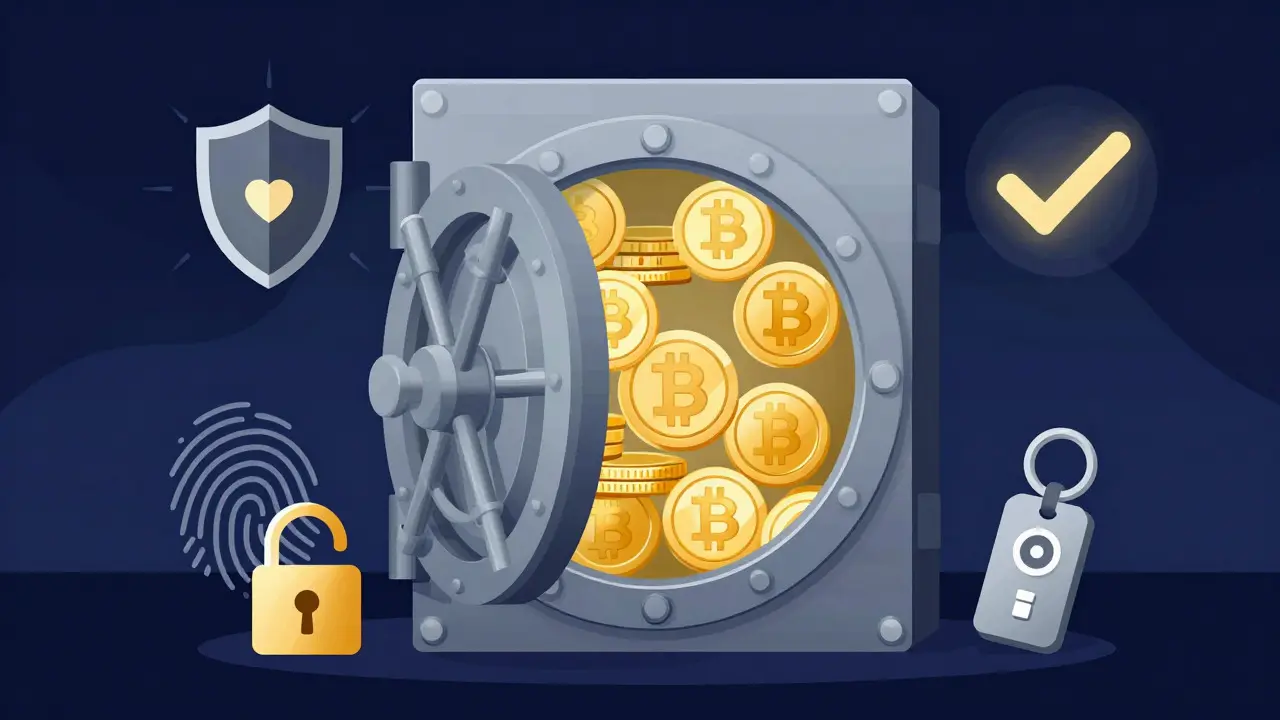
Security is where WhiteBIT truly shines. The platform maintains a 96% cold storage ratio, meaning only 4% of user funds are kept in hot wallets for immediate trading. Most competitors keep between 80% and 90% in cold storage, so this extra buffer provides significant protection against hacks.
Beyond storage, the platform holds CCSS Level 3 and PCI DSS Level 1 certifications. These are rigorous standards that ensure consistent operational controls and data protection. User authentication is layered with PIN codes, fingerprint recognition, two-factor authentication (2FA), and anti-phishing codes. This multi-layered approach reduces the risk of unauthorized account access, a common vulnerability in crypto platforms.
Regulatory compliance is another major advantage. Unlike many offshore exchanges that operate in legal gray areas, WhiteBIT is licensed and regulated in several key jurisdictions, including the EU, Australia, Turkey, Kazakhstan, and Georgia. This compliance ensures that user funds are held in segregated accounts, protecting them if the company were to face financial difficulties. For traders in these regions, this removes a significant layer of risk associated with unregulated platforms.
User Experience and Onboarding
The interface is clean and intuitive, particularly for spot trading. Beginners should find the buy/sell buttons straightforward, and the mobile apps (rated 4.2/5 on Google Play and 4.4/5 on the App Store) perform well for daily checks and quick trades. However, advanced futures tools require a bit of study. The learning curve is moderate, rated 3.5/5 by CoinBureau, meaning you won’t get lost immediately, but you may need to read through the documentation to master complex order types.
Onboarding is where the experience can become frustrating. While basic account setup takes about 15 minutes, full KYC verification often takes 3-5 business days. Some users report needing to resubmit documents due to clarity issues or network delays. This is slower than competitors like Binance, which can verify standard users in under 15 minutes. If you plan to trade immediately after signing up, this delay could be a dealbreaker. For long-term investors who prioritize security over speed, however, the thoroughness of the check is a positive sign.
Customer support is available via live chat, phone, WhatsApp, and email. Live chat responses average 8 minutes, which is decent for a global platform. Email tickets take up to 24 hours, so urgent issues are best handled through chat or phone. The help center is comprehensive but technical, so beginners might find the community forum (with 45,000+ active members) more useful for troubleshooting specific errors.
Asset Selection and Trading Pairs
Here is the main drawback for many users: asset selection. WhiteBIT supports approximately 325 cryptocurrencies across 540-700 spot trading pairs. While this covers all major assets like Bitcoin, Ethereum, Solana, and Cardano, it lacks the depth found in larger exchanges. Binance lists over 1,000 assets, and even mid-tier rivals like KuCoin offer 700+. If you trade niche altcoins or new project tokens, you might find yourself missing out on opportunities.
For futures trading, there are 180-200 pairs available, which is sufficient for most mainstream strategies. The native token, WBT, offers fee discounts and governance rights, adding utility for long-term holders. Additionally, the integration of Whitechain, the proprietary blockchain, allows for faster and cheaper transactions within the ecosystem, though this is still a developing feature compared to established networks.

WhiteBIT vs. Competitors
To understand where WhiteBIT stands, it helps to compare it directly with its main rivals. The table below highlights the key differences in security, fees, and asset availability.
| Feature | WhiteBIT | Binance | KuCoin |
|---|---|---|---|
| Cryptocurrencies Supported | ~325 | 1,000+ | 700+ |
| Spot Trading Fee (Taker) | 0.1% | 0.1% | 0.1% |
| Cold Storage Ratio | 96% | Not Disclosed Publicly | Not Disclosed Publicly |
| Regulatory Status | EU, AU, TR, KZ | Varies by Region | Singapore Based |
| KYC Speed | 3-5 Days | <15 Minutes | 1-2 Days |
| Best For | Security & EU Users | Asset Variety | Altcoin Traders |
Binance wins on variety and speed, but faces regulatory scrutiny in several jurisdictions. KuCoin offers a middle ground with better altcoin selection than WhiteBIT but less regulatory clarity. WhiteBIT’s niche is clear: it is the safest bet for traders in Europe and other regulated markets who prioritize fund safety and compliance over having every possible coin listed.
Who Should Use WhiteBIT?
This platform is ideal for European traders, institutions, and anyone who values regulatory compliance. If you are based in the EU, Australia, or Turkey, WhiteBIT’s local licensing gives you legal protections that offshore exchanges cannot match. It is also a strong choice for professionals who need reliable API access and low-latency execution for algorithmic trading.
It may not be the best fit for:
- Niche altcoin hunters who need access to hundreds of small-cap tokens.
- Users in restricted jurisdictions like the United States, where WhiteBIT is currently unavailable.
- Traders who need instant KYC approval to start trading immediately.
Frequently Asked Questions
Is WhiteBIT safe to use?
Yes. WhiteBIT holds an AAA security rating from CER.live and stores 96% of user funds in cold storage. It is also regulated in multiple jurisdictions, including the EU, which adds an extra layer of legal protection for user assets.
How long does KYC verification take on WhiteBIT?
Full verification typically takes 3-5 business days. While basic account creation is fast, the detailed KYC process can sometimes require multiple document submissions, making it slower than competitors like Binance.
What are the trading fees on WhiteBIT?
Standard spot trading fees are 0.1% for both makers and takers. Futures trading starts at 0.035% for takers. VIP tiers reduce these fees significantly, with maker fees dropping to 0.001% for high-volume traders.
Can I use WhiteBIT in the United States?
Currently, no. WhiteBIT restricts access for users in the United States due to regulatory considerations. The platform focuses on Europe, Asia, and Latin America, serving 190 countries in total.
Does WhiteBIT offer staking or earning options?
Yes, WhiteBIT Earn 2.0 offers auto-compounding features for various assets. Recent updates include USDC staking with an 8.5% APY, providing passive income opportunities alongside trading.