Have you ever seen a crypto chart that looks like it belongs in a science fiction movie? One day the price is fractions of a cent, and the next, it’s trading at dollars per token. That is exactly what happened with Black Phoenix (BPX), a cryptocurrency that has baffled investors, confused data aggregators, and sparked intense debate in online forums. If you are wondering what this coin actually is, why its price varies so wildly between websites, and whether it is worth your attention, you have come to the right place. We need to cut through the noise and look at the hard facts, because in the world of small-cap cryptocurrencies, information asymmetry can cost you real money.
The short answer is that Black Phoenix is a multi-chain token launched on the TRON blockchain as a TRC-20 standard token. It aims to build a decentralized ecosystem for fast, low-fee transactions. However, the reality is much more complex than the marketing promises suggest. You will find conflicting data about its supply, its value, and even its purpose depending on which website you visit. This guide breaks down the technical specs, the market anomalies, and the risks you need to understand before interacting with BPX.
What Exactly Is Black Phoenix (BPX)?
To understand BPX, we first need to look at where it lives. Black Phoenix was launched on April 12, 2021. It started as a TRC-20 token on the TRON network. Later, the team expanded its presence to the BNB Chain as a BEP-20 token. This multi-chain approach is common in modern crypto projects, allowing users to trade BPX across different ecosystems without needing to bridge assets manually every time.
The project’s stated mission is ambitious. According to its official documentation, Black Phoenix wants to "transform newcomers into advanced users" while generating profits for holders. They claim to be building a "fully on-chain liquidity protocol." In plain English, this means they want to create a system where you can swap tokens instantly and securely across different blockchains without relying on centralized intermediaries. The long-term roadmap includes launching their own infrastructure: the Black Phoenix Blockchain (or BPX Network), a dedicated wallet called Black Phoenix Wallet, and a decentralized exchange known as BPX Exchange.
However, there is a significant gap between these plans and current execution. While the vision sounds impressive, the actual utility available today is limited. Most of the promised infrastructure-like the native blockchain and DEX-is still in development or lacks clear timelines. For now, BPX functions primarily as a speculative asset rather than a functional tool for decentralized finance.
The Data Crisis: Why Does the Price Differ So Much?
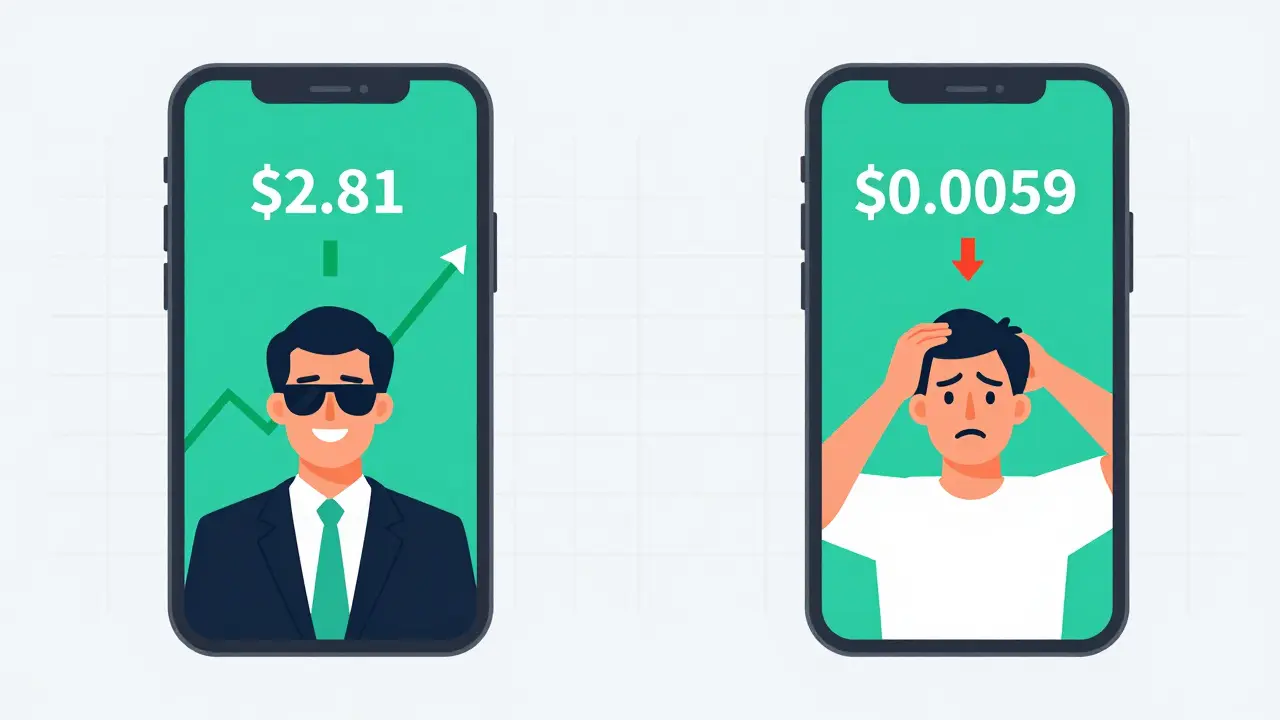
If you search for the price of Black Phoenix right now, you might get two completely different answers. This is not a glitch; it is a critical red flag that every investor needs to understand. As of July 2026, major platforms like CoinMarketCap, Coinbase, and Crypto.com report a price around $2.81 USD. In contrast, other aggregators like Stack.Money show a price closer to $0.0059.
Why does this happen? There are three main reasons:
- Liquidity Fragmentation: BPX trades on several smaller exchanges such as FameEX, XT, Bitrue, Coinsbit, and Vindax. These markets often have low trading volume. When volume is low, a single large buy or sell order can skew the price drastically on one platform but not others.
- Data Aggregator Errors: Not all tracking sites update their algorithms correctly. Some may be pulling data from old API endpoints or confusing BPX with other similarly named tokens.
- Market Manipulation Concerns: In the crypto space, "wash trading" (where traders buy and sell to themselves to inflate volume and price) is a known issue among lower-ranked coins. The discrepancy suggests that the higher prices may not reflect genuine market demand.
This confusion extends to market capitalization. One source lists BPX at rank #668, while another ranks it #1846. Your position in the rankings determines how visible you are to new investors. If you see a high ranking, check the underlying metrics yourself. Never trust a single number blindly.
| Metric | CoinMarketCap / Coinbase | Stack.Money / CoinGecko |
|---|---|---|
| Price (USD) | $2.81 | $0.0059 - $0.0060 |
| 24h Volume | $3.31 Million | $782.00 |
| Market Cap Rank | ~#668 | ~#1846 |
| All-Time High | $3.38 (Jan 2025) | Varying BTC equivalents |
| Total Supply | 4 Billion | Infinite (∞) / Disputed |
Tokenomics: Supply, Circulation, and Inflation Risks
When evaluating any cryptocurrency, you must look at its tokenomics-the economic structure of the token. For Black Phoenix, the numbers are contradictory, which adds another layer of risk.
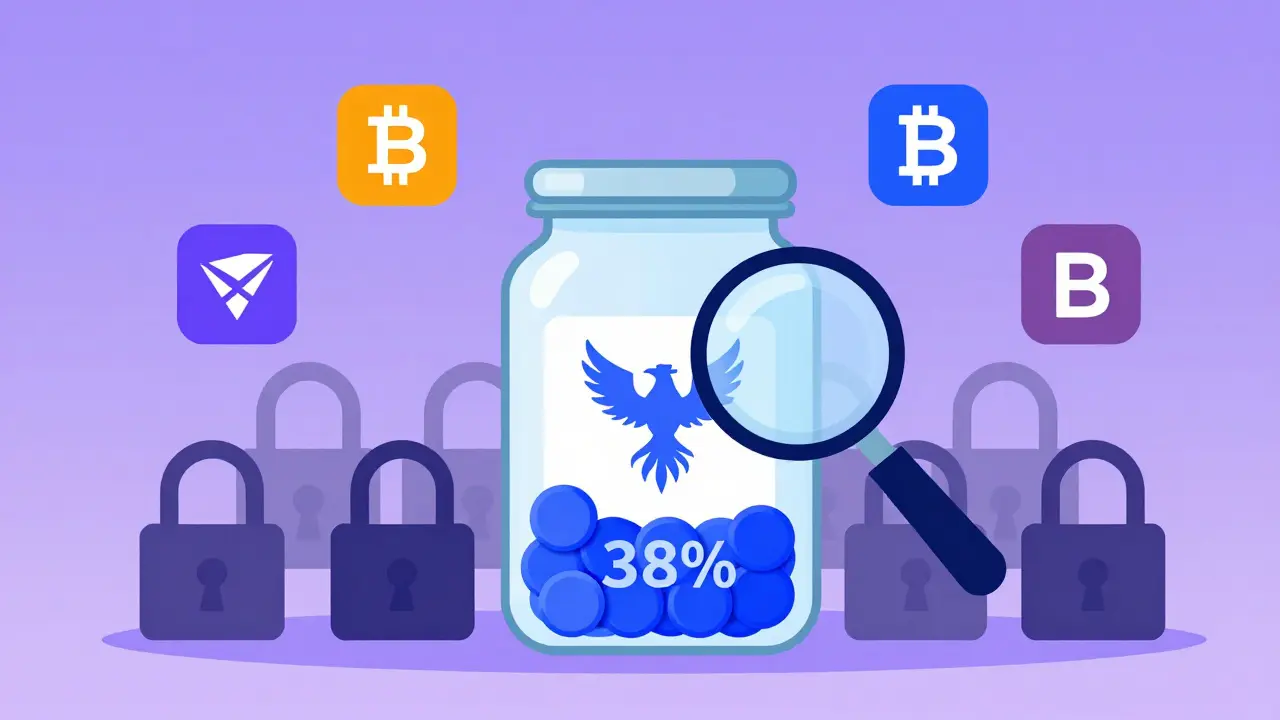
According to its whitepaper and major trackers like CoinMarketCap, the total supply of BPX is capped at 4,000,000,000 tokens. Currently, approximately 1.54 billion tokens are in circulation, representing about 38% of the total. This means roughly 2.46 billion tokens are locked, reserved for the team, or held in future releases. When these tokens eventually enter the market, they could increase supply significantly, potentially driving the price down if demand does not match.
However, CoinGecko lists the maximum supply as infinite (∞). This is a massive discrepancy. An infinite supply implies hyperinflationary potential, whereas a capped supply suggests scarcity. Which one is true? Without transparent on-chain verification accessible to the average user, you have to assume the worst-case scenario. Always verify supply caps directly on the blockchain explorer (TronScan for TRC-20 or BscScan for BEP-20) rather than trusting aggregator sites alone.
The circulating supply dynamics are crucial. With only 38% of tokens currently tradable, the "Fully Diluted Valuation" (FDV) is misleadingly high. If you calculate the FDV based on the $2.81 price and 4 billion supply, you get over $11 billion. Compare this to the actual market cap of roughly $4.3 billion (based on circulating supply). This gap indicates that the token is heavily discounted relative to its potential future supply. Smart investors watch this ratio closely; a high FDV-to-Market-Cap ratio often signals impending selling pressure when locked tokens unlock.
Security and Technical Infrastructure
Black Phoenix operates on established networks: TRON and BNB Chain. This provides a baseline level of security because the underlying blockchains are robust and widely audited. However, the safety of your BPX tokens depends largely on how you store them and which exchanges you use.
The project claims to employ "the highest level of security measures," but specific details about smart contract audits, bug bounty programs, or insurance funds are scarce in public documentation. In the crypto world, vague security claims should raise eyebrows. Have the contracts been audited by firms like CertiK or Hacken? Is the code open-source? If you cannot find this information, proceed with extreme caution.
For storage, you should use a non-custodial wallet that supports TRC-20 and BEP-20 tokens. Popular options include Trust Wallet, TronLink, or MetaMask (configured for BNB Chain). Avoid leaving large amounts of BPX on centralized exchanges, especially smaller ones like FameEX or Vindax, which may have weaker security protocols compared to industry giants.
Is Black Phoenix a Good Investment? Analyzing the Risks
Let’s be direct: Black Phoenix is a high-risk, high-volatility asset. It is not suitable for conservative investors or those who cannot afford to lose their entire investment. Here is why:
- Extreme Volatility: BPX hit an all-time low of $0.00000133 in March 2022. Its all-time high was $3.38 in January 2025. That is a move of over 2 million percent. While this sounds exciting, it also means the price can drop just as quickly. Trading 99.8% below its peak BTC value shows severe instability.
- Data Reliability Issues: As discussed, the conflicting price and volume data make it difficult to perform accurate technical analysis. You might be buying at a "high" on one platform while another platform shows a "low."
- Lack of Clear Utility: The promised ecosystem (Blockchain, Wallet, DEX) is not yet fully operational. Until there is real-world usage driving demand, the price is driven purely by speculation and sentiment.
- Liquidity Risk: Low trading volume on some platforms means you might struggle to sell your tokens quickly without slippage (getting a much worse price than expected).
On the positive side, BPX has shown recent momentum, outperforming the broader crypto market with a 10.30% weekly gain in some periods. It is listed on multiple exchanges, providing some accessibility. Automated trading bots, like those offered by RevenueBot, allow for algorithmic trading strategies, which can help disciplined traders manage entries and exits. But remember: bots do not eliminate risk; they just automate it.

How to Buy and Store Black Phoenix Safely
If you decide to proceed with buying BPX, follow these steps to minimize friction and risk:
- Choose a Reputable Exchange: Look for platforms that list BPX with verified volume. Check both centralised exchanges (CEX) like Bitrue or XT and decentralised options if available. Always compare prices across at least two sources before executing a trade.
- Verify the Contract Address: Before sending any funds, double-check the token contract address on the respective blockchain explorer. Scammers often create fake tokens with the same name. Ensure you are interacting with the official TRC-20 or BEP-20 contract.
- Use a Secure Wallet: Withdraw your tokens to a personal wallet you control. Do not keep them on the exchange long-term. Set up your wallet to support both TRON and BNB Chain networks to ensure flexibility.
- Start Small: Given the volatility and data discrepancies, never invest more than you can afford to lose. Treat BPX as a speculative play, not a core portfolio holding.
Conclusion: Proceed with Caution
Black Phoenix (BPX) presents a classic case study in the wild west of cryptocurrency. It has a bold vision, a multi-chain presence, and a history of explosive price movements. However, it is plagued by inconsistent data, unclear tokenomics, and unfulfilled roadmap promises. The discrepancy between its reported price on major aggregators versus niche trackers is a warning sign that demands vigilance.
Before you click "buy," ask yourself: Do I understand why the price differs between sites? Have I verified the contract address? Am I prepared for the possibility of a 90% drop? If the answer to any of these is no, you might want to wait until the project delivers more tangible utility and transparency. In crypto, patience is often more profitable than FOMO (Fear Of Missing Out).
What blockchain is Black Phoenix (BPX) built on?
Black Phoenix is primarily built on the TRON blockchain as a TRC-20 token. It has also been deployed on the BNB Chain as a BEP-20 token to increase accessibility and liquidity across different ecosystems.
Why is the price of BPX different on CoinMarketCap and other sites?
The price discrepancy arises from fragmented liquidity across various exchanges, potential data aggregation errors, and possible wash trading activities. Major platforms may pull data from high-volume pairs, while smaller aggregators might reflect thin order books or outdated feeds. Always cross-reference multiple sources.
What is the total supply of Black Phoenix tokens?
There is conflicting information. The project's whitepaper and major trackers like CoinMarketCap state a capped supply of 4 billion BPX tokens. However, some sources like CoinGecko list the supply as infinite. Investors should verify this on-chain due to the significant impact on valuation.
Is Black Phoenix a safe investment?
No, Black Phoenix is considered a high-risk investment. It exhibits extreme volatility, has unclear tokenomics regarding supply, and lacks fully realized utility. The lack of transparent security audits and the presence of data inconsistencies further increase the risk profile.
Where can I buy Black Phoenix (BPX)?
You can buy BPX on various exchanges including FameEX, XT, Bitrue, Coinsbit, and Vindax. You can also acquire it via peer-to-peer transfers or decentralized swaps if supported on your chosen chain (TRON or BNB Chain). Always verify the exchange's reputation and security before depositing funds.
What is the all-time high of Black Phoenix?
According to Coinbase and other major trackers, the all-time high for Black Phoenix was $3.38, reached on January 6, 2025. The all-time low was recorded at $0.00000133 in March 2022, highlighting the token's extreme price swings.