You’ve probably seen it on your feed: a tiny chart with a price that looks like it has too many zeros. You click on ANDYMAN, expecting the next big thing in decentralized finance. But before you connect your wallet and swap some ETH, you need to know what you’re actually buying. Is this a revolutionary protocol or just another digital collectible riding the wave of internet culture?
Here’s the reality check: ANDYMAN isn’t building new tech. It doesn’t have its own blockchain, validators, or smart contracts doing complex financial calculations. Instead, it’s an ANDYMAN token, an Ethereum-based ERC-20 meme coin launched in July 2024 that relies entirely on community hype and liquidity depth rather than proprietary utility. If you are looking for a project with a whitepaper full of technical diagrams, you won’t find one here. This article breaks down exactly what ANDYMAN is, where it trades, and why its extreme illiquidity makes it a high-stakes gamble.
The Core Identity: More Than Just a Joke?
At its heart, ANDYMAN positions itself as a "non-profit" experiment in organic growth. The team claims they want to avoid the typical crypto playbook of paying influencers, hiring Key Opinion Leaders (KOLs), and running expensive ad campaigns. They frame the token as a resistance against the over-commercialization of Ethereum. While this sounds noble, remember that these are self-reported goals from the project’s website, not audited facts verified by third parties.
The project was founded by someone going by the handle "Cryptohustler," who reportedly entered the crypto space in 2015. Other community figures include "Tarzan" for community development and members like "Yougurt" and "The Butcher." Notice the lack of formal corporate structure? There is no registered legal entity, no public GitHub repository with commit histories, and no dated social media directory listed on their official site. For a serious investor, this opacity is a red flag. For a meme coin trader, it’s often part of the charm-but it also means there is no central authority to hold accountable if things go south.
Technical Specs: Where Does It Live?
ANDYMAN lives on the Ethereum network. This means it uses the Ethereum blockchain platform known for its robust security and widespread adoption of the ERC-20 token standard. As an ERC-20 token, it behaves just like USDC or UNI. You can store it in MetaMask, send it via Etherscan, and trade it on decentralized exchanges. However, unlike those established tokens, ANDYMAN has no independent consensus mechanism. Its security is borrowed entirely from Ethereum.
If you try to buy it, you’ll likely end up on Uniswap V2. This is the primary trading venue identified by both the project website and market data aggregators like CoinGecko. The main trading pair is ANDYMAN/WETH (Wrapped Ether). Because it’s on Uniswap V2, there is no order book. Prices are determined by automated market makers (AMMs). If you buy a large amount of ANDYMAN, you push the price up significantly because the liquidity pool is small. This is crucial to understand: you aren’t just buying at the current price; you are influencing the price with your purchase size.
Tokenomics and Supply Reality Check
Let’s look at the numbers. The total supply is capped at 1 billion tokens. Market data sites report a circulating supply of roughly 963 million. That leaves about 36.5 million tokens unaccounted for in the circulating count. Is this locked? Burned? Held by the team? The project website does not publish a vesting schedule, allocation table, or burn policy. Without a blockchain explorer verification of these specific addresses, we cannot confirm if those tokens are truly out of circulation or just sitting in a developer wallet waiting to be dumped.
One critical metric to watch is holder concentration. Data from CoinLore suggests that the top 10 addresses hold approximately 53% of the total supply. In a healthy, decentralized network, you want distribution. Here, more than half the supply is controlled by ten entities. If those entities decide to sell simultaneously, the price could crash instantly. Are those addresses exchange wallets? Liquidity pools? Or whales? Until you verify this on Etherscan, assume the worst-case scenario for volatility.
| Metric | Value / Status | Implication |
|---|---|---|
| Contract Address | 0x68aaa...c7be | Always verify this exact string before swapping. |
| Blockchain | Ethereum (ERC-20) | High gas fees apply for transactions. |
| Total Supply | 1,000,000,000 | No inflationary minting mechanism. |
| Top 10 Holders | ~53% of Supply | High risk of manipulation or dump. |
| Trading Venue | Uniswap V2 | Limited exit liquidity compared to CEXs. |
The Illiquidity Problem
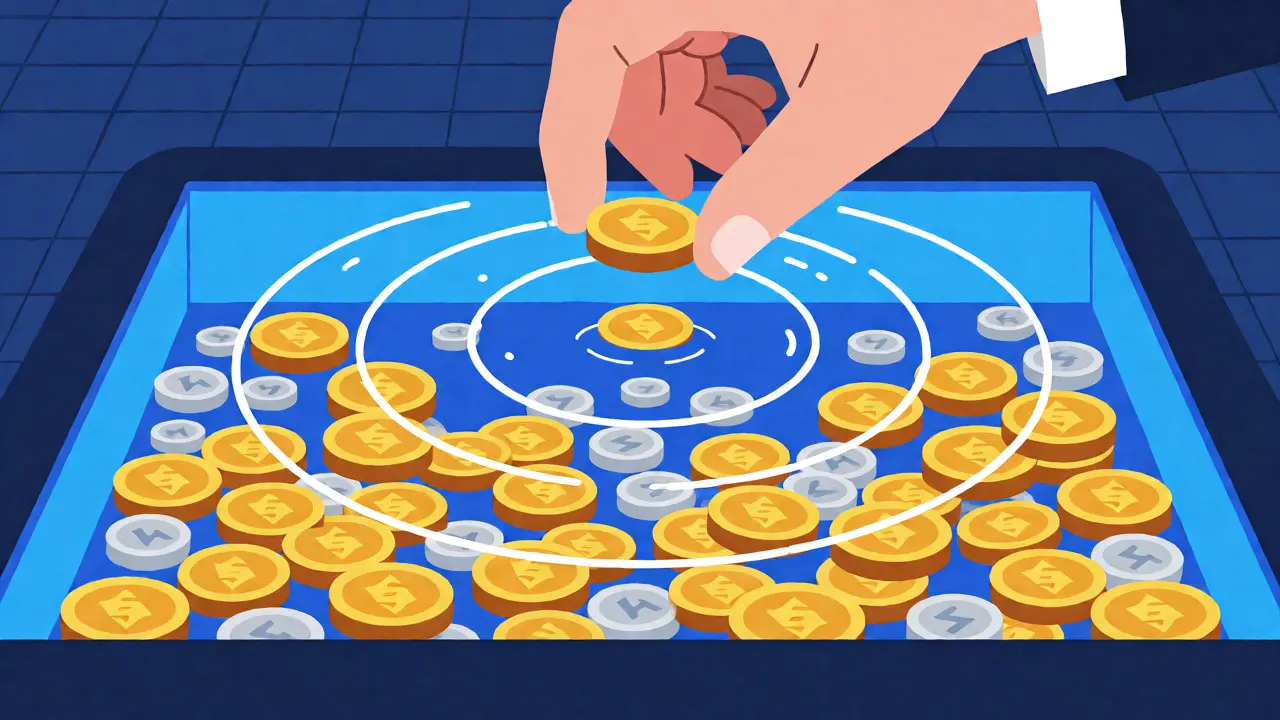
This is the most dangerous aspect of ANDYMAN right now. Recent data shows a 24-hour trading volume of approximately $12.73. Yes, twelve dollars and seventy-three cents. Compare that to a market capitalization of around $81,000. This implies a turnover ratio of 0.016%. What does this mean for you? It means the market is effectively dead or extremely thin.
If you buy $100 worth of ANDYMAN, you might move the price by 10-20% due to slippage. If you try to sell that same $100 later, you might get back only $80 because there are no buyers on the other side. High volume equals easy exits. Low volume equals trapped capital. Do not treat this asset as liquid cash. Treat it as a lottery ticket where the prize pool changes every time someone buys or sells.
Furthermore, the price discrepancies between data providers highlight this instability. One source might list the price at $0.000084, while another lists it at a fraction of that value based on stale data. When daily volume is this low, a single transaction can skew the reported average price across all aggregators. Never trust the price displayed on a dashboard without checking the live pool on Uniswap directly.
Risks: Why "Renounced" Isn't Enough
The project claims three major security features: zero transaction tax, renounced contract ownership, and burned liquidity. These are good signs, but they are not guarantees of safety. "Renounced" means the developer can no longer change the code to add taxes or pause transfers. "Burned liquidity" means the LP tokens were sent to a dead address, theoretically preventing the developer from pulling the rug pull. "Zero tax" means you don’t pay a fee to the project when you trade.
However, none of this eliminates Ethereum gas costs, Uniswap’s 0.3% swap fee, or the risk of a malicious initial setup. Was the contract source code verified? Is there an audit report? The retrieved materials do not show a link to a professional audit firm like CertiK or Hacken. Without an audit, "renounced" is just a claim until you see the bytecode on Etherscan confirming no hidden functions exist. Additionally, beware of address confusion. Another token named ANDYMAN exists on Ethereum with a different contract address. Always copy-paste the correct address: 0x68aaa0d94ea163b9bbf659dc3766defb4c0ac7be.

How to Buy and Store Safely
If you still want to take the plunge, here is the practical path. First, install MetaMask and fund it with Ethereum. Second, navigate to Uniswap V2. Third, paste the ANDYMAN contract address into the search bar. Do not rely on the name alone; verify the last four characters match 'c7be'. Fourth, execute the swap. Start small. Given the low liquidity, a large buy will result in significant price impact, meaning you’ll pay much more per token than the quoted spot price.
Storage is simple since it’s ERC-20. Your MetaMask will display it once imported. Keep your seed phrase offline. Since the project lacks a formal roadmap or governance voting system, holding the token gives you no special rights. You don’t get dividends, you don’t vote on proposals, and you don’t get early access to software. You are purely speculating on community sentiment and future marketing efforts.
Frequently Asked Questions
Is ANDYMAN a legitimate investment?
ANDYMAN is a speculative meme coin, not a traditional investment. It has no revenue, no product, and very low liquidity. It should only be purchased with money you can afford to lose completely, treating it as a high-risk gambling asset rather than a store of value.
Where can I buy ANDYMAN?
The primary place to buy ANDYMAN is on Uniswap V2, a decentralized exchange on the Ethereum network. You will need ETH to swap for it. It is generally not listed on centralized exchanges like Binance or Coinbase.
Does ANDYMAN have its own blockchain?
No, ANDYMAN does not have its own blockchain. It is an ERC-20 token that runs on the existing Ethereum blockchain. It relies on Ethereum for security, speed, and transaction finality.
What are the risks of buying ANDYMAN?
The main risks are extreme illiquidity (difficulty selling), high price volatility, potential rug pulls if liquidity wasn't properly burned, and the fact that 53% of the supply is held by just ten addresses. There is also no independent audit of the contract.
Is the ANDYMAN contract renounced?
The project claims the contract is renounced, meaning the developers cannot change the rules anymore. However, you should verify this yourself on Etherscan by checking the contract's ownership status. Claims without verification are risky in crypto.
Final Verdict: Should You Care?
ANDYMAN is a classic example of the "meme coin casino." It offers no utility, no technology, and minimal liquidity. Its value is derived entirely from whether people believe the story of a non-profit, community-driven resistance. If the community stays active and brings in new buyers, the price might rise. If attention shifts to the next shiny object, the price will likely drift toward zero due to the lack of fundamental support.
For traders, it’s a playground for testing slippage and market microstructure. For investors, it’s a warning sign. If you decide to enter, keep your position small, monitor the Uniswap pool depth closely, and always double-check the contract address. Don’t let the promise of "organic growth" blind you to the hard data: a $12 daily volume is not a foundation for long-term wealth preservation.