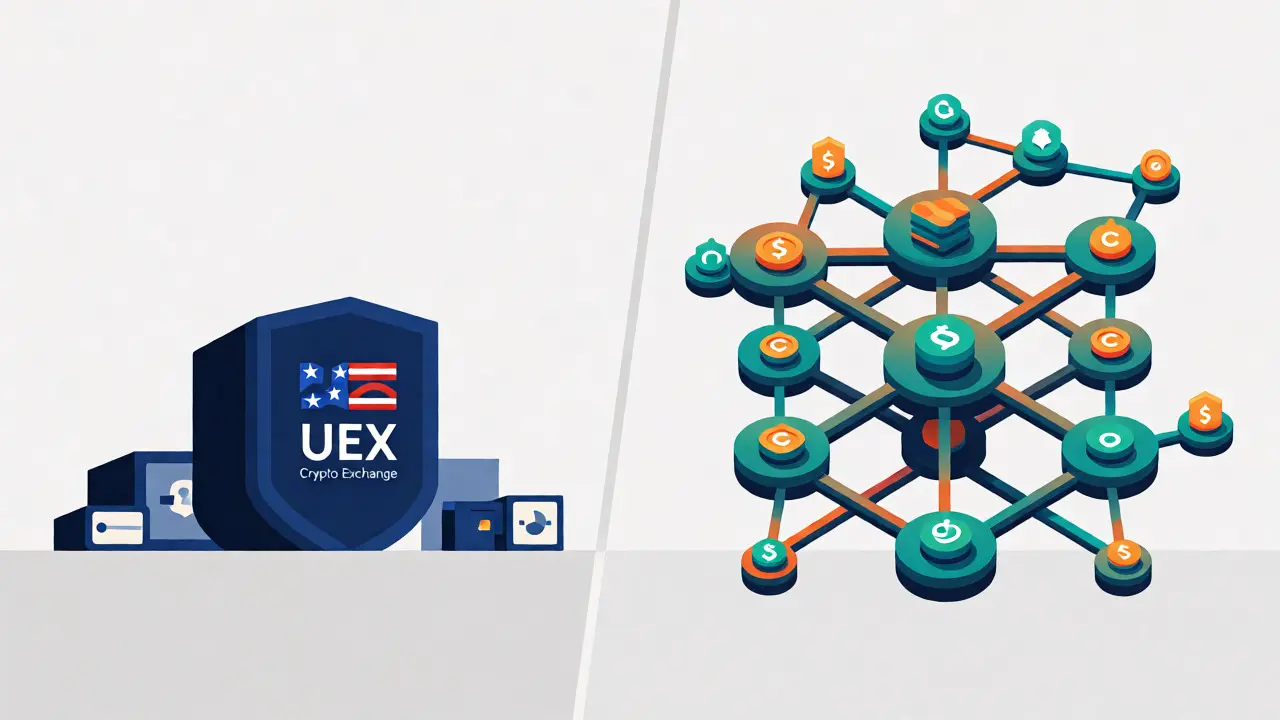
You type "UEX" into a search bar, and suddenly you're staring at two completely different things. One is a niche, US-regulated trading platform trying to keep its head above water in a crowded market. The other is Bitget's massive marketing push for their new Universal Exchange concept, which promises to merge stocks and crypto into one messy but exciting ecosystem. If you are here looking for a standard UEX crypto exchange review, you need to know exactly which UEX you are dealing with before you deposit a single dollar. Mixing them up could mean signing up for a small, compliant broker when you wanted a global derivatives hub, or vice versa.
The Name Game: Two UEXs, One Headache
Let's clear the air first. The term "UEX" has become dangerously ambiguous in the crypto world since late 2024 and throughout 2025. On one side, you have the standalone UEX Crypto Exchange. This is an independent platform operating under United States regulations. It holds an MSB (Money Service Business) registration, which means it plays by the strict rules of American financial law. It doesn't offer flashy meme coins or 100x leverage on obscure tokens. It offers safety, compliance, and a boringly reliable way to trade major assets.
On the other side, there is Bitget's "Universal Exchange." In 2025, during their seventh-anniversary celebration, Bitget rebranded their expansion strategy as the UEX concept. They aren't selling a separate app called UEX; they are describing their entire platform evolution. They want to be the place where you buy Apple stock, Ethereum, and Nvidia futures all in one click. This isn't a new company; it's a feature set. When people ask about "UEX," half are asking about the small US broker, and the other half are curious if Bitget's new vision is actually worth the hype.
Standalone UEX: The Compliant Choice
If you are in the United States and tired of exchanges that feel like casinos run by anonymous founders in offshore jurisdictions, the standalone UEX Crypto Exchange might appeal to you. Its biggest selling point isn't high-speed matching engines or gamified interfaces-it's regulatory legitimacy. TechBullion, a reputable tech publication, noted that mandatory KYC (Know Your Customer) verification is "a sign of a serious, law-abiding business." Why? Because scam exchanges usually hide in the shadows. UEX forces you to upload your ID and prove who you are. For privacy purists, this is a dealbreaker. For anyone worried about their funds vanishing overnight, it’s a comfort blanket.
The platform operates under federal oversight. This means if something goes wrong, you have legal recourse. You aren't just sending money to a black box in the Cayman Islands. You are interacting with a registered Money Service Business. While it may not have the deepest liquidity for altcoins compared to giants like Binance or Coinbase, it serves a specific purpose: providing a regulated gateway for US users who prioritize security over speculation.
Security Infrastructure: Cold Storage and Audits
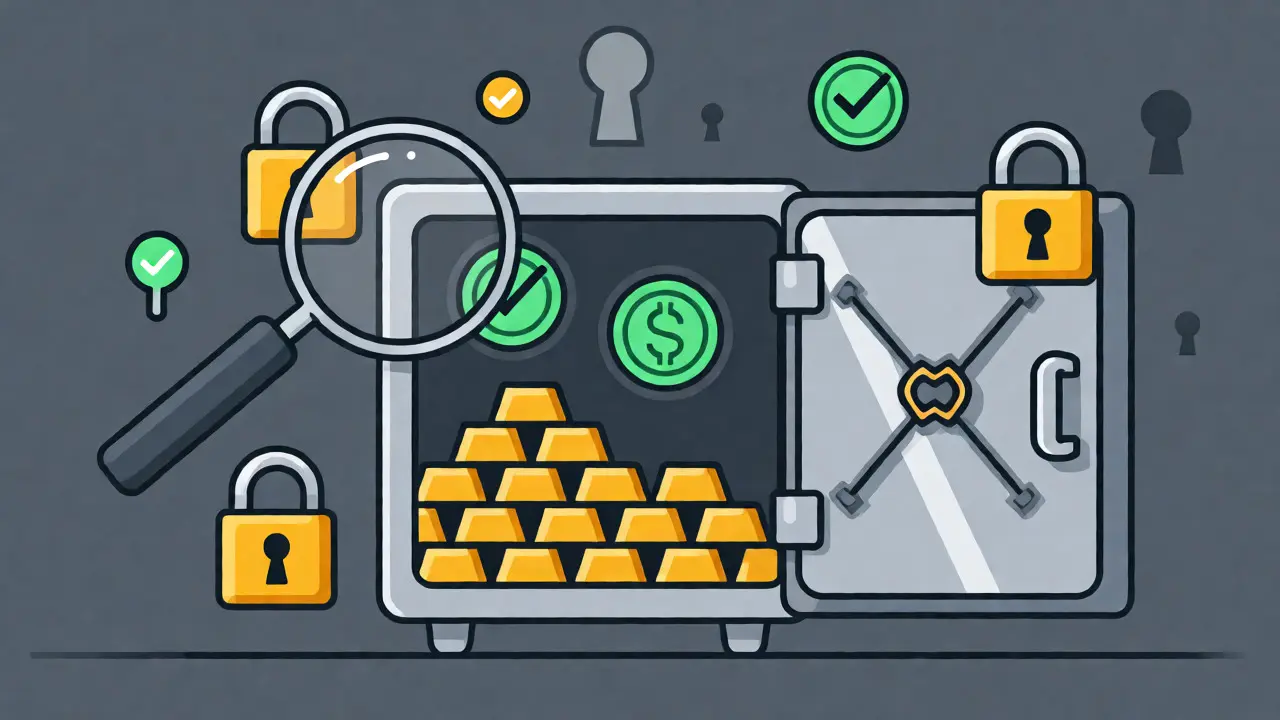
Security is where the standalone UEX Crypto Exchange tries to differentiate itself from the "wild west" platforms. They don't just say they are secure; they implement industry-standard protocols that you can verify. First, they use cold storage for the majority of user funds. This means most of the Bitcoin and Ethereum held on the platform is offline, stored in hardware wallets that require multiple cryptographic keys to access. Hackers can't steal what isn't connected to the internet.
Beyond storage, UEX employs end-to-end encryption for all data transactions. But the real trust-builder here is independent third-party security audits. They invite external firms to try and break their systems. As TechBullion pointed out, this is "exactly what we'd expect from a reputable exchange prioritizing user safety." There is no hidden fee structure or mystery insurance fund here. The setup is straightforward: strong encryption, offline storage, and regular checks by outsiders. It’s not fancy, but it works.
Bitget’s Universal Exchange: The Ambitious Rival
Now, let's look at the other UEX. Bitget's Universal Exchange concept is less about regulatory boxes and more about breaking down walls between traditional finance (TradFi) and digital assets. Launched aggressively in 2025, this initiative aims to solve the fragmentation problem in crypto. Instead of having one account for stocks, another for spot crypto, and a third for futures, Bitget wants to unify them.
How do they do it? By partnering with xStocks and Ondo Finance to offer tokenized stocks and ETFs. You can trade shares of companies like Apple (AAPL) or Nvidia (NVDA) using cryptocurrency derivatives. This is a significant shift. It allows crypto-native traders to hedge against traditional market movements without leaving their crypto wallet. Bitget also added support for assets across Ethereum, BSC, Base, and Solana networks, making it a multi-chain powerhouse.
CEO Gracy Chen stated that achieving a 186% reserve ratio in September 2025 shows a commitment to safeguarding user assets. That number matters. A reserve ratio above 100% means the exchange holds more assets than it owes users. It’s a buffer against insolvency. Bitget publishes monthly Proof of Reserves (PoR) reports verified via Merkle Tree methods, allowing you to independently check if your balance is backed by real assets. This level of transparency is rare outside of top-tier centralized exchanges.
| Feature | Standalone UEX Crypto Exchange | Bitget Universal Exchange Concept |
|---|---|---|
| Primary Focus | US Regulatory Compliance & Basic Trading | Integrated TradFi & Crypto Ecosystem |
| Regulation | US MSB Registration | Global Licenses (varies by region) |
| KYC Requirement | Mandatory Full KYC | Mandatory for full features |
| Asset Variety | Limited to Major Cryptocurrencies | Crypto, Tokenized Stocks, ETFs, Futures |
| Security Fund | Cold Storage & Multi-sig | $700M+ User Protection Fund |
| Target Audience | Conservative US Investors | Active Traders seeking Diversification |
Who Should Use Which?
Choosing between these two depends entirely on your risk tolerance and location. If you are a US resident who gets nervous about unregulated platforms, the standalone UEX Crypto Exchange is your safe harbor. You sacrifice asset variety and advanced trading tools for peace of mind. You know where your money is, who runs the company, and that they answer to US regulators. It’s not going to make you rich overnight through exotic arbitrage, but it won’t likely disappear either.
Conversely, if you are an active trader who wants exposure to the stock market without opening a brokerage account, Bitget’s Universal Exchange concept is compelling. The ability to trade NVDA futures alongside BTC spot trades is powerful. However, you must accept the complexity. Bitget operates globally, meaning regulatory protections vary by country. While their $700 million protection fund is impressive, it is a self-insured model, unlike government-backed insurance. You are trusting Bitget’s solvency and their public Proof of Reserves.

Pitfalls and Practical Tips
One major pitfall is confusion during sign-up. Users often land on Bitget expecting the standalone UEX interface and get overwhelmed by the sheer number of tabs and options. Conversely, users looking for Bitget’s stock integration might find the standalone UEX platform too basic. Always check the URL. The standalone exchange uses its own domain, while Bitget’s UEX features are embedded within bitget.com.
Another tip: watch the fees. Regulated US exchanges often have higher spreads to cover compliance costs. Bitget might offer lower maker/taker fees but charge more for withdrawal or conversion between tokenized stocks and stablecoins. Read the fine print on how tokenized stocks settle. Are they actual shares? Or synthetic derivatives? With Bitget’s partnership with xStocks, they are largely synthetic, tracking price movements rather than granting voting rights or dividends directly in your wallet. This distinction matters for long-term holders.
Final Verdict
There is no single "best" UEX because there are two different products wearing the same name tag. The standalone UEX Crypto Exchange is a legitimate, security-conscious player for those who value regulation above all else. It lacks the bells and whistles of larger competitors but delivers on its promise of safety. Bitget’s Universal Exchange is an ambitious experiment in financial convergence. It offers incredible utility for diversified traders but requires you to navigate a more complex, global regulatory landscape.
If you prioritize sleeping well at night knowing your funds are in a US-regulated entity, go with the standalone UEX. If you want to trade the S&P 500 with your Bitcoin profits and trust large-scale proof-of-reserves reporting, Bitget’s UEX concept is the superior tool. Just make sure you know which door you’re walking through.
Is UEX Crypto Exchange the same as Bitget?
No, they are distinct entities. The standalone UEX Crypto Exchange is an independent, US-regulated platform with MSB registration. Bitget is a global exchange that introduced the "Universal Exchange" (UEX) concept as a branding strategy for its integrated financial services, including tokenized stocks and crypto.
Is the standalone UEX Crypto Exchange safe?
The standalone UEX implements strong security measures, including cold storage with multi-signature approval, end-to-end encryption, and independent third-party security audits. Its US MSB registration adds a layer of regulatory oversight, making it a safer option for users concerned about unregulated offshore exchanges.
Can I buy stocks on UEX?
On the standalone UEX Crypto Exchange, you generally cannot buy traditional stocks; it focuses on cryptocurrencies. However, Bitget’s Universal Exchange concept allows users to trade tokenized stocks and ETFs (like Apple and Nvidia) alongside cryptocurrencies through partnerships with providers like xStocks and Ondo Finance.
Does UEX require KYC verification?
Yes, both the standalone UEX Crypto Exchange and Bitget require KYC (Know Your Customer) verification for full access. The standalone UEX mandates it due to US regulatory requirements, viewing it as a sign of legitimacy. Bitget requires it for higher limits and access to fiat gateways.
What is Bitget's Reserve Ratio?
As of September 2025, Bitget reported a 186% reserve ratio. This means the exchange holds 1.86 times the amount of assets needed to cover user deposits. They publish monthly Proof of Reserves (PoR) reports using Merkle Tree verification so users can independently audit their balances.