Remember the days when launching a crypto project meant printing billions of tokens and hoping someone bought them? Those early 'wild west' experiments are dead. The era of speculative junk is over. By 2026, Tokenomics design is the sophisticated economic architecture that governs value flow, community interaction, and project sustainability in blockchain ecosystems. It has evolved from a marketing gimmick into a rigorous discipline blending finance, game theory, and regulatory compliance.
If you are building or investing in Web3 today, looking at a token's price chart isn't enough. You need to understand the engine under the hood. The future of tokenomics isn't about getting rich quick; it's about creating systems that survive market crashes, regulatory scrutiny, and user apathy. This shift represents a fundamental change in how we view digital assets-not as lottery tickets, but as functional components of a broader financial infrastructure.
The Death of Simple Supply Models
In the early days, tokenomics was often reduced to two numbers: maximum supply and circulating supply. Projects would claim scarcity by burning tokens or locking them up, assuming this alone would drive value. That model failed because it ignored utility. A token with no use case is just a number on a ledger, regardless of how rare it is.
Modern design focuses on multi-mechanism coordination. Instead of relying on a single lever like deflation, successful protocols now layer multiple incentives. For example, a protocol might burn a portion of transaction fees to reduce supply while simultaneously offering staking rewards to encourage long-term holding. This creates a balance between reducing inflation and incentivizing participation. The goal is equilibrium, not explosive growth followed by collapse.
This complexity requires careful calibration. If rewards are too high, the system becomes inflationary and unsustainable. If they are too low, users leave for better opportunities. The art of modern tokenomics lies in finding the sweet spot where the cost of participation is outweighed by the value generated.
Real-World Assets (RWA) Bridge the Gap
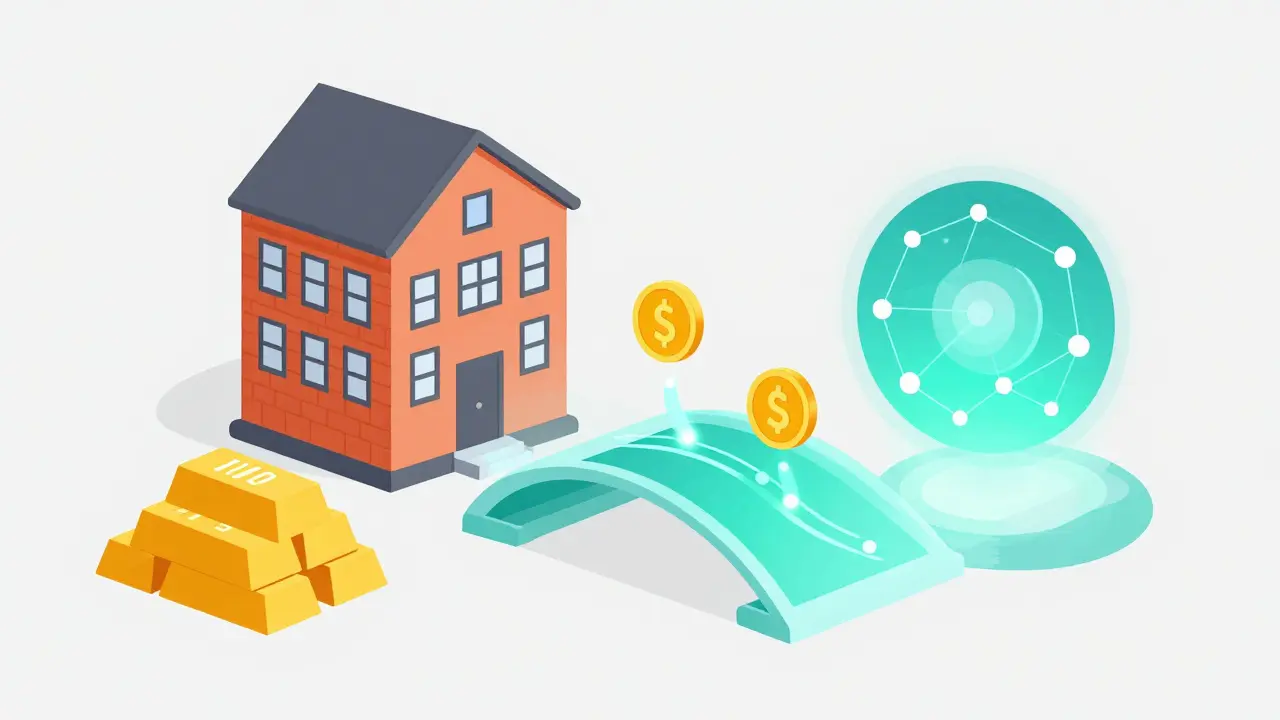
One of the most significant trends shaping the future is the integration of Real-World Asset (RWA) tokenization. This process involves representing physical assets-like real estate, treasury bonds, or commodities-as digital tokens on a blockchain. Projections suggest this sector could surpass $1.5 trillion in market capitalization by 2030.
Why does this matter for tokenomics? Because RWAs bring predictable cash flows into the volatile crypto world. When a token represents ownership in a rental property or a corporate bond, its value is tied to real-world income, not just speculation. This stability attracts institutional investors who previously stayed away due to risk concerns.
| Feature | Early Era (Pre-2023) | Future Design (2026+) |
|---|---|---|
| Primary Goal | Price appreciation via hype | Sustainable utility and cash flow |
| Supply Mechanism | Fixed cap or simple burns | Dynamic rebasing and fee-burning hybrids |
| Value Source | Speculative demand | RWA yields and network activity |
| Regulatory Stance | Avoidance or ignorance | Built-in compliance (MiCA, SEC) |
| Governance | Centralized teams | DAO-driven with liquid staking |
This convergence allows traditional finance participants to access blockchain benefits like fractional ownership and instant settlement. For token designers, it means building systems that can handle legal complexities alongside technical ones. The token is no longer just code; it's a legal instrument.
Compliance as a Core Feature
You cannot talk about the future without addressing regulation. In 2025, frameworks like the European Union's Markets in Crypto-Assets (MiCA) regulation became standard. The Securities and Exchange Commission (SEC) also increased scrutiny globally. Projects that treated compliance as an afterthought found themselves delisted or shut down.
Future-proof tokenomics designs integrate compliance directly into the smart contract logic. This might mean programmatically restricting transfers to sanctioned addresses or ensuring that only verified investors can hold certain token classes. While this reduces anonymity, it increases trust. Institutional money flows where there is clarity, not chaos.
Transparency is key here. Investors want to see exactly how funds are used and how decisions are made. Protocols that publish regular audits and maintain open communication channels gain a competitive advantage. Compliance is no longer a barrier; it's a feature that signals maturity and longevity.
DAO Governance and Liquid Restaking
Decentralized Autonomous Organizations (DAOs) have moved beyond simple voting mechanisms. The future of DAO tokenomics involves deep integration with Decentralized Finance (DeFi) protocols. This synergy enhances both liquidity and governance participation.
Consider Liquid Restaking Tokens (LRTs). These allow users to stake their assets to secure one blockchain while earning yield from other services. This concept of "pooled security" amplifies the utility of locked capital. Instead of sitting idle, staked assets generate revenue across multiple layers of the ecosystem.
For DAOs, this means tokens aren't just votes; they're productive assets. Holders can stake their governance tokens in DeFi platforms to earn rewards, which incentivizes retention. This creates a positive feedback loop: more staking leads to higher security and yield, which attracts more holders, strengthening the DAO's influence and financial health.
However, this complexity brings challenges. Balancing decentralization with operational efficiency remains tricky. Fully decentralized decision-making can be slow, while centralized control risks corruption. The best designs use hybrid models, allowing rapid execution for routine tasks while reserving major changes for community vote.
Sustainability Through Risk Mitigation
A robust tokenomic system must account for failure. Technical risks, such as smart contract vulnerabilities, can wipe out value instantly. Economic risks, like hyperinflation or liquidity crunches, can erode trust over time. Future designs prioritize risk mitigation through multi-layered security and stress testing.
Continuous value generation is another pillar. A token needs a reason to exist beyond trading. Whether it's paying for network fees, accessing premium services, or receiving dividends from RWA holdings, utility drives organic demand. Without genuine use cases, prices rely solely on new buyers entering the market-a pyramid structure destined to collapse.
Demand generation strategies focus on growing adoption rates and network activity. Metrics like daily active users and transaction volume are better indicators of health than price alone. Projects that build tools people actually want to use create sustainable demand. This approach shifts the narrative from "how much will this go up?" to "what can I do with this?".
Practical Steps for Evaluating Tokenomics
So, how do you assess if a project has future-ready tokenomics? Look beyond the whitepaper's promises. Here’s a checklist:
- Utility Check: Does the token solve a specific problem within the ecosystem? Is it required for core functions?
- Supply Dynamics: Are emissions predictable? Is there a mechanism to offset inflation, such as fee burns or buybacks?
- Governance Structure: Who controls the treasury? Is voting power distributed fairly, or concentrated among insiders?
- Regulatory Alignment: Does the project comply with major jurisdictions like MiCA or US regulations?
- Revenue Model: How does the protocol make money? Can it sustain operations during bear markets?
Ask yourself: If the price dropped 90%, would anyone still use this product? If the answer is yes, the tokenomics likely have merit. If no, it’s probably just speculation.
What is the main difference between old and new tokenomics?
Old tokenomics focused on fixed supplies and speculative price pumps. New tokenomics emphasizes sustainable utility, regulatory compliance, and integration with real-world assets to create long-term value.
How do Real-World Assets (RWAs) affect token value?
RWAs tie token value to tangible income sources like rent or interest. This reduces volatility and attracts institutional investors by providing predictable cash flows rather than relying on hype.
Why is compliance important in tokenomics design?
Compliance ensures legal survival. Regulations like MiCA require transparency and accountability. Projects that ignore these rules risk shutdowns, while compliant ones gain trust from larger financial players.
What are Liquid Restaking Tokens (LRTs)?
LRTs allow users to stake assets to secure a blockchain while earning additional yields from other services. This maximizes capital efficiency and strengthens network security through pooled resources.
How can I tell if a token has sustainable demand?
Look for genuine utility. Does the token pay for essential services or provide access to unique features? High user activity and consistent transaction volumes indicate organic demand driven by usage, not speculation.