If you're an Iranian citizen looking to trade cryptocurrency without getting your account frozen by international exchanges, EXIR might be the only option left. But is it actually any good? In 2025, with crypto markets more liquid and accessible than ever, EXIR still operates like a relic - a platform built not for innovation, but for survival.
What Is EXIR, Really?
EXIR is a cryptocurrency exchange based in Tehran, Iran. It was launched in December 2017 specifically because Iranian users were being locked out of global exchanges like Binance and Coinbase due to U.S. sanctions. Unlike other platforms that try to serve everyone, EXIR only allows Iranian citizens to open accounts. No exceptions. No VPNs. No workarounds. If you’re not an Iranian national with a valid national ID, you can’t even sign up. This isn’t a feature - it’s a necessity. For Iranians, international exchanges are off-limits. EXIR fills that gap. But it doesn’t compete with global exchanges. It exists because they can’t.Trading Volume and Liquidity: A Major Red Flag
Liquidity is everything in crypto. If you can’t buy or sell without moving the price, you’re not trading - you’re guessing. Back in August 2020, EXIR’s 24-hour trading volume was around $1.01 million. By December 2021, it had dropped to just $388,116. That’s a 61% decline in less than two years. And there’s been no public update since then. Compare that to Binance, which clears over $76 billion in volume daily in 2025. EXIR’s volume is less than 0.0005% of that. That means even if you want to trade a popular coin like Bitcoin or Ethereum, you’re likely to face slippage, delayed orders, or outright failed trades. For most traders, this isn’t just inconvenient - it’s a dealbreaker. If you’re trying to enter or exit a position quickly, EXIR’s low liquidity makes it risky.Fiat Deposits: Only Wire Transfers
EXIR doesn’t accept credit cards, PayPal, or even local bank apps like ZarinPal. The only way to deposit Iranian rials is through a bank wire transfer. That means:- Deposits take 1-3 business days
- You need to visit your bank in person or use online banking with strict limits
- No instant funding - you can’t jump on a price spike the moment it happens
Mobile App: Still Not Available
As of the last update in December 2021, EXIR promised a mobile app for iOS and Android “within the near future.” Over three years later, there’s still no official app. No download links. No announcements. That’s a huge problem. Most crypto users trade on their phones. If you’re relying on a desktop-only web interface, you’re missing out on real-time alerts, quick trades, and price tracking. In 2025, a crypto exchange without a mobile app feels outdated - and untrustworthy.Security and Regulation: A Black Box
EXIR doesn’t publish any security audits. No proof of reserves. No details on cold storage. No information about insurance for user funds. That’s not normal. Even smaller global exchanges like KuCoin or Bitrue publish basic security details. Iran’s government has cracked down on crypto in the past, and there’s no public record of EXIR being licensed or regulated. That means:- Your funds are not protected by any known financial safety net
- If the platform shuts down, you have no legal recourse
- There’s no transparency on who controls the keys
Who Is EXIR Actually For?
EXIR isn’t for traders looking for low fees, high liquidity, or advanced tools. It’s not for investors who want to stake or earn interest. It’s not for developers who need API access. It’s only for one group: Iranian citizens who need to buy and sell crypto without being blocked by international sanctions. That’s it. If you’re an Iranian user and you’ve been locked out of Binance or Kraken, EXIR gives you a way in. But you’re trading on a platform with:- Extremely low volume
- No mobile app
- Slow, outdated deposit methods
- No public security information
How EXIR Compares to Global Exchanges
| Feature | EXIR | Binance | Kraken | Coinbase |
|---|---|---|---|---|
| Available to Iranians | Yes | No (blocked) | No (blocked) | No (blocked) |
| 24-hour trading volume | $388,116 (est.) | $76B+ | $4.2B | $2.1B |
| Fiat deposit methods | Wire transfer only | Credit card, bank transfer, Apple Pay, etc. | Bank transfer, SEPA, SWIFT | Bank transfer, debit card, ACH |
| Mobile app | Not available | Yes | Yes | Yes |
| Supported coins | ~20 | 500+ | 200+ | 100+ |
| Security audits | None published | Yes, regularly | Yes, publicly available | Yes, with insurance |
| Customer support | Farsi only, no public details | 24/7, multilingual | 24/7, email + chat | 24/7, email + chat |
The Bigger Picture: Is EXIR Sustainable?
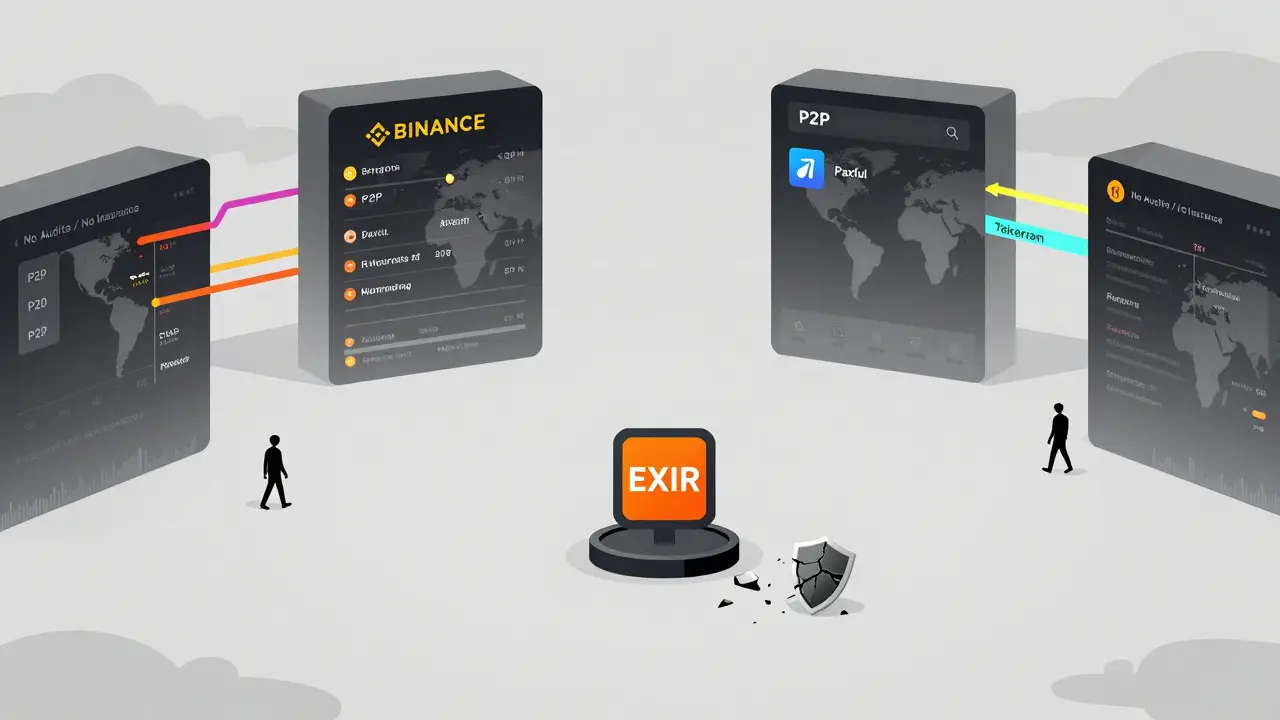
EXIR survives because Iran’s financial isolation forces people to use it. But that’s not a business model - it’s a contingency plan. Iranian users are already turning to peer-to-peer (P2P) platforms like LocalBitcoins and Paxful to buy crypto with cash or mobile payments. These platforms bypass EXIR entirely. They’re faster, more flexible, and often cheaper. If EXIR doesn’t improve its liquidity, launch a mobile app, or add better deposit methods, it risks becoming obsolete even within its own market. The longer it waits, the more users will find alternatives - even if those alternatives are riskier.Final Verdict: Use EXIR Only If You Have No Other Choice
EXIR isn’t a top-tier exchange. It’s not even a mid-tier one. It’s a survival tool. If you’re an Iranian citizen and you need to trade crypto without getting your account frozen, EXIR is your only regulated-looking option. But you’re trading on a platform with almost no liquidity, no mobile access, and zero transparency. If you’re outside Iran - don’t even try. You can’t sign up. And even if you could, the experience would be useless. The best-case scenario? EXIR improves. It launches its app. It boosts volume. It opens up deposit methods. But there’s no sign of that happening. The last update was over three years ago. For now, EXIR is a necessary evil - not a good choice.Can non-Iranians use EXIR crypto exchange?
No. EXIR strictly blocks all users outside Iran. You must have an Iranian national ID to register. Even if you use a VPN, the platform verifies your identity through Iranian government-linked systems. Attempting to bypass this will result in account suspension.
Does EXIR have a mobile app?
As of December 2025, EXIR does not have a mobile app. Although the platform announced plans for an iOS and Android app in late 2021, no official release has occurred. Users must rely on the web version, which is not optimized for mobile trading and lacks push notifications or quick-order features.
Is EXIR safe to store crypto long-term?
No. EXIR does not publish any proof of reserves, security audits, or insurance policies. There’s no public information on how user funds are stored or protected. For long-term storage, users should withdraw crypto to a personal hardware wallet like Ledger or Trezor immediately after trading.
What cryptocurrencies can I trade on EXIR?
EXIR supports around 20 cryptocurrencies, including Bitcoin (BTC), Ethereum (ETH), Tether (USDT), and a few Iranian-pegged tokens. It lacks major altcoins like Solana, Cardano, or Polkadot, and does not offer staking, lending, or yield farming features found on global exchanges.
Why is EXIR’s trading volume so low?
EXIR’s low volume is due to its restricted user base (only Iranians), limited deposit options (wire transfers only), and lack of mobile access. With no marketing, no global reach, and no competitive features, it struggles to attract enough traders to create deep liquidity. The volume has declined since 2020, suggesting user interest is fading even within Iran.
Are there better alternatives for Iranians?
Yes. Many Iranian users now use peer-to-peer (P2P) platforms like LocalBitcoins, Paxful, or local Telegram groups to buy crypto with cash, mobile payments, or bank transfers. These platforms often have better liquidity and faster access than EXIR, though they carry higher scam risks. EXIR remains the only exchange with a formal structure - but not necessarily the best option.
Does EXIR support API trading or institutional use?
No. EXIR does not offer API access, institutional accounts, or advanced trading tools like limit orders, stop-losses, or margin trading. It’s designed for basic retail users only, with a simple interface and minimal features. Professional traders should avoid it.