The core problem with our current energy systems is that they are centralized. Power flows from a massive plant to your house, and the billing is handled by a giant company. This setup is slow to adapt to renewables like wind and solar, which are often scattered across many small locations. Blockchain fixes this by letting energy move and be traded in a web-like structure rather than a straight line. With the global market for these technologies climbing toward a multi-billion dollar valuation, the shift is happening faster than most expected.
How Modular Blockchain is Solving the Scaling Problem
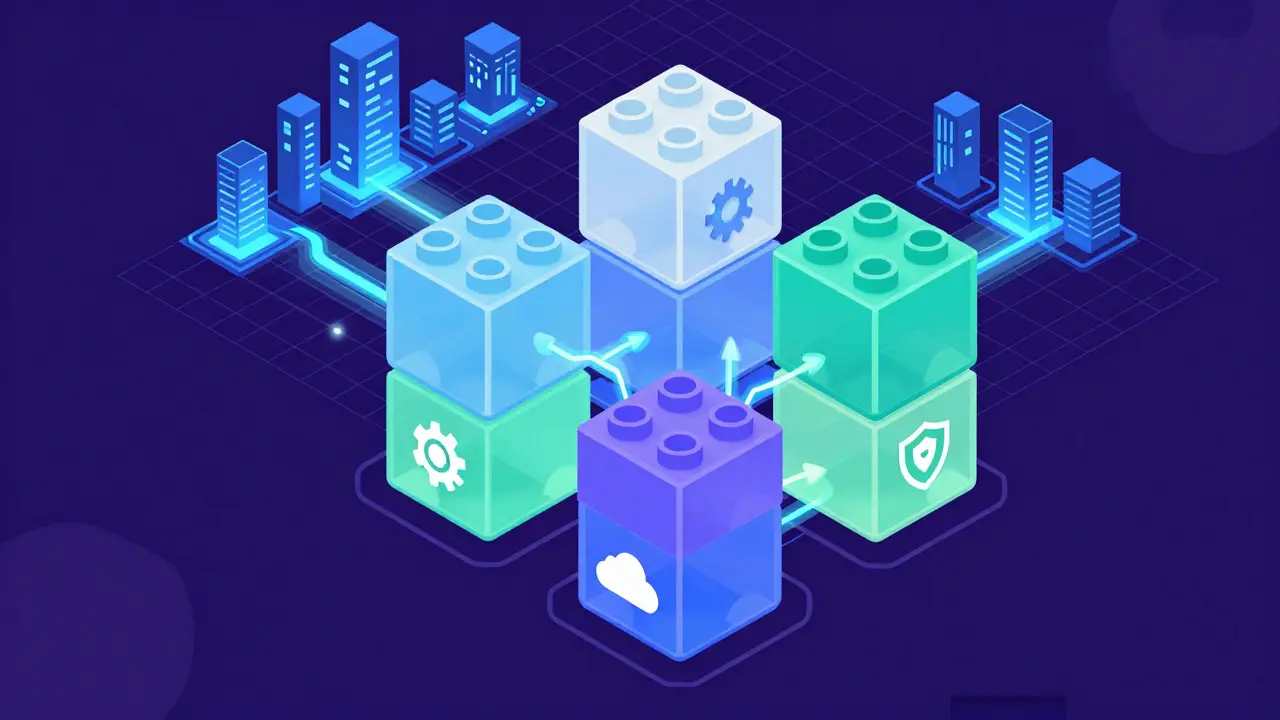
Early blockchain attempts in energy failed because they were too slow. You can't run a city's power grid on a network that only processes a few transactions per second. That's where Modular Blockchains is a blockchain architecture that separates the network's functions-like consensus, execution, and data availability-into different layers to increase speed and efficiency.
Instead of one chain doing everything, developers now use a "lego-block" approach. For example, Celestia is a modular data availability network that allows other blockchains to store data without needing to process every single transaction. By offloading data storage, energy companies can launch high-speed trading platforms without spending millions on massive server farms. We're also seeing Polygon 2.0 provide the coordination needed to link different energy networks together, while EigenLayer allows the network to borrow security from Ethereum to protect these specialized energy services.
| Feature | Monolithic Blockchain | Modular Blockchain |
|---|---|---|
| Transaction Speed | Slow (Bottlenecks occur) | Very Fast (Parallel processing) |
| Cost to Deploy | High (Requires full node set) | Lower (Uses existing data layers) |
| Customization | Rigid | High (Pick-and-choose layers) |
| Best For | Simple payment logs | Real-time smart grid automation |
Real-World Use Cases: From Solar Panels to Carbon Credits
It's easy to get lost in the tech, but the real value is in how it changes the day-to-day operation of the energy sector. Here are the most impactful ways this is actually working right now:
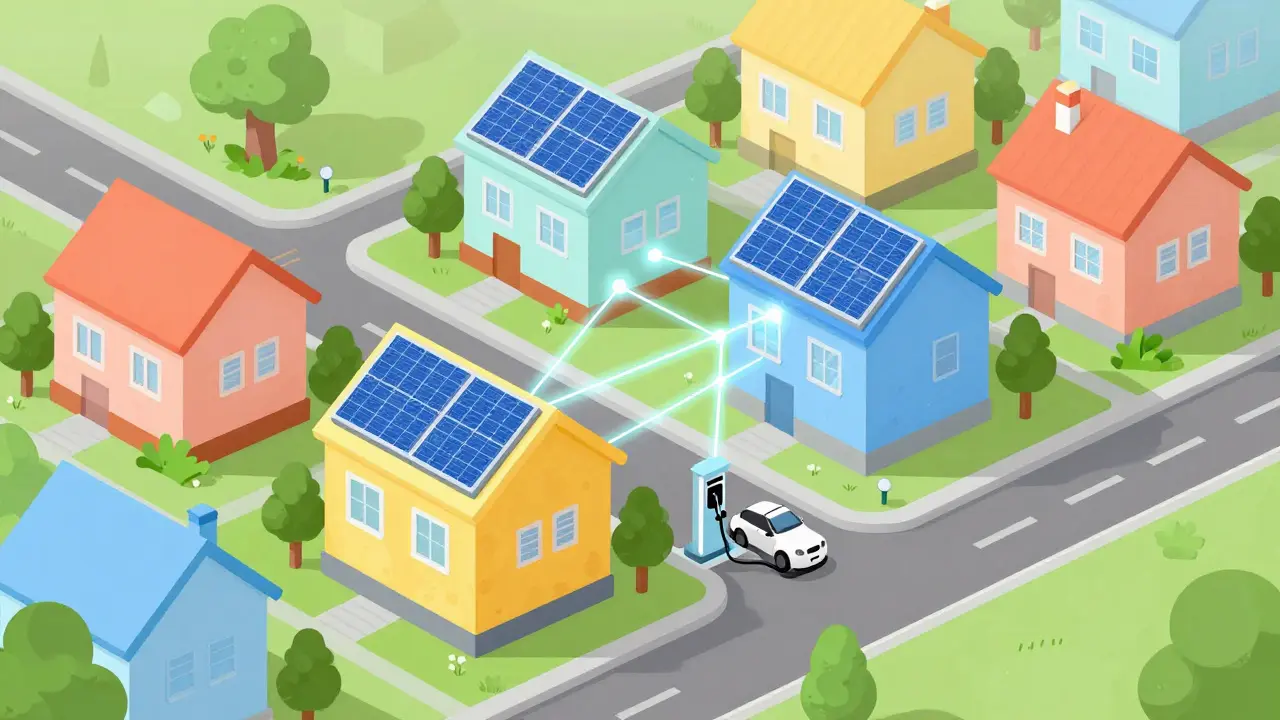
- Peer-to-Peer (P2P) Energy Trading: This is the "Uber for electricity." If your home produces more solar power than you need, a smart contract automatically sells it to a neighbor. No utility company needs to manually verify the trade; the blockchain handles the ledger and the payment instantly.
- Carbon Credit Tokenization: Historically, carbon credits were messy and prone to fraud. Now, farmers can tokenize their verified carbon capture efforts. A Token is a digital representation of an asset on a blockchain, making these credits easy to trade and impossible to double-count.
- Smart Grid Automation: Using sensors and automated code, grids can now balance themselves. If a surge in demand hits a specific neighborhood, the blockchain can trigger a request for stored energy from local home batteries, preventing blackouts without human intervention.
- Lifecycle Battery Tracking: Ever wonder where your EV battery goes after it dies? Blockchain creates a "digital passport" for batteries, tracking them from the cobalt mine to the recycling center. This ensures minerals are sourced ethically and recycled properly.
- Green Crypto Mining: Some developing nations are using excess renewable energy-power that would otherwise go to waste-to mine digital assets, effectively turning wasted electricity into a national revenue stream.
The AI and Blockchain Synergy
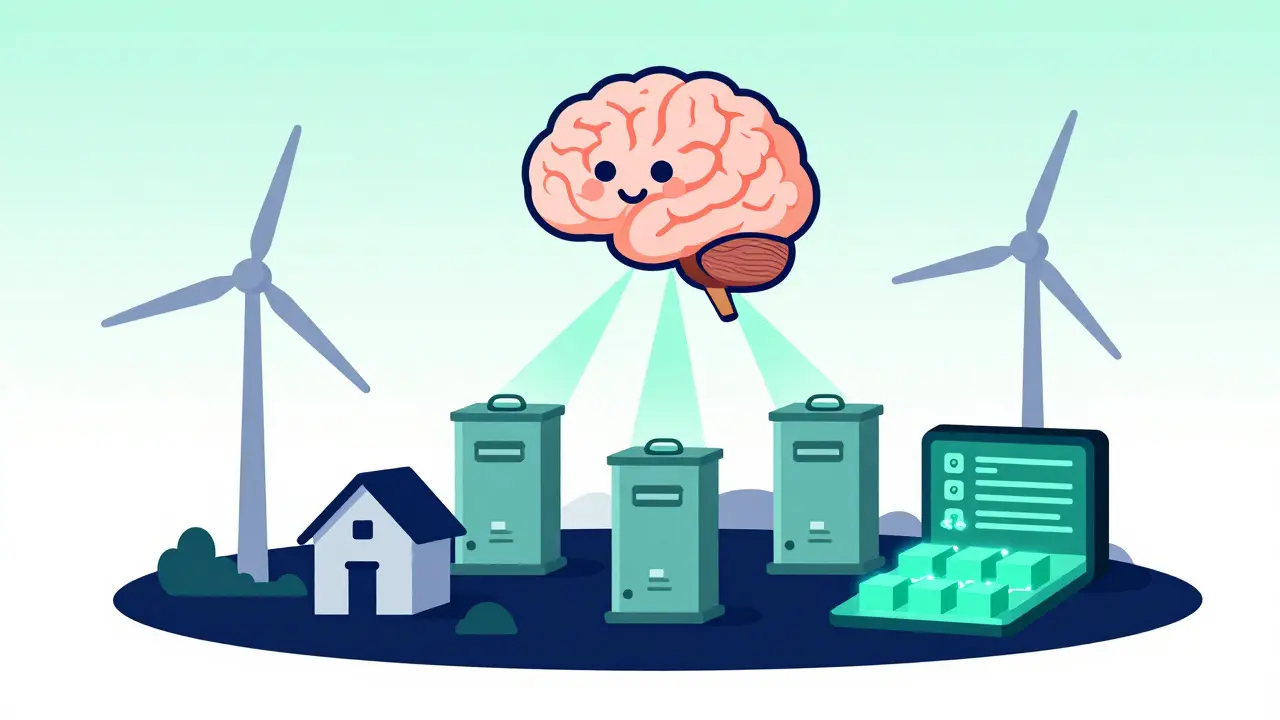
Blockchain is great for record-keeping, but it's not "smart" on its own. That's why the integration of Artificial Intelligence is the simulation of human intelligence processes by machines, especially computer systems, used here for predictive analytics and automation. When you combine AI with blockchain, you get a system that can predict energy spikes and then execute the trades automatically via smart contracts.
For example, an AI model might predict a heatwave in Perth next Tuesday. It can automatically signal thousands of tokenized home batteries to hold their charge until the peak hour, then sell that power back to the grid at the highest possible price. The AI does the thinking; the blockchain does the trusting and the paying.
Global Trends and the Regional Divide
Not every part of the world is moving at the same speed. Europe is currently the powerhouse in this space, holding over 35% of the market share. Their push for energy independence from Russian gas has accelerated the move toward decentralized renewables. In contrast, North America's progress is a bit more fragmented. While there has been some political shuffling regarding incentives for green tech, the sheer volume of private investment in electrification and storage continues to grow.
Asia-Pacific, particularly China, is playing a different game. They are investing heavily in the hardware-batteries, EVs, and nuclear-and using blockchain primarily to secure the supply chain and reduce reliance on imported oil. We are seeing a global race not just for energy, but for the software that manages that energy.
Overcoming the "Dirty Blockchain" Stigma
We can't talk about blockchain without talking about the environment. For years, the industry was haunted by Proof-of-Work is a consensus mechanism that requires miners to solve complex puzzles, consuming vast amounts of electricity. It felt ironic to use a power-hungry technology to save the planet.
However, the industry has pivoted. Most energy-focused projects now use Proof-of-Stake, which uses a fraction of the energy by validating transactions based on the number of tokens held rather than computing power. This shift toward sustainability is no longer optional; it's a requirement for any project wanting to receive government grants or corporate funding in 2026.
Will blockchain replace my current electricity provider?
Probably not entirely, but it will change their role. Instead of being the sole owner of the power and the bill, your provider may become a "grid orchestrator" who manages the physical wires while the blockchain handles the complex trading and billing between neighbors.
Is it safe to trade energy via a decentralized network?
Yes, and in many ways, it's safer. Because every transaction is encrypted and recorded on an unalterable ledger, it's much harder for a company to overcharge you or for a hacker to spoof a billing record. The use of smart contracts ensures you only pay when the energy is actually delivered.
Do I need to own cryptocurrency to use these energy systems?
No. Most modern energy blockchain systems operate in the background. You might interact with a simple app that shows your balance in dollars or euros, while the blockchain handles the technical movement of tokens and credits behind the scenes.
How does tokenizing carbon credits actually help the planet?
It stops "double counting." In the old system, two different companies could sometimes claim the same forest's carbon offset. With blockchain, a carbon credit is a unique digital asset. Once it's "retired" (used to offset an emission), it's gone from the ledger, ensuring a 1:1 ratio of offset to emission.
What is the biggest hurdle to widespread adoption right now?
Regulation. While the tech is ready, the laws are still catching up. Governments are still figuring out how to tax P2P energy sales and how to regulate decentralized grids that don't have a single corporate entity in charge.
Next Steps for the Industry
If you're a developer or an energy entrepreneur, the move is now toward modularity. Don't try to build a whole new blockchain from scratch; instead, use existing data layers like Celestia and focus on the "execution layer"-the actual app that solves a specific problem like battery recycling or solar trading.
For the average consumer, the next few years will be about integration. Look for "smart home" systems that mention blockchain compatibility. These will eventually allow you to turn your home into a micro-power plant that doesn't just save you money on your bills, but actually earns you a passive income by supporting your local community's energy needs.