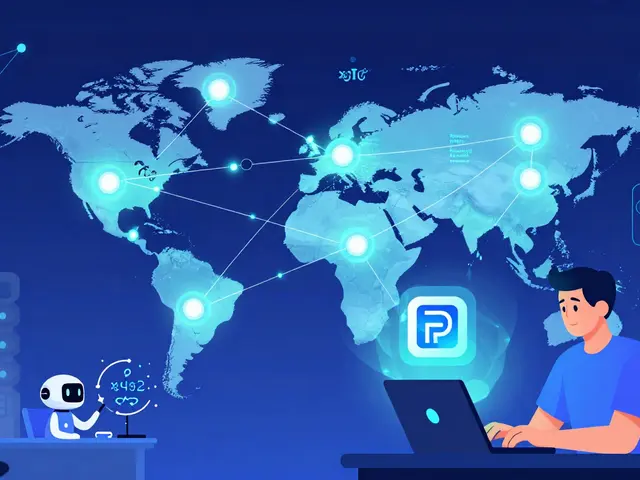
You’ve probably heard the buzzwords flying around crypto Twitter and Discord servers. Someone’s launching a Social Token for their new music album, while another artist is minting an NFT collection of digital art. Both are on the blockchain, both involve creators, and both promise to change how we interact with online communities. But they aren’t the same thing. In fact, treating them as interchangeable is a fast track to confusion or lost money.
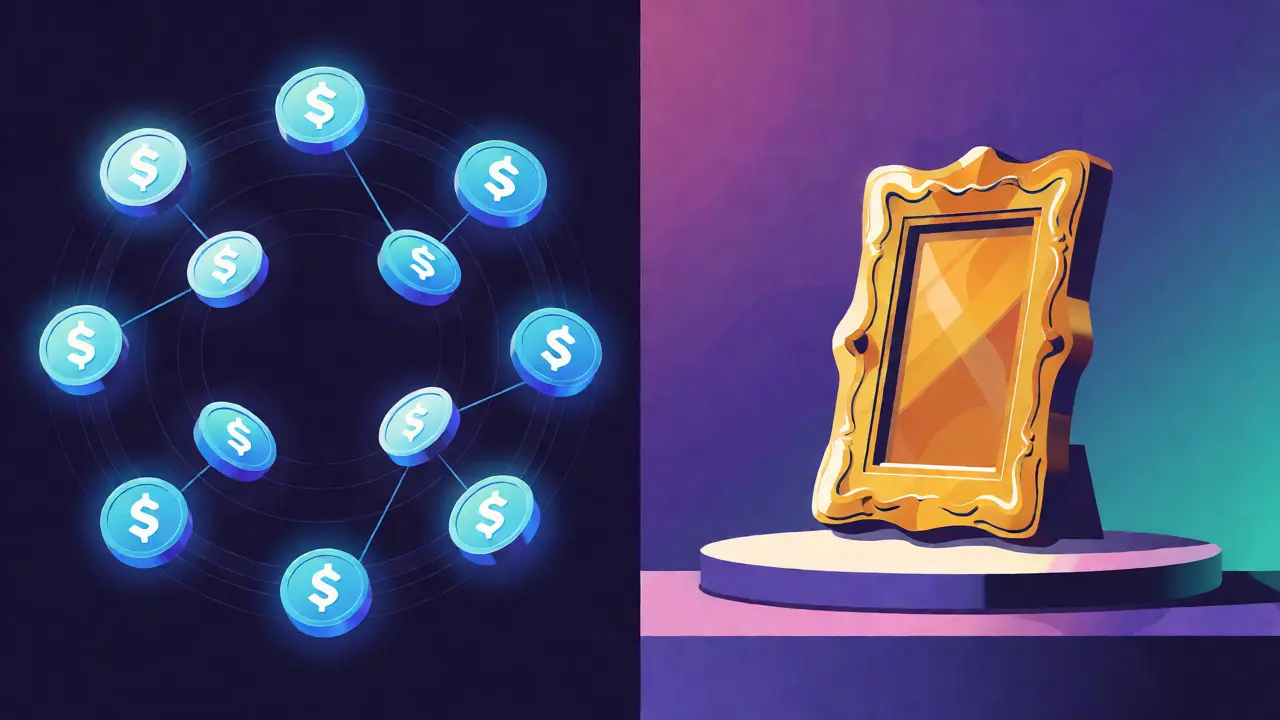
Here’s the core difference in plain English: A social token is like a club membership card that you can trade. It’s fungible, meaning one token is exactly the same as another, and it grants access or status within a community. An NFT (Non-Fungible Token) is like a signed original painting. It’s unique, indivisible, and proves you own that specific piece of digital history. One is about participation; the other is about ownership.
The Core Difference: Fungibility vs. Uniqueness
To understand why these two assets behave so differently, you have to look at their technical backbone. This isn’t just jargon; it dictates how much things cost to buy, sell, and manage.
Social tokens are fungible. Think of Bitcoin or Ethereum-every unit is identical to every other unit. If I send you one social token from my wallet, it doesn’t matter which specific token I sent because they all hold the same value and grant the same rights. They typically use standard frameworks like ERC-20 on Ethereum, which allows for batch transfers and simple smart contracts. This makes them cheaper to create and easier to scale for large communities.
NFTs, on the other hand, rely on standards like ERC-721 or ERC-1155. These standards ensure each token has a unique ID and metadata. You can’t swap one Bored Ape Yacht Club NFT for another and expect them to be identical-one might have gold fur, another might have sunglasses. This uniqueness drives scarcity, which often drives price. But it also means higher transaction costs and more complex management because each asset needs its own tracking.
| Feature | Social Token | NFT |
|---|---|---|
| Fungibility | Fungible (1:1 exchange) | Non-fungible (Unique) |
| Standard Example | ERC-20 | ERC-721 / ERC-1155 |
| Primary Value Driver | Community utility & access | Rarity & provenance |
| Transaction Cost | Lower (batch processing) | Higher (individual tracking) |
| Best For | Governance, loyalty, access | Art, collectibles, proof of ownership |
What Are Social Tokens Actually Used For?
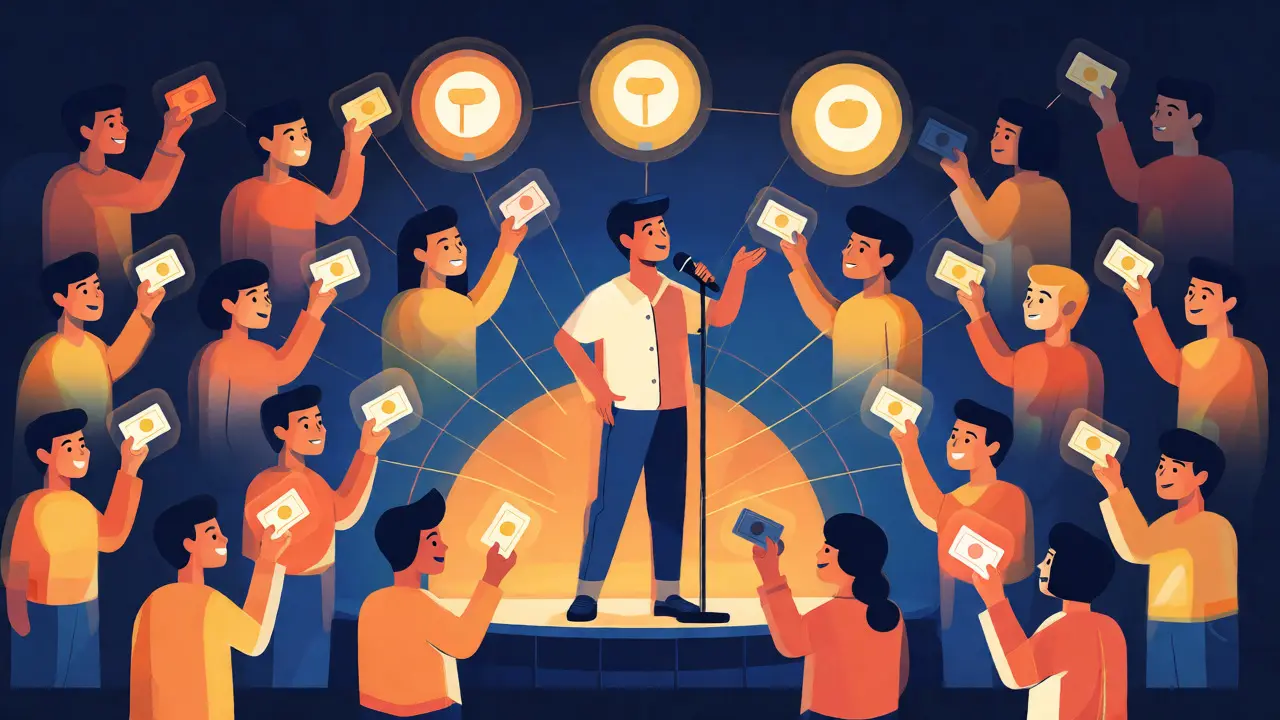
If you’re thinking, “Okay, but what do I actually get?” let’s break down the real-world applications. Social tokens are essentially the currency of the creator economy. They turn passive followers into active stakeholders.
There are three main types you’ll encounter:
- Personal/Creator Tokens: Issued by individuals like musicians or influencers. For example, when Sting launched his social token, fans could buy it to support his work and gain exclusive content. It’s a way for creators to monetize their brand directly without relying solely on ad revenue or label deals.
- Community Tokens: These strengthen group bonds. The Shiba Inu community uses tokens to gatekeep private Telegram groups. If you leave the community, you can sell your token back. It creates a liquid market for belonging.
- Platform Tokens: These incentivize usage on specific apps. You earn tokens for posting, commenting, or moderating, creating a self-sustaining ecosystem.
The power here is in ongoing engagement. Unlike an NFT purchase, which is often a one-time transaction, holding a social token usually implies continued interaction. Robert Lewandowski, the soccer star, tokenized parts of his brand to give fans exclusive benefits. It’s not just about owning a picture of him kicking a ball; it’s about having a relationship with his brand that evolves over time.
Why Do People Buy NFTs?
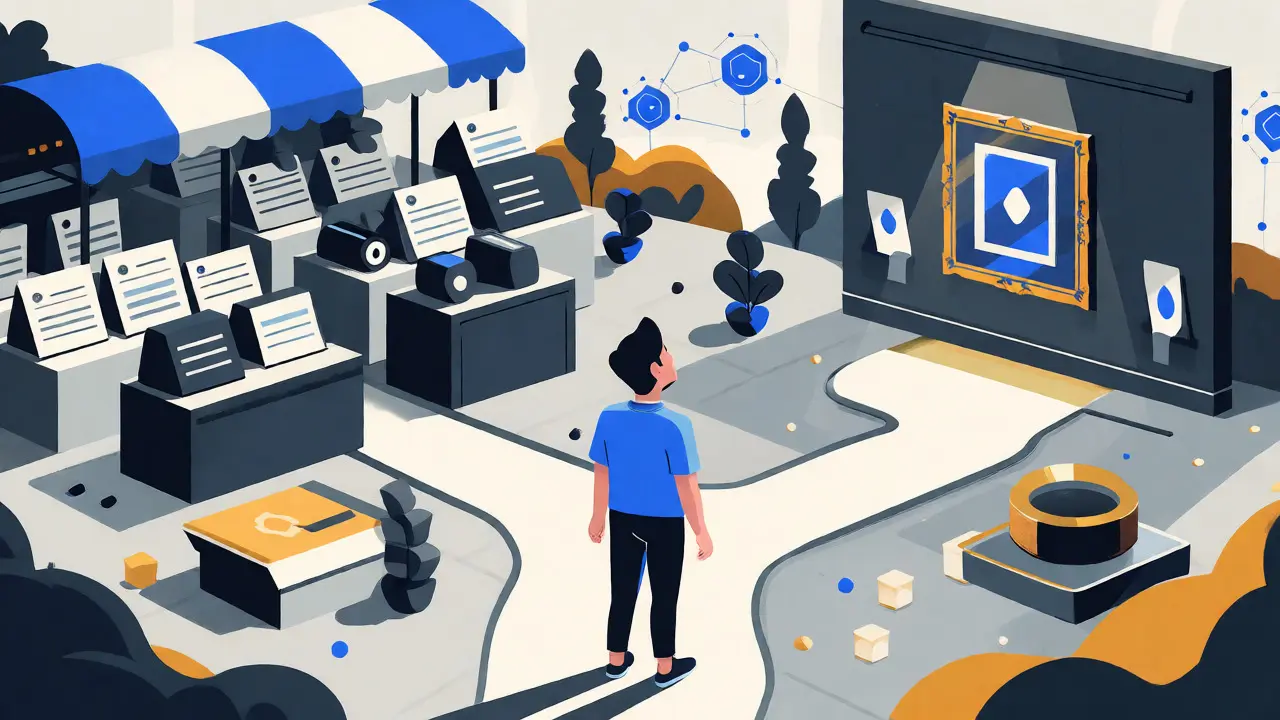
NFTs scratch a different itch. They are about exclusivity and status. When you buy an NFT, you’re buying a certificate of authenticity for a digital item. This works brilliantly for digital art, where provenance was historically hard to prove. Before NFTs, anyone could right-click and save a JPEG. Now, you can prove you own the “original” version registered on the blockchain.
But don’t think it’s just about art. Gaming items, virtual real estate in metaverses like Decentraland, and even domain names (like ENS domains) are NFTs. The value is subjective and driven by rarity. A rare CryptoPunk might sell for millions not because it looks better than others, but because there are only nine of that specific trait combination. Scarcity creates desire.
However, this comes with volatility. Because valuation is subjective and lacks the clear “exchange rate” logic of some social tokens, prices can swing wildly based on hype cycles. Coinbase Learning notes that while social tokens have defined utility metrics, NFT values often lack clear-cut determination, making them riskier for casual investors.
Which One Should You Choose?
This depends entirely on your goal. Are you building a community, or are you selling a product?
Choose Social Tokens if:
- You want to build a loyal fanbase that feels invested in your success.
- You need a scalable solution for thousands of users (low transaction fees).
- You want to offer governance rights (voting on project direction).
- You prefer steady, utility-based value rather than speculative spikes.
Choose NFTs if:
- You are selling unique digital goods (art, music tracks, game skins).
- You want to create artificial scarcity to drive premium pricing.
- Your audience values status symbols and “flexing” their holdings.
- You need to prove ownership of a specific asset.
Consider the entry barrier. Social tokens often allow for micro-transactions, letting fans dip their toes in with small amounts. NFTs frequently require significant upfront capital, especially for “blue chip” collections. For a beginner creator, social tokens offer a lower-risk way to test community interest before committing to high-effort NFT drops.
Regulatory Risks and Future Convergence
Neither path is without danger. Experts warn that social tokens face regulatory uncertainty. Since they often resemble securities (investment contracts), they could attract scrutiny from bodies like the SEC. If a social token promises profit based on the efforts of others, it might fall under security laws. NFTs have faced similar questions, though less intensely so far, largely because they’re framed as collectibles.
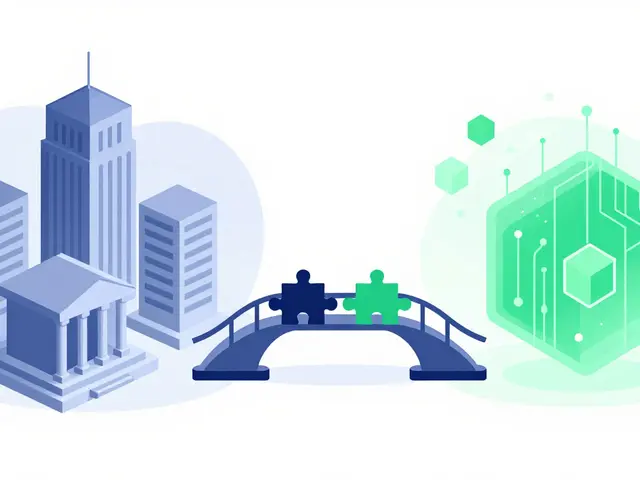
Interestingly, the lines are blurring. We’re seeing hybrid models where artists sell NFTs for ownership of a song but issue social tokens for access to live workshops. This combines the scarcity appeal of NFTs with the recurring engagement model of social tokens. As blockchain infrastructure improves, expect these categories to merge further, offering comprehensive digital asset strategies rather than isolated tools.
Ultimately, neither is “better.” They solve different problems. Social tokens build relationships; NFTs certify assets. Knowing which problem you’re trying to solve is the first step to choosing the right tool.
Can a social token become an NFT?
Not directly, because they operate on different standards (fungible vs. non-fungible). However, protocols exist that allow swapping or bridging between asset classes. Some platforms let you burn multiple social tokens to mint a unique NFT, effectively converting access rights into a collectible item.
Are social tokens safer than NFTs?
“Safer” is relative. Social tokens generally have clearer utility metrics and lower volatility than speculative NFTs, but they carry regulatory risks regarding securities classification. NFTs have less regulatory clarity but suffer from extreme price volatility and liquidity issues if the hype dies.
Do I need coding skills to launch either?
No. Platforms like Roll, Rally, or OpenSea provide no-code interfaces. You can launch a social token or mint an NFT using pre-built smart contracts. Custom development is only needed for highly specialized features or unique tokenomics.
How do I value a social token?
Valuation is tied to community health and utility. Metrics include holder count, trading volume, and the perceived value of perks (e.g., exclusive Discord access). Unlike NFTs, which rely on rarity, social tokens rely on network effects-the more people join and participate, the more valuable the token becomes.
Can I hold both social tokens and NFTs in the same wallet?
Yes. Most Web3 wallets like MetaMask or Phantom support both fungible tokens and NFTs. They appear in separate tabs or sections within the wallet interface, allowing you to manage your portfolio of memberships and collectibles simultaneously.