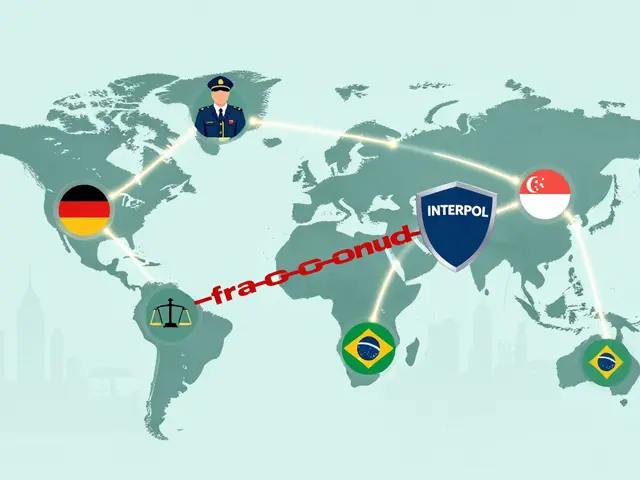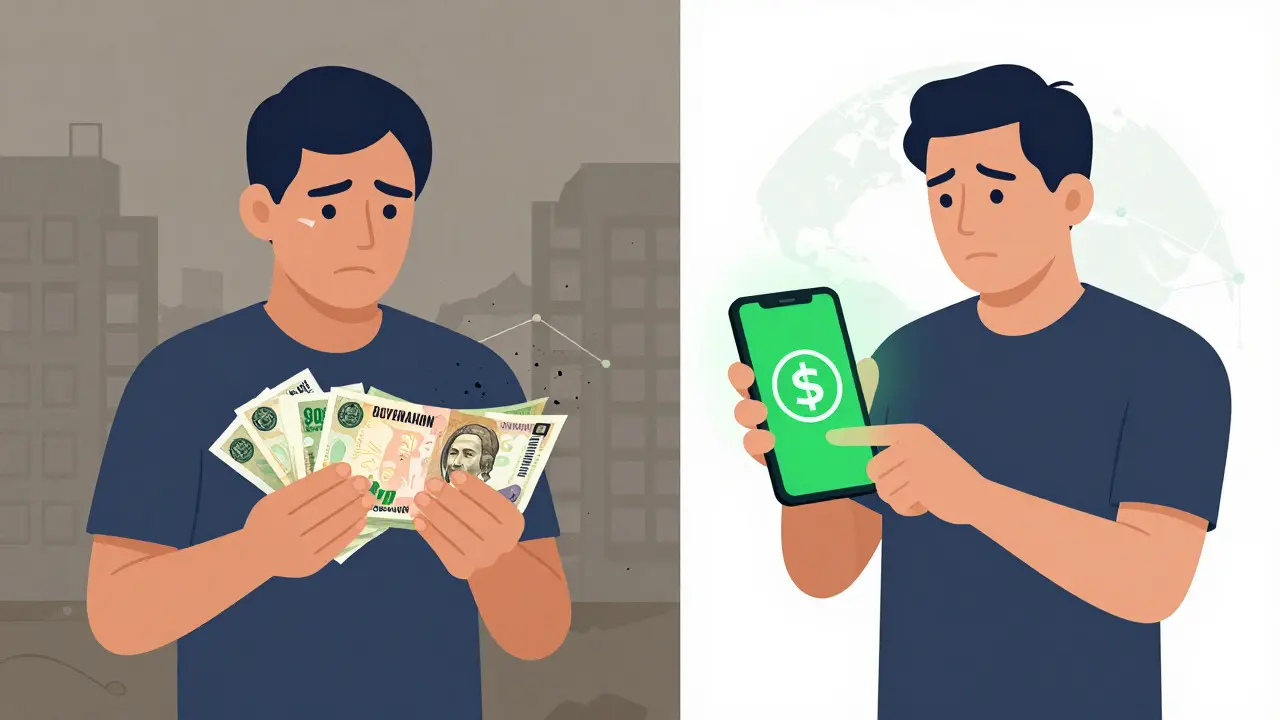
Imagine waking up every morning knowing that the money in your pocket is worth significantly less than it was yesterday. For millions of people in Venezuela, this isn't a hypothetical scenario; it is daily life. With annual inflation hitting 229% as of May 2025 and the local currency, the bolívar, losing over 70% of its value in just a few months, traditional banking has become a trap rather than a safety net. In this environment, cryptocurrency has stopped being a speculative investment for tech enthusiasts and has become a vital survival tool for ordinary citizens.
You might wonder how digital assets function in a country with frequent power outages, internet restrictions, and heavy government scrutiny. The answer lies in a grassroots revolution driven by necessity. Venezuelans have built a parallel financial system using stablecoins like USDT (Tether) and peer-to-peer (P2P) networks to bypass capital controls and preserve their purchasing power. This article breaks down exactly how this system works, why specific technologies are preferred, and what it means for the future of finance in crisis zones.
The Shift from Bolívar to "Binance Dollars"
To understand the scale of adoption, you first need to look at the language used on the streets of Caracas. You will rarely hear merchants talking about the official exchange rate set by the Central Bank of Venezuela (BCV). Instead, prices are quoted in what locals call "Binance Dollars." This term refers specifically to USDT traded on the Binance platform. It has become the de facto standard for pricing goods and services because it offers stability against the volatile bolívar.
This shift represents a fundamental change in economic behavior. When you buy groceries or pay rent, the transaction is often calculated in USDT equivalents. If you pay in bolívares, the price is adjusted daily based on the prevailing black market rate, known as the "dólar negro," or more commonly now, the P2P crypto rate. This three-tiered exchange system-official BCV rate, black market cash rate, and crypto P2P rate-creates a complex landscape where the crypto rate is increasingly becoming the benchmark for real-world value.
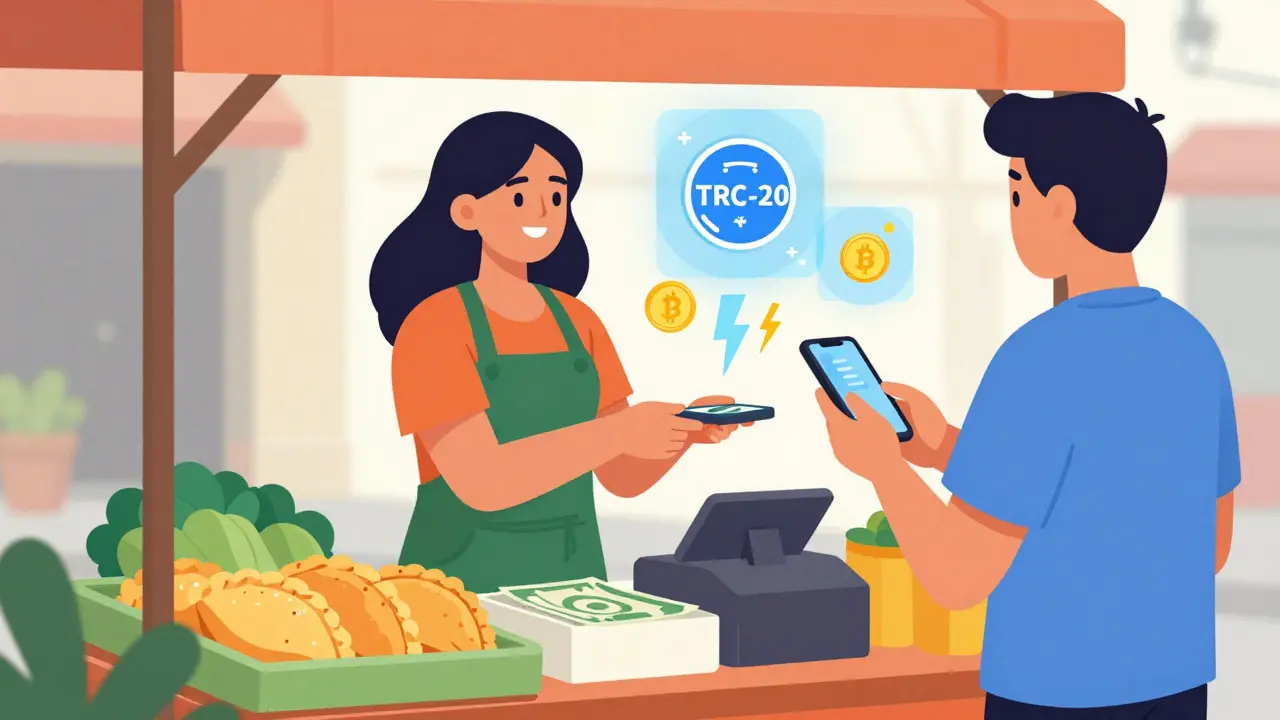
The private sector has embraced this reality fully. Data from July 2025 shows that Venezuelan businesses recorded $119 million in cryptocurrency transactions in a single month. This isn't just small-scale barter; it includes significant commercial activity. From street vendors selling empanadas to technology startups paying salaries, the integration of crypto into the daily economy is deep and widespread. Merchants accept these payments because holding bolívares is financially suicidal due to rapid depreciation.
Why USDT and TRC-20 Dominate Daily Transactions
Not all cryptocurrencies are created equal when it comes to survival. While Bitcoin (BTC) holds value as a store of wealth, its volatility makes it risky for buying bread or paying electricity bills. Instead, Venezuelans rely heavily on stablecoins, particularly USDT, which is pegged to the US dollar. This peg provides the psychological and practical stability needed for everyday commerce.
However, simply holding USDT isn't enough; the network matters. Most transactions occur on the TRC-20 network, powered by the Tron blockchain. Why? Because fees and speed are critical. Sending USDT via Ethereum's ERC-20 standard can cost several dollars in gas fees, which is prohibitive for small transfers. TRC-20 transactions typically cost less than one cent and settle in seconds. For a vendor receiving a $5 payment, a $3 fee would wipe out their profit. TRC-20 ensures that the full amount arrives instantly, making micro-transactions viable.
| Network | Average Fee | Transaction Speed | Primary Use Case in Venezuela |
|---|---|---|---|
| TRC-20 (Tron) | < $0.01 | Seconds | Daily purchases, remittances, small business payments |
| ERC-20 (Ethereum) | $2 - $10+ | Minutes | Large value storage, institutional transfers |
| BEP-20 (BNB Chain) | < $0.10 | Seconds | Secondary option for lower fees |
| Bitcoin Network | $1 - $5 | 10+ Minutes | Long-term savings, large cross-border transfers |
This technical choice highlights how users optimize for efficiency. The dominance of TRC-20 reflects a pragmatic approach: minimize costs and maximize speed. It allows the ecosystem to function smoothly even for those with very limited funds.
Navigating Restrictions Through Peer-to-Peer Trading
If banks are unreliable and direct bank transfers are restricted, how do people get crypto into their hands? The answer is Peer-to-Peer (P2P) trading platforms. Binance P2P and formerly LocalBitcoins have become the essential infrastructure for entering and exiting the crypto economy. These platforms allow individuals to trade directly with each other without intermediaries.
Here is how a typical transaction works: A user wants to convert bolívares to USDT. They find a seller on the P2P platform who accepts mobile money transfers (like Pago Móvil) or cash meetups. The buyer sends the bolívares to the seller's bank account, confirms the transfer in the app, and the platform releases the USDT to the buyer's wallet. This process bypasses traditional banking limits and capital controls entirely.
Remittances play a huge role here. In 2023, families sent $5.4 billion to Venezuela, with 9% flowing through cryptocurrency channels. Previously, sending money meant dealing with Western Union fees, long lines, and capped amounts. Now, a relative abroad can send USDT directly to a family member's wallet in seconds. The recipient then sells the USDT on P2P for bolívares to spend locally. This method is faster, cheaper, and avoids many of the sanctions-related hurdles that complicate traditional wire transfers.
However, this system requires trust and vigilance. Scams exist, so users have developed sophisticated verification methods. They check seller ratings, trade volumes, and completion rates meticulously. Community groups on WhatsApp and Telegram share blacklists of bad actors, creating a self-regulating ecosystem that operates outside formal legal frameworks.
Challenges: Infrastructure, Literacy, and Security
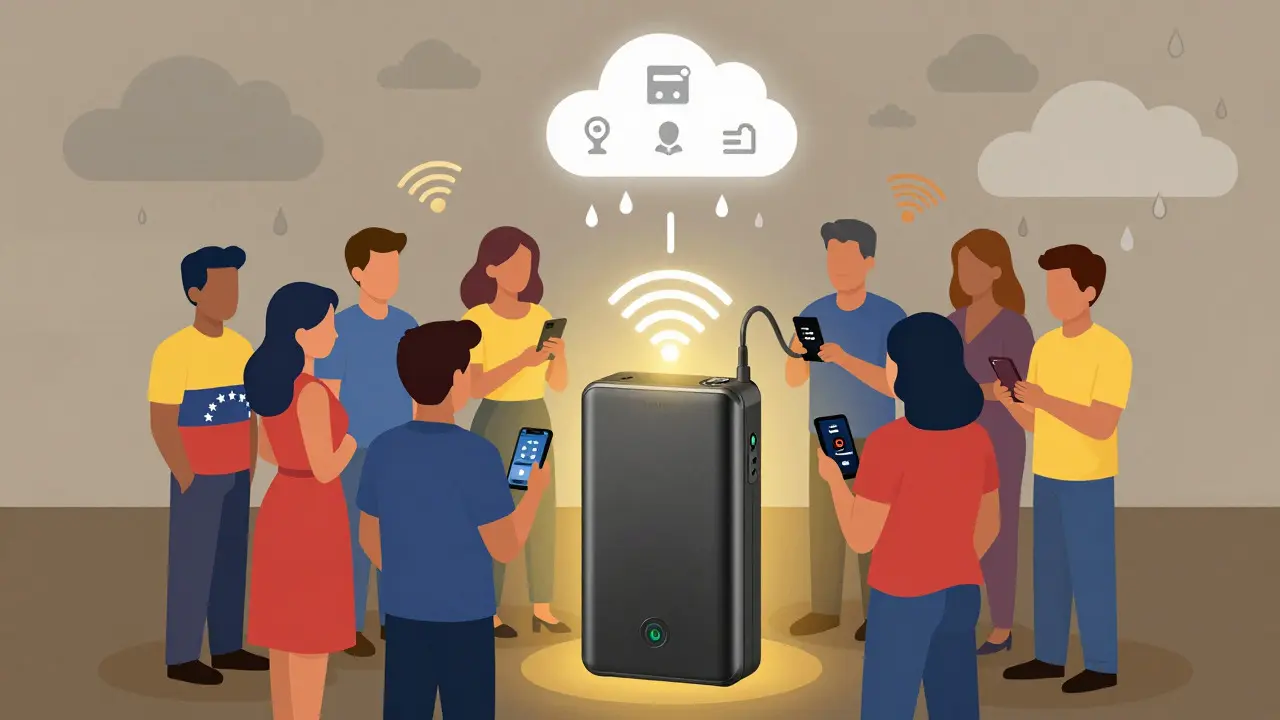
Crypto adoption doesn't happen in a vacuum. Venezuela faces severe infrastructure challenges that make digital finance difficult. Frequent power outages mean users must keep smartphones charged constantly. Internet connectivity can be spotty or throttled, interrupting transactions at critical moments. Users often carry portable power banks and rely on mobile data hotspots to ensure they can access their wallets when needed.
Technical literacy is another barrier. While the concept of saving in dollars is simple, managing private keys and avoiding phishing scams is not. Many new users learn through trial and error or community mentorship. The learning curve for basic operations takes about 2-3 weeks, but mastering security best practices takes longer. Mistakes can be costly; losing a seed phrase means losing everything, with no customer support to call.
Security risks extend beyond user error. Government crackdowns on mining operations and exchanges create an atmosphere of uncertainty. While the state tolerates consumer-level usage of stablecoins, it has historically targeted larger entities. This regulatory ambiguity forces users to stay agile, constantly adapting to new rules or enforcement actions. Despite this, the demand for financial sovereignty keeps adoption growing.
Government Response and the Failed Petro
The Venezuelan government's relationship with cryptocurrency is contradictory. On one hand, it launched the Petro, a state-backed token, in 2018. Intended to circumvent sanctions and stabilize the economy, the Petro failed miserably due to lack of transparency, low liquidity, and public distrust. By 2024, it was effectively discontinued, abandoned by both citizens and international partners.
On the other hand, the government has occasionally tolerated dollar-backed crypto exchanges because they provide a pressure valve for the economy. Without these outlets, social unrest could escalate further. However, this tolerance is fragile. Periodic raids on mining farms and arrests of exchange operators remind users that the state retains the power to disrupt the ecosystem. This tension between necessity and control defines the current landscape.
Political instability adds another layer of complexity. Following the contested 2024 presidential election, with conflicting claims of victory between Nicolás Maduro and opposition candidate Edmundo González, financial uncertainty increased. Yet, analysts note that crypto usage persists regardless of political outcomes. The underlying driver is economic reality, not political ideology. As long as the bolívar remains unstable, citizens will seek alternatives.
Future Outlook: Irreversible Dollarization
Looking ahead, the trend toward blockchain-based dollarization appears irreversible. Unlike neighboring countries like Brazil, which are pursuing institutional integration and regulatory frameworks, Venezuela's adoption is bottom-up and survival-driven. This grassroots nature makes it resilient to top-down bans. Even if the government imposes stricter controls, users have already built workarounds using decentralized tools.
As infrastructure improves and user education increases, we can expect deeper integration. We may see more businesses issuing invoices directly in crypto, payroll systems operating on-chain, and greater use of decentralized finance (DeFi) protocols for lending and borrowing. The key will be balancing accessibility with security, ensuring that vulnerable populations aren't left behind or exploited.
For the global crypto community, Venezuela serves as a powerful case study. It demonstrates that when traditional systems fail, people will innovate. Crypto isn't just a technological novelty here; it is a lifeline. Understanding how Venezuelans navigate these challenges offers valuable insights into the true utility of decentralized finance in crisis situations.
Is it legal to use cryptocurrency in Venezuela?
The legal status is ambiguous. The government has not explicitly banned personal use of cryptocurrencies like Bitcoin or USDT, but it has cracked down on mining operations and exchanges. Citizens use crypto primarily to survive hyperinflation, operating in a gray area where tolerance fluctuates based on political and economic pressures.
What is the safest way to store crypto in Venezuela?
Most users prefer non-custodial wallets where they control their own private keys, reducing reliance on centralized exchanges that could face regulatory issues. However, for daily trading, many keep funds on reputable P2P platforms like Binance due to convenience, accepting the counterparty risk involved.
Why do Venezuelans prefer USDT over Bitcoin?
USDT is a stablecoin pegged to the US dollar, providing price stability essential for daily transactions. Bitcoin's volatility makes it unsuitable for buying groceries or paying rent, as its value can swing significantly within hours. USDT offers the predictability of fiat currency with the benefits of digital transfer.
How do people overcome internet and power issues?
Users rely on mobile data connections, portable power banks, and offline planning. They often perform transactions during periods of stable connectivity and use lightweight apps optimized for slower networks. Community knowledge sharing helps identify reliable service providers and times for better connectivity.
Can foreigners easily send money to Venezuela via crypto?
Yes, sending USDT via TRC-20 is fast and cheap. Recipients can sell it on P2P platforms for local currency. This method bypasses traditional banking restrictions and sanctions hurdles, making it a popular choice for remittances among the diaspora.