Back in 2021, music NFTs felt like a wild gamble. Artists were dropping digital albums and claiming fans could own a piece of their music. Some made millions. Others lost everything. Today, the hype has settled - and what’s left are real, lasting success stories. Not because of speculation, but because artists figured out how to use blockchain to build something deeper: real connections with fans.
It’s Not About Selling Songs - It’s About Selling Access
The biggest mistake early music NFT projects made was treating NFTs like digital collectibles. Buy a song. Hold it. Hope it goes up in value. That didn’t last. The winners? They treated NFTs like VIP passes. Take 3LAU. In 2021, he sold 33 NFTs of his album Ultraviolet for $11.7 million. But here’s what made it stick: each NFT came with exclusive access. Owners got custom remixes, backstage passes, even co-writing credits on future tracks. One fan told Reddit they got a personalized song from 3LAU that became their wedding theme. That’s not a collectible. That’s a relationship. Same with Tarot. He didn’t just drop an NFT album. He gave holders access to live, token-gated performances. 92% of his NFT owners showed up to at least one show. That’s not luck. That’s design. He turned buyers into community members - and that’s what keeps revenue flowing long after the initial sale.How the Top Platforms Actually Work
Not all music NFT platforms are the same. And choosing the wrong one can cost you time, money, and credibility. Sound.xyz is the quiet leader. Launched in 2022, it’s built for artists who want to focus on music, not tech. Artists upload tracks, set a price in ETH, and launch. The platform takes only 5% - artists keep 95%. Secondary sales? The artist gets 10% every time the NFT changes hands. That’s unheard of in traditional music deals, where labels take 80% of streaming revenue. What makes Sound.xyz special is how it rewards early fans. Collectors who buy early get special perks: early access to drops, exclusive live streams, even voting rights on future releases. By Q3 2023, over 15,000 music NFTs had been dropped on the platform. Average price? Between $100 and $1,000. Not a fortune, but consistent - and it keeps growing. Then there’s Royal. It pioneered fractional ownership. In 2022, Nas dropped a single track, Montero, as an NFT. Ten thousand fans bought shares - each owning a tiny slice of the song’s future royalties. They didn’t just own a file. They owned a piece of the income. The project raised $1 million in minutes. But here’s the catch: only 37% of Royal’s collections have active resale markets. Why? Because if you’re buying for royalties, you need liquidity. And most fans don’t know how to trade them. OpenSea? It’s still the biggest NFT marketplace, but it’s messy for music. Music NFTs make up just 4.2% of its total volume. Discovery is terrible. You’ll find a random track next to a pixelated ape. No filters. No artist verification. Most serious artists avoid it.The Real Money Isn’t in the Drop - It’s in the Community
A study from the University of Southern California found something surprising: artists who made over $50,000 from music NFTs spent 37% more time engaging with their collectors than promoting their drops. That means daily Discord chats. Weekly AMAs. Personal DMs. Answering questions. Sharing behind-the-scenes clips. Showing up. One indie artist from Melbourne, who goes by Neon Pulse, made $87,000 in six months. He didn’t use a big platform. He built his own simple minting page on Polygon (to avoid Ethereum gas fees) and posted on Reddit and Twitter every day for three months before the drop. He answered every comment. He sent handwritten thank-you notes to early buyers. His NFT didn’t just sell - it became a movement. Compare that to Blanke, an EDM producer who raised $450,000 in 2022 with promises of 12 exclusive utilities - only delivered 3. Within six months, his NFTs dropped 97% in value. Why? Because he treated it like a one-time cash grab, not a long-term project.
What Happens When Big Labels Get Involved
In 2022, Universal Music Group launched its own NFT division. Sony Music teamed up with The Sandbox. Warner Music rolled out WMusic in early 2023. At first, fans were skeptical. “Big labels will ruin this,” they said. But something unexpected happened. Labels started using NFTs to offer things they never could before: exclusive live sessions, unreleased demos, even a share of touring revenue. One UMG artist gave NFT holders early access to a global tour - and 68% of them bought tickets. That’s a 4x higher conversion rate than traditional fan email lists. The difference? Labels aren’t trying to replace streaming. They’re using NFTs to supplement it. They’re building tiers: casual listeners on Spotify, superfans with NFTs.The Hidden Costs - And How to Avoid Them
Music NFTs aren’t free. There’s a learning curve. And a price tag. Smart contract audits? $5,000 to $15,000. Community management? 15-20 hours a week. Audio mastering for blockchain? That’s a whole other skill. And gas fees? On Ethereum, they can spike from $1.50 to $150 in a single day. That’s why 78% of new music NFT projects in late 2023 switched to Polygon. It’s cheaper, faster, and just as secure. Artists using Ethereum for drops in 2023 saw 40% more failed transactions than those on Polygon. And don’t forget the human cost. If you don’t have a fanbase ready to buy, your NFT will sit unsold. One artist spent $12,000 on marketing, dropped an NFT, and sold only 12 copies. His mistake? He didn’t build the community first.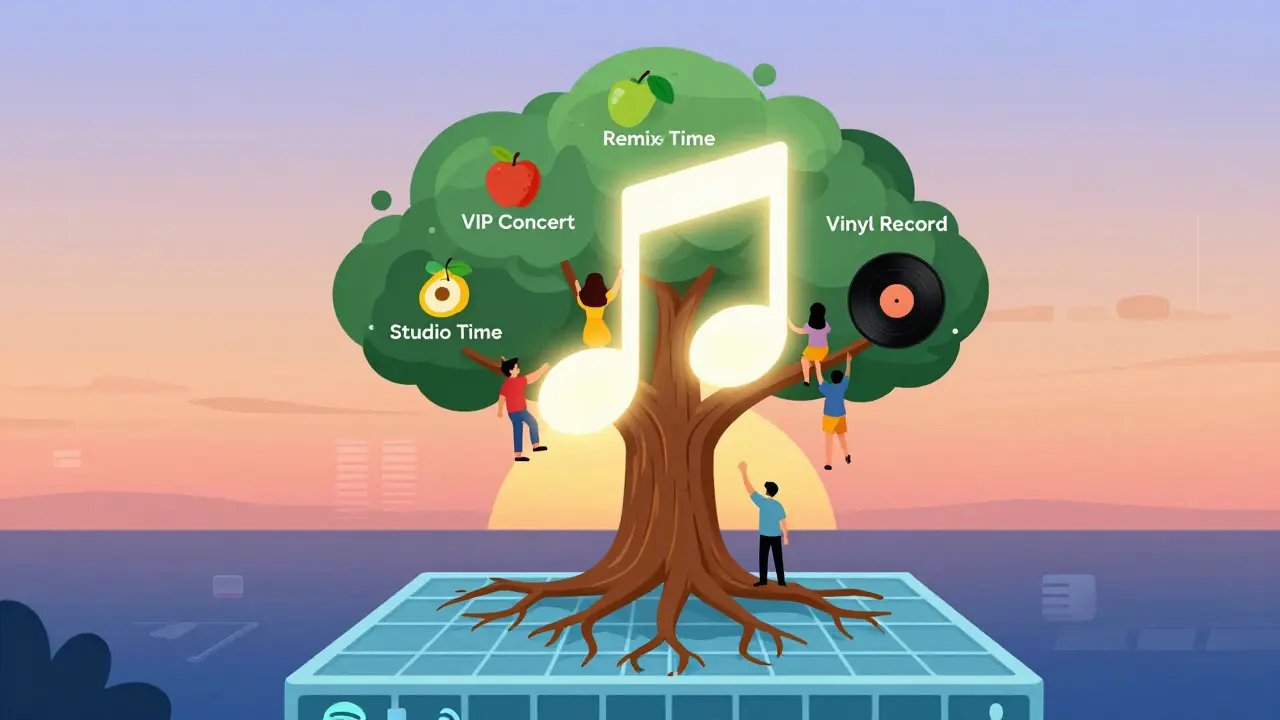
What’s Next? The Future Is Experience
The biggest shift in 2024 isn’t new tech - it’s new thinking. Music NFTs are becoming experience tokens. Sound.xyz is testing a feature called “Collective Ownership,” where fans vote on whether an artist should release a remix or tour in a new country. Royal is integrating with streaming platforms so royalties flow automatically to NFT holders. Spotify and Apple Music are quietly testing NFT integrations. YouTube now verifies music NFTs through its Content Authenticity Initiative. Even more exciting: AI-generated personalized NFTs. Holly Herndon’s PROTO project lets fans create custom music clips using AI trained on her voice and style - and the NFT proves you own that unique version. By 2025, Deloitte predicts 65% of successful music NFT projects will include real-world perks: vinyl records, concert tickets, studio time. The digital file is just the entry ticket. The real value is what comes after.So, Is It Worth It?
If you’re an artist looking for a quick payday - no. Music NFTs aren’t a get-rich-quick scheme. They’re a long game. But if you want to own your music, keep 90% of the revenue, and build a fanbase that doesn’t just stream - they show up, buy tickets, and stick with you for years - then yes. This is the most powerful tool independent artists have ever had. The success stories aren’t the ones who sold $1 million albums. They’re the ones who turned 500 fans into a movement. Who turned buyers into collaborators. Who stopped asking, “How do I sell this?” and started asking, “How do I serve them?” That’s the real win.Can anyone make money from music NFTs?
Yes - but only if you already have a fanbase. Music NFTs don’t create fans. They reward them. Artists with 5,000+ engaged followers have the best shot. Without that foundation, even the best NFT drop will fail. It’s not about the tech - it’s about trust.
Do I need to know blockchain to start?
Not deeply. You don’t need to code smart contracts. But you do need to understand wallets (like MetaMask), how to mint an NFT, and what gas fees are. Most platforms - Sound.xyz, Royal - walk you through it. The real skill isn’t tech. It’s community management.
Are music NFTs still popular in 2026?
They’re not booming like in 2021, but they’re stronger than ever. The speculative frenzy is over. What’s left are real artists using NFTs to fund tours, release exclusive content, and build loyal communities. The market is smaller, but more sustainable. Platforms like Sound.xyz and Apple Music’s partnership show this isn’t a fad - it’s infrastructure now.
What’s the biggest mistake artists make?
Treating NFTs like a one-time sale. If you don’t plan for what happens after the drop - ongoing perks, community events, future releases - your NFTs will crash in value. The most successful projects treat NFTs as the start of a relationship, not the end of a transaction.
Can I use music NFTs if I’m signed to a label?
It depends on your contract. Major labels now have NFT divisions, so many artists are doing it under their label’s umbrella. But if your contract says the label owns your masters, you can’t sell them as NFTs. Always check your rights. Independent artists have the most freedom. Signed artists can still use NFTs for merch, experiences, and unreleased demos - as long as they own the rights.
How do I get started?
Start small. Pick one platform - Sound.xyz is the easiest. Upload a track you’re proud of. Set a price under $200. Tell your fans you’re launching an exclusive NFT with early access. Then, spend the next 30 days engaging with them on Discord or Twitter. Don’t just announce - listen. Ask what they’d want. Then launch. The first drop doesn’t need to be perfect. It needs to be real.