Why Mining Difficulty Matters More Than You Think
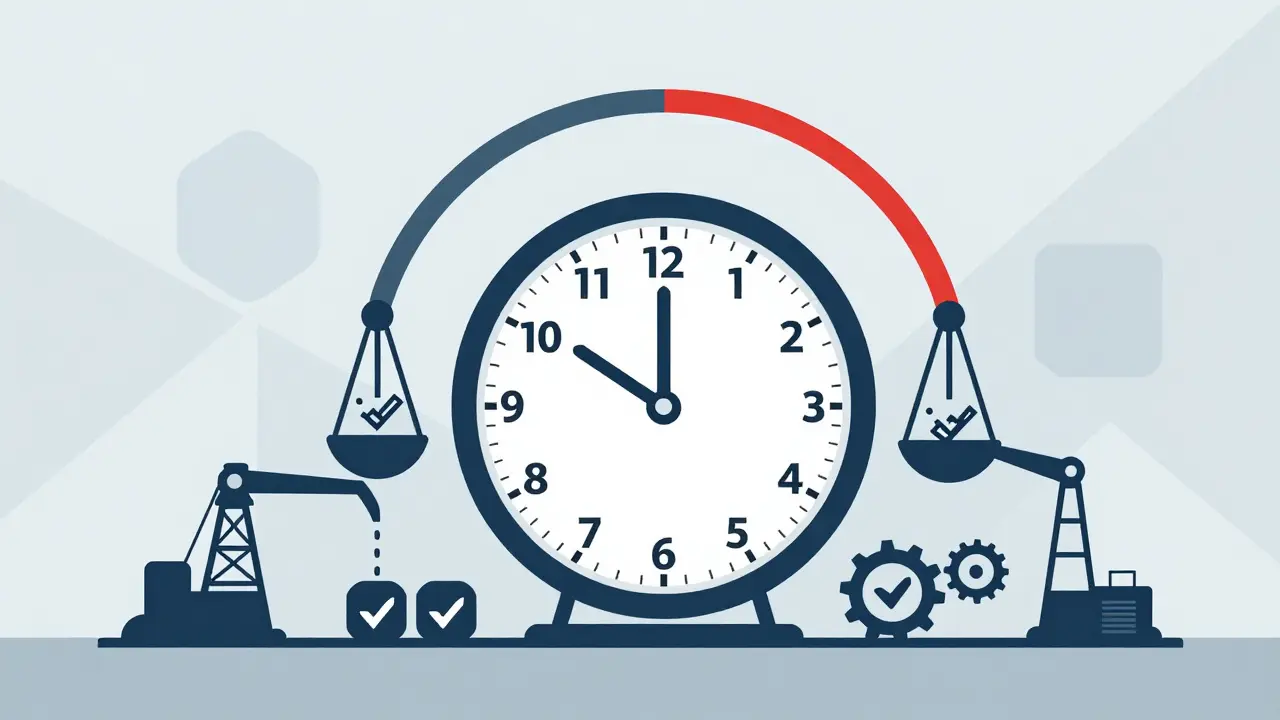
If you’ve ever wondered why Bitcoin blocks don’t come faster even when more miners join the network, the answer lies in mining difficulty. It’s not just a number on a chart-it’s the invisible hand that keeps Bitcoin’s rhythm steady. Without it, blocks could flood the network in seconds or drag on for hours, breaking everything from transaction confirmations to wallet apps. The system was designed by Satoshi Nakamoto to solve a simple problem: how do you keep block creation consistent when the computing power on the network changes?
How Bitcoin Keeps a 10-Minute Block Time
Bitcoin doesn’t aim for speed. It aims for predictability. Every block is supposed to take about 10 minutes to mine. That’s not arbitrary-it’s the sweet spot between security, decentralization, and confirmation speed. But what happens when thousands of new ASIC miners flood the network? Or when a country bans mining and half the hash power vanishes overnight?
The answer is automatic difficulty adjustment. Every 2,016 blocks-roughly every two weeks-Bitcoin checks how long it took to mine those blocks. If the average was under 10 minutes, difficulty goes up. If it was over 10 minutes, difficulty goes down. The math is straightforward: if 2,016 blocks took 18,000 minutes (9 minutes each), difficulty increases by 12% because 20,160 (target) divided by 18,000 (actual) equals 1.12. Simple, but powerful.
What Mining Difficulty Actually Measures
Difficulty isn’t just a number-it’s a target. Think of it like this: miners are racing to find a hash that’s lower than a moving target. The lower the target, the harder it is to find. Right now, that target requires a hash starting with around 15 zeros. That’s not something your laptop can do. It takes specialized machines, massive electricity, and cooling systems just to get close.
As of late 2023, Bitcoin’s difficulty hit 63.35 trillion. That means, on average, miners must try 63.35 trillion different hash values before one is valid. The network doesn’t care how many miners are online-it only cares whether the average block time stays near 10 minutes. So if hash power doubles, difficulty doubles too. If it drops by 30%, difficulty drops by 30%. It’s a self-correcting system.
Why Adjustments Take Two Weeks
Some networks adjust difficulty every block. Ethereum Classic does it every 100,800 seconds-about every 28 hours. Bitcoin waits two weeks. That’s intentional. Frequent adjustments would make the system unstable. Imagine difficulty changing every hour based on noisy, short-term hash rate spikes. Miners couldn’t plan. Profitability would swing wildly. Equipment would become obsolete overnight.
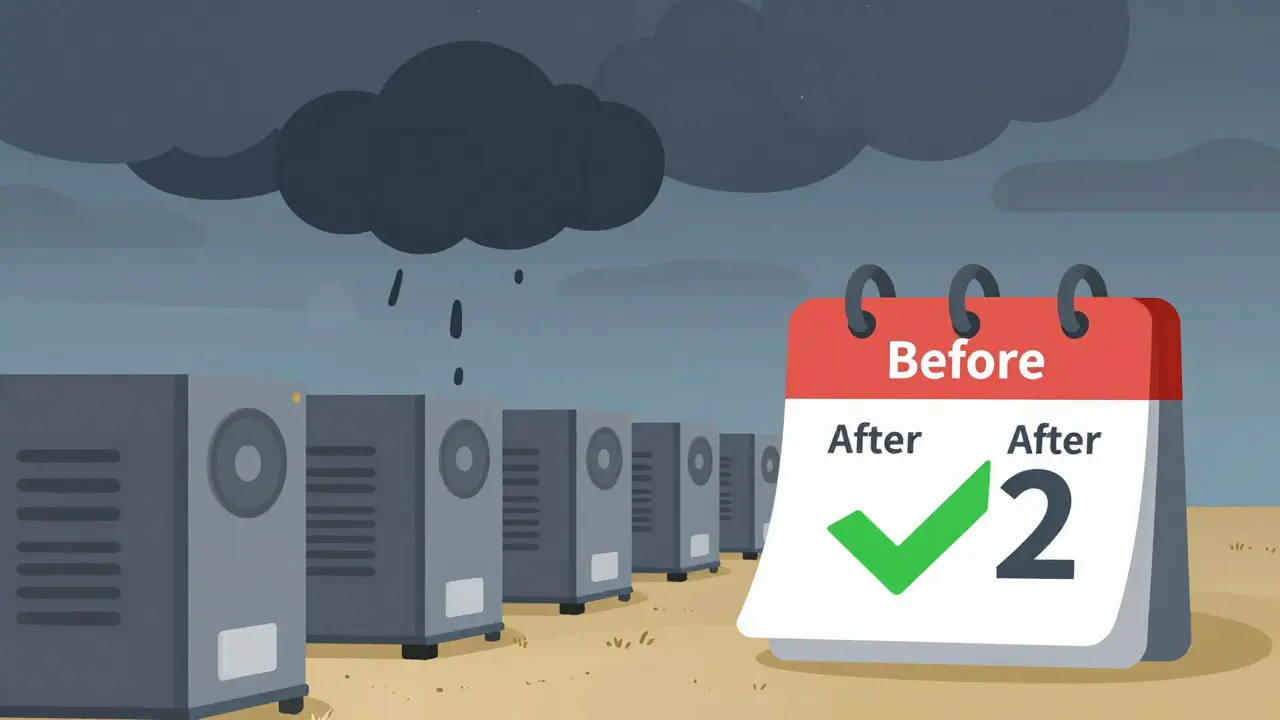
But there’s a trade-off. When a major event happens-like China’s mining ban in mid-2021-Bitcoin’s difficulty doesn’t react fast enough. Hash rate dropped 50% in days, but difficulty stayed high for weeks. Miners lost money. Then, when the difficulty finally dropped by 27.94%, the network rebounded fast. Within three months, difficulty surged 40% as new miners returned. Many who sold their rigs during the drop lost over $100,000.
How Other Blockchains Handle It
Not every blockchain uses Bitcoin’s model. Litecoin, for example, targets a 2.5-minute block time and adjusts difficulty every 2,016 blocks too-but because blocks come faster, adjustments happen more often in real time. Ethereum Classic adjusts every 100,800 seconds, reacting within hours instead of weeks. That means less volatility for miners but more complexity for the network.
Some newer chains use dynamic algorithms that adjust after every block. They’re faster to respond but more prone to manipulation. Bitcoin’s slow adjustment is a feature, not a bug. It gives miners time to react, invest, and exit. It also makes attacks harder-anyone trying to flood the network with fake hash power would need to sustain it for two weeks to force a difficulty change. That’s expensive.
What Miners Actually Do About It
Professional miners don’t guess. They track. Tools like Blockchain.com’s Difficulty Chart, Minerstat’s Forecast, and Bitmain’s analytics dashboards are standard. Top mining farms now employ dedicated analysts who study historical trends, hash rate movements, and even electricity price cycles to predict the next adjustment.
According to a Minerstat survey from August 2023, 68% of miners rank difficulty changes as the second biggest factor in profitability-right after electricity costs. And 42% have shut down operations temporarily because a difficulty spike made their rigs unprofitable. One Reddit user, MiningMaster42, summed it up: “My BTC price went up 5%, but difficulty jumped 1.35% and I lost money. I check it weekly now.”
The Business Side: Profitability and Risk
Bitcoin mining is a business. And like any business, you need to forecast. Companies like Marathon Digital and Riot Blockchain now include difficulty forecasts in their quarterly earnings reports. Why? Because difficulty directly affects revenue. In Q3 2023, difficulty swings accounted for 63% of Bitcoin mining revenue volatility, according to Messari Crypto.
Miners who use predictive models see 18% higher profitability than those who don’t. That’s not a small edge-it’s the difference between staying in business and going bankrupt. A single wrong guess during a difficulty spike can wipe out months of profit. That’s why services like Bitdeer, despite having a 3.8/5 rating on Trustpilot, get praised for their “accurate difficulty forecasting tools.”
What’s Next? The Fight Over the Algorithm
Not everyone thinks Bitcoin’s system is perfect. Dr. David Schwartz of Ripple called it “outdated” in a 2021 op-ed. He argued that with modern hardware, two weeks is too long. Others, like Dr. Emin Gün Sirer, say the system’s simplicity is what makes it resilient. “It’s elegant,” he wrote, “but creates wild swings for miners.”
Now, a new proposal called BIP-340, or “Fibonacci Difficulty Adjustment,” is gaining traction. Instead of adjusting difficulty in one big jump every two weeks, it would spread the change over time using Fibonacci weights. This would smooth out the spikes and dips. As of October 2023, 15 of the top 20 mining pools-controlling 68% of the network’s hash rate-support it.
But changing Bitcoin’s core mechanism is risky. It’s never been done before. Even small tweaks can break assumptions built into wallets, exchanges, and mining software. For now, the current system holds.
What This Means for You
If you’re just holding Bitcoin, mining difficulty doesn’t affect you directly. But it does affect security. Higher difficulty means more hash power protecting the network. That makes it harder to attack. It also means more miners are incentivized to stay online, keeping the network decentralized.
If you’re mining-even on a small scale-you need to treat difficulty like a weather forecast. Track it. Understand the cycle. Don’t buy new hardware right before a difficulty spike. Don’t sell right after a drop. And never assume price changes will offset difficulty moves. They often don’t.
Final Thought: Stability Over Speed
Bitcoin wasn’t built to be the fastest blockchain. It was built to be the most reliable. Mining difficulty is the quiet engine behind that reliability. It doesn’t make headlines. It doesn’t trend on Twitter. But without it, Bitcoin wouldn’t work. It’s the reason the network has survived crashes, bans, and hardware revolutions for over 15 years. And as long as miners keep showing up-even when the math says they shouldn’t-Bitcoin will keep ticking.
How often does Bitcoin’s mining difficulty change?
Bitcoin’s mining difficulty adjusts every 2,016 blocks, which takes about two weeks on average since blocks are targeted at 10 minutes each. The network calculates the average time it took to mine those blocks and increases or decreases difficulty to bring the average back to 10 minutes.
Why doesn’t Bitcoin adjust difficulty after every block?
Frequent adjustments would make mining too unpredictable. If difficulty changed every block, miners couldn’t plan investments or manage electricity costs. Bitcoin’s two-week cycle gives miners time to respond, reduces volatility in profitability, and makes the network more resistant to short-term hash rate manipulation.
What happens if mining difficulty drops too much?
If difficulty drops too low, blocks are mined faster than every 10 minutes. This can cause temporary network congestion and make it easier for attackers to perform double-spends during the adjustment window. But the system automatically increases difficulty in the next adjustment to restore balance. The biggest drop in history was 27.94% in July 2021 after China’s mining ban.
Can mining difficulty go up forever?
There’s no hard cap on difficulty-it can keep rising as long as more computing power joins the network. As of 2024, difficulty has increased over 100,000% since Bitcoin’s launch. But the system is designed to handle it. The only limit is the physical world: electricity, hardware, and cooling. If no more efficient miners are built, difficulty will stabilize.
How does mining difficulty affect Bitcoin’s price?
Difficulty doesn’t directly affect Bitcoin’s price, but it influences miner behavior, which can indirectly impact supply. When difficulty rises and miners turn off rigs, fewer new Bitcoins are mined, reducing sell pressure. When difficulty drops, miners may sell more coins to cover costs, increasing supply. These dynamics can create short-term price pressure, but they’re not direct causes.
What’s the highest mining difficulty Bitcoin has ever had?
As of January 2026, Bitcoin’s all-time high difficulty is 82.4 trillion, reached in December 2024 after a surge in mining capacity from new data centers in Texas and Kazakhstan. This was over 30% higher than the previous record set in mid-2023.
Do other cryptocurrencies use the same difficulty system?
Many use variations. Litecoin and Dogecoin use Bitcoin’s 2,016-block adjustment but with a 2.5-minute target block time. Ethereum Classic adjusts every 100,800 seconds (about every 28 hours). Some altcoins adjust after every block, which makes them more responsive but less stable. Bitcoin’s method is unique in its balance of simplicity and long-term resilience.
Is mining still profitable with high difficulty?
Yes-but only with the right equipment and low electricity costs. As of 2026, profitable mining requires ASICs like the Bitmain Antminer S19 XP (140 TH/s) or MicroBT Whatsminer M50S (126 TH/s), with power under $0.06 per kWh. Most home miners using older hardware or paying over $0.12/kWh are unprofitable. Profitability depends on difficulty, price, and electricity-not just the coin’s value.