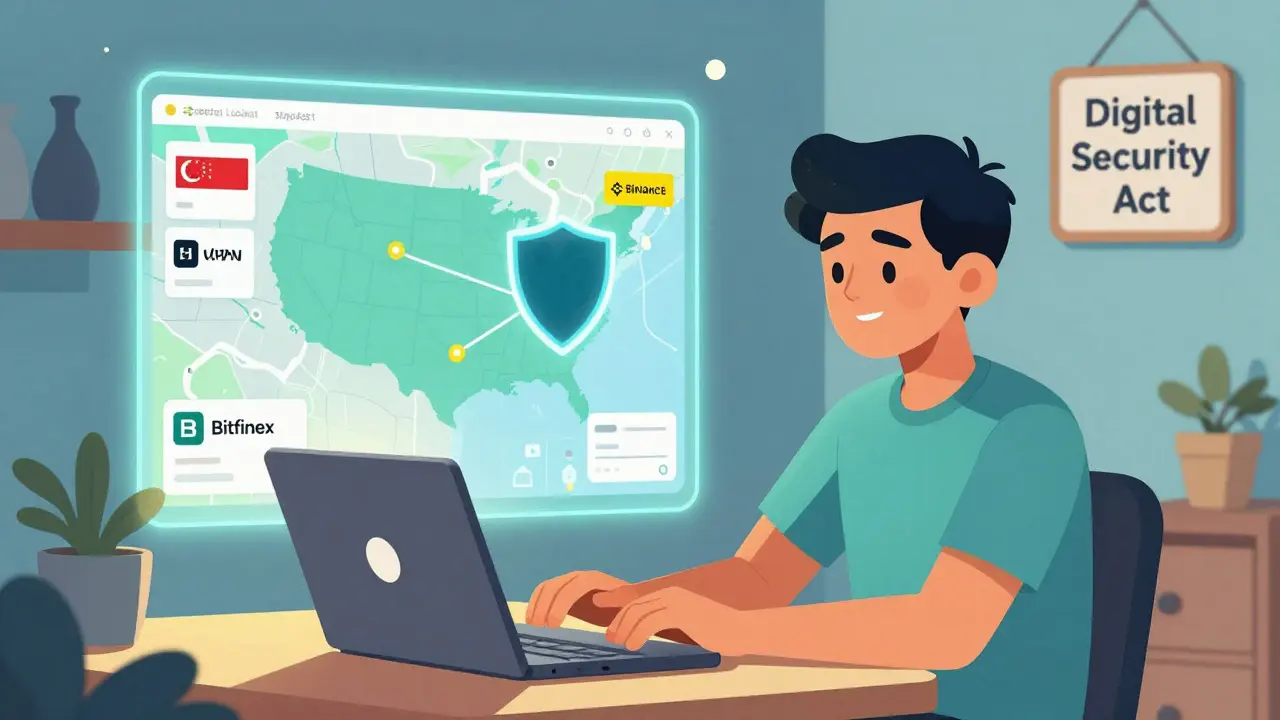
For many people in Bangladesh, buying Bitcoin or trading on Binance isn’t just about opportunity-it’s about bypassing barriers. The government doesn’t ban cryptocurrency outright, but it doesn’t make it easy either. Banks block transactions linked to crypto. Exchanges like Bitfinex and Binance restrict access from Bangladesh. And with the Digital Security Act still in force, online activity is monitored. So what do traders do? They use a VPN.
Why Bangladeshis Need a VPN for Crypto
Imagine trying to buy Ethereum, but the website says, "Access denied. Your location is not supported." That’s the reality for many in Bangladesh. Major exchanges like Binance and Bitfinex don’t serve users from Bangladesh directly. They block the IP addresses. It’s not about trust-it’s about compliance. Exchanges avoid countries with unclear or restrictive crypto laws to reduce legal risk. But here’s the real issue: even if you could sign up, your online activity isn’t private. The Digital Security Act of 2018 gives authorities broad powers to track digital behavior. That means your browser history, your WhatsApp chats, even your search for "how to buy Bitcoin" could be flagged. Without a VPN, your real IP address is visible. And since Bitcoin transactions are public, someone could link your wallet to your home internet. That’s a risk no trader should take. A VPN changes all that. It hides your real IP and replaces it with one from another country-say, Singapore or the U.S.-where exchanges are fully open. Your traffic is encrypted. No one can see what you’re doing online. Not your ISP. Not the government. Not hackers.Which Exchanges Are Blocked in Bangladesh?
Not every exchange blocks Bangladesh, but the big ones do. Here’s what’s off-limits:- Bitfinex - Explicitly blocks users from Bangladesh, along with Ecuador and Bolivia.
- Binance - While not officially listed as blocked in Bangladesh, many users report access failures. Binance restricts users in over 50 countries, and Bangladesh often falls into that gray zone due to regulatory pressure.
- Kraken - Requires strict KYC and often rejects applications from Bangladesh.
- Coinbase - Not available in Bangladesh. Even if you sign up, your payment method will likely be declined.
What Makes a Good VPN for Crypto in Bangladesh?
Not all VPNs are created equal. A bad one won’t unblock exchanges. A worse one might leak your real IP or sell your data. Here’s what actually works:- AES-256 encryption - The gold standard. Without it, your traffic can be cracked.
- WireGuard or OpenVPN protocols - These are faster and more secure than older ones like PPTP. Speed matters when you’re trading in real time.
- No-logs policy - The provider must not store your browsing history, connection times, or IP addresses. If they do, they can be forced to hand it over.
- Server locations - You need servers in countries where exchanges aren’t blocked. The U.S., Singapore, Japan, and the U.K. are top choices.
- Crypto payment options - Some VPNs let you pay with Bitcoin or Ethereum. That keeps your financial trail clean.
- ExpressVPN - Runs on RAM-only servers, meaning no data is stored on hard drives. Even if someone seizes the server, there’s nothing to find. It unblocks Binance consistently and offers a 30-day money-back guarantee.
- NordVPN - Offers dark web monitoring, phishing protection, and accepts crypto payments via CoinGate. It has servers in 118 countries, so you can always find a working location.
- Surfshark - Cheaper than the others and still delivers strong speeds. It’s the top pick if you want a Bangladesh IP address for local testing, and it also works well for bypassing geo-blocks.
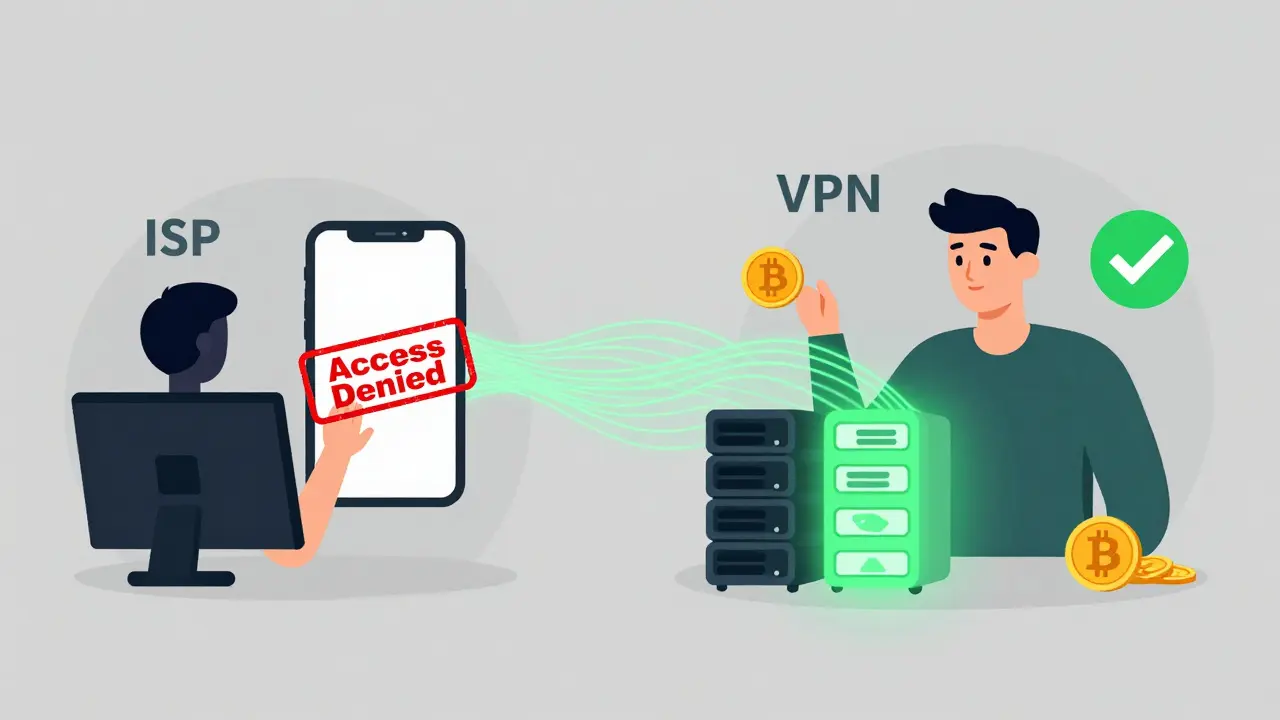
How to Set Up a VPN for Crypto Trading
It’s simpler than it sounds. Here’s how to do it in five steps:- Choose your VPN - Pick one from the list above. ExpressVPN is the safest bet for beginners.
- Sign up and pay - Use Bitcoin or Ethereum if the option is available. That keeps your payment anonymous.
- Download the app - Get it from the official website or your device’s app store. Never download from third-party sites.
- Connect to a server - Pick a country where Binance works. The U.S. or Singapore are reliable. Don’t pick a server in Bangladesh-it won’t help you bypass the block.
- Open your exchange - Log in and start trading. If it doesn’t work right away, clear your browser cache or try a different server.
Security Risks Even With a VPN
A VPN isn’t magic. It protects your IP and encrypts your traffic-but it doesn’t stop you from clicking a fake Binance link. Phishing scams targeting crypto users in Bangladesh are rising. Scammers send fake emails or SMS messages pretending to be from Binance. They ask you to log in on a cloned website. That’s why NordVPN’s built-in threat protection matters. It blocks malicious sites before you even load them. Other services offer similar tools. Always enable them. Also, never store your seed phrase on your phone or computer. Write it on paper. Keep it in a safe. A VPN won’t protect your wallet if you leave your private key in a Notes app. And remember: even with a VPN, your transactions are still public on the blockchain. If you send Bitcoin to an exchange and then immediately cash out to a local bank, someone could trace the flow. Use mixers or privacy coins like Monero if you want true anonymity. But that’s advanced stuff.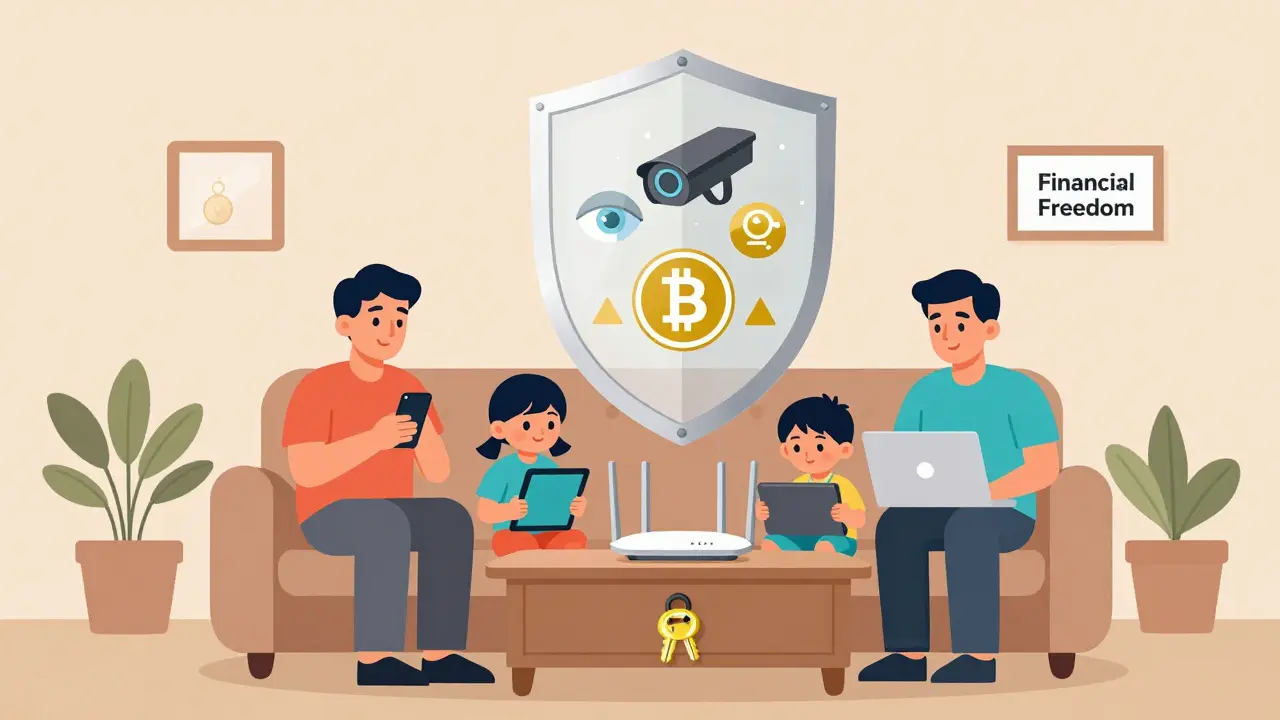
What If the VPN Doesn’t Work?
Sometimes, exchanges update their blocking systems. You connect to a U.S. server, but Binance still says "access denied." What now?- Try a different server in the same country.
- Switch to another country-try Japan or Germany.
- Clear your browser cache and cookies. Old data can cause false blocks.
- Restart your device and reconnect the VPN.
- Contact the VPN’s 24/7 support. Most top providers have live chat. They know which servers work best.
The Bigger Picture
This isn’t just about trading. It’s about financial freedom. In Bangladesh, traditional banking is slow, expensive, and exclusionary. Many people don’t have access to credit cards or international wire transfers. Crypto offers a way out. But only if they can reach the platforms. VPNs are the bridge. They’re not illegal in Bangladesh-yet. The government hasn’t banned them. But they’re watching. That’s why using a no-logs, encrypted service isn’t optional. It’s essential. The same tools that let you trade Bitcoin also let journalists report safely, activists organize, and small businesses reach global markets. Crypto isn’t the only reason people use VPNs. But for many in Bangladesh, it’s the most urgent one.What Comes Next?
Bangladesh’s stance on crypto may change. In 2024, the central bank signaled openness to a digital currency. If that happens, regulations could shift. Maybe exchanges will get licensed. Maybe the blocks will lift. But until then, VPNs are the only reliable path. And the demand is growing. More young people are learning to trade. More families are sending remittances through crypto. More people are realizing that money doesn’t have to be controlled by banks. The technology is here. The tools are available. All you need is the right VPN-and the courage to use it.Is using a VPN for crypto illegal in Bangladesh?
No, using a VPN is not illegal in Bangladesh. The government hasn’t passed any law banning VPNs. However, the Digital Security Act allows authorities to monitor online activity, so using a VPN for privacy is seen as a precaution, not a crime. Many people use VPNs to access blocked websites, including news sites and social media. Crypto traders use them for the same reason: to protect their identity and access global services.
Can I use a free VPN to access Binance?
You technically can, but you shouldn’t. Free VPNs are slow, unreliable, and often unsafe. Many log your data, inject ads, or sell your browsing habits. Some even steal crypto wallet details. Binance is a high-value target for hackers. A free VPN won’t protect you-it might put your funds at risk. Stick to paid services with proven security like ExpressVPN or NordVPN.
Why does Binance block Bangladesh?
Binance doesn’t officially list Bangladesh as a blocked country, but it avoids operating in regions with unclear or restrictive crypto regulations. Bangladesh’s central bank has repeatedly warned against crypto use, and banks block transactions linked to exchanges. To avoid legal exposure, Binance restricts access from countries where compliance is risky. This is a business decision, not a political one.
Will a VPN hide my crypto transactions from the government?
It hides your IP address and encrypts your connection, so the government can’t see you’re accessing Binance. But blockchain transactions are public. If you send Bitcoin to an exchange and then withdraw to a local bank, someone could trace the flow. A VPN protects your access, not your transaction history. For true privacy, use privacy coins like Monero or mixers-but those come with their own risks.
Which server location works best for Bangladesh crypto users?
The best server locations are the U.S., Singapore, Japan, and the U.K. These countries have stable, high-speed connections and no restrictions on crypto exchanges. Avoid servers in neighboring countries like India or Sri Lanka-they’re often blocked too. Test a few locations to find the fastest one. Speed matters when prices move fast.
Can I use the same VPN on my phone and laptop?
Yes, most top VPNs allow 5-10 simultaneous connections. That means you can use the same account on your phone, laptop, tablet, and even your router. ExpressVPN and NordVPN both support multiple devices. Just log in on each one and connect to the same server. It’s easy and keeps your trading consistent across devices.
Do I need a VPN if I use a decentralized exchange (DEX)?
You still should. DEXs like Uniswap or PancakeSwap don’t require KYC, but your browser and wallet can still be tracked. If you connect to a DEX without a VPN, your real IP is visible. That could link your wallet to your home address. A VPN adds a layer of privacy even on decentralized platforms. Plus, some DEXs are geo-blocked too.