If you've been tracking the crypto space in Asia, you might have heard whispers about a sweeping "Virtual Assets Ordinance 2025" in Hong Kong. Here's the twist: there isn't one single law with that exact name. Instead, what you're seeing is a coordinated web of new rules, specifically anchored by the Stablecoins Ordinance, which went live on August 1, 2025. This shift matters because it changes how you trade, store, and issue digital assets in one of the world's most important financial hubs. If you are a trader, an issuer, or just curious about where your money is safe, understanding this framework is no longer optional-it's essential for navigating the market without getting caught off guard by sudden compliance hurdles.
The Real Name Behind the Hype
Let's clear up the confusion first. The term "Virtual Assets Ordinance" is often used as a shorthand for Hong Kong's broader regulatory push, but the concrete legislative muscle behind it comes from specific ordinances and policy statements. The cornerstone here is the Stablecoins Ordinance, which establishes a strict licensing regime for fiat-referenced stablecoin issuers. Think of this as Hong Kong saying, "If you want to issue a digital dollar or euro in our jurisdiction, you need a license, and you need to prove you have the cash reserves to back it up." This isn't just bureaucracy for the sake of it; it's designed to prevent another Terra/Luna-style collapse by ensuring transparency and solvency.
Beyond stablecoins, the landscape includes the Policy Statement 2.0 issued by the Financial Services and Treasury Bureau (FSTB) in June 2025. This statement reaffirms Hong Kong's goal to become a global hub for digital asset innovation. It’s backed by joint consultation papers from the Securities and Futures Commission (SFC) and the Hong Kong Monetary Authority (HKMA). These bodies are working together to create a dual-regulator approach. The SFC sets the high-level standards for trading platforms and asset managers, while the HKMA handles banks and stored value facility providers. This division of labor aims to reduce regulatory blind spots, ensuring that whether you're dealing with a bank-backed token or a decentralized exchange, someone is watching.
What Counts as a Virtual Asset?
Not every digital token falls under these new rules. The framework is precise about what it covers and what it leaves alone. Under the Stablecoins Ordinance, a "stablecoin" is defined as a cryptographically secured digital representation of value that acts as a medium of exchange and maintains stable value relative to an underlying asset. Crucially, this definition targets fiat-referenced stablecoins (FRS). If you're holding a token pegged to the US Dollar or the Hong Kong Dollar, it likely falls under this scrutiny.
However, several categories are explicitly excluded to avoid overlapping jurisdictions. Securities tokens, central bank digital currencies (CBDCs), and banking deposits are out of scope for the Stablecoins Ordinance. Limited purpose digital tokens, like those used exclusively within a specific gaming ecosystem, also escape these particular licensing requirements. This exclusion list is vital for startups. One asset manager noted that having a clear list of excluded tokens saved them over 200 hours of legal consultation. Without this clarity, firms would be stuck guessing whether their niche product needed a full-blown banking license or just a simple registration.
| Asset Type | Regulatory Status | Primary Regulator | Key Requirement |
|---|---|---|---|
| Fiat-Referenced Stablecoins | In Scope | HKMA | Licensing & Reserve Proof |
| VA Trading Platforms | In Scope | SFC | Type 1 & 7 Licenses |
| Securities Tokens | Out of Scope (for FRS) | SFC (under SFO) | Existing Securities Laws |
| NFTs | Under Review | TBD | Potential Future Regulation |
Licensing: The Cost of Doing Business
So, what does it take to operate legally? For those looking to deal in virtual assets or provide custody services, the barriers to entry have risen significantly. The proposed licensing regimes introduce a minimum capital requirement benchmarked at HK$129,730. While this might sound manageable for large institutions, industry surveys indicate that smaller firms face a 15-20% increase in operational costs due to compliance overheads. You can't just set up shop overnight; you need infrastructure.
One of the most stringent requirements is the mandatory dual approval system for wallet whitelisting. Before a transaction goes through, two separate approvals are needed. This adds friction-43% of surveyed firms reported a 30-40% increase in transaction processing time-but it dramatically reduces the risk of unauthorized transfers. Additionally, you must appoint at least one responsible officer with three years of experience in virtual asset portfolio management. This person needs to actively supervise portfolios for 24 hours a day. For firms operating across multiple time zones, this has proven operationally challenging, leading some to delay their market entry entirely.
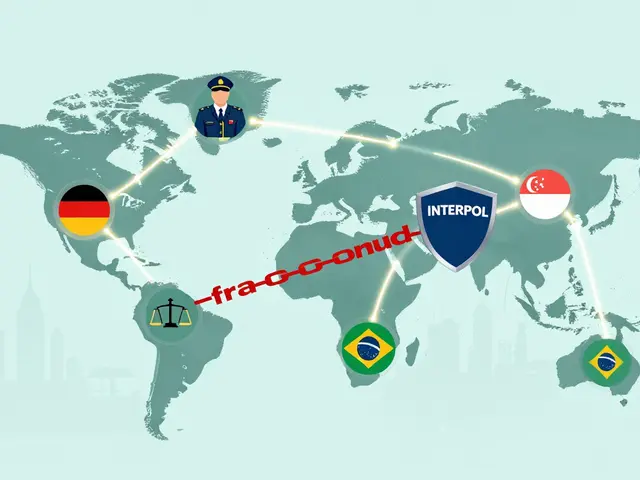
Penalties for non-compliance are severe. Violations can result in fines up to HK$5 million and imprisonment for up to seven years. This isn't a slap-on-the-wrist scenario. The extraterritorial reach of these laws means that even if you're based outside Hong Kong, if you're targeting Hong Kong investors, you're subject to these rules. This closes a loophole that existed in Singapore's framework, where only locally incorporated entities required licensing, allowing offshore players to skirt certain obligations.

Custody and Security Standards
If you're holding customer funds, custody rules are where the rubber meets the road. The SFC requires that institutional funds trade only through regulated exchanges in specific jurisdictions: Hong Kong, the U.S., the U.K., Dubai, and Japan. This whitelist approach ensures that counterparties meet rigorous security standards. Adrian Fong, a partner at Reed Smith, describes this as "essential for investor protection," though some traders argue it limits market efficiency by restricting access to emerging liquidity pools.
To comply, most custodians have adopted multi-signature wallet systems, with 82% of compliant firms using this technology. Blockchain analytics tools like Chainalysis are also standard, used by 68% of firms to monitor for suspicious activity. Cybersecurity isn't just a checkbox; it's a continuous process. The SFC's guidance demands robust protocols against hacks and internal fraud. Early adopters report that achieving full compliance takes three to six months, requiring significant investment in both technology and personnel.
Market Impact and Global Context
How does Hong Kong stack up against its neighbors? Compared to Singapore's Payment Services Act, which regulates stablecoins under a broader payments framework, Hong Kong's dedicated Stablecoins Ordinance is more specialized. Unlike the fragmented U.S. approach, where the SEC, CFTC, and state regulators often clash, Hong Kong offers clearer boundaries between the SFC and HKMA. This clarity is winning hearts and minds. A survey by Sumsub found that 78% of Asian virtual asset firms prefer Hong Kong's phased implementation timeline over Singapore's abrupt rollout.
The market response has been tangible. Hong Kong now holds 18.7% of Asia's institutional crypto custody market, growing at 32% year-over-year. In contrast, Singapore's growth has slowed to 19%. Why the shift? Predictability. Investors hate uncertainty. By setting clear milestone dates-such as Q4 2025 for stablecoin licenses and Q2 2026 for dealer/custodian licenses-Hong Kong allows businesses to plan. Morgan Stanley predicts that if implementation stays on schedule, Hong Kong could capture 25-30% of Asia's institutional custody market by 2027, generating hundreds of millions in licensing fees annually.

Challenges and Criticisms
It's not all smooth sailing. Critics point to the potential for regulatory arbitrage. Because certain tokens are excluded, clever issuers might structure products to fall into gaps between securities laws and stablecoin rules. There's also concern about the dual-regulator model creating operational friction. Will the SFC and HKMA always agree on who oversees a hybrid product? Forty-one percent of surveyed firms worry that regulatory overlap could lead to compliance inefficiencies.
Retail access is another flashpoint. The SFC requires intermediaries to assess clients' knowledge before onboarding them. While this protects unsophisticated investors, it creates a barrier for casual users. Some view this as elitist, limiting the democratizing promise of crypto. Furthermore, the requirement for 24-hour supervision is tough for small teams. As one Reddit user noted, "The Stablecoins Ordinance gives us certainty... though the minimum capital is tough for small startups." The balance between protecting consumers and stifling innovation remains a delicate tightrope walk.
Looking Ahead: What's Next?
The framework is dynamic, not static. The FSTB plans a review of tokenization rules for bonds in Q1 2026, aiming to facilitate real-world asset (RWA) adoption. Already, 11 tokenized RWA funds launched in Q3 2025, managing $2.3 billion. The HKMA is also launching a regulatory sandbox for cross-border stablecoin transactions in Q2 2026, involving giants like Standard Chartered and HSBC. NFTs are currently on the radar, with the FSTB indicating they will review the regulatory approach after the current framework settles. If you're building in this space, keep an eye on December 15, 2025, when the SFC publishes detailed guidance on stablecoin reserve requirements. That document could make or break many business models.
Is there a single "Virtual Assets Ordinance 2025" in Hong Kong?
No, there is no single law with that exact title. The term refers to a collection of measures, primarily the Stablecoins Ordinance (effective Aug 1, 2025) and upcoming licensing regimes for VA dealing and custody, guided by the FSTB's Policy Statement 2.0.
Who regulates stablecoins in Hong Kong?
The Hong Kong Monetary Authority (HKMA) serves as the frontline regulator for fiat-referenced stablecoin issuers under the Stablecoins Ordinance, while the Securities and Futures Commission (SFC) sets broader standards for virtual asset activities.
Do foreign companies need a license to serve Hong Kong investors?
Yes. The framework applies extraterritorially. If you target Hong Kong investors, you must comply with licensing requirements regardless of where your company is incorporated.
What are the penalties for violating the new rules?
Violations can lead to fines of up to HK$5 million and imprisonment for up to seven years. Non-compliant firms may also face forced cessation of operations.
Are NFTs covered by the 2025 regulations?
Currently, NFTs are not strictly covered under the Stablecoins Ordinance. However, the FSTB has indicated it will review the regulatory approach to NFTs following the implementation of the current framework, potentially in 2027.