Imagine sending money to a friend where the transaction is instant, cheap, and completely invisible to banks, governments, and hackers. For years, this was the promise of cryptocurrency. But today, that promise is evolving into something far more complex and critical. We are no longer just talking about hiding Bitcoin transactions. We are talking about protecting your medical records, verifying your identity without handing over your passport, and securing enterprise data against quantum computers.
The landscape of blockchain privacy technology is a suite of cryptographic methods enabling anonymous yet verifiable transactions on decentralized networks has shifted dramatically. What started as a niche interest for crypto-anarchists in 2009 is now a boardroom priority. By late 2025, nearly 80% of Fortune 500 companies had integrated some form of blockchain privacy solution. Why? Because the cost of a single data breach hit an average of $4.87 million, and traditional security measures were failing.
This isn't just about secrecy anymore. It's about sovereignty. It's about proving you are who you say you are, or that you have enough funds for a loan, without revealing your entire financial history. Let’s break down what is actually happening under the hood, why it matters for your daily life, and where this technology is heading in 2026 and beyond.
The Shift from Pseudonymity to True Privacy
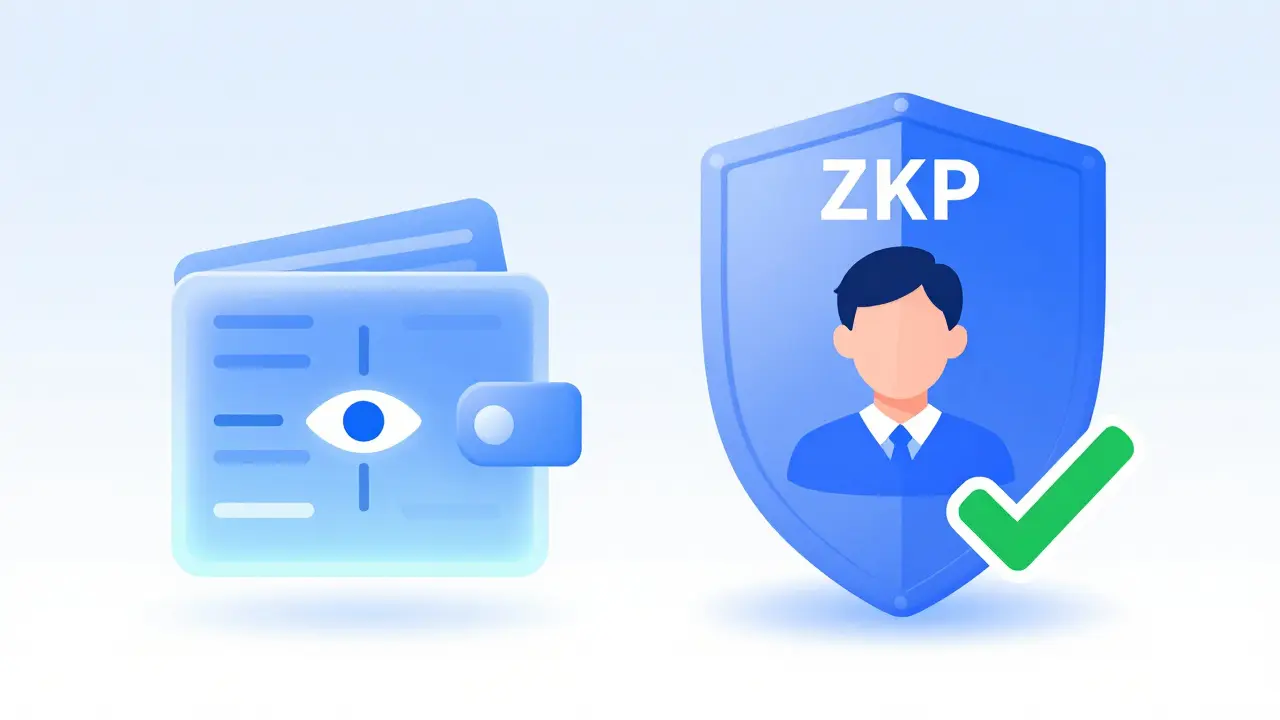
When Bitcoin launched, it offered pseudonymity, not privacy. Your wallet address was public, and anyone could trace every satoshi you ever sent. That changed with the introduction of advanced cryptography. The real breakthrough came with Zero-Knowledge Proofs (ZKPs) are cryptographic protocols allowing one party to prove to another that a statement is true without revealing any information beyond the validity of the statement itself.
Think of it like this: You want to prove to a bouncer you are over 21. Instead of showing your ID (which reveals your name, address, and exact birthdate), you use a ZKP. The system verifies "Age > 21" returns true, but the bouncer never sees your actual date of birth. This concept, pioneered by the Zerocash protocol in 2013, is now the backbone of modern privacy tech.
In 2025, two main types of ZKPs dominate the field:
- zk-SNARKs: These are faster to verify and smaller in size, making them ideal for existing systems. They handle around 1,450 transactions per second (TPS). However, they require a trusted setup phase, which can be a security risk if the initial keys aren't destroyed properly.
- zk-STARKs: These are the newer, heavier lifters. They don't need a trusted setup and are resistant to quantum computing attacks. StarkWare Labs reported in July 2025 that zk-STARKs can process 2,800 TPS with 99.998% validity confidence. They are larger and slower to generate, but they are the future-proof choice.
The hardware requirements for running these nodes have also dropped significantly. In 2023, running an Ethereum zkEVM node required 16GB of RAM. By March 2025, that requirement dropped to just 4GB. This democratization means more people can participate in the network, increasing decentralization and security.
Quantum Resistance: The New Baseline
If there is one thing keeping cryptographers up at night, it is quantum computing. Current blockchain signatures rely on elliptic curve cryptography, which quantum computers could theoretically break in minutes once they reach sufficient power. The window of vulnerability is estimated at 12-18 months for non-upgraded networks, according to MIT’s Quantum Computing Impact Assessment from September 2025.
The industry response has been swift. Quantum-resistant cryptography refers to encryption algorithms designed to withstand attacks from both classical and quantum computers is no longer optional; it is the baseline. As of late 2025, 63% of major blockchain protocols have implemented lattice-based encryption, complying with NIST’s Post-Quantum Cryptography Standardization Project (Round 4).
This shift ensures that even if a powerful quantum computer is built tomorrow, your private keys remain safe. It’s a proactive move, similar to updating your locks before a new type of burglar tool becomes common. Without this upgrade, all current digital assets would be vulnerable to theft.
Enterprise Adoption vs. Privacy Coins
There is a growing divide between how enterprises use privacy tech and how individual users do. On one side, you have Privacy coins such as Monero and Zcash are cryptocurrencies designed to provide untraceable transactions through ring signatures and stealth addresses. On the other, you have enterprise solutions like Hyperledger Fabric’s Private Data Collections.
| Feature | Privacy Coins (e.g., Monero) | Enterprise Solutions (e.g., Hyperledger) |
|---|---|---|
| Primary Use Case | Personal anonymity, cash-like transactions | Regulated data sharing, supply chain tracking |
| Regulatory Status | Highly restricted, delisted from many exchanges | Compliant with KYC/AML laws |
| Adoption Rate | 83% share in private retail transactions | 38% adoption in banking sector |
| Transparency | None (fully opaque) | Selective transparency (auditors can see) |
| Performance | ~1,800 TPS (Monero RingCT 3.0) | Variable, often lower due to consensus overhead |
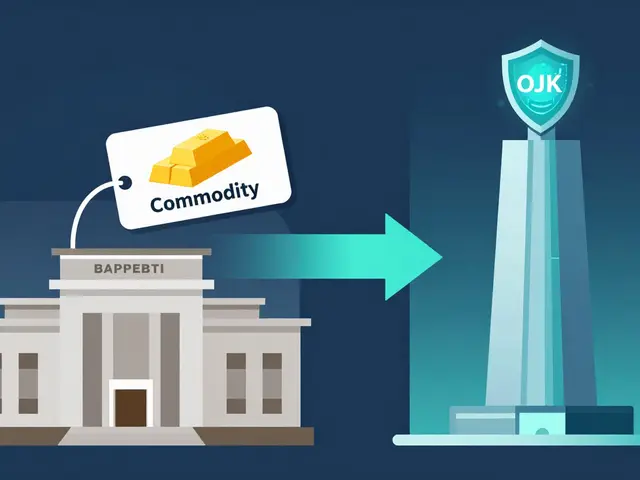
Privacy coins are facing heat. In 2025, they saw a 47% reduction in exchange listings due to regulatory pressure. The U.S. Treasury’s guidance prohibits obscuring transaction details, making it hard for legitimate businesses to accept Monero. Conversely, enterprise solutions thrive because they offer "regulated privacy." Companies can share sensitive data with partners without exposing it to competitors or the public, while still satisfying auditors. This is why healthcare and finance lead adoption, with 27% and 32% implementation rates respectively.
Decentralized Identity (DID): Owning Your Data
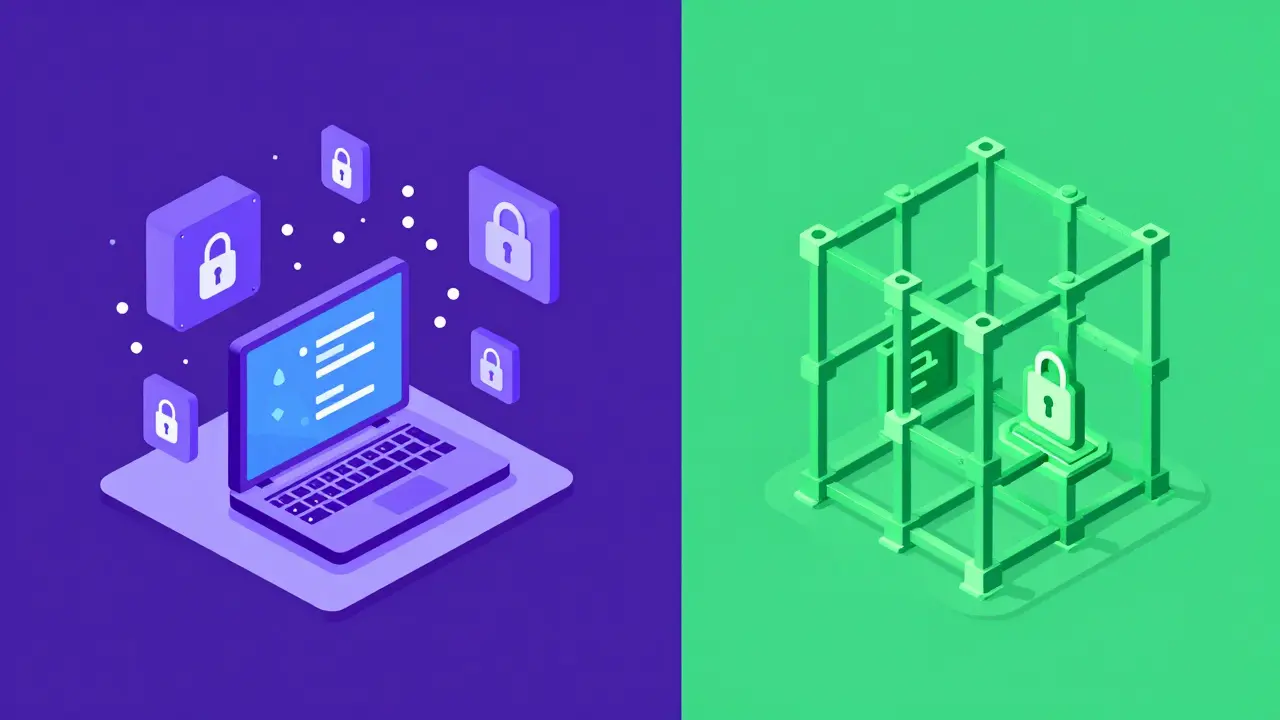
One of the most exciting applications of blockchain privacy is Decentralized Identity (DID) is a model where individuals control their own digital identities without relying on centralized authorities. Currently, you give your data to Google, Facebook, or your bank, and hope they protect it. With DID, you hold the keys.
By 2025, market leaders like Circle’s SEED network (45M users) and Polygon ID (28M users) are leading this charge. The EU’s Digital Identity Wallet mandate, requiring DID integration by Q2 2026, is accelerating this shift. Imagine logging into a website using your DID. The site asks, "Are you over 18?" Your wallet proves it via a ZKP. No email, no password, no personal data shared. If the website gets hacked, your identity is safe because nothing was stored on their servers.
However, user experience remains a hurdle. Reddit discussions from late 2025 highlighted that 68% of negative reviews cited complex key management. Losing your private key means losing your identity. The industry is working on social recovery wallets and biometric backups to solve this, but it’s still a pain point for non-technical users.
AI Integration: A Double-Edged Sword
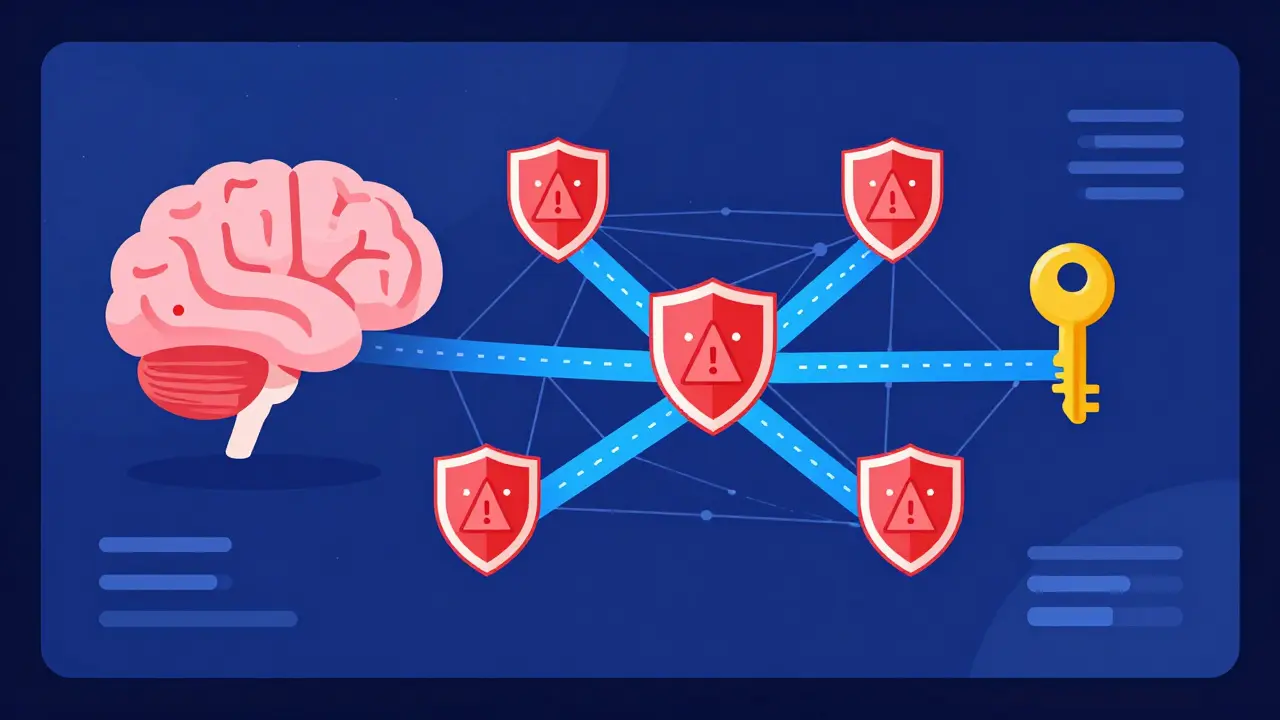
Artificial Intelligence is entering the blockchain privacy space, and it’s bringing both shields and swords. On the defensive side, AI-enhanced threat detection uses machine learning algorithms to identify anomalous patterns in blockchain transactions that may indicate fraud or privacy breaches is becoming standard. Google’s SecAI module, launched in July 2025, detects 99.2% of prompt injection attacks targeting private data. IBM’s Watson Privacy Guard reduced breach risks by 63% in clinical trials.
But AI is also being used to attack privacy. MIT’s Digital Currency Initiative warned that AI-enhanced deanonymization attacks can breach 31% of first-generation ZK systems. These tools analyze transaction timing, amounts, and network topology to link anonymous addresses to real-world identities. This arms race means privacy tech must evolve constantly. Static encryption is no longer enough; dynamic, AI-driven obfuscation is the new norm.
Regulatory Fragmentation and Global Divides
Perhaps the biggest challenge for blockchain privacy is not technical, but political. Regulations vary wildly by region. The EU’s MiCA framework allows privacy coins if they have transaction tracing capabilities. Singapore and Switzerland approve 92% of privacy coin exchange applications. In contrast, the U.S. approves only 8%, with the Treasury actively sanctioning mixing services like Tornado Cash.
This fragmentation creates a patchwork world. Developers must build solutions that are compliant in multiple jurisdictions. McKinsey predicts that by 2030, 70% of privacy solutions will survive only if they comply with three or more major regulatory frameworks. This pushes the industry toward "compliance-by-design" architectures, where privacy features can be toggled based on the user’s location and legal requirements.
Implementation Challenges for Developers
If you are a developer looking to enter this space, be prepared for a steep learning curve. Mastering ZK-proof programming takes an average of 83 hours, according to a Binariks Developer Survey. Rust has become the dominant language, used in 74% of privacy projects, due to its memory safety and performance.
Documentation quality varies. Zcash scores high (4.3/5), while Monero’s docs struggle with accessibility (2.8/5). Furthermore, security is paramount. The average time to remediate a ZK-proof vulnerability is 72 days, leaving significant exposure windows. Community support is strongest in Ethereum ecosystems, with over 3,200 active privacy-focused developers on GitHub, compared to just 240 per project in privacy coin communities.
Where Do We Go From Here?
The future of blockchain privacy is not a single path, but three divergent trajectories:
- Regulated Privacy: Led by giants like Visa, processing billions in monthly transactions with ZK-payment networks. This model prioritizes compliance and scale.
- Sovereign Networks: Projects like Monero’s Kovri 2.0 routing layer focus on absolute censorship resistance and anonymity, regardless of regulation.
- Hybrid Enterprise Systems: Platforms like Oracle Blockchain Platform combine confidential computing with blockchain for secure business operations.
Long-term viability depends on balancing these needs. Over 50% of current privacy coins may become obsolete if they cannot adapt to regulatory demands. Meanwhile, quantum decryption breakthroughs remain a 22% probability risk by 2028. The winners will be those who offer seamless, user-friendly privacy that doesn’t compromise on security or legality.
For users, the takeaway is clear: privacy is no longer a luxury for the paranoid. It is a fundamental right in the digital age. Whether you are sharing health data, voting in an election, or simply buying coffee, blockchain privacy technologies are building the infrastructure for a safer, more sovereign internet.
What is the difference between zk-SNARKs and zk-STARKs?
zk-SNARKs are faster to verify and have smaller proof sizes, making them efficient for current blockchains, but they require a trusted setup. zk-STARKs are larger and slower to generate but do not require a trusted setup and are resistant to quantum computing attacks, making them more secure for the long term.
Why are privacy coins like Monero facing regulatory pressure?
Privacy coins allow fully anonymous transactions, which regulators fear can be used for money laundering and illicit activities. Governments like the U.S. have issued guidelines prohibiting exchanges from listing coins that obscure transaction details, leading to widespread delistings.
How does Decentralized Identity (DID) improve user privacy?
DID allows users to control their own identity data without relying on centralized providers. Using zero-knowledge proofs, users can verify attributes like age or citizenship without revealing underlying personal information, reducing the risk of data breaches and identity theft.
Is blockchain privacy technology ready for enterprise use?
Yes, increasingly so. By 2025, 78% of Fortune 500 companies had adopted some form of blockchain privacy solution. Enterprise solutions focus on regulated privacy, allowing secure data sharing between partners while maintaining compliance with laws like GDPR and HIPAA.
What role does AI play in blockchain privacy?
AI plays a dual role. Defensively, it helps detect threats and anomalies in real-time. Offensively, AI-powered deanonymization tools can analyze blockchain data to link anonymous addresses to real identities, forcing privacy protocols to evolve continuously to stay ahead.