You can’t just lock up private keys in a safe and call it a day anymore if you’re operating in Germany. The days of the "wild west" are gone, replaced by one of the most structured, strict, and legally precise regulatory environments in Europe. If you are looking to offer crypto custody services or you are an institution seeking a custodian, you need to understand that Germany doesn't just regulate; it architects. With the full implementation of the Markets in Crypto-Assets Regulation (MiCAR) and national amendments like the KWG, the rules have shifted from vague guidelines to hard legal mandates.
This isn't about slapping a label on your service. It’s about proving, through capital, technology, and operational rigor, that client assets are safe even if your company goes bankrupt. Let’s break down what this means for you right now in 2026.
The Dual Framework: MiCAR Meets National Law
Germany operates under a unique dual-layer system. On top sits the European Union’s MiCAR, which became fully applicable across the EU on December 30, 2024. Below that is Germany’s national Banking Act (Kreditwesengesetz, known as KWG). This combination creates a high bar for entry but offers immense legal certainty once you’re in.
The primary regulator here is BaFin (Bundesanstalt für Finanzdienstleistungsaufsicht, or Federal Financial Supervisory Authority). They don’t guess; they enforce. Under the current framework, providing crypto custody requires an explicit license. But not all crypto assets are treated equally:
- Cryptocurrencies (like Bitcoin and Ether): These fall squarely under MiCAR’s scope. You need a Crypto-Asset Service Provider (CASP) license.
- Crypto Securities and Security Tokens: These remain regulated under MiFID II and the KWG. If a token qualifies as a "civil law security," you might need a banking license rather than just a financial services license.
This distinction is critical. Dr. Anna Schmidt, Professor of Financial Regulation at the Frankfurt School of Finance & Management, noted in May 2025 that this approach is the "most legally precise implementation of MiCAR in the EU." It creates clarity, yes, but it also demands sophisticated legal analysis that increases compliance costs by roughly 25% compared to countries with simpler frameworks.
Who Needs a License? Defining Custody
BaFin doesn’t leave room for ambiguity. They define custody services in three distinct variants, and triggering any of them means you need a license:
- Pure Custody: Safekeeping of private keys. You hold the keys; the client doesn’t.
- Administration: Managing transactions and operations on behalf of the client.
- Safeguarding: Protecting assets from loss or theft through technical measures.
If you are a Custodian Wallet Provider (CWP) doing only pure custody business, you get some breathing room. You are exempt from certain KWG requirements like specific reporting obligations and some liquidity rules. However, you still face the core MiCAR standards. For everyone else-especially those mixing traditional finance with crypto-the complexity ramps up quickly.

Technical and Operational Hard Requirements
You can’t talk your way into a license in Germany. You have to build your way in. The technical requirements are exceptionally detailed, designed to prevent another FTX-style collapse.
First, there’s the issue of segregation. Client assets must be physically or logically separated from the custodian’s own assets. BaFin’s January 2025 guidance note makes this non-negotiable. If your company faces insolvency, client funds must remain untouched. This is the core promise of investor protection under MiCAR Article 54.
Then there’s the tech stack. Here’s what you need to have in place:
- Hardware Standards: Hardware wallets must meet Common Criteria EAL 4+ security certification.
- Software Security: Regular penetration testing by independent third parties. You submit these results to BaFin quarterly.
- Resilience: Compliance with the Digital Operational Resilience Act (DORA). Your business continuity plan must withstand disruptions for at least 72 hours.
- Storage Architecture: Multi-signature wallets using at least a 3-of-5 signature scheme. Cold storage is mandatory for 95% of assets.
Implementation costs reflect this rigor. Basic setups start around €500,000, while enterprise-grade solutions easily exceed €2 million, according to Sia Partners’ July 2025 market analysis. You aren’t just buying software; you’re building a fortress.
The Licensing Process: Capital and Time
Getting licensed is a marathon, not a sprint. For new applicants, expect a timeline of 6 to 9 months. BaFin’s application process requires 47 distinct documentation components. We’re talking detailed business plans, organizational charts showing three lines of defense, IT security architecture diagrams, and proof of capital.
Capital requirements are strict. A pure crypto custody provider needs a minimum operational capital of €125,000. If you offer multiple services under MiCAR Article 6, that jumps to up to €730,000. Additionally, you must employ at least two senior managers with "fitness and propriety" certification. This has created a talent bottleneck; KPMG’s June 2025 report showed only 312 certified crypto custody compliance officers in Germany serving 87 licensed entities.
There is a shortcut, though. Traditional financial institutions already licensed under MiFID II can use an accelerated notification procedure under MiCAR Article 91(2). This cuts the licensing time to approximately 3 months. Deutsche Bank successfully used this path in Q1 2025, highlighting why incumbents are dominating the market.
Market Reality: Who Is Winning?
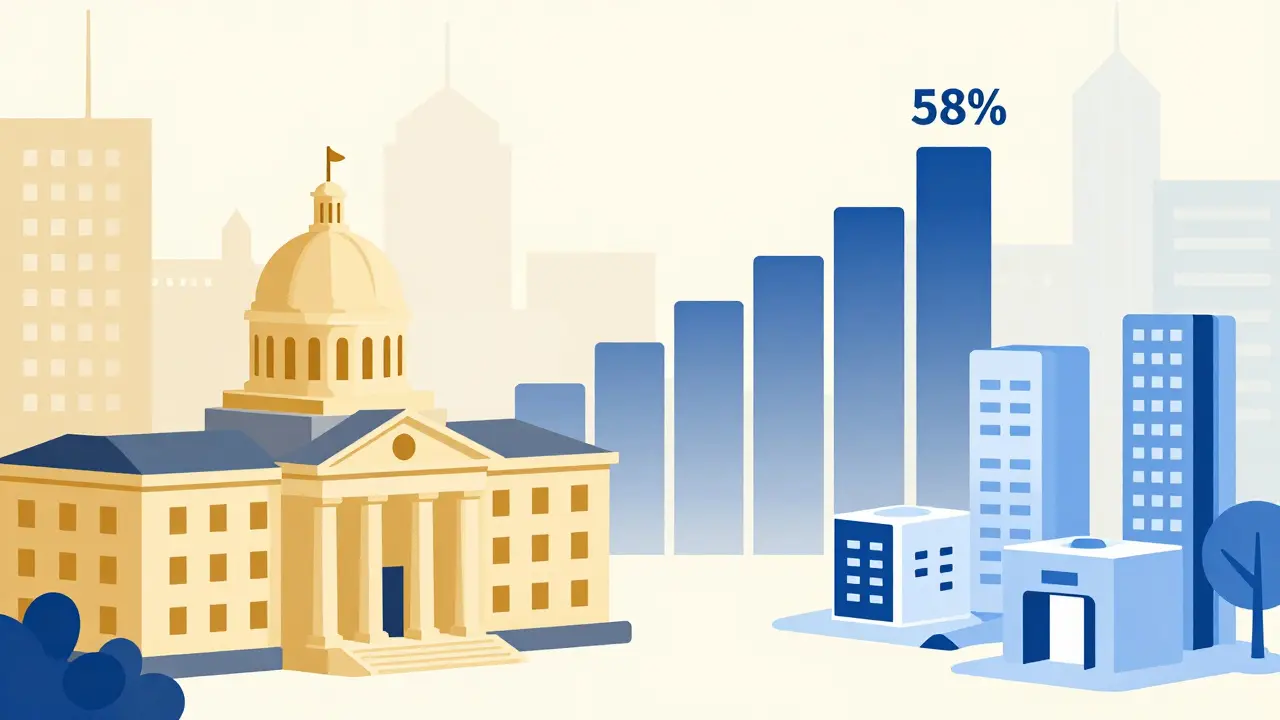
As of mid-2026, the German crypto custody market is valued at €48.7 billion, up 28.3% year-over-year. But who holds the keys? Traditional banks do. Deutsche Bank, Commerzbank, and DZ Bank collectively control 58% of assets under custody. Specialized crypto-native providers like Coinbase Custody and Finoa hold about 27% combined.
Why the bank dominance? Trust and the accelerated licensing path. Institutional investors, including 63% of DAX 30 companies, prefer licensed German providers because the strict segregation requirements give them confidence their assets are truly protected. BlackRock’s European Digital Assets Head, Thomas Vogel, stated in May 2025 that BaFin’s detailed guidance allowed them to build compliant solutions "with confidence."
However, smaller firms struggle. The Ethena GmbH case serves as a stark warning. In June 2025, BaFin ordered the winding up of Ethena’s USDe stablecoin operations due to regulatory breaches, forcing token holders to redeem assets through a special representative. This shows that BaFin will act swiftly against non-compliance, regardless of the project’s popularity.
| Jurisdiction | Licensing Model | Entry Speed | Key Advantage | Key Challenge |
|---|---|---|---|---|
| Germany | Dual (MiCAR + KWG) | Slow (6-9 months) | High legal certainty & institutional trust | Complex compliance & high costs |
| Switzerland | FINMA Sandbox | Medium | Flexibility for innovation | Less long-term certainty than MiCAR |
| France | AMF Registration | Fast | Easier market entry | Perceived lower security standards |
| Malta | VFA Act Unified | Medium | Single licensing process | Lacks granular asset type distinctions |
What’s Coming Next? DAC 8 and Tax Changes
The rules aren’t static. By January 1, 2026, the DAC 8 reporting requirements will take effect. This means custody providers must implement new technical interfaces to report crypto transactions to tax authorities, aligning with the OECD’s Crypto-Asset Reporting Framework. Expect compliance costs to rise by another 15-20%, according to PwC’s June 2025 assessment.
Tax treatment is also shifting. The March 2025 updated circular introduced critical changes, differentiating between active staking (taxed as commercial income) and passive staking. There is also first-time guidance on DeFi tax implications. For custodians, this means your systems must track not just holdings, but the nature of every yield-generating activity to ensure accurate reporting for clients.
Looking further ahead, Germany plans to revise its civil securities law by Q2 2026. Analysts predict that by 2027, 70-80% of security tokens will be classified as civil law securities. This would fundamentally reshape the landscape, potentially requiring banking licenses for a much broader range of custody activities. Stay tuned, because the finish line keeps moving.
How long does it take to get a crypto custody license in Germany?
For new applicants, the process typically takes 6 to 9 months. However, existing financial institutions licensed under MiFID II can use an accelerated notification procedure, reducing the timeline to approximately 3 months. The delay often comes from preparing the 47 required documentation components and passing BaFin's rigorous fitness and propriety checks for senior management.
What is the minimum capital requirement for a crypto custodian in Germany?
A pure crypto custody provider needs a minimum operational capital of €125,000. If the provider offers multiple services under MiCAR Article 6, such as trading or exchange services alongside custody, the capital requirement can rise to up to €730,000. This ensures the firm has enough buffer to operate securely during initial losses or unexpected events.
Does Germany regulate Bitcoin differently from security tokens?
Yes. Bitcoin and Ether fall under the MiCAR framework, requiring a CASP license. Security tokens, however, may qualify as "civil law securities." If they do, they remain regulated under MiFID II and the KWG, potentially requiring a banking license rather than a standard financial services license. This dual-track system adds complexity but provides clear legal boundaries for each asset type.
What happens if a German crypto custodian goes bankrupt?
Client assets are protected through strict segregation requirements mandated by MiCAR Article 54. Custodians must keep client crypto assets physically or logically separate from their own corporate assets. In an insolvency scenario, client funds are not part of the custodian's estate and should remain accessible to the rightful owners, provided the custodian followed proper segregation protocols.
Are there exemptions for small-scale wallet providers?
Yes, Custodian Wallet Providers (CWPs) that solely conduct pure crypto custody business are exempt from certain KWG requirements, including specific reporting obligations, remuneration provisions, and some own funds and liquidity rules. However, they still must comply with core MiCAR standards regarding security, segregation, and licensing. The grandfathering period for existing licenses ends on December 31, 2025, after which full MiCAR compliance is mandatory for all.