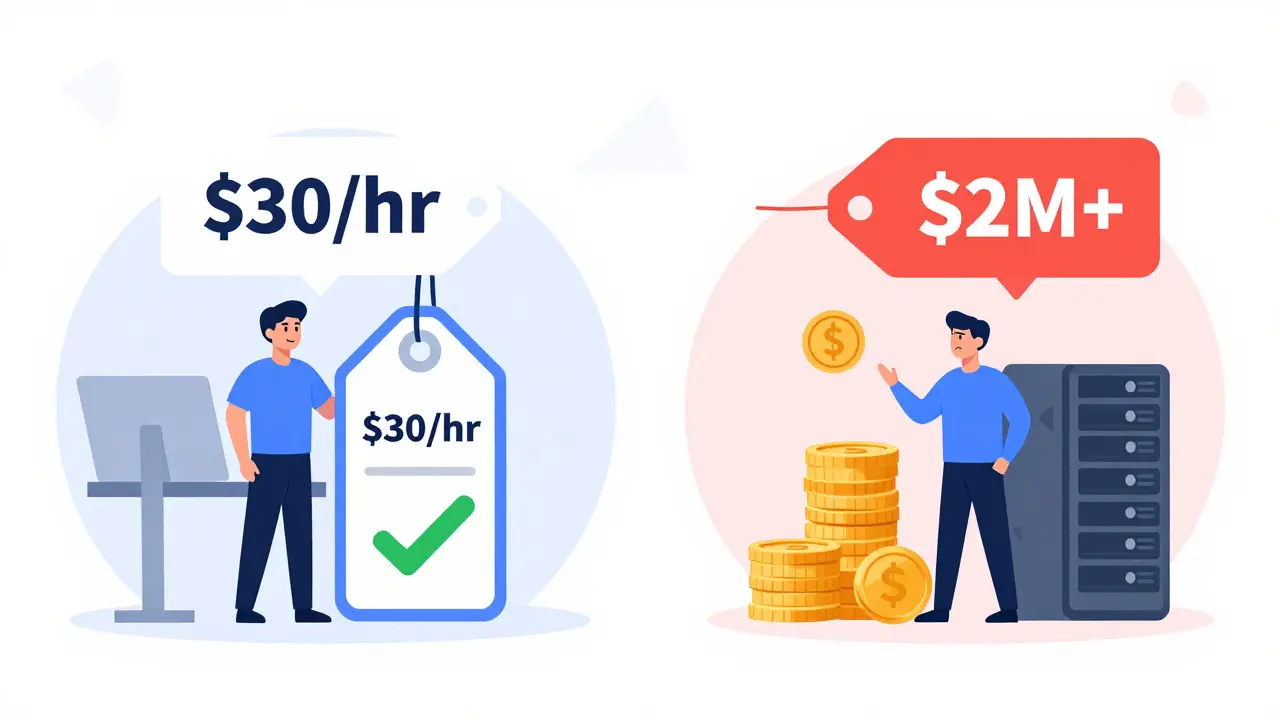
You want to build on the blockchain, but you don't want to manage servers. That’s where Blockchain-as-a-Service (BaaS) comes in. It lets companies deploy blockchain networks without building infrastructure from scratch. But here is the catch: the price tag varies wildly. One provider might charge $30 an hour, while another demands a six-figure upfront fee. In 2026, understanding these costs isn’t just about budgeting; it’s about survival. Pick the wrong model, and your project gets buried under hidden transaction fees or vendor lock-in.
The Real Price Tag of Blockchain-as-a-Service
When people ask for the cost of BaaS, they usually expect a single number. They won’t get one. The market is split into two main buckets: professional services (where you pay developers) and platform subscriptions (where you pay for the infrastructure).
For custom development firms, hourly rates sit between $30 and $85 per hour. For example, Rapid Innovation charges between $30 and $60 per hour, focusing on AI-driven Web3 solutions. On the higher end, specialized financial blockchain firms like Paystand charge $50 to $70 per hour, while Bitcoin-focused providers like Blockstream start at $75 per hour. If you are looking at comprehensive implementation projects, the total bill can range from $50,000 for a basic proof-of-concept to over $2 million for large-scale enterprise networks with complex smart contracts.
On the other hand, platform-based providers use subscription models. Kaleido, for instance, starts at $250 per month for basic networks but scales up to $15,000+ per month for enterprise deployments. This structure sounds predictable until your transaction volume spikes, which brings us to the biggest hidden cost in BaaS: network fees.
Hidden Costs: Transaction Fees and Network Selection
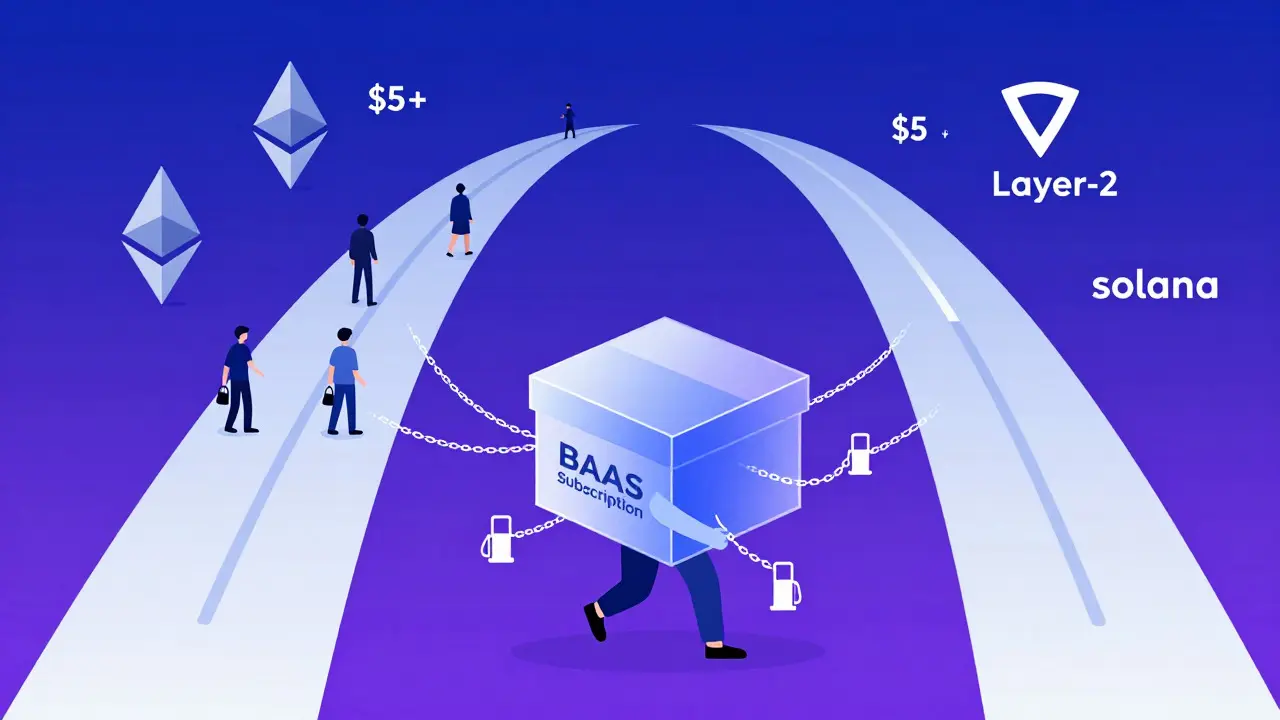
Your BaaS subscription covers the hosting, but it doesn’t cover the gas fees every time someone uses your app. This is where many enterprises get burned. The choice of blockchain network dictates your ongoing operational expenses.
If you choose Ethereum’s base layer, expect to pay between $1.50 and $5.00 per transaction during normal conditions. During peak congestion, those numbers jump significantly. This makes Ethereum expensive for high-volume applications like micropayments or frequent supply chain updates.
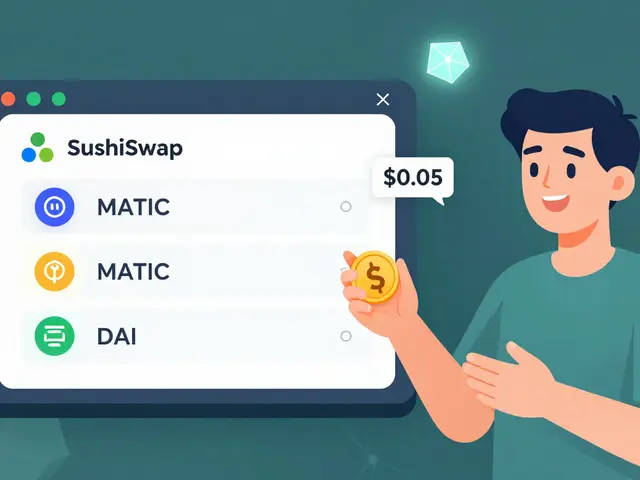
To cut costs, most modern BaaS implementations route traffic through Layer-2 solutions or alternative chains. Networks like Solana, Polygon, Arbitrum, and BNB Chain offer transaction fees ranging from $0.0001 to $0.05. For ultra-low fee requirements, Nano and IOTA offer effectively zero fees ($0.00001 to $0.0001), though they lack robust smart contract capabilities compared to Ethereum-compatible networks. Choosing the right chain isn’t just a technical decision; it’s a financial one that impacts your monthly burn rate.
| Provider | Pricing Model | Hourly Rate / Monthly Fee | Best For |
|---|---|---|---|
| Rapid Innovation | Hourly Development | $30 - $60 / hour | Cost-efficient custom Web3 apps |
| Paystand | Hourly Development | $50 - $70 / hour | Fintech and financial compliance |
| Blockstream | Hourly Development | $75+ / hour | Bitcoin-specific enterprise solutions |
| Kaleido | Subscription | $250 - $15,000+ / month | Predictable budgeting, scalable networks |
| Bloq | Hourly Development | $65 - $85 / hour | Supply chain and logistics tools |
Factors That Drive Up Your Bill
Why does one project cost $50,000 while another hits $2 million? Several technical factors influence the final invoice:
- Network Type: Private and consortium networks typically cost 15-25% less than public implementations because they require less complex security overheads for permissioned access.
- Consensus Mechanism: Proof-of-Stake (PoS) implementations average 30% cheaper to run than Proof-of-Work (PoW) alternatives due to lower energy and hardware requirements.
- Smart Contract Complexity: A basic token transfer contract might cost $5,000 to develop and audit. A complex DeFi protocol with multiple interacting contracts can exceed $50,000 in development alone.
- Integration Requirements: Connecting your blockchain to existing legacy systems is expensive. Each additional API integration adds $3,000 to $8,000 to the total cost.
Long-Term Economics: Maintenance and Compliance
The initial deployment is just the beginning. McKinsey’s 2025 analysis warns that 42% of enterprises underestimate long-term BaaS costs. Why? Because maintenance averages 15-20% of the initial implementation cost annually. You need to patch vulnerabilities, upgrade nodes, and monitor performance.
Compliance is another major cost driver. If you are operating globally, regulatory frameworks add significant weight to your budget. The EU’s MiCA framework, for example, can add 12-18 months to implementation timelines and increase costs by 15-25% for compliance audits. In contrast, jurisdictions with progressive sandboxes, like Singapore, can reduce implementation time by 20-30%. Always budget an extra $15,000 to $50,000 for legal consultation if your blockchain handles regulated assets or personal data.

How to Choose the Right BaaS Partner
Don’t just look at the hourly rate. Look at the total cost of ownership (TCO). Here is a quick checklist to avoid pitfalls:
- Check for Vendor Lock-in: Ensure your code can be migrated if the provider raises prices. Proprietary tools make switching painful and expensive.
- Evaluate Support Quality: Rapid Innovation scores 4.8/5 for documentation, while some competitors lag behind. Poor docs mean more hours spent debugging, which means more money spent.
- Verify Security Audits: A fintech startup once saved money by choosing a cheap provider, only to lose $2.3 million to an exploit. Budget for independent smart contract audits. It’s cheaper than remediation.
- Plan for Volatility: Keep a 10-15% contingency budget for transaction fee spikes. Even low-cost networks like Solana can see fees fluctuate during peak congestion.
Future Trends: What to Expect in 2027 and Beyond
The BaaS market is consolidating. Gartner predicts that 30-40% of specialized providers will be acquired by major cloud platforms by 2027. This means fewer niche players and more standardized offerings from giants like AWS and Microsoft Azure.
Look out for multi-chain support becoming standard. By 2027, 65% of BaaS implementations will likely include automated routing to the cheapest available network for each transaction type. This technology will help stabilize costs and protect against network-specific congestion issues.
Finally, keep an eye on quantum computing threats. The World Economic Forum estimates that global blockchain infrastructure upgrades to resist quantum attacks could cost $200-$500 billion by 2030. While distant, this may eventually add 15-25% to long-term BaaS costs as providers implement quantum-resistant cryptography.
What is the average cost to build a blockchain app using BaaS?
The cost varies widely based on complexity. Basic proof-of-concept projects start around $50,000, while full-scale enterprise implementations with complex smart contracts and integrations can exceed $2,000,000. Hourly development rates typically range from $30 to $85 per hour depending on the provider's specialization.
Are there hidden costs in Blockchain-as-a-Service?
Yes. The most common hidden costs are network transaction fees (gas fees), which vary by blockchain. Ethereum transactions can cost $1.50-$5.00+, while Layer-2 solutions like Polygon are fractions of a cent. Other hidden costs include annual maintenance (15-20% of initial cost), compliance audits, and API integration fees ($3,000-$8,000 per integration).
Which BaaS provider is the most cost-effective?
For custom development, Rapid Innovation offers competitive rates between $30-$60/hour. For subscription-based models, Kaleido starts at $250/month for basic needs. However, "cost-effective" depends on your use case. Fintech apps may find Paystand’s higher hourly rate justified by its compliance features, while supply chain projects might prefer Bloq’s specialized tools.
How do transaction fees affect my BaaS budget?
Transaction fees are recurring operational costs. If your app processes thousands of transactions daily, using a high-fee network like Ethereum Mainnet will drastically increase expenses. Switching to low-fee networks like Solana, Arbitrum, or Polygon can reduce these costs by 97-99%. Always budget a 10-15% contingency for fee volatility during network congestion.
Is BaaS cheaper than building in-house?
Generally, yes. ScienceSoft reports that BaaS solutions achieve 40-60% faster deployment times than in-house development. Organizations using team augmentation models save 25-35% compared to full in-house teams. BaaS eliminates the need to hire specialized blockchain architects and maintain physical server infrastructure, reducing both capital and operational expenditures.