You might have scrolled past it on Twitter, heard a friend mention it in a Discord chat, or spotted the ticker TITS while hunting for low-cap gems on Solana. It’s not your typical utility token promising to revolutionize supply chains or gaming. We Love Tits (TITS) is exactly what the name suggests: a community-driven, humor-based meme coin built on the Solana blockchain. But beyond the provocative branding and the "celebrating women in Web3" slogan, what actually backs this asset? Is it just another pump-and-dump waiting to happen, or does it have staying power?
If you are considering buying some TITS tokens, you need to look past the memes. This article breaks down the technical reality, the market data as of late 2026, and the specific risks involved with holding an unverified, low-liquidity asset. We’ll help you decide if this fits your speculative portfolio or if it’s better left alone.
The Core Concept: More Than Just a Joke?
At its heart, We Love Tits is an SPL token launched on the Solana blockchain in March 2024. Unlike Bitcoin or Ethereum, which aim to be global financial rails, TITS doesn’t claim to solve complex computational problems. Its stated mission is cultural: creating a community brand that celebrates women in the crypto space through humor, entertainment, and exclusive content.
The project positions itself as female-owned and community-centric. The logic here is simple but risky: the more the community engages, the higher the market cap, and theoretically, the better the quality of the merchandise and content they can produce. It’s a social experiment wrapped in a token. There is no decentralized application (dApp) you can use today, no staking rewards mechanism documented in a whitepaper, and no proprietary technology stack. It relies entirely on the speed and low fees of the Solana network to function.
Tokenomics and Market Reality
Let’s talk numbers, because this is where most people get burned. As of November 1, 2026, the data paints a picture of a very small, volatile asset. You need to understand the scale before you throw any money at it.
| Metric | Value (Approximate) | Context |
|---|---|---|
| Total Supply | 999.93 Million | Fixed supply; no new tokens are being minted. |
| Market Cap | $110,000 - $120,000 | Extremely low; ranks around #5000-#6000 globally. |
| All-Time High | $0.488 (Nov 2024) | Current price is ~99.9% below peak. |
| Current Price | ~$0.00011 | Highly sensitive to small buy/sell orders. |
| Holders | ~14,880 | Small but active community base. |
Notice the massive gap between the all-time high and the current price. If you bought in during the hype cycle of late 2024, you’re likely sitting on a significant loss. This isn’t unusual for memecoins, but it highlights the extreme volatility. With a market cap hovering around $110k, a single whale selling off could crash the price by double digits instantly. Liquidity is thin, meaning you might see a price on the chart, but executing a large order could result in heavy slippage.

How to Buy and Store TITS Safely
Buying TITS isn’t like clicking "Buy" on Coinbase. Since it’s a Solana-based SPL token, you need to navigate the decentralized finance (DeFi) ecosystem. Here is the practical workflow:
- Get a Solana Wallet: Download Phantom or Solflare. These are browser extensions or mobile apps that manage your private keys.
- Fund Your Wallet: Buy SOL (Solana's native cryptocurrency) on a centralized exchange like Binance or Coinbase, then send it to your wallet address.
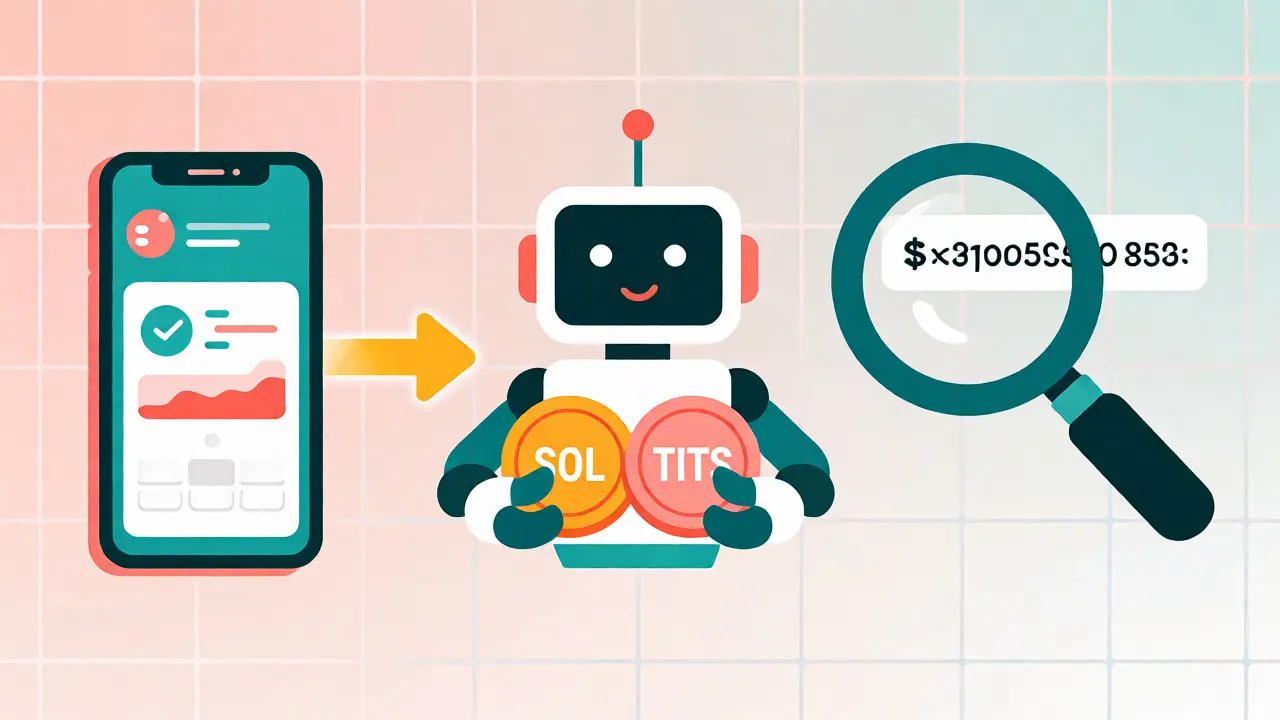
- Find the Right Token: This is critical. Search for the ticker "TITS," but always verify the contract address. The correct Solana mint address starts with
23CTZMjEYNNZUE4itfn3iv6kgM4xn7X7dx1kVX1Gr8Xi. Do not trust the logo alone; scammers create fake tokens with identical names. - Swap on Raydium: Go to Raydium.io, select the TITS/SOL pair, and swap your SOL for TITS. Check the transaction fee (usually a fraction of a cent) and confirm.
Once you have the tokens, store them securely. Because TITS is not verified on Solana’s official token registry, some wallets may flag it as "unverified." This doesn’t mean it’s a scam, but it means the developers haven’t paid for or completed the verification process that adds metadata like logos and descriptions to major exchanges.
Risk Factors: Why Caution is Essential
Is TITS a scam? Probably not in the traditional sense of stealing funds via a rug pull immediately after launch. However, it carries significant risks that every buyer must acknowledge.
- No Whitepaper or Team Transparency: There is no detailed technical document explaining future development. The team behind the project remains largely anonymous or pseudonymous. In crypto, anonymity isn’t always bad (Bitcoin was created by Satoshi Nakamoto), but combined with a lack of product, it raises questions about long-term viability.
- Liquidity Risk: With daily trading volumes often under $200, exiting a position larger than a few hundred dollars might be difficult without moving the market against yourself.
- Unverified Status: Solflare’s risk scanner has flagged potential concerns, noting issues with holder concentration and authority controls. While audits say "no issues," these automated scans aren’t foolproof.
- Imitation Tokens: Because the ticker is short and catchy, other projects on Ethereum or BSC use the same symbol. Confusing the two can lead to sending funds to the wrong chain, resulting in permanent loss.
Community and Brand Potential
Despite the risks, the community aspect is real. The project leverages social media platforms like X (formerly Twitter), Telegram, and Instagram to maintain engagement. The narrative of "female-owned" and "celebrating women" gives it a distinct identity in a male-dominated crypto sphere. They sell merchandise and promise exclusive content, aiming to build a lifestyle brand rather than just a financial instrument.
For investors, the bet is purely on attention economy. If the community grows and brings in new users who want to participate in the culture, the price rises. If the hype fades and members move on to the next shiny object, the volume dries up, and the price stagnates near zero. There is no underlying revenue stream from software licenses or transaction fees to support the token value independently of speculation.
Verdict: Who Should Buy TITS?
Should you add TITS to your portfolio? It depends entirely on your risk tolerance.
Buy TITS if:
- You enjoy meme culture and want to support a specific community niche.
- You are comfortable losing 100% of the invested amount.
- You understand how to use Solana wallets and verify contract addresses.
- You are looking for a lottery-ticket play with high upside potential if the brand goes viral again.
Avoid TITS if:
- You seek stable investments or predictable returns.
- You prefer assets with transparent teams and audited codebases.
- You cannot tolerate seeing your portfolio value drop 99% overnight.
- You are new to crypto and don’t know how to spot fake tokens.
Is We Love Tits (TITS) a legitimate investment?
It is a legitimate cryptocurrency asset in the sense that it exists on the blockchain and has traded since 2024. However, it is highly speculative. It lacks the fundamental utility of major coins and relies on community sentiment. Treat it as high-risk gambling rather than a core investment.
Where can I buy TITS crypto?
The primary venue is Raydium, a decentralized exchange on Solana. You will need SOL in a compatible wallet like Phantom or Solflare to make the purchase. Centralized exchanges rarely list micro-cap memecoins like TITS.
What is the contract address for TITS?
On Solana, the verified mint address is 23CTZMjEYNNZUE4itfn3iv6kgM4xn7X7dx1kVX1Gr8Xi. Always copy-paste this address when searching for the token to avoid counterfeit versions.
Why is the TITS price so low?
The price reflects the total market capitalization divided by the circulating supply. With nearly 1 billion tokens in circulation and a market cap of roughly $110,000, the unit price naturally sits at fractions of a cent. Low price per unit does not mean the asset is cheap; it means the supply is high relative to demand.
Does TITS have a roadmap?
There is no publicly available, detailed technical roadmap or whitepaper. The project focuses on community engagement, merchandise, and social media presence rather than protocol upgrades or technological milestones.