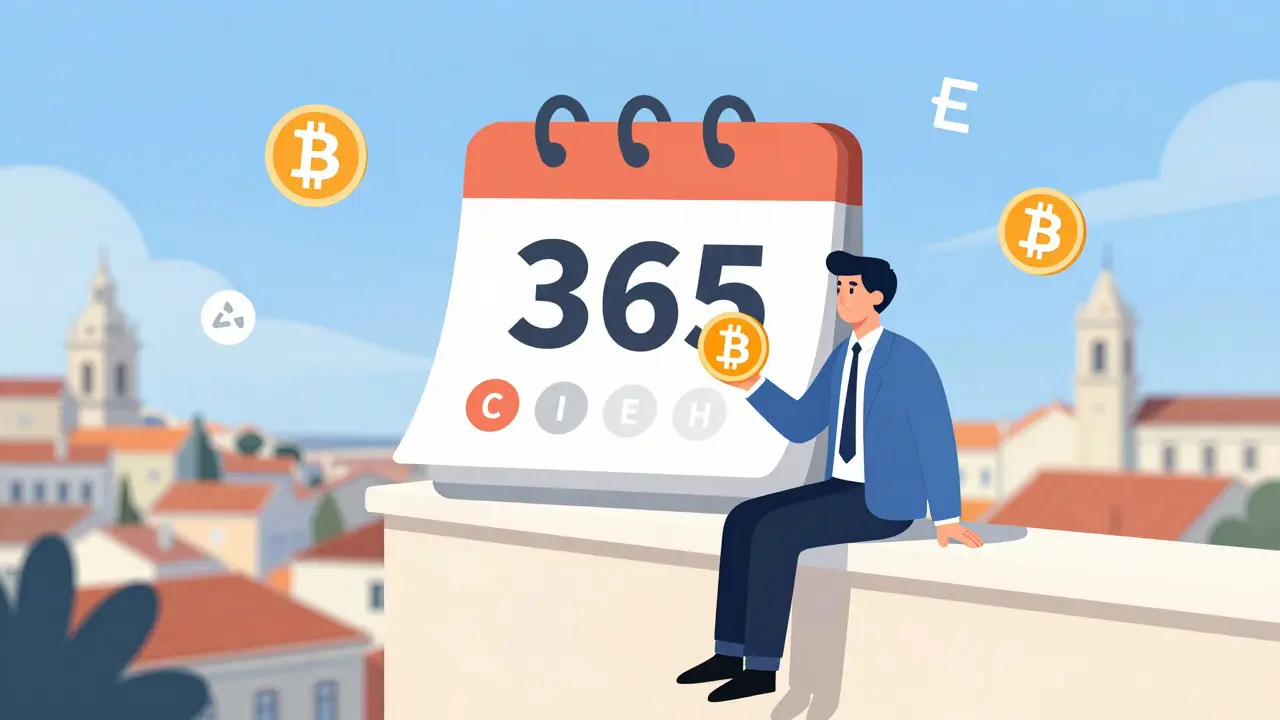
Portugal has quietly become one of the most attractive places in Europe for Bitcoin investors-not because it’s loud about it, but because it’s smart. While countries like Germany, France, and the Netherlands pile on complex taxes, Portugal keeps it simple: hold Bitcoin for over a year, and you pay zero tax. That’s not a loophole. It’s the law. And as of 2026, it’s still standing strong.
How Portugal’s Crypto Tax System Works
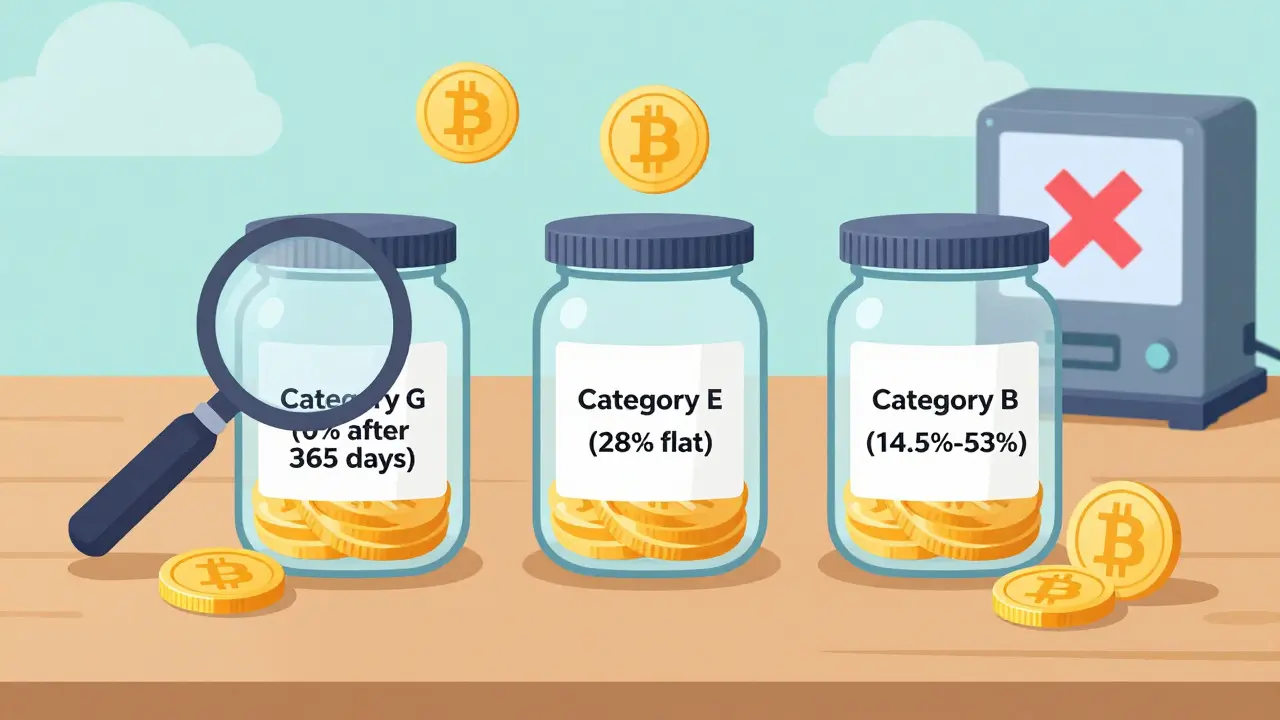
Portugal doesn’t treat all Bitcoin activity the same. Since the 2023 tax reform, the country broke crypto income into three clear buckets under its Personal Income Tax Code (PIT Code). Each has its own rules, and knowing which one you fall into makes all the difference.- Category G (Capital Gains): This covers selling Bitcoin for euros or other fiat currency. If you bought Bitcoin 364 days ago and sold it today? You owe 28%. But if you held it 366 days? Zero tax. The clock starts ticking from the day you bought it, not when you received it. No exceptions. No gray area.
- Category E (Capital Income): This is for passive income like staking rewards, lending interest, or airdrops. All of it gets taxed at a flat 28%. No deductions. No brackets. Just 28% on whatever you earn. It’s not tax-free, but it’s predictable-and way simpler than progressive rates in other countries.
- Category B (Self-Employment Income): If you’re mining, running a crypto trading business, or validating transactions for a living, you’re in this category. Your profits are taxed at Portugal’s progressive income rates: 14.5% up to €7,968, then climbing all the way to 53% for income over €80,640. This is where Portugal gets tough. High-volume traders pay more than in many other EU countries.
Here’s the kicker: crypto-to-crypto trades don’t trigger taxes. You can swap Bitcoin for Ethereum, then Ethereum for Solana, then back to Bitcoin-all without paying a cent. Most countries treat these as taxable events. Portugal doesn’t. That gives investors real flexibility to rebalance portfolios, chase opportunities, or hedge positions without worrying about tax bills piling up.
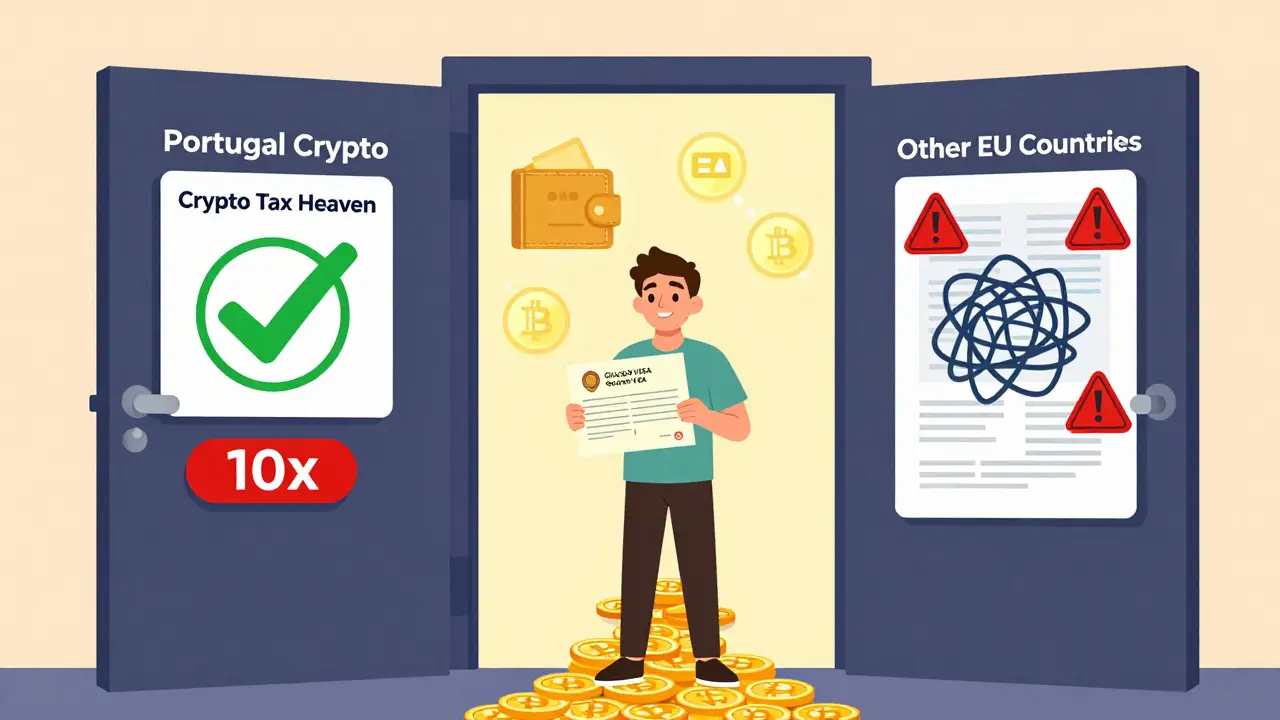
Why Portugal Beats Other European Countries
Let’s compare. In Germany, if you hold Bitcoin for over a year, you also pay no tax. Sounds similar, right? But here’s the catch: if you sell within a year, Germany taxes your gains as part of your regular income-up to 45%. Portugal? Flat 28%. No matter how much you make. That’s a big deal for someone who trades occasionally but isn’t a professional.France? They slap on a flat 30% tax on all crypto gains, including social charges. Staking? Taxed as income, up to 45%. And they tax crypto-to-crypto swaps too. Portugal doesn’t. Even the Netherlands, often seen as crypto-friendly, taxes all gains as personal income with rates up to 49.5%.
Portugal’s 28% short-term rate and complete exemption after 365 days give it a clear edge. It’s not the lowest rate in Europe-but it’s the most balanced. You pay fairly if you’re trading frequently, but you’re rewarded handsomely if you’re patient.
Who Benefits the Most?
Not everyone wins the same way. Portugal’s system is built for two kinds of people:- Long-term Bitcoin holders: If you bought Bitcoin in 2021 and still have it? You’re golden. Sell it in 2026? Zero tax. No paperwork. No forms. Just bank the profit. This is why so many digital nomads and expats choose Portugal-to lock in gains without the tax trap.
- Occasional traders: You buy Bitcoin, sell a little when it spikes, then wait. That’s fine. As long as you’re not doing it daily or running a business, you fall under Category G. And if you hold over a year? Tax-free.
But if you’re a professional trader? The system isn’t designed to help you. If you’re making 10 trades a week, running a bot, or managing crypto for others-you’re in Category B. And that means you’re subject to progressive rates up to 53%. Some traders complain about this. But the government’s message is clear: we want investors, not day traders.
Compliance and What You Need to Track
Portugal doesn’t require you to file crypto taxes every month. But you do need to declare everything once a year. The key? Proof of purchase dates.You need to know:
- When you bought each Bitcoin (and how much you paid)
- When you sold it
- Whether you traded it for another crypto (to avoid accidental taxable events)
Most investors use tools like CoinTracking or CoinLedger to import their transaction history. These platforms auto-categorize your trades, calculate gains, and generate reports that match Portugal’s tax forms. You don’t need to be an accountant-just organized.
The tax authority (Autoridade Tributária e Aduaneira) doesn’t actively chase crypto users yet. But they’re building the systems to do it. They’ve started working with blockchain analytics firms and are slowly integrating crypto data into their systems. Don’t assume you’ll get away with hiding. It’s not worth the risk.
The NHR and Golden Visa Advantage
Portugal’s crypto tax perks get even better when paired with its other incentives. If you’re a non-resident who moves here, you might qualify for the Non-Habitual Residence (NHR) Program. Even though the original NHR ended in 2024, a new version launched in 2025 with similar benefits for digital nomads and investors.Under the new rules:
- Foreign-sourced income (like Bitcoin gains from outside Portugal) can be tax-free for up to 10 years
- Portuguese-sourced income (like staking rewards earned while living here) is taxed at a flat 20%
Combine that with the 0% tax on long-term Bitcoin sales? You’re looking at a powerful tax strategy. And if you invest €500,000 or more in Portuguese assets-including crypto-linked funds-you can qualify for the Golden Visa, which gives you residency and a path to citizenship.
What Could Change?
Portugal’s system has held steady since 2023. No major changes are expected in 2026. But here’s what to watch:- EEA classification: Bitcoin held outside the European Economic Area (like in the U.S. or Switzerland) might lose its tax-free status. Keep your holdings within EEA wallets if you want to be safe.
- Professional trader thresholds: The government may lower the threshold for Category B. Right now, it’s based on behavior, not income. But they might set a specific income cap (like €20,000/year) to trigger business taxation.
- Reporting requirements: Expect more digital reporting soon. The EU’s MiCA regulation will push all member states to improve crypto tracking. Portugal is already preparing.
For now, the rules are clear. Hold long. Trade smart. Don’t run a business. And you’ll keep more of your Bitcoin gains than almost anywhere else in Europe.
Is Bitcoin really tax-free in Portugal?
Yes-but only if you hold it for more than 365 days. Selling Bitcoin within a year of buying it triggers a 28% tax. If you hold it longer, you pay nothing. This applies to personal investors, not professional traders.
Are crypto-to-crypto trades taxable in Portugal?
No. Exchanging Bitcoin for Ethereum, Solana, or any other cryptocurrency is not considered a taxable event in Portugal. This is one of the most valuable advantages compared to countries like the U.S. or Germany, where such swaps are treated as sales.
Do I need to report crypto staking rewards?
Yes. Staking rewards, lending interest, and airdrops are classified as Category E income and are taxed at a flat 28%. You must report them in your annual tax declaration. Even if you reinvest them, they’re still taxable in the year you receive them.
Can I avoid taxes by moving to Portugal?
If you become a tax resident and hold Bitcoin for over a year, you can eliminate capital gains tax on sales. Combine that with Portugal’s new NHR program, and foreign-sourced income (including crypto gains earned before moving) may be tax-free for up to 10 years. But you must legally establish residency-buying property, renting a home, or registering with local authorities.
What if I mine Bitcoin in Portugal?
Mining is treated as a business activity (Category B). Your profits are subject to progressive income tax rates from 14.5% up to 53%, depending on your total earnings. You must register as a self-employed individual and keep detailed records of equipment costs, electricity, and revenue.
Is Portugal safe for crypto investors in 2026?
Yes. Portugal remains one of the most stable and transparent crypto tax environments in Europe. There are no signs of reversing its current policies. The government continues to attract digital nomads and crypto businesses. While enforcement is improving, the rules are clear, predictable, and favorable for long-term investors.
Portugal didn’t become a crypto haven by accident. It was a deliberate choice-to draw talent, investment, and innovation. For Bitcoin investors who want to hold, not trade, and who value simplicity over complexity, it’s still the best option in Europe.