You’ve probably seen dozens of new crypto tokens pop up every week. Most promise high yields, but few explain exactly how they deliver them without collapsing. That’s where UniFarm comes in. It isn’t just another meme coin or a vague utility token. It is a decentralized finance (DeFi) platform built around a specific problem: the complexity and risk of managing multiple staking positions across different protocols.
UniFarm operates as a decentralized group staking protocol and an Initial DEX Offering (IDO) Launch Pad. Instead of forcing you to chase yields on ten different apps, it pools various DeFi projects together. This allows for long-term holdings with less daily management. If you are wondering whether UFARM is worth your attention in the current market landscape, we need to look past the hype and examine the mechanics, the tokenomics, and the real-world utility behind the project.
The Core Concept: Group Staking vs. Solo Farming
To understand UniFarm, you first have to understand the pain point it solves. In traditional DeFi, if you want to farm rewards from Project A, Project B, and Project C, you usually have to connect your wallet to three different interfaces, approve three different contracts, and monitor three different Annual Percentage Yields (APYs). It is fragmented, time-consuming, and risky.
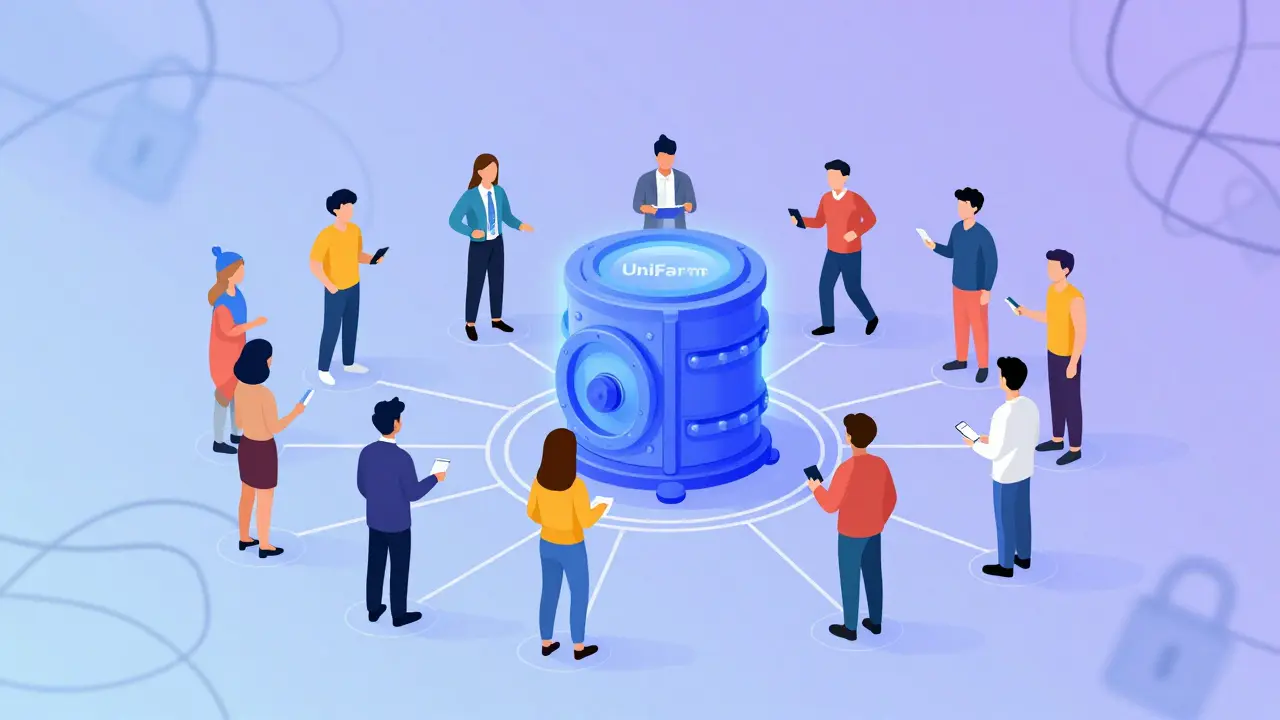
UniFarm changes this dynamic by introducing group staking. Think of it like an index fund for yield farming. You stake one token into a UniFarm cohort, and that capital is deployed across multiple high-quality projects simultaneously. The platform aggregates these opportunities into a single pool. This reduces the friction for users who want diversified exposure to DeFi yields without becoming full-time liquidity managers.
This approach also introduces the concept of "cohorts." These are groups of users staking together. By pooling resources, the protocol can negotiate better terms or access premium opportunities that individual retail investors might not reach on their own. It simplifies the user experience significantly, turning a complex multi-step process into a single transaction.
Understanding the UFARM Token Utility
A token is only as valuable as its use cases. Many projects launch tokens that serve no purpose other than speculation. UFARM is designed as a comprehensive utility token with six primary functions within the ecosystem. Let’s break down what you actually get when you hold UFARM.
- Governance: Holders vote on protocol-level decisions. As UniFarm transitions toward a Software-as-a-Service (SaaS) model, this becomes even more critical. You help decide which features get built and how the platform evolves.
- Staking Rewards: You can stake UFARM itself to earn other high-quality project tokens. The platform guarantees a minimum APY of 36% for participants in major cohorts. This is a significant differentiator in a market where yields often fluctuate wildly or drop to near zero.
- Premium Pools Access: Not all yield opportunities are open to everyone. UniFarm uses a tiered structure. The more UFARM you hold or stake, the higher your tier, and the access you get to exclusive, higher-yield pools.
- Premium Offerings: Beyond just pools, holding UFARM grants tickets to collaborations with other platforms, launchpads, wallets, and service providers. Think of it as a VIP pass to the broader DeFi ecosystem.
- Add-on Access: Future features like on-chain insurance and NFT farming will be unlocked based on your tier status. This ensures that early and loyal holders benefit from the platform’s expansion into adjacent sectors.
- Fee Payment: As the platform matures into a SaaS offering for developers, UFARM will likely become the primary currency for paying fees to access premium infrastructure tools.
This multi-layered utility means UFARM isn’t just sitting in your wallet; it is actively working to unlock value, reduce costs, and provide governance power.
Tokenomics: Supply, Circulation, and Market Reality
When evaluating any crypto asset, the numbers tell the real story. Here is the breakdown of the UFARM economic model as of mid-2026.
| Metric | Value |
|---|---|
| Total Supply | 1,000,000,000 UFARM |
| Circulating Supply | ~38,375,920 UFARM |
| Market Cap | ~$1,870 USD |
| Fully Diluted Valuation (FDV) | ~$48,750 USD |
| Total Value Locked (TVL) | ~$496,210 USD |
| Holders | ~7,080 |
These figures reveal a fascinating dynamic. The market cap is extremely low-under $2,000. However, the Total Value Locked (TVL) is nearly half a million dollars. This results in a Market Cap to TVL ratio of roughly 0.003. In DeFi, a ratio below 1.0 often suggests that the protocol is generating more value (in locked assets) than the market values its equity (the token). This could indicate significant undervaluation, or it could reflect limited liquidity and trading volume in secondary markets.
The price volatility is notable. Recent data shows prices hovering around $0.000012, with occasional spikes. With a circulating supply of only about 38 million tokens out of a billion total, there is room for growth as more tokens enter circulation, but also potential for dilution if vesting schedules release large amounts quickly. Investors need to watch the vesting cliffs closely.
Multi-Chain Strategy: Where Does It Live?
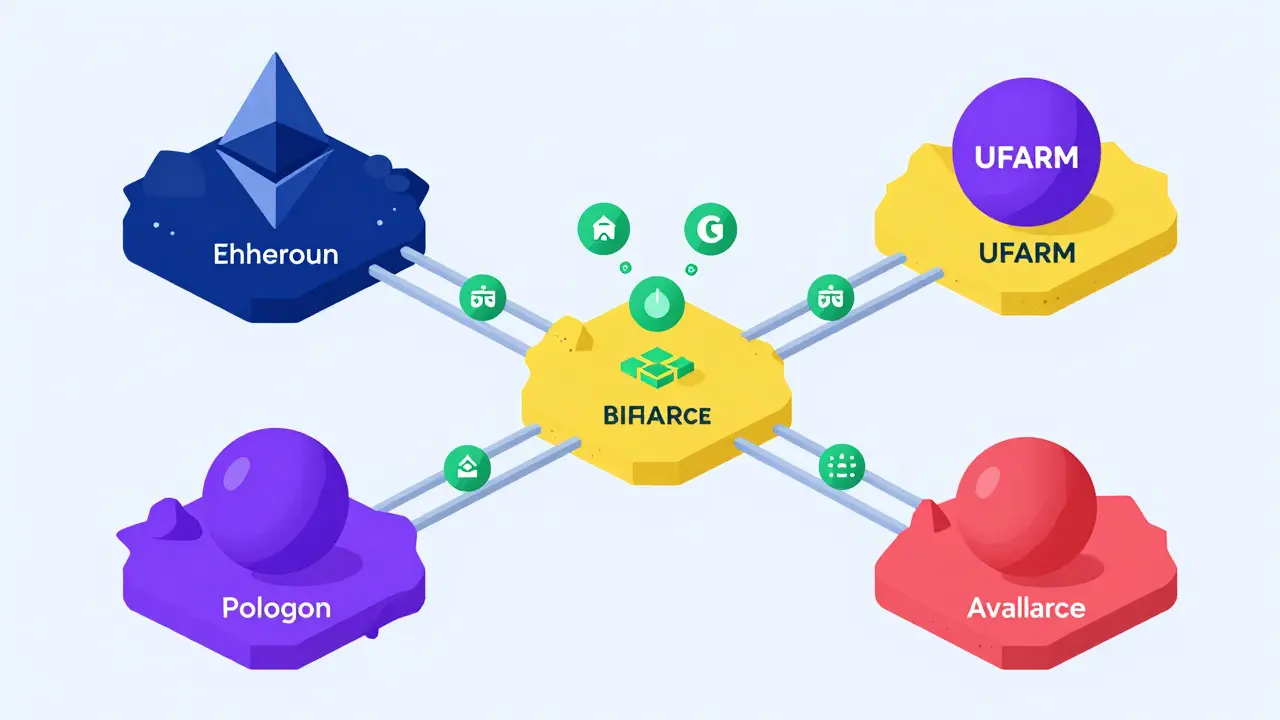
One of UniFarm’s strongest technical advantages is its multi-chain deployment. It doesn’t bet everything on Ethereum. Instead, it operates across four major networks:
- Ethereum: For users who prioritize security and deep liquidity, despite higher gas fees.
- Binance Smart Chain (BSC): For faster transactions and lower costs, appealing to a broader retail audience.
- Polygon: Offering a middle ground with scalability and EVM compatibility.
- Avalanche: Providing high throughput and finality for rapid staking operations.
This strategy provides resilience. If Ethereum gas fees spike during a network congestion event, users can switch to Polygon or Avalanche without leaving the UniFarm ecosystem. It also expands the total addressable market, allowing users from different chain communities to participate. However, this fragmentation does come with a cost: liquidity is spread thinner across chains, which can impact slippage and execution speed on less popular networks.
Risks and Challenges: The Other Side of the Coin
No DeFi project is without risk. While the guaranteed 36% APY sounds attractive, you must ask: where does that yield come from? In DeFi, high yields usually compensate for high risks. UniFarm mitigates some risk through diversification (staking across multiple projects), but smart contract risk remains. If one of the underlying projects in a cohort suffers a hack or exploit, the pooled funds could be affected.
Another challenge is market recognition. Despite having over 12,000 active users, UniFarm’s market ranking varies wildly between trackers, sometimes appearing as high as #860 and other times dropping below #3000. This inconsistency suggests that data aggregators may not fully capture its activity, or that trading volume is too thin to maintain a stable rank. Low liquidity means that large buys or sells can drastically move the price, making it difficult for institutional players to enter without significant slippage.
Furthermore, the transition to a SaaS model is ambitious. Shifting from a consumer-facing staking platform to a developer-focused infrastructure provider requires a different skill set and marketing strategy. If the team fails to attract developers, the fee revenue stream envisioned in the tokenomics could fall short.
How to Get Started with UniFarm
If you decide to explore UniFarm, here is the practical path forward. First, ensure you have a Web3 wallet compatible with the supported chains (MetaMask, Trust Wallet, etc.). Second, acquire UFARM tokens. They are available on major exchanges like Binance and Crypto.com, though liquidity may vary. You can transfer them to your personal wallet or receive them from other sources.
Once you have the tokens, visit the official UniFarm dashboard. Connect your wallet and select the chain you wish to operate on. Navigate to the "Staking" section to join a cohort. Remember to check your tier status, as this determines which premium pools you can access. Always start with a small amount to test the interface and verify the withdrawal process before committing significant capital.
Final Thoughts on UniFarm’s Potential
UniFarm represents a mature attempt to solve the fragmentation problem in DeFi. By grouping stakes and guaranteeing minimum yields, it offers a product that appeals to both novice users overwhelmed by complexity and experienced farmers seeking efficiency. The low market cap relative to TVL presents a speculative opportunity, but it also highlights the liquidity challenges inherent in smaller-cap DeFi projects.
The shift toward a SaaS model is the key variable to watch. If successful, it transforms UFARM from a simple yield aggregator into essential infrastructure for the DeFi sector. Until then, it remains a niche but functional tool for diversified staking. Do your own research, understand the smart contract risks, and never invest more than you can afford to lose.
Is UniFarm a safe investment?
No cryptocurrency investment is completely safe. UniFarm uses audited smart contracts and diversifies risk across multiple projects, but it still carries standard DeFi risks such as smart contract vulnerabilities, impermanent loss in underlying pools, and market volatility. The guaranteed 36% APY is a protocol promise, not a bank guarantee, and depends on the performance of the underlying farms.
What is the minimum amount to stake on UniFarm?
There is typically no strict minimum for basic staking, but to access premium pools and higher tiers, you will need to hold a certain amount of UFARM tokens. Check the current tier requirements on the UniFarm dashboard, as these thresholds can change based on governance votes and protocol updates.
Which blockchains does UniFarm support?
UniFarm currently operates on four major blockchain networks: Ethereum, Binance Smart Chain (BSC), Polygon, and Avalanche. This multi-chain approach allows users to choose their preferred network based on transaction speed and gas fee preferences.
How does the guaranteed 36% APY work?
The guaranteed minimum APY is achieved through the platform's group staking mechanism. By pooling funds from many users, UniFarm can deploy capital across multiple high-yield DeFi protocols simultaneously. The aggregation of these yields allows the protocol to offer a competitive floor rate to participants, though actual returns may exceed this minimum depending on market conditions.
Can I buy UFARM directly with fiat currency?
You cannot buy UFARM directly with fiat on the UniFarm platform itself. However, UFARM is listed on centralized exchanges like Binance and Crypto.com. You can purchase UFARM there using fiat or stablecoins and then transfer it to your Web3 wallet to interact with the UniFarm protocol.
What is the future roadmap for UniFarm?
UniFarm is transitioning toward a Software-as-a-Service (SaaS) model. This means the platform will increasingly focus on providing infrastructure for developers and other DeFi projects to build unique offerings. Future add-ons include on-chain insurance and NFT farming features, expanding the utility of the UFARM token beyond simple staking.