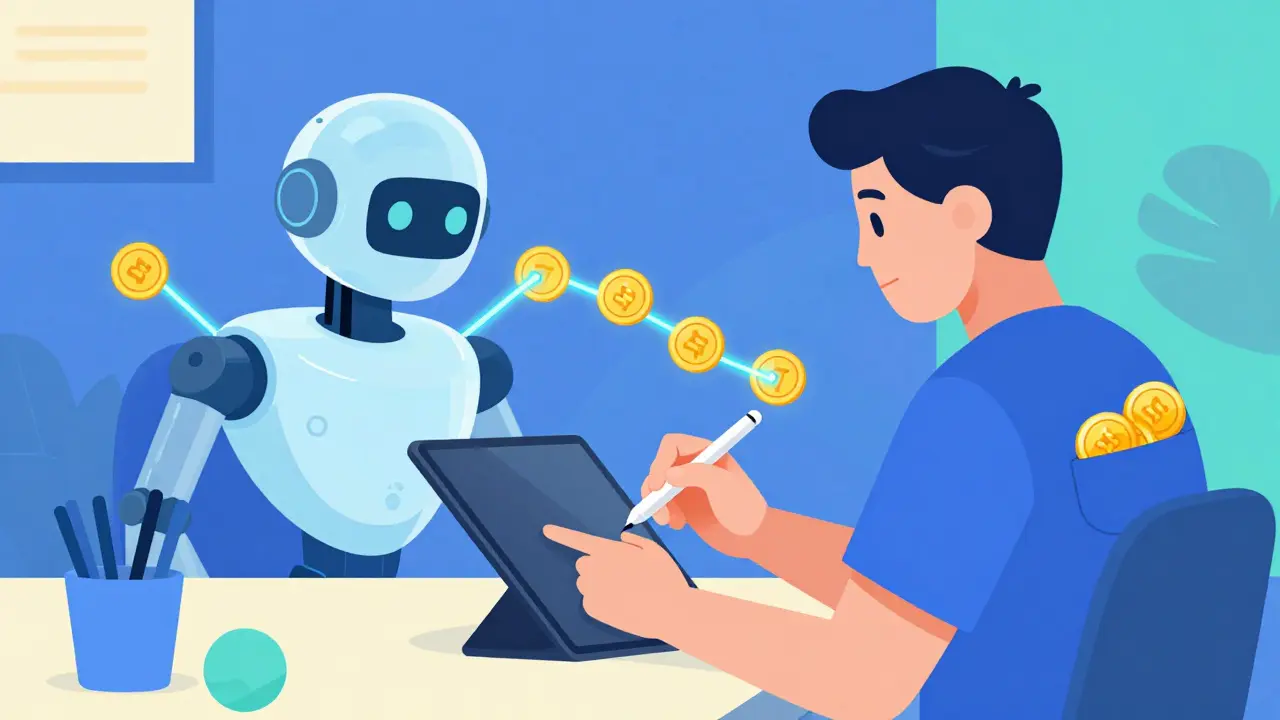
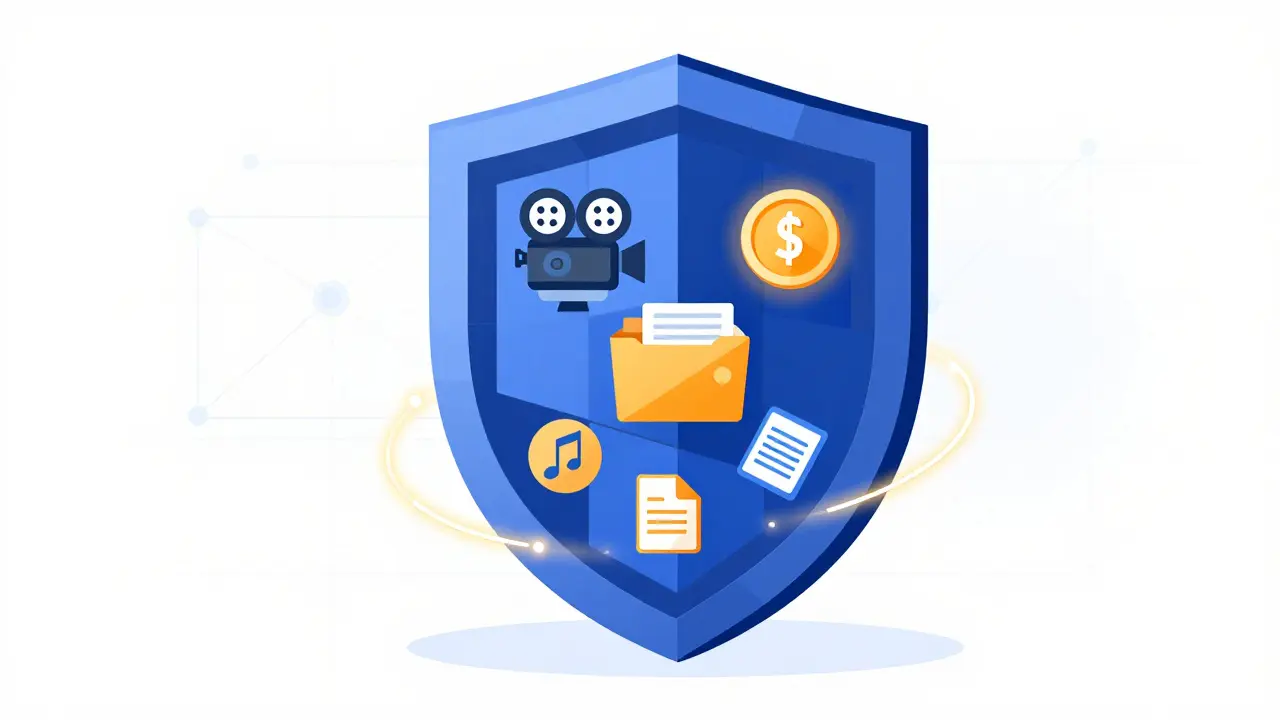
Imagine a world where every time an AI system learns from your artwork, you get paid automatically. That is the core promise behind Story Protocol, a specialized Layer 1 blockchain designed explicitly for managing digital intellectual property (IP). With artificial intelligence sweeping through industries, creators are worried about their work being scraped without permission or credit. Story Protocol aims to fix this broken dynamic by making rights programmable and enforceable on-chain.
The native currency of this ecosystem is the $IP token, which serves as fuel for the network rather than a speculative asset for gambling. Unlike Bitcoin or Ethereum, which build broad infrastructure for everything, Story focuses narrowly on solving one massive problem: protecting and monetizing creativity in the age of AI. As we move further into 2026, the need for this kind of infrastructure has shifted from a nice-to-have to a fundamental requirement for the digital economy.
The Problem: Why a New Blockchain?
To understand Story Protocol, you have to look at what’s happening with AI right now. Large language models and image generators often train on public data. In 2024 alone, estimates suggested that over $600 billion worth of intellectual property was stolen or misused annually within the US alone. Traditional copyright laws are slow, expensive, and nearly impossible to enforce globally. A lawyer can’t police every server farm.
Story Protocol acts as the first dedicated operating system for intellectual property. It creates a universal registry where assets like music, code, characters, and images live with clear ownership records attached. Instead of trying to sue someone years later for using your photo, the blockchain enforces rules at the moment of interaction. If an AI model wants to access your data, the smart contract checks if it has permission and handles payment instantly.
This approach differs significantly from existing giants. While Ethereum allows you to mint an NFT, proving you own a JPEG, it doesn't natively handle licensing terms or royalties when that asset is reused. You have to build complex smart contracts manually. Story brings these features out of the box, specifically engineered for rights management.
Understanding the $IP Token
The $IP token is the engine driving this entire machine. It launched officially during the Token Generation Event (TGE) in early 2025, marking the transition from testnet to real-world application. By mid-2026, the token had become central to several critical functions:
- Gas Fees: Every transaction on the Story blockchain-registering an asset, licensing a piece of content, or checking attribution-requires a small amount of $IP.
- Staking for Security: Validators lock up $IP tokens to secure the network, ensuring the ledger remains tamper-proof.
- Governance: Holders vote on future protocol upgrades and treasury spending.
- Access Control: Companies buying rights to train data spend $IP to license those assets securely.
Market data from late 2025 showed the token stabilizing around $4.39 USD with significant trading volume, reflecting growing institutional interest. The total supply is capped at 1 billion tokens, preventing unlimited inflation. About 25% of these were circulating at launch, with significant portions reserved for long-term ecosystem growth and foundation incentives.
Key Features: How It Actually Works
The technical architecture of Story is what separates it from "crypto-wrappers" trying to solve legal problems. It treats Intellectual Property Assets (IPAs) as first-class citizens on the chain. Here is the breakdown of the tools available to users:
| Tool Name | Function | Benefit |
|---|---|---|
| StoryKitWhite-label UI toolkit for developers | Builds interfaces for registering and viewing IP | Reduces app development time by ~70% |
| IP Hub | Central repository for all registered assets | One-stop search for licensed content |
| Licensing Module | Manages permissions (Open, Commercial, Remix) | Automated royalty payments on resale/use |
Programmable Licensing: When you register a song on Story, you don't just upload an MP3. You attach terms. Maybe you allow non-commercial remixing for free but require a fee for commercial use. These terms are written in code (machine-readable) so AI systems and apps can read them automatically without human intervention. This solves the "clearinghouse" problem where companies pay huge fees to lawyers to figure out who owns a song.
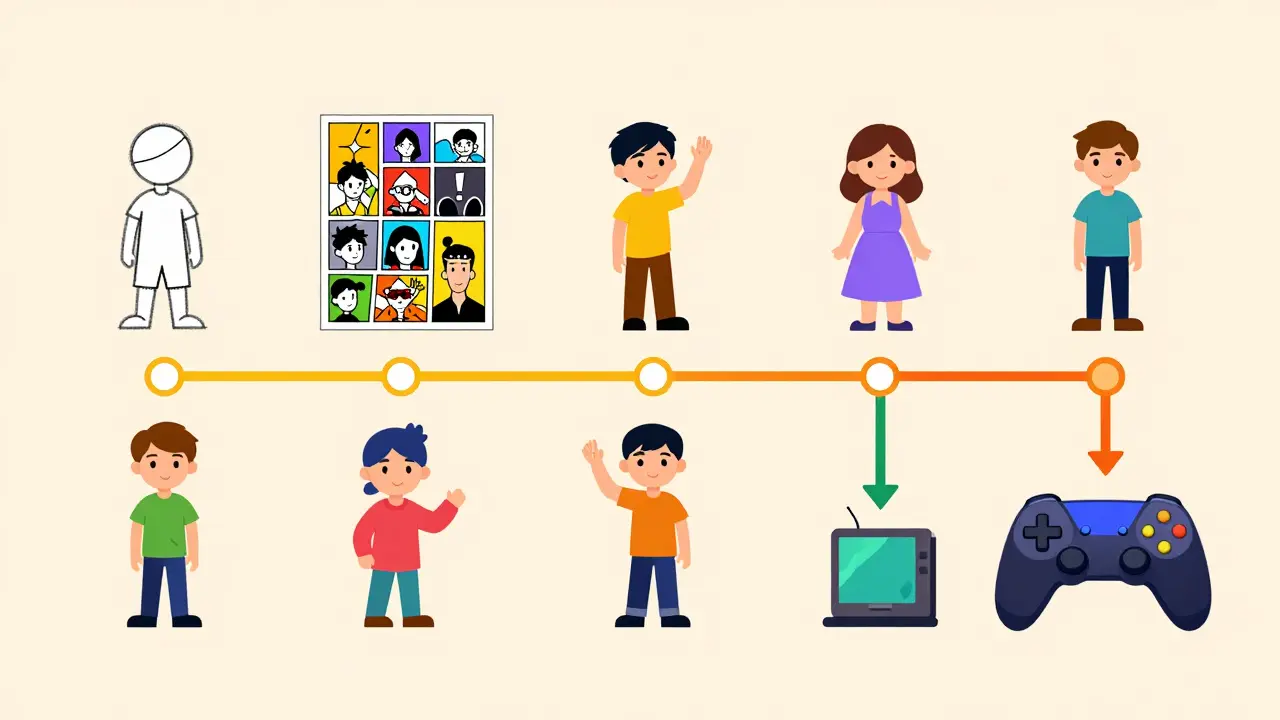
Derivative Graphs: One unique feature is tracking value across generations. If Artist A makes a character, and Artist B uses that character to make a comic book, and then Artist C turns that comic into a game, Story tracks the lineage. Each step back pays a royalty to the previous creator automatically. This ensures original creators benefit from downstream derivatives forever.
Adoption and Real-World Usage
A concept is only useful if people use it. By 2025, Story Protocol secured major partnerships that validate its roadmap. The most prominent example involves Barunson, the production studio famous for the Oscar-winning film Parasite. They launched nPLUG, an IP remixing platform built entirely on Story. This means the film industry is actively testing how they can tokenize characters and storylines for fan engagement and merchandising.
Fintech is another area seeing traction. Seoul Exchange, a regulated financial platform in South Korea, chose Story exclusively to settle tokenized real-world assets. They needed a system where the underlying asset could have legal standing, and Story's focus on enforceability made it the preferred choice over generic chains.
User sentiment reflects excitement mixed with caution. Reviews from late 2025 rated the protocol highly (4.3/5) for utility, noting that the "ease of registering IP" was superior to traditional copyright offices. However, some users noted that major centralized exchanges took time to list the token post-launch, creating liquidity friction initially. Despite this, the community grew rapidly, especially among digital artists and AI developers who see it as a potential income source.
Investing and Holding: What You Need to Know
If you are looking to hold or use $IP, understanding the risk profile is crucial. This is not a meme coin; it is tied directly to the success of the Web3 intellectual property market. If AI regulation increases-forcing companies to buy licenses rather than scrape data-the demand for $IP would logically rise because companies need the token to purchase access.
Staking Opportunities: Since the network relies on validators to process transactions, holding $IP offers more than passive storage. Liquid staking protocols like Meta Pool have offered yields around 10.96% APY for staked tokens. This provides a secondary layer of utility for holders waiting for market growth.
However, remember that regulatory environments for crypto remain complex. While Story operates as a utility layer, governments are still figuring out how to treat tokenized IP. The protocol attempts to comply with global laws, but cross-border enforcement relies on the willingness of jurisdictions to respect on-chain registries.
Limitations and Challenges
No technology is perfect, and Story Protocol faces hurdles common to specialized blockchains. First, the "chicken and egg" problem: networks need users to create IP, but users wait for others to create demand. While early enterprise adoption helps, mass consumer awareness remains the bottleneck.
Secondly, there is competition from broader ecosystems. Ethereum and Solana could theoretically add similar IP modules later. Story differentiates itself by offering specialized hardware optimizations and pre-built legal logic that generic chains lack, but maintaining a standalone Layer 1 requires constant developer attention and marketing to avoid becoming obsolete.
Frequently Asked Questions
Is the $IP token the same as Story Protocol?
Not exactly. Story Protocol is the entire blockchain infrastructure and software suite. The $IP token is the native currency used within that network to pay fees and participate in governance. You need the token to interact with the protocol efficiently.
Can I register my physical art on Story?
Story is primarily designed for digital assets. However, you can register metadata representing physical goods, such as certificates of authenticity for collectibles, though the direct verification of the physical object isn't automatic.
Who founded Story Protocol?
It was founded by a group of entrepreneurs with backgrounds in venture capital and deep-tech engineering, though specific names are less public-facing compared to giants like Bitcoin or Ethereum. They emphasize a collective foundation approach backed by category leaders in media and finance.
Does Story compete with NFT marketplaces?
Yes and no. It complements them. While OpenSea sells individual files, Story manages the rights associated with those files. You can view it as the legal backend that allows NFT marketplaces to verify and license content securely.
Is Story Protocol safe for long-term investment?
All crypto investments carry risk. Story addresses a real economic problem (IP theft), which gives it strong fundamentals. However, adoption depends on regulatory shifts regarding AI and data usage, which adds uncertainty to its immediate timeline.