You might have stumbled upon S.Finance while scrolling through obscure corners of the decentralized finance world. It sounds promising: a specialized tool for swapping stablecoins with low fees and extra yield. But before you connect your wallet, you need to know what you are actually looking at. As of October 2026, S.Finance is not a mainstream giant like Uniswap or Curve. It is a niche, legacy project from the 2020 DeFi boom that has faded into near-obscurity.
This guide breaks down exactly what S.Finance does, how its SFG token works, and why the current data suggests extreme caution. We will look at the tech, the risks, and the stark reality of its market presence today.
The Core Concept: Stablecoin Swaps with Compound Yield
S.Finance is an Ethereum-based decentralized finance protocol designed specifically for exchanging stablecoins. Unlike general-purpose exchanges that handle everything from meme coins to Bitcoin derivatives, S.Finance focused on pairs like DAI and USDC. The goal was simple: reduce slippage and trading fees for users moving between dollar-pegged assets.
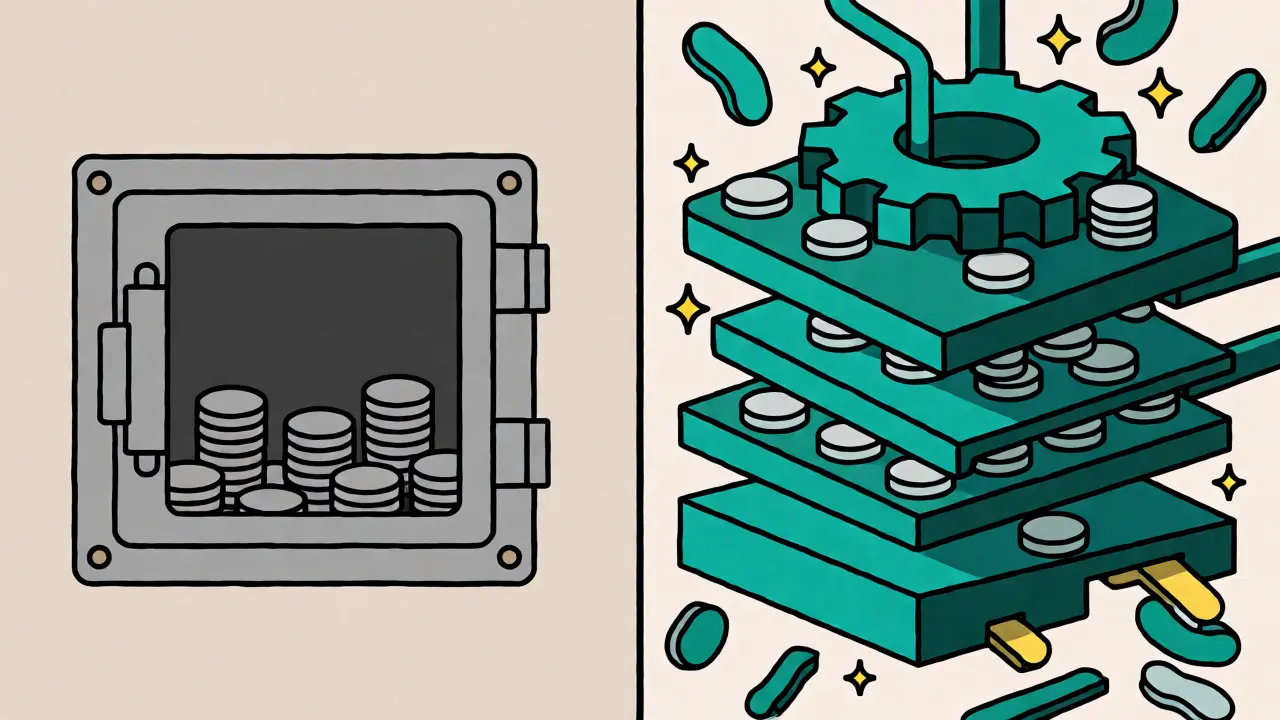
What made it unique in 2020 was its integration with Compound Finance. Most liquidity pools lock your assets up, meaning they sit idle. S.Finance allowed liquidity providers to deposit cDAI or cUSDC-interest-bearing tokens from Compound-into its pool. This meant your money could theoretically earn interest on Compound while simultaneously providing liquidity for swaps on S.Finance. It was a clever "set it and forget it" mechanism for yield farmers who wanted efficiency without sacrificing capital productivity.
| Feature | S.Finance | Uniswap V3 | Curve Finance |
|---|---|---|---|
| Primary Focus | Stablecoin Swaps + Compound Yield | General Token Trading | Stablecoin & LRT Efficiency |
| Network | Ethereum Mainnet | Multi-chain | Multi-chain |
| TVL (Oct 2026) | ~$175 (Negligible) | Billions | Billions |
| Status | Alpha / Legacy | Active Leader | Active Leader |
Understanding the SFG Token
The SFG token serves two main purposes: governance and incentives. Holders can vote on protocol changes, though given the low activity, voting power is likely concentrated among a few whales. More importantly, SFG was used to reward liquidity providers. If you supplied DAI or USDC to the pools, you earned SFG emissions as a bonus on top of trading fees and Compound interest.
The tokenomics follow a declining emission schedule. The total supply is capped at 21 million SFG. There was no pre-mine and no private sale; all tokens were distributed based on contribution to the protocol. Daily issuance was set at 0.1% of the remaining unminted supply. This means the inflation rate drops over time, mimicking Bitcoin’s halving logic but on a daily basis. However, because the protocol’s usage collapsed, most of these emissions went unclaimed or lost value rapidly.
Current Market Reality: A Ghost Town?
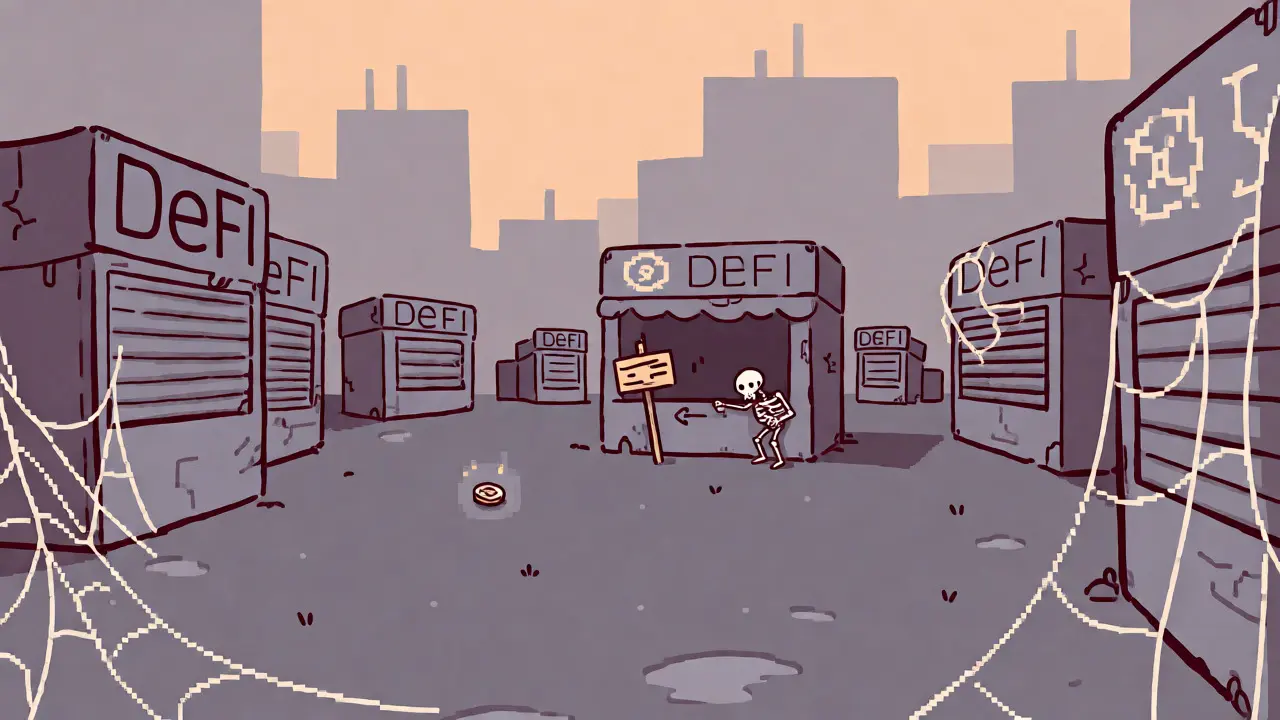
Here is the hard truth. Data from DefiLlama shows S.Finance’s Total Value Locked (TVL) hovering around $174.63. Yes, one hundred and seventy-four dollars. For context, major protocols hold billions. This tiny TVL indicates that almost no one is actively using the protocol right now. The price of SFG sits near $0.0019, with a fully diluted valuation under $41,000.
Why so low? The project launched in September 2020 during the height of "DeFi Summer." By 2021, competitors like Curve had perfected stablecoin swaps with better algorithms and deeper liquidity. S.Finance failed to capture significant market share. Today, it exists mostly as a historical artifact. Liquidity is so thin that buying or selling any meaningful amount of SFG would crash the price instantly due to slippage.
Risks You Cannot Ignore
If you are considering interacting with S.Finance, treat it as highly speculative. Here are the specific dangers:
- Smart Contract Risk: The GitHub repository labels the project as "alpha." While there was a KNOWNSEC audit, audits do not guarantee safety, especially if code was updated post-audit. Always verify the deployed bytecode matches the audited source.
- Liquidity Risk: With only ~$175 in TVL, exiting a position might be impossible without accepting massive losses. You could get stuck holding SFG tokens you cannot sell.
- Abandonment Risk: There is little public evidence of active development in 2025-2026. If the team has moved on, bugs may go unfixed, and integrations may break.
- Data Discrepancies: Different trackers report conflicting circulating supply figures. Some say 84,900 tokens; others claim 21 million. This confusion makes valuation unreliable.
How to Use S.Finance (If You Must)
For the curious explorer wanting to test the mechanics, here is the basic workflow. Note that gas fees on Ethereum often exceed the potential yield on such a small protocol.
- Connect Wallet: Use MetaMask or another ERC-20 compatible wallet.
- Acquire cTokens: You need cDAI or cUSDC. Supply DAI/USDC to Compound to mint these, or buy them via aggregators like 1inch.
- Approve Spending: Grant S.Finance permission to move your cTokens.
- Provide Liquidity: Deposit balanced amounts of supported stablecoins. The protocol converts them into the required pool composition.
- Harvest Rewards: Claim SFG rewards periodically. Remember to factor in gas costs for claiming.
Is S.Finance Worth Your Time?
For most investors, no. The opportunity cost is too high. You can find similar stablecoin yield strategies on established platforms like Aave, Curve, or Convex with vastly superior security, liquidity, and developer support. S.Finance remains interesting primarily as a case study in DeFi history-a reminder that first-mover advantage means nothing without sustained execution and community growth.
If you already hold SFG from the early days, check the contract address (0x8a6ACA71A218301c7081d4e96D64292D3B275ce0) carefully. Scam clones are common for old projects. Do not send funds to the protocol unless you have verified the UI and contracts yourself. In the crypto world, "dead" protocols can still drain wallets if approvals remain active.
Is S.Finance safe to use in 2026?
It carries high risk. The project is labeled "alpha," has minimal TVL (~$175), and lacks recent development updates. Smart contract bugs or abandonment are real threats. Only interact with funds you can afford to lose completely.
What is the difference between S.Finance and SolForge Fusion?
They are unrelated projects that coincidentally share the ticker SFG. S.Finance is an Ethereum DeFi protocol for stablecoins. SolForge Fusion is a blockchain gaming project. Always check the contract address to ensure you are buying the correct asset.
Can I still earn yield on S.Finance?
Technically yes, but practically no. The yields are negligible compared to Ethereum gas fees. Additionally, the lack of liquidity means withdrawing your principal might incur higher slippage than the yield earned.
Where can I trade SFG tokens?
Trading volume is extremely low. It may appear on smaller decentralized exchanges or outdated listings on aggregators. Be wary of fake liquidity pools. Verify the contract address 0x8a6ACA71A218301c7081d4e96D64292D3B275ce0 before swapping.
Who founded S.Finance?
The team operates under the organization name s-finance-org. Public records do not clearly list individual founders or key developers, which reduces accountability and transparency compared to teams like Uniswap Labs or Curve DAO.