You bought Bitcoin. You sold Ethereum for INR. Or maybe you just swapped one altcoin for another. If you are an Indian taxpayer, that simple action might have triggered a 1% TDS on crypto transactions. It sounds small, but if you trade often, this deduction eats into your capital fast. More importantly, getting it wrong can lead to penalties or blocked funds.
This isn't just a fee charged by your exchange. It is a government mandate under Section 194S of the Income Tax Act, 1961, introduced in the 2022 budget and enforced since July 1, 2022. The goal? To track where your money goes in the crypto world. But how does it actually work for you, the trader? Let's break down the rules, the thresholds, and the common traps that catch people off guard.
What Exactly Is This 1% TDS?
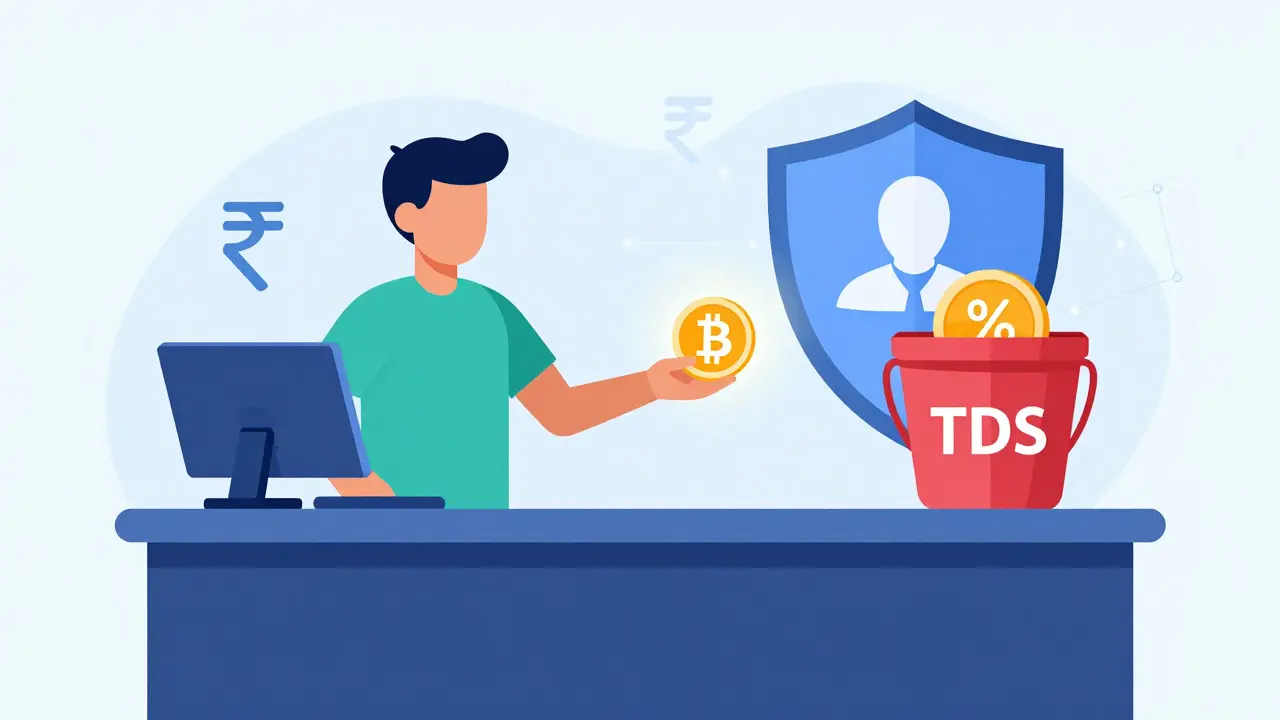
Tax Deducted at Source (TDS) means the money is taken out before you even see the full amount in your bank account. In the context of crypto, the government treats every transfer of a Virtual Digital Asset (VDA) as a taxable event. When you sell crypto for fiat (like INR), or swap one crypto for another, the buyer-or the exchange acting on their behalf-must deduct 1% of the transaction value and send it to the government.
Think of it as a pre-payment of your tax liability. You don't pay this separately; it comes out of the sale proceeds. If you sell ₹1,00,000 worth of Bitcoin, only ₹99,000 hits your wallet or bank account. The remaining ₹1,000 goes to the tax department. You can claim this back when you file your Income Tax Return (ITR), provided you report it correctly. However, if you fail to file your returns, this money becomes a sunk cost, effectively raising your tax rate.
The definition of "transfer" here is broad. It includes sales, trades, and spending crypto for goods or services. Interestingly, moving crypto from your own Wallet A to your own Wallet B is not considered a transfer and attracts no TDS. But the moment ownership changes hands, the clock starts ticking.
The Two Thresholds: Who Pays What?
Not every single rupee you trade gets taxed immediately. The law provides safety nets based on who you are. There are two distinct annual thresholds. Understanding which one applies to you is critical because missing it means paying TDS on transactions you shouldn't have been taxed on yet.
| Taxpayer Type | Annual Transaction Limit | TDS Applies After... |
|---|---|---|
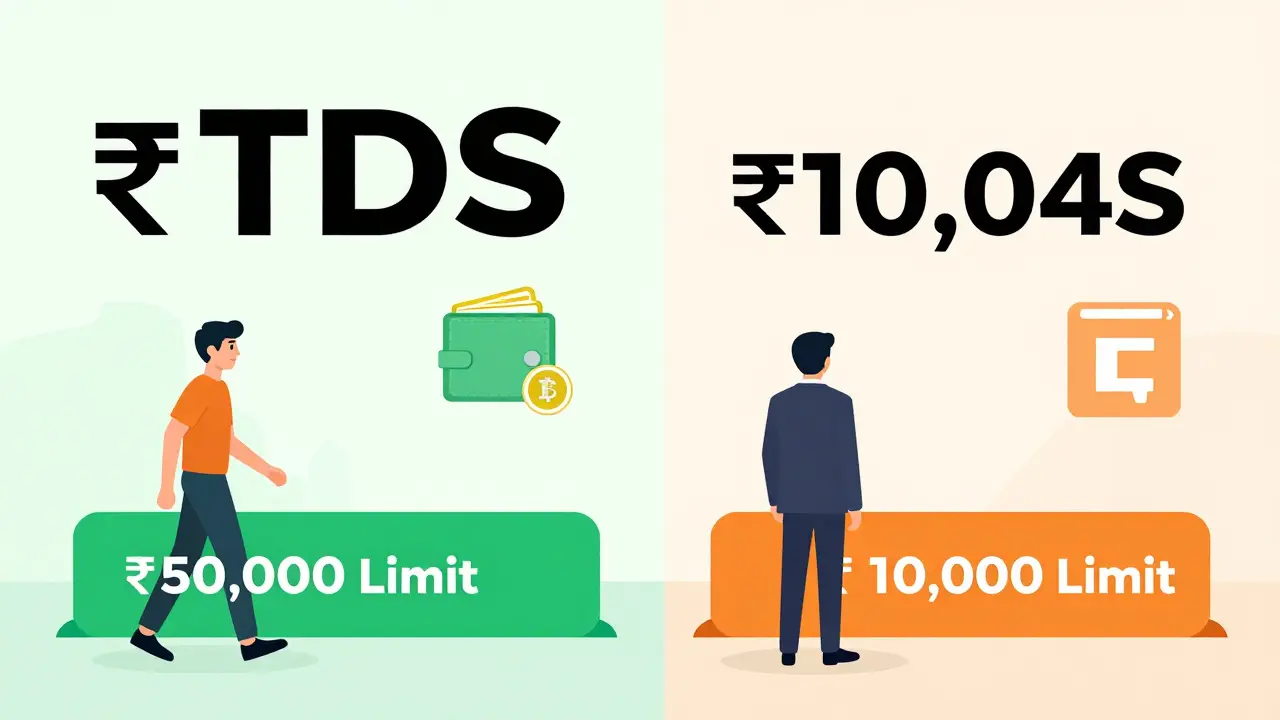
| Specified Persons (Individuals/HUFs not liable for tax audit) | ₹50,000 | Total crypto transfers exceed ₹50,000 in a financial year |
| All Other Taxpayers (Companies, Audited Individuals, Firms) | ₹10,000 | Total crypto transfers exceed ₹10,000 in a financial year |
If you are a regular salaried individual without a business requiring a tax audit, you fall into the "Specified Person" category. You get a free pass until your total yearly crypto turnover crosses ₹50,000. Once you cross that line, every subsequent transaction-even if it's just ₹1,000-will attract 1% TDS. For businesses or high-net-worth individuals subject to tax audits, the limit is much tighter at ₹10,000. This distinction is often overlooked, leading to unnecessary deductions for small traders.
Crypto-to-Crypto Swaps: The Double Whammy
Here is where many traders get shocked. You think you're just swapping Solana for Ethereum. No fiat involved, right? So why is my balance lower than expected? Under Section 194S, a crypto-to-crypto swap is treated as two separate events. First, you are selling Solana. Second, you are buying Ethereum.
In practice, most centralized exchanges handle this by deducting TDS from the buyer's side. However, the legal framework implies that both parties are transferring VDAs. Some platforms interpret this strictly, applying 1% TDS on the value of the asset being sold AND 1% on the asset being bought. While many major Indian exchanges like WazirX and CoinDCX currently automate this to deduct 1% from the seller's proceeds (or the equivalent value), the effective cost can feel higher. If you are trading peer-to-peer (P2P) or using decentralized exchanges (DEXs), the responsibility falls on you to ensure the 1% is deducted and deposited. Failure to do so doesn't mean you escape the tax; it means you risk penalties later.
Penalties for Non-Filers: The 5% Trap
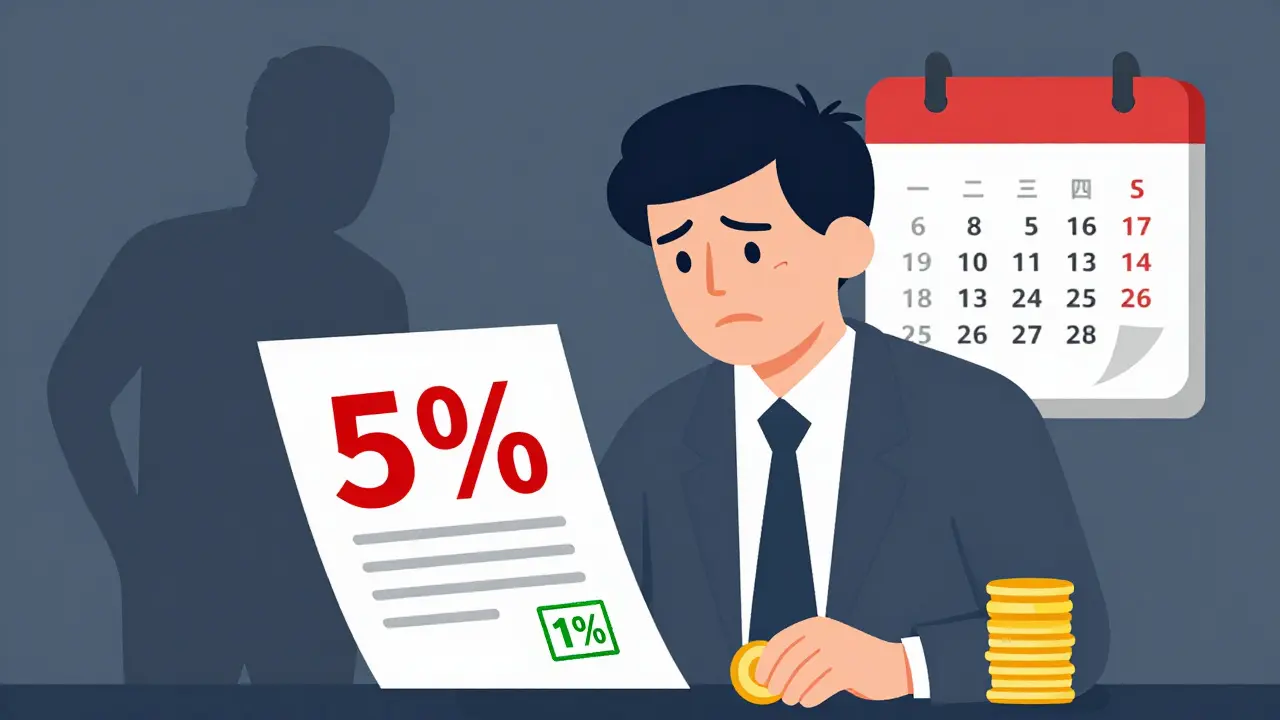
The government has a stick to go with the carrot. If you have failed to file your income tax returns for the last two years, and your total TDS/TCS exceeds ₹50,000 annually, you fall under Section 206AB of the Income Tax Act. This section imposes a punitive TDS rate of 5% instead of the standard 1%.
This is a massive hit to your liquidity. Imagine selling ₹10 lakh worth of crypto. Normally, you'd lose ₹10,000 to TDS. Under Section 206AB, you lose ₹50,000. This provision is designed to force compliance. If you haven't filed your ITR recently, check your status immediately. Exchanges verify PAN details against government databases. If they flag you as a defaulter, they will automatically apply the 5% rate. You cannot negotiate this with customer support. The fix is simple: file your pending returns and update your status with the exchange.
How Compliant Are Indian Exchanges?
You don't need to calculate this manually if you use registered Indian exchanges. Platforms like CoinDCX, WazirX, and ZebPay have integrated TDS deduction into their backend systems. When you initiate a withdrawal or a P2P sale, the system checks your cumulative turnover for the year. If you've crossed the threshold, it deducts the 1% instantly.
However, automation isn't perfect. Users have reported issues with delayed credits in Form 26AS (the tax credit statement). Sometimes, the TDS appears in your Form 26AS weeks after the transaction. During this lag, your cash flow is affected. Always keep screenshots of your transaction history and TDS certificates issued by the exchange. These documents are your proof when claiming refunds during ITR filing.
For those using international exchanges or DEXs, there is no automated deduction. You are responsible for self-assessing and paying the tax. This creates a gray area where many users believe they are safe because no money was deducted. They are not. The liability remains with the taxpayer. The government is increasingly cracking down on unreported offshore transactions through data sharing agreements and blockchain analytics tools.
Practical Tips to Manage TDS Impact
You can't avoid the tax if you trade, but you can manage its impact. Here are actionable steps:
- Track Your Cumulative Turnover: Don't guess. Use a spreadsheet or portfolio tracker to monitor your total annual crypto transactions. Stay aware of when you're approaching the ₹50,000 or ₹10,000 limit.
- File Returns Early: Avoid the 5% penalty trap by ensuring your ITRs are filed on time. Update your PAN status with exchanges if you were previously flagged.
- Consolidate Trades: If you are close to the threshold, consider consolidating smaller trades into fewer larger ones if market conditions allow. This reduces the number of times TDS is calculated, though the total amount deducted remains proportional to the value.
- Claim Refunds Promptly: When filing your ITR, ensure you report the TDS amount in the correct schedule (Schedule TS). Claiming the refund ensures you aren't overpaying, especially if your overall tax liability is low due to losses.
- Beware of GST on Fees: Remember, TDS is on the transaction value. Additionally, the 18% GST applies to the exchange's service fees. These are separate. A ₹1,00,000 trade might incur ₹1,000 TDS plus GST on the trading fee. Budget for both.
Future Outlook: Will Things Change?
The regulatory landscape in India is evolving. The proposed Digital Asset Bill 2025 aims to bring more clarity, potentially replacing the current TDS framework with a centralized registry. There are rumors of threshold revisions, possibly increasing the limit for individuals to ₹1,00,000 to reduce the burden on retail investors. Until then, the 1% rule stands firm.
The Reserve Bank of India (RBI) and the Central Board of Direct Taxes (CBDT) are tightening the net. Off-exchange trading and P2P networks are seeing increased scrutiny. As blockchain analytics improve, the ability to hide transactions diminishes. Compliance is no longer optional; it's the baseline for participating in the Indian crypto market.
Is 1% TDS applicable on every crypto transaction?
No. It applies only after your total annual crypto transactions exceed the specified threshold (₹50,000 for specified persons, ₹10,000 for others). Transactions below these limits are exempt from TDS.
Can I claim the 1% TDS back?
Yes. The TDS acts as an advance payment of your tax. You can claim it as a credit while filing your Income Tax Return (ITR). If your total tax liability is less than the TDS paid, you may be eligible for a refund.
Does TDS apply to crypto-to-crypto swaps?
Yes. Swapping one cryptocurrency for another is considered a transfer of Virtual Digital Assets (VDAs). Therefore, it attracts 1% TDS once the annual threshold is crossed.
What happens if I don't file my income tax return?
If you fail to file returns for the past two years and have significant TDS records, Section 206AB applies. This increases the TDS rate from 1% to 5%, significantly reducing your available capital.
Do I need to pay TDS if I use a foreign exchange?
Foreign exchanges do not automatically deduct Indian TDS. However, as an Indian resident, you are still legally obligated to report these gains and pay the applicable taxes. Self-assessment tax payments may be required.