Imagine buying a ticket to a concert that hasn’t happened in three years. You still have the stub, but the venue is dark, the band broke up, and no one remembers the show date. That’s roughly where Nerve Finance stands today. Launched during the frantic DeFi summer of 2021, this stableswap Automated Market Maker (AMM) on Binance Smart Chain promised low-slippage trading for stablecoins. Fast forward to late 2026, and its market cap hovers around $30,000 with daily trading volumes so low they’re practically noise. If you’re seeing NRV pop up in your wallet or hearing whispers about it, you need to know: Is this a hidden gem waiting to explode, or a zombie protocol walking dead?
The Core Concept: What Did Nerve Finance Try to Solve?
To understand what Nerve Finance is, you have to look at the problem it tried to fix. In early 2021, swapping stablecoins like USDT, USDC, and BUSD on major exchanges was expensive and prone to "slippage"-that annoying gap between the price you see and the price you get. Ethereum gas fees were skyrocketing, pushing traders to look for alternatives.
Nerve Finance entered the scene as a specialized solution. It wasn’t trying to be everything to everyone like Uniswap. Instead, it focused exclusively on pegged synthetic assets. Think of it as a dedicated lane on a highway just for cars driving exactly 60 mph. By optimizing its algorithm specifically for coins that are supposed to stay at $1.00, it aimed to offer near-zero slippage and minimal transaction costs.
The platform launched on March 1, 2021, backed by heavyweights like Alameda Research and Three Arrows Capital. The logic was sound: BSC offered cheap transactions, and Curve Finance had proven the stableswap model worked on Ethereum. Nerve was essentially "Curve for BSC." But here’s the catch: while the tech worked, the ecosystem didn’t stick.
Understanding the NRV Token and Its Role
At the heart of the protocol is the NRV token, which serves two main functions: governance and incentives. As a governance token, holding NRV gave users a say in how the treasury was spent and how the protocol evolved. More importantly, during the hype cycle, NRV was used to reward liquidity providers. Users who deposited their stablecoins into Nerve pools earned NRV tokens, creating a flywheel effect where more liquidity led to better prices, attracting more traders.
However, the tokenomics reveal a stark reality. The maximum supply of NRV sits at approximately 150 million tokens, but the circulating supply is much lower due to vesting schedules and burns. The critical metric to watch isn’t just the price-it’s the relationship between the token value and the actual money locked in the protocol. This is known as the Market Cap to TVL (Total Value Locked) ratio.
| Metric | Nerve Finance (NRV) | Healthy DeFi Standard | Implication |
|---|---|---|---|
| Market Cap | ~$30,000 | Varies ($1M+) | Extremely low valuation |
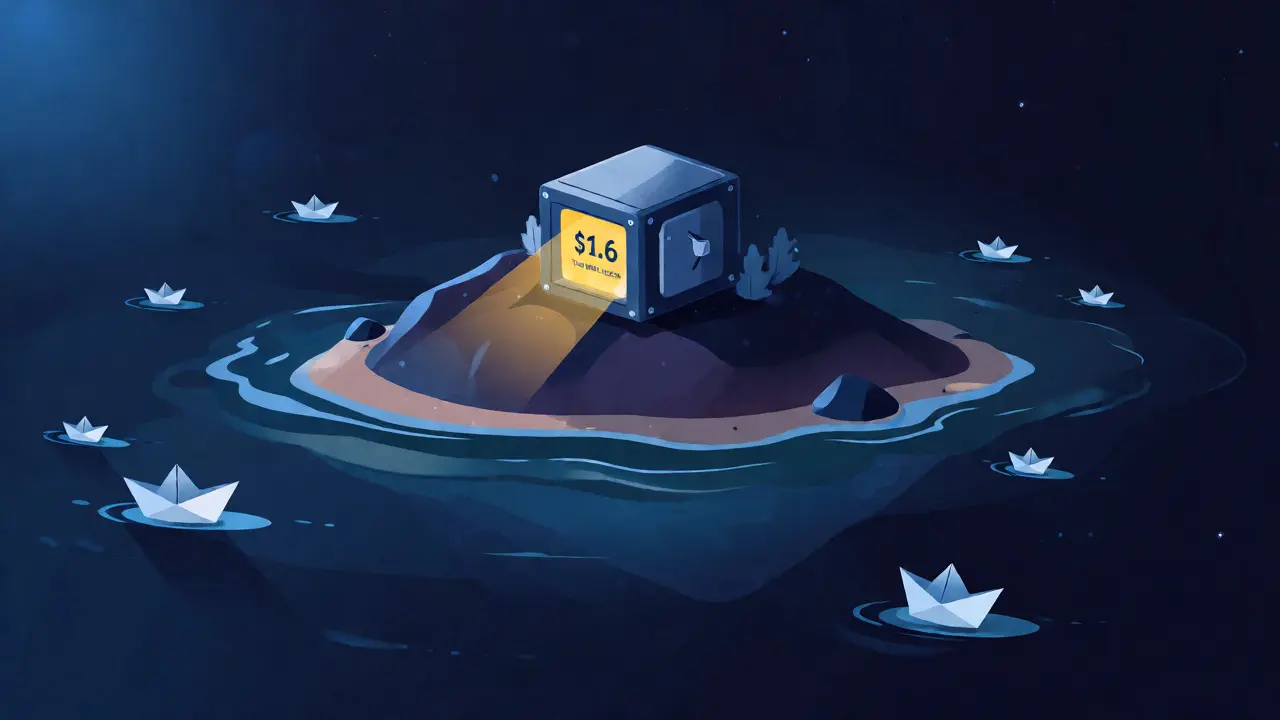
| Total Value Locked (TVL) | ~$1.6 Million | High correlation | Protocol holds more value than token trades for |
| MC/TVL Ratio | 0.018 | 0.1 - 1.0 | Token is severely undervalued or ignored |
| Daily Volume | <$100 | $1M+ | Negligible market interest |
A ratio of 0.018 is bizarre. Usually, if a protocol has $1.6 million locked, its token should trade closer to that value. Here, the token trades at a fraction of that. This suggests either massive undervaluation (a rare bargain) or, more likely, that investors have completely lost faith in the project’s ability to capture value from its own usage.
Why Has Nerve Finance Faded Into Obscurity?
If the tech was good, why is NRV trading at fractions of a cent? Several factors converged to kill its momentum.
- Competition Crushed It: When Nerve launched, PancakeSwap was the king of BSC. While PancakeSwap started with general swaps, it quickly added stablecoin pools. Why use a niche app when the main hub already did the job? Nerve never captured enough mindshare to survive against the giant.
- The Collapse of Backers: Nerve was initially funded by firms like Three Arrows Capital (3AC) and Alameda Research. Both collapsed spectacularly in 2022. When your primary backers go bankrupt, marketing budgets vanish, and strategic partnerships dissolve.
- Development Stagnation: A quick glance at GitHub shows little to no code commits since mid-2022. In crypto, if you aren’t shipping updates, you’re dying. Users migrated to active protocols like Beefy Finance or newer BSC DEXs that offered better yields and security audits.
- Liquidity Spiral: Low volume leads to high slippage for large trades, which scares away big players. Without big players, volume stays low. It’s a death spiral that small AMMs rarely escape.
Is It Safe to Trade or Hold NRV Today?
Let’s be honest: trading NRV now is less about investing and more about gambling on a lottery ticket. With a market cap of $30k, a single whale buying $5,000 worth of NRV could spike the price by 20%. Conversely, selling that same amount could crash it by 15%.
Here’s what you face if you decide to interact with Nerve Finance:
- Exchange Availability: You won’t find NRV on Coinbase or Kraken easily. Your best bets are Gate.io or decentralized exchanges like PancakeSwap. Be prepared for thin order books.
- Smart Contract Risk: While the contract was audited in 2021, lack of ongoing maintenance means new vulnerabilities haven’t been patched. Plus, without an active team, who fixes bugs if they appear?
- Impermanent Loss: Even though it’s a stableswap, providing liquidity isn’t risk-free. If one of the pegged assets de-pegs (like UST did), your portfolio takes a hit. Given the low rewards now, you might not earn enough fees to cover that loss.
User reviews from the last year are scarce, which speaks volumes. On forums like Reddit, mentions of Nerve Finance are often historical anecdotes rather than current discussions. One user noted in 2022, "Great concept, but liquidity dried up after the initial hype. Impermanent loss ate my returns despite the low slippage claims." That sentiment seems to have stuck.
How to Buy NRV (If You Must)
Despite its dormancy, the token is still tradable. Here’s the practical path to acquiring it via Binance Smart Chain:
- Set Up MetaMask: Ensure you have the BNB Smart Chain network added to your wallet.
- Fund with BNB: Buy some BNB on a major exchange and withdraw it to your MetaMask address. This covers your gas fees.
- Connect to a DEX: Go to PancakeSwap or Gate.io. Search for the NRV/USDT pair.
- Check Slippage: Because liquidity is low, set your slippage tolerance higher (maybe 1-2%) to ensure your transaction goes through. Otherwise, it will fail.
- Execute Swap: Confirm the transaction in your wallet. Wait for the block confirmation.
Pro Tip: Don’t buy all at once. Use dollar-cost averaging even for micro-cap coins. If you dump $100 in, you might move the price against yourself before you finish the trade.
The Verdict: Zombie Protocol or Hidden Gem?
So, what is Nerve Finance really? Technically, it’s a functional AMM that does exactly what it says on the tin: swaps stablecoins with low slippage. Practically, it’s a ghost town.
The data points to a "zombie protocol." These are projects that are technically alive on-chain but lack users, development, and community engagement. According to industry reports, over 18% of DeFi projects from the 2021 bull run have suffered this fate. Nerve fits the profile perfectly: no roadmap updates, inactive social channels, and negligible trading volume.
Should you buy? Only if you enjoy high-risk speculation with tiny amounts of capital you can afford to lose. Do not expect dividends, strong governance influence, or price appreciation based on fundamentals. The fundamental driver-liquidity-is gone. Unless a new team revives the project with aggressive marketing and incentives, NRV will likely continue to drift toward zero.
For most crypto enthusiasts, there are better places to park funds. Look at active BSC protocols with growing TVL and active developer communities. Nerve Finance is a lesson in how quickly novelty fades when competition arrives and backers vanish.
Is Nerve Finance still active?
Technically, yes. The smart contracts are live on Binance Smart Chain, and you can still swap stablecoins. However, development activity has stalled significantly since 2022, and community engagement is nearly non-existent. It is considered a dormant or "zombie" protocol.
Where can I buy NRV tokens?
NRV is primarily traded on decentralized exchanges like PancakeSwap (BSC) and centralized exchanges such as Gate.io. It is generally not listed on top-tier exchanges like Binance or Coinbase due to its low market capitalization and trading volume.
Why is the NRV price so low?
The price reflects a severe lack of demand and liquidity. After peaking in May 2021, the token lost over 99% of its value. Key factors include the collapse of backing firms like Three Arrows Capital, intense competition from PancakeSwap, and a failure to sustain user interest beyond the initial launch hype.
Is Nerve Finance safe to use?
The smart contracts were audited in 2021, so the basic code is relatively secure. However, safety also involves economic risks. With very low liquidity, large trades suffer from high slippage. Additionally, the lack of active maintenance means any newly discovered bugs may not be fixed promptly.
Can I earn yield on Nerve Finance?
You can provide liquidity to stablecoin pools and earn trading fees plus NRV rewards. However, because the protocol is dormant, the APY (Annual Percentage Yield) is typically very low compared to active competitors. Impermanent loss risks also remain, particularly if one of the stablecoins de-pegs.