You’ve probably heard of Uniswap or SushiSwap. You connect your wallet, click a button, and boom-your tokens swap instantly. But what if you wanted to trade $50,000 worth of crypto without moving the market price? Or what if you wanted to avoid paying fees to a centralized company?
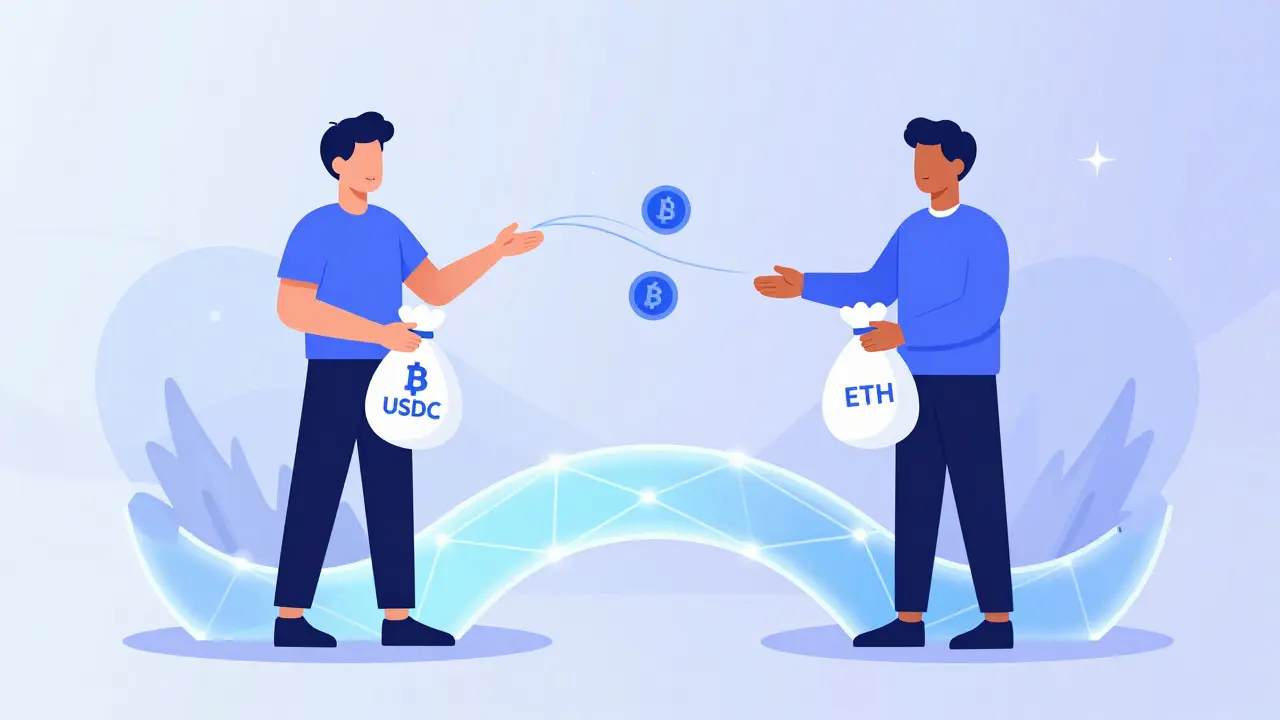
That’s where AirSwap comes in. It’s not your typical automated exchange. Instead, it connects buyers and sellers directly, like a digital handshake between two people who agree on a price.
If you’re wondering whether this peer-to-peer model is right for you, or how the AST token fits into the picture, you’re in the right place. We’ll break down how AirSwap works, why it exists, and whether it deserves a spot in your DeFi toolkit.
How AirSwap Works: No Order Books, Just People
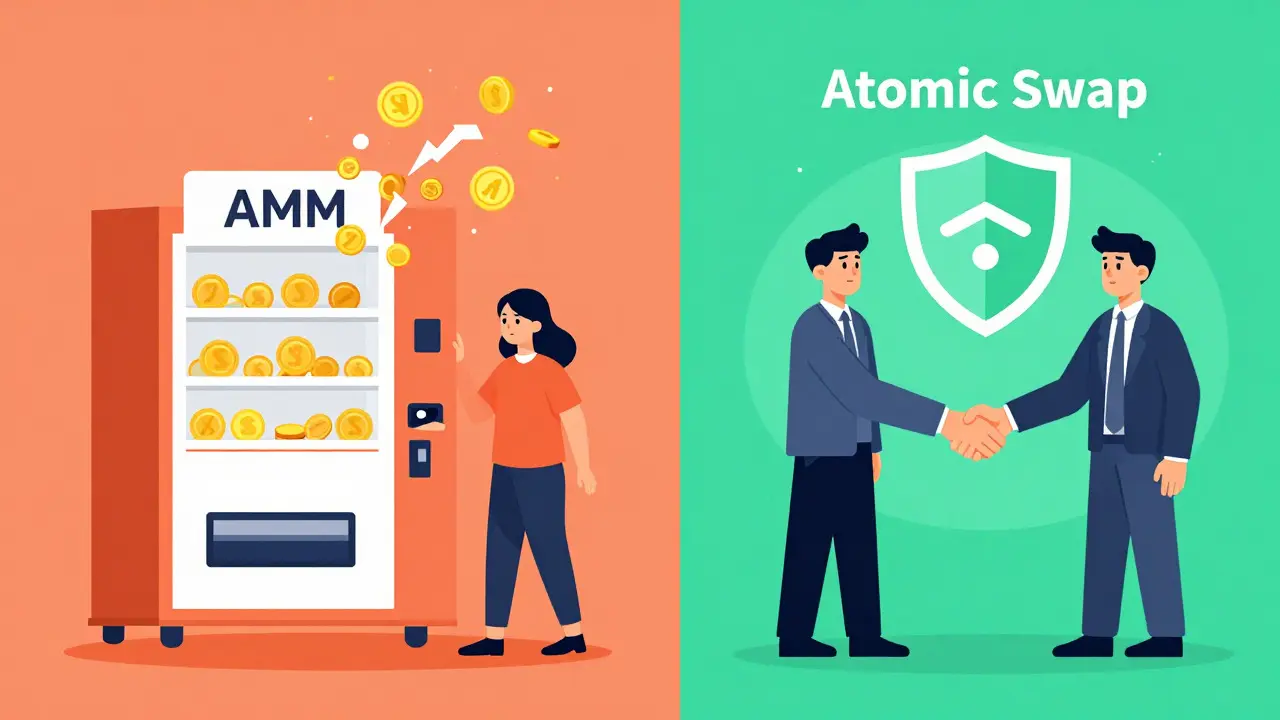
Most decentralized exchanges (DEXs) use something called an Automated Market Maker (AMM). Think of it as a vending machine. You put money in, the machine gives you tokens based on a mathematical formula, and no human is involved. This is great for speed but terrible for large trades because buying too much at once drives up the price (slippage).
AirSwap flips this script. It uses a Request-for-Quote (RFQ) system. Here’s how it looks in practice:
- You post a request: "I want to buy 10 ETH using USDC."
- Makers respond: Other users (called Makers) who hold ETH see your request. They can offer you a price.
- You choose an offer: You pick the best deal.
- Atomic Swap: Both parties sign a cryptographic contract. The tokens swap simultaneously on the blockchain. If one side fails, the whole trade cancels. No middleman holds your funds.
This model was co-founded by Don Mosites and Michael Oved in 2017. Their goal was simple: remove intermediaries from crypto trading entirely. By the end of 2024, the network had processed over $4.42 billion in volume across more than 2.6 million swaps. That’s real usage, not just hype.
The Role of the AST Token
Every major protocol has a native token, and AirSwap is no exception. The AST token isn’t just a speculative asset; it powers the ecosystem’s governance and liquidity incentives.
Here’s what AST actually does:
- Governance: Holders vote on proposals that shape the protocol’s future. For example, in September 2024, AST holders approved ASTIP-23 with 87.4% support, introducing a new fee-sharing mechanism.
- Liquidity Staking: To become a Market Maker (someone who offers prices), you often need to stake AST. As of late 2024, staking required locking 250 AST tokens for seven days.
- Fee Distribution: Starting in Q2 2025, 0.05% of all swap volume will be distributed to AST stakers, creating a passive income stream for participants.
While AST ranked around #147 in market cap with approximately $135 million in value as of October 2024, its utility is tied directly to the health of the trading network. If more traders use AirSwap, the demand for AST to secure and govern the network rises.
AirSwap vs. Traditional DEXs: Who Wins?
Is AirSwap better than Uniswap? It depends on what you’re trying to do. Let’s compare them head-to-head.
| Feature | AirSwap | Uniswap V3 |
|---|---|---|
| Trading Model | Peer-to-Peer (RFQ) | Automated Market Maker (AMM) |
| Slippage on Large Trades | Near zero (negotiated price) | High (market impact) |
| Gas Efficiency | ~21,000 gas units per swap | Higher for complex routing |
| User Experience | Requires negotiation/waiting | Instant execution |
| Best For | Institutions, large whales | Retail users, small trades |
Uniswap dominates with over $1.12 trillion in all-time volume because it’s easy. You don’t have to wait for someone to accept your trade. But if you’re moving serious capital, AirSwap shines. In one documented case from September 2024, a user swapped $150,000 from USDC to DAI with only 0.08% slippage on AirSwap, compared to 0.42% on Uniswap for the same size trade. That difference saves thousands of dollars.
Pros and Cons of Using AirSwap
No technology is perfect. Before you dive in, weigh these factors carefully.
The Good:
- Privacy: Since trades happen peer-to-peer, there’s less data aggregation than on centralized exchanges.
- Cost Savings: You only pay standard Ethereum gas fees (averaging $1.27 per transaction in late 2024), plus no platform fees.
- Cross-Chain Support: AirSwap now operates on BNB Chain, Polygon, Linea, and Avalanche, giving you more options for lower fees.
The Bad:
- Learning Curve: New users report needing 3-5 hours to fully understand the interface. Trustpilot reviews average 3.2/5 stars, with many citing confusion over the negotiation process.
- Liquidity Gaps: For obscure tokens or very small amounts, you might struggle to find a Maker willing to trade.
- Not Instant: You have to wait for someone to quote you a price. If you’re impatient, this will frustrate you.
Who Should Use AirSwap?
AirSwap isn’t for everyone. If you’re buying $50 worth of Dogecoin for fun, stick to a user-friendly AMM like Uniswap or PancakeSwap. You’ll save time and headache.
However, AirSwap is ideal for:
- Institutional Traders: Funds moving millions need to avoid slippage. AirSwap’s RFQ model lets them negotiate exact prices.
- Arbitrageurs: Traders looking to exploit price differences between chains benefit from AirSwap’s cross-chain capabilities.
- Privacy-Conscious Users: Those who prefer direct counterparty interactions over pooled liquidity.
As of mid-2024, 67% of AirSwap’s quarterly volume came from addresses linked to known crypto funds and trading desks. This tells us the platform is built for professionals, not casual investors.
Future Outlook: What’s Next for AirSwap?
The team isn’t resting on its laurels. AirSwap v4 is scheduled for release in Q1 2025. Key upgrades include:
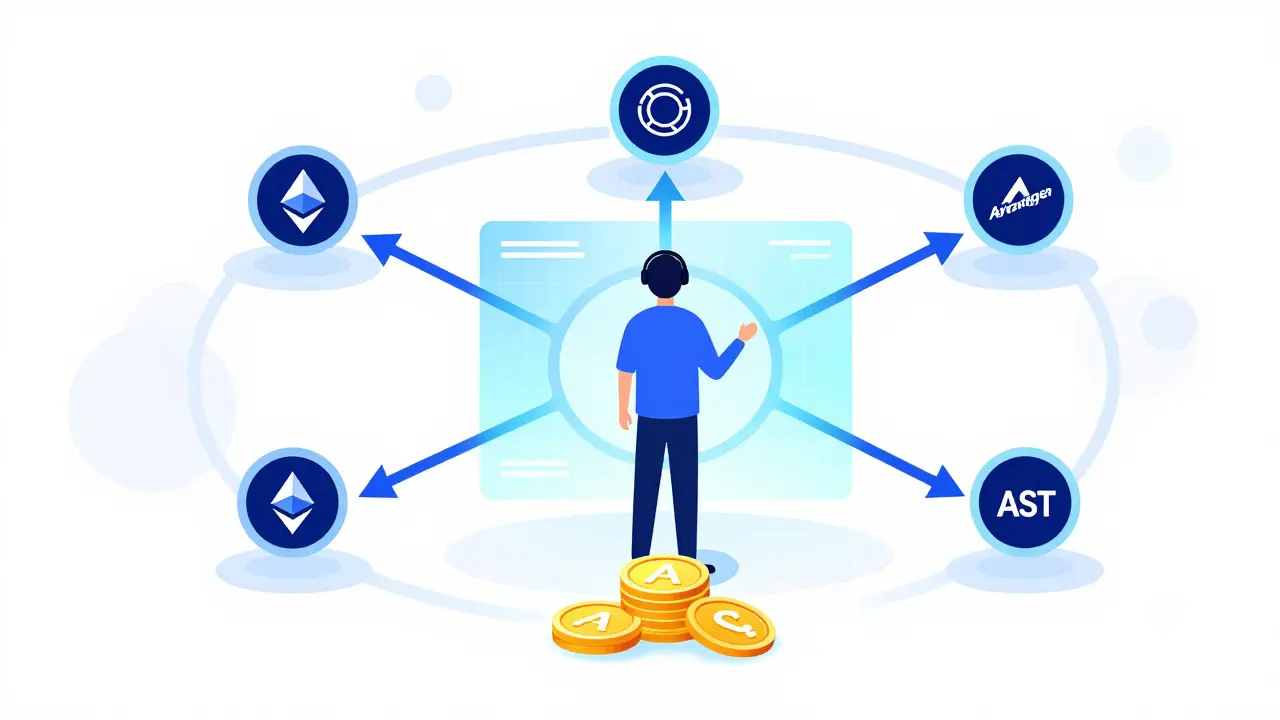
- Cross-Chain Atomic Swaps: Seamless trading between different blockchains without bridging risks.
- Improved Reputation Systems: Makers will build trust scores, making it easier to identify reliable counterparties.
- Expanded Networks: Recent launches on Avalanche and Linea signal a push toward broader interoperability.
Analysts from Delphi Digital project AirSwap’s annual volume could hit $7.2 billion by 2026, driven by institutional adoption. However, competition remains fierce. Protocols like 0x Process handle similar RFQ models with higher volume, and centralized exchanges continue to offer OTC desks with superior liquidity.
Regulatory scrutiny is also a factor. The SEC’s 2023 framework hinted that governance tokens like AST could face classification as securities, though no enforcement actions have occurred yet. Keep an eye on legal developments, as they could impact AST’s utility and value.
Getting Started with AirSwap
If you decide to try AirSwap, here’s what you need:
- A Web3 Wallet: MetaMask, WalletConnect, or Ledger are supported.
- Ether for Gas: Ensure you have enough ETH (or native token for other chains) to cover transaction fees.
- Patience: Learn the interface. Read the documentation. Join the Discord community (over 12,000 active members) to ask questions.
- Start Small: Execute a tiny trade first to understand the signing process before committing large sums.
Remember, AirSwap is a tool for efficiency, not convenience. Use it when you need precision, not speed.
Is AirSwap safe to use?
Yes, AirSwap is considered safe due to its atomic swap technology. Trades only execute when both parties successfully transfer tokens via cryptographic signatures. There is no central vault holding user funds, reducing hack risks. However, always verify counterparty reputations and double-check smart contract interactions.
What is the minimum amount to trade on AirSwap?
There is no strict minimum set by the protocol, but practical limits apply. Most Makers prefer trades above $100-$500 to justify their effort. For smaller amounts, you may struggle to find quotes quickly. Large institutions typically use AirSwap for trades exceeding $10,000.
Can I use AirSwap on mobile devices?
Yes, AirSwap is accessible via mobile browsers through compatible wallets like MetaMask Mobile or WalletConnect. However, the interface is optimized for desktop use. Complex negotiations and multiple signature steps are easier to manage on a larger screen.
How does AirSwap make money?
AirSwap itself doesn’t charge platform fees. Users only pay blockchain gas fees. Revenue comes indirectly through AST token staking incentives and potential future fee-sharing mechanisms. Makers earn spreads on trades, while the protocol sustains itself through ecosystem growth and governance participation.
Which blockchains does AirSwap support?
As of 2024, AirSwap supports Ethereum, BNB Chain, Polygon, Linea, and Avalanche. This multi-chain approach allows users to access lower gas fees and diverse liquidity pools depending on which network they prefer.