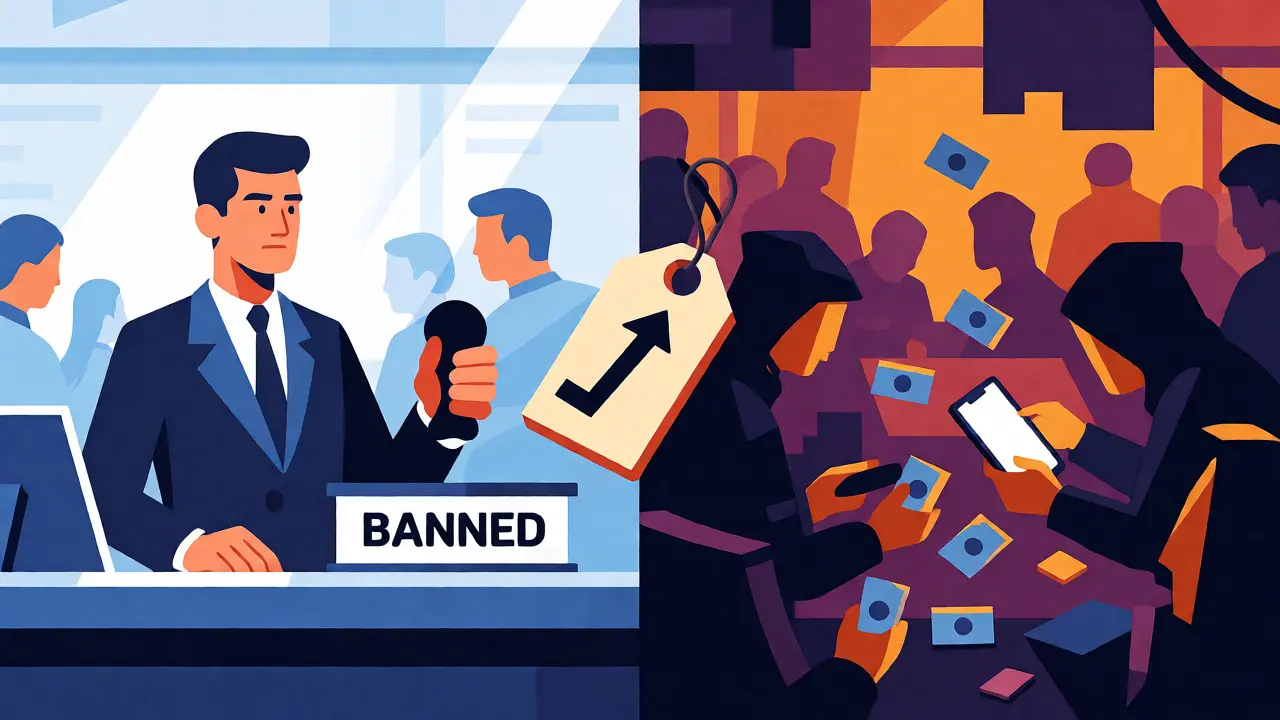
Imagine paying 20% more for a cup of coffee because your government banned the credit card you’re using. Now scale that up to billions of dollars in digital assets. That’s the reality for millions of people living in countries where cryptocurrency is illegal or heavily restricted. These aren't just theoretical economic puzzles; they are real-world scenarios playing out right now in places like China, Afghanistan, and Egypt. When a government slaps a ban on Bitcoin or Ethereum, the demand doesn’t vanish-it goes underground. And when demand stays high but supply gets choked off by legal risks, prices shift. This creates what economists call an underground market premium: the extra cost buyers pay to access crypto outside official channels.
You might wonder, "If it's illegal, why bother?" The answer lies in necessity and opportunity. In nations with hyperinflation, strict capital controls, or failing banking systems, crypto isn't just speculation-it's a lifeline. But navigating this hidden economy comes at a steep price. Let’s break down how these premiums form, who pays them, and what the data tells us about the state of restricted crypto markets as of late 2026.
The Economics of Scarcity and Risk
At its core, an underground market premium is a risk fee. When you buy Bitcoin on Coinbase or Binance, you’re paying for convenience, security, and regulatory clarity. You know the exchange won’t be raided tomorrow. You know your funds are segregated. In a banned jurisdiction, those guarantees disappear. Instead, you’re dealing with peer-to-peer traders, shady intermediaries, or encrypted chat groups where trust is scarce.
This scarcity drives up the price. Think of it like concert tickets sold by scalpers after the box office sells out. If there are only ten sellers willing to take the risk of selling crypto in a country where it’s illegal, and a hundred buyers desperate to hedge against their collapsing local currency, the seller has all the leverage. They can charge a premium-sometimes 5%, sometimes 15%, or even higher depending on enforcement intensity. This premium compensates them for the risk of arrest, asset seizure, or fraud.
Moreover, liquidity dries up. On regulated exchanges, you can sell thousands of dollars worth of ETH in seconds. In an underground market, finding a buyer for a large amount without tipping off authorities takes time. This illiquidity forces sellers to offer discounts if they need cash fast, or buyers to pay extra to get immediate access. It’s a two-way street of inefficiency, but usually, the buyer bears the brunt of the premium because urgency often outweighs caution.
China: The Most Restrictive Case Study
No discussion of crypto bans is complete without looking at China. As of May 30, 2025, Beijing didn’t just ban trading or mining-they criminalized personal ownership. Yes, holding Bitcoin in your private wallet became a legal liability. The Chinese government bet everything on its Central Bank Digital Currency (CBDC), the digital yuan, aiming to eliminate competition from decentralized assets entirely.
This comprehensive prohibition created a fascinating dynamic. While official data on underground premiums is hard to pin down due to the covert nature of transactions, anecdotal evidence suggests significant markups. Users seeking to bypass the ban often rely on cross-border transfers or complex OTC (Over-The-Counter) deals facilitated through trusted networks. Because the penalty for violation includes potential criminal charges, not just fines, the risk premium embedded in these trades is substantial. Unlike previous years where mining was the primary target, the 2025 law targets the end-user, making every transaction a potential crime scene. This shifts the market further into the shadows, increasing costs for anyone trying to exit or enter the ecosystem.
Afghanistan and Religious Prohibitions
In Afghanistan, the Taliban regime has maintained an absolute ban on cryptocurrency since 2022. Their justification is twofold: religious and economic. Under Sharia law interpretations adopted by the current leadership, crypto is declared "haram," or forbidden. Economically, they aim to maintain tight control over a fragile financial system that relies heavily on aid and remittances.
Enforcement here is handled by Da Afghanistan Bank and FinTRACA. While the ban is absolute, enforcement consistency varies. In major urban centers like Kabul, underground trading persists, often conducted in cash-based bazaars or via mobile money apps that skirt direct crypto labels. The premium in Afghanistan is driven less by sophisticated arbitrage and more by sheer scarcity and fear. Without institutional infrastructure, most trades are small-scale and face-to-face. This limits the volume but increases the per-unit cost for those who manage to find a counterparty. For Afghans trying to preserve wealth against inflation or move funds internationally, the underground route is expensive but often the only viable option.
The Gray Zone: Emerging Markets and Compliance Costs
Not every restriction is a total ban. Many emerging markets fall into a "gray zone" where crypto is technically legal but wrapped in such heavy compliance requirements that it effectively pushes activity underground. India, South Africa, and the Philippines provide excellent examples of this phenomenon.
In India, the Financial Intelligence Unit (FIU) has been aggressive. In 2024 alone, they fined non-compliant platforms $9.5 million-a 32% jump from the previous year. When compliance becomes too costly or bureaucratic, users migrate to unlicensed operators or P2P platforms that don’t report to the FIU. This migration creates a parallel market. While the base price of Bitcoin might be similar globally, the friction costs-KYC delays, withdrawal fees, and tax complexities-act as a de facto premium. Users essentially pay for the convenience of avoiding the red tape.
| Jurisdiction | Regulatory Status | Primary Driver of Underground Activity | Estimated Premium Pressure |
|---|---|---|---|
| China | Total Ban (Ownership Criminalized) | Criminal Liability & CBDC Push | High |
| Afghanistan | Absolute Ban (Religious/Economic) | Lack of Infrastructure & Fear | Very High |
| Egypt | Blanket Ban on Trading | Active Enforcement & Arrests | Moderate-High |
| India | Legal but Heavily Regulated | Compliance Costs & Fines | Moderate |
| Nigeria | Restrictions on Banking Channels | Banking Exclusion | Moderate |
Technological Workarounds and Privacy Coins
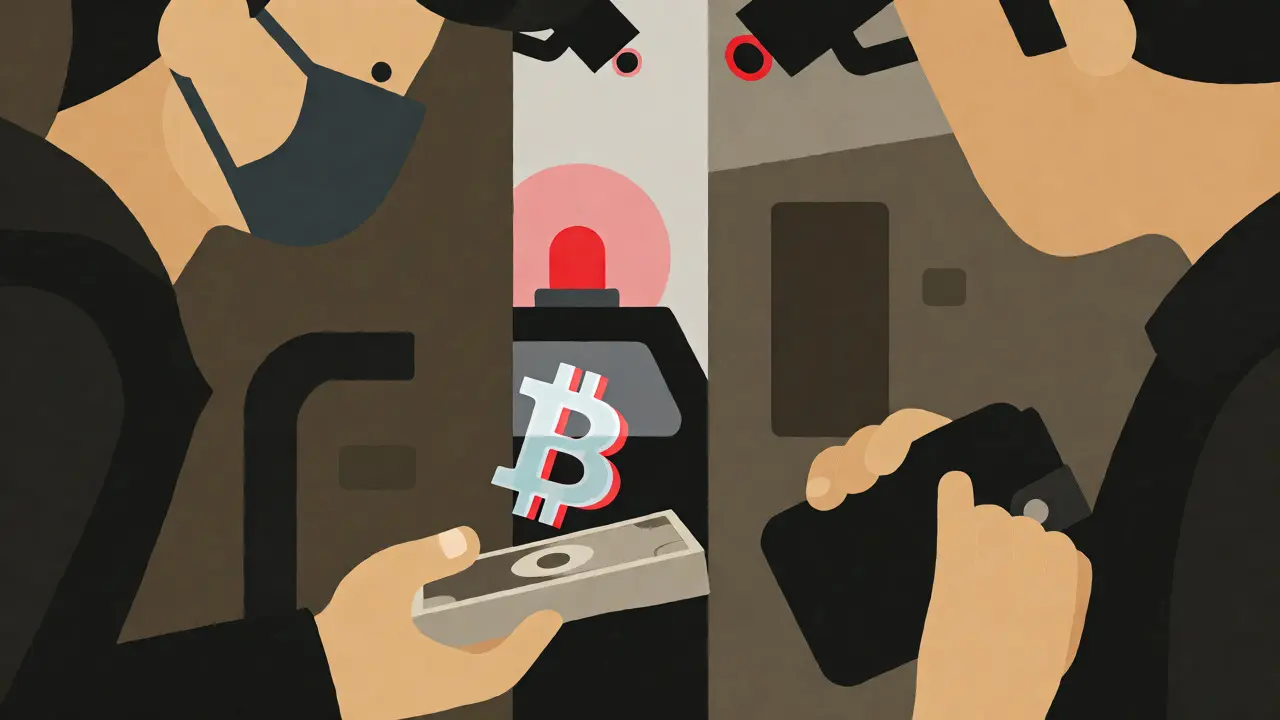
Technology plays a crucial role in shaping these premiums. In banned jurisdictions, privacy-focused cryptocurrencies like Monero and Zcash often command higher premiums than Bitcoin or Ethereum. Why? Because transparency is a liability when you’re breaking the law. A traceable Bitcoin transaction can be flagged by blockchain analytics firms working with regulators. Monero, however, obscures sender, receiver, and amount.
This utility value adds another layer to the price. If you’re moving funds in a country where the police monitor on-chain activity, paying a 10% premium for Monero is worth it to avoid scrutiny. Similarly, Decentralized Exchanges (DEXs) allow users to trade directly from their wallets without touching a centralized bank account. While DEXs reduce counterparty risk, they introduce smart contract risks and gas fee volatility. In regions with unstable internet or electricity, accessing these platforms reliably also incurs a cost, further inflating the effective price of entry.
Enforcement Effectiveness Matters
It’s important to note that not all bans create equal premiums. The level of premium correlates directly with enforcement effectiveness. In countries with sophisticated financial surveillance-like China or Singapore-style regulatory states-the risk is high, so the premium is high. Conversely, in jurisdictions with limited enforcement capabilities or widespread corruption, the ban might exist on paper but rarely in practice. Here, the premium is lower because the actual risk of getting caught is minimal.
Egypt offers a middle ground. Despite a blanket ban, authorities arrested 112 individuals in 2025 for violations. This visible enforcement creates a chilling effect, pushing traders into smaller, less liquid pools. Meanwhile, Nigeria’s Economic and Financial Crimes Commission seized $38 million in crypto assets linked to cybercrime in 2024. This signals that while the market exists, it’s fraught with danger. Users in these environments often pay premiums not just for the asset, but for the assurance that their transaction won’t trigger an audit.
The Future of Underground Markets
As we look toward 2027, the global regulatory landscape continues to fragment. The Financial Action Task Force reports that nearly 100 jurisdictions have passed or are passing crypto legislation. This proliferation creates a patchwork quilt of rules that encourages arbitrage. Traders will continue to seek out jurisdictions with favorable terms, leaving behind those with restrictive regimes.
For investors and observers, understanding these premiums is key to grasping the true demand for crypto. It’s not just about price charts; it’s about human behavior under constraint. When governments try to suppress a technology that offers financial sovereignty, the market adapts. It finds ways to survive, often at a higher cost. Whether you’re a trader looking for arbitrage opportunities or a policy maker assessing the efficacy of bans, recognizing the existence and scale of these underground premiums is essential. The market always finds a way, but it rarely does so for free.
What causes underground crypto market premiums?
Underground premiums arise from three main factors: reduced supply due to legal restrictions, increased operational risks for traders (such as arrest or seizure), and lower liquidity compared to regulated exchanges. Buyers pay extra to compensate sellers for taking on these risks and to secure faster access to assets in a constrained market.
Which countries currently have the strictest crypto bans?
As of late 2026, China maintains the most comprehensive ban, criminalizing personal ownership of cryptocurrencies. Afghanistan also enforces an absolute ban based on religious and economic grounds. Other countries like Egypt and Algeria have significant restrictions, though enforcement levels vary widely.
Do privacy coins like Monero cost more in banned countries?
Yes, privacy coins often command higher premiums in restricted jurisdictions. Their enhanced anonymity features make them more valuable to users who need to obscure transaction details from regulators, unlike transparent blockchains like Bitcoin which can be tracked by financial intelligence units.
How do P2P platforms affect underground market prices?
Peer-to-Peer (P2P) platforms facilitate underground trading by connecting buyers and sellers directly, bypassing regulated exchanges. However, because these platforms operate in a gray area, they often feature wider bid-ask spreads and higher transaction costs, contributing to the overall premium paid by users.
Is there official data on underground crypto premiums?
Specific quantitative data on underground premiums is scarce because the market is covert. Most insights come from academic studies, NGO reports, and anecdotal evidence from traders. Governments rarely publish statistics on illegal market activities, making precise measurement difficult.