Most people think of crypto as a gamble. You buy it, you hope the price goes up, and you pray someone else pays more later. But that model is breaking down. The real value in blockchain isn't just speculation; it's function. It’s about tokens that actually *do* something.
This is where utility tokens come in. Unlike meme coins that ride waves of internet hype, utility tokens are hardwired into their ecosystems. If you remove the token, the platform breaks. They pay for transaction fees, grant governance rights, or unlock access to services. In 2026, this distinction matters more than ever. Investors and developers are looking for structural necessity, not just viral moments.
So, what does a successful utility token look like in practice? Let’s break down the specific examples that are defining the market right now, from infrastructure giants to niche metaverse economies.
The Infrastructure Giants: Powering the Network
At the top of the food chain are the tokens that keep the entire blockchain running. These aren’t optional add-ons; they are the fuel.
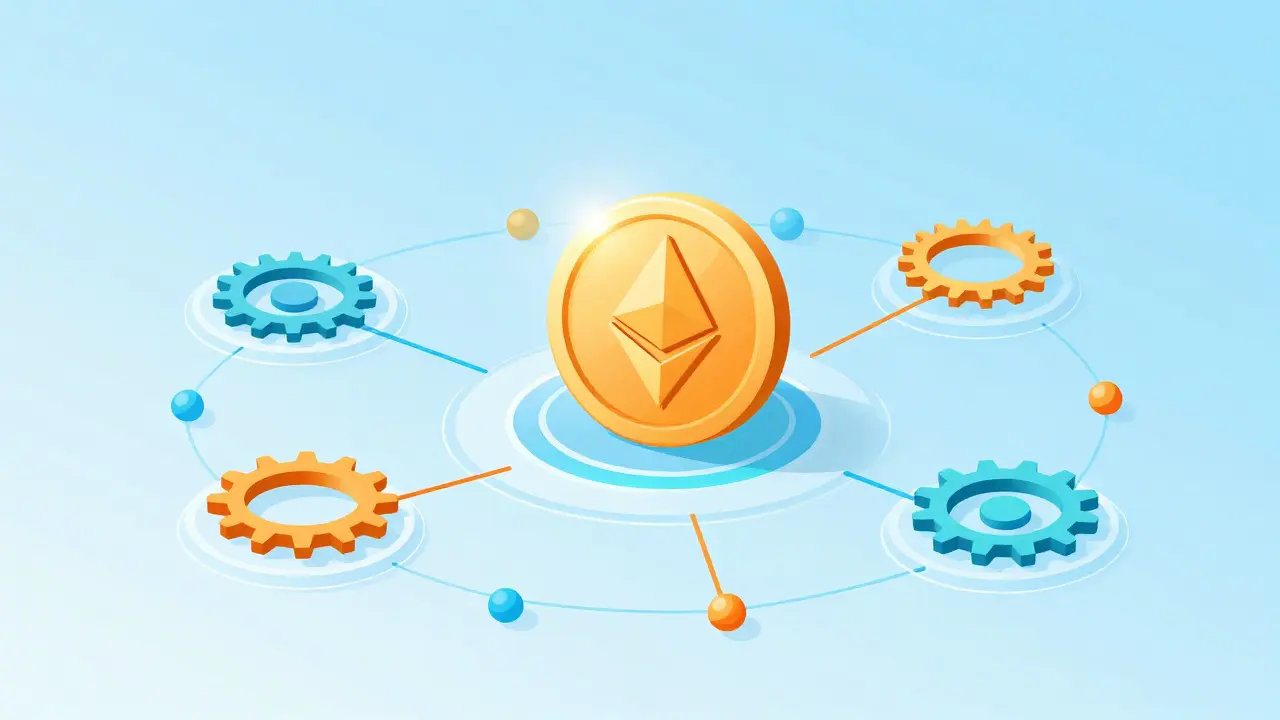
Ethereum (ETH) is the classic example. When you interact with a decentralized application (dApp) on Ethereum, you don’t pay with dollars or euros. You pay with ETH. This is known as "gas." Every time you swap tokens, mint an NFT, or execute a smart contract, you burn ETH to compensate validators for securing the network. Because Ethereum hosts the largest ecosystem of dApps, the demand for ETH is directly tied to usage. If the network gets busy, gas fees rise, creating a natural economic pressure. Beyond payments, ETH allows holders to stake their coins to help secure the network via proof-of-stake, earning rewards in return. It’s a closed loop: use the network, pay with ETH, secure the network with ETH.
Then there’s Solana (SOL). Solana markets itself on speed and low cost. Its utility is similar to Ethereum but optimized for high throughput. SOL is required to pay for transactions and to stake for network security. What makes SOL interesting in 2026 is its growing adoption in consumer-facing apps, from payment processors to gaming platforms, because users can transact without paying dollars in fees per click. The token’s value is linked to how many people are using Solana-based apps daily.
| Token | Primary Utility | Key Mechanism |
|---|---|---|
| Ethereum (ETH) | Gas fees, Staking | Pays for compute power on the most established smart contract platform. |
| Solana (SOL) | Transaction fees, Staking | Enables high-speed, low-cost transactions for consumer apps. |
| Hedera (HBAR) | Network operations | Pays for data storage and consensus on a hashgraph ledger. |
Data and Oracles: Bridging Real and Digital Worlds
Blockchains are isolated systems. They can’t see outside their own code. If a DeFi protocol wants to know the price of Bitcoin or the weather in London, it needs a bridge. That’s where oracle networks come in, and Chainlink (LINK) is the dominant player here.
LINK isn’t just a currency; it’s a payment method for data services. Developers who want reliable, tamper-proof data feeds for their applications must pay node operators in LINK. As more protocols rely on Chainlink’s Cross-Chain Interoperability Protocol (CCIP) to move assets between different blockchains securely, the demand for LINK increases. In 2025 and into 2026, Chainlink expanded into real-world asset (RWA) tokenization, helping banks tokenize bonds and treasury bills. Every time a bank uses Chainlink to settle a trade on-chain, LINK changes hands. This creates a direct correlation between enterprise adoption and token utility.
Decentralized Finance (DeFi): Governance and Liquidity
In the world of decentralized finance, utility often takes the form of governance and fee sharing. You hold the token to vote on how the protocol evolves, or to earn a cut of the profits.
Uniswap (UNI) is the leading decentralized exchange (DEX). UNI doesn’t have a complex financial mechanism attached to it like staking rewards directly from fees, but its primary utility is governance. Holders vote on proposals that change the protocol, such as adjusting fee structures or upgrading the software. Since Uniswap handles billions in volume, having a say in its direction is valuable. The token represents ownership influence over one of the most critical pieces of financial infrastructure in Web3.
SushiSwap (SUSHI) took a different approach. SUSHI serves multiple roles: it grants governance rights, but it also allows users to stake their tokens (via xSUSHI) to earn a share of the protocol’s trading fees. SushiSwap operates across more than 40 chains, and the SUSHI token is used to incentivize liquidity providers. If you provide liquidity to a pool, you might earn SUSHI as a reward. This creates a flywheel: more liquidity attracts more traders, which generates more fees, which rewards SUSHI holders.
Ondo Finance (ONDO) is a newer entrant focusing on RWA tokenization. ONDO tokens are used to govern the Ondo DAO, which decides on new product launches and risk parameters. With over $1 billion in Total Value Locked (TVL), the protocol uses ONDO to align incentives between users and the protocol. If you want to influence how treasury bills are tokenized and distributed, you need ONDO.
Enterprise and Enterprise-Grade Ledgers
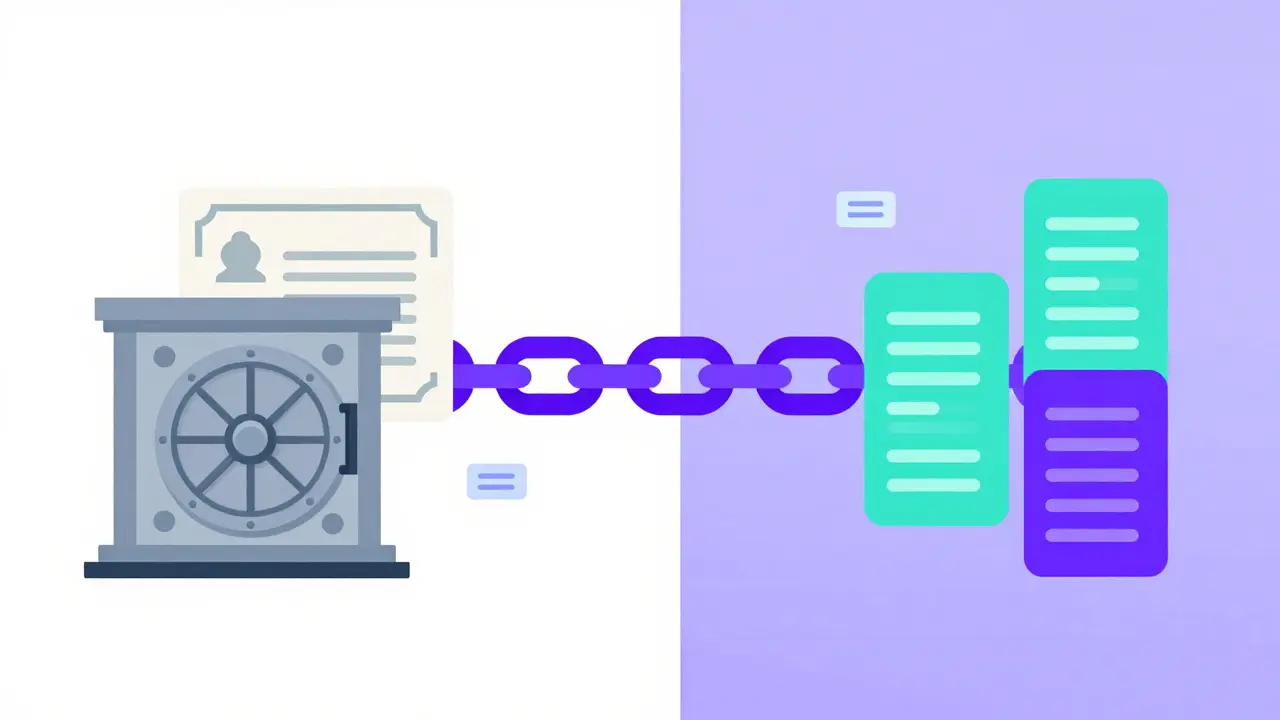
Not all utility tokens are built for retail traders. Some are designed for corporations and governments. Hedera (HBAR) stands out here. Hedera doesn’t use a traditional blockchain; it uses a hashgraph consensus algorithm, which is faster and more energy-efficient. HBAR is required to pay for transactions, file storage, and smart contract execution on the network. What gives HBAR unique weight is its governance council, which includes tech giants like Google, IBM, and Boeing. These companies don’t just endorse Hedera; they operate nodes and ensure the network remains neutral and robust. For enterprises looking to track supply chains or manage carbon credits, HBAR is the toll booth.
Ripple (XRP) has long been controversial, but its utility is clear: cross-border payments. XRP is used as a bridge currency in RippleNet, allowing banks to send money internationally in seconds rather than days. After years of regulatory battles, XRP has seen renewed institutional interest in 2025-2026, with ETFs under consideration. Its utility isn’t about building apps; it’s about moving fiat currency efficiently. If you’re a bank, XRP solves a specific, expensive problem.
Metaverse and Virtual Economies
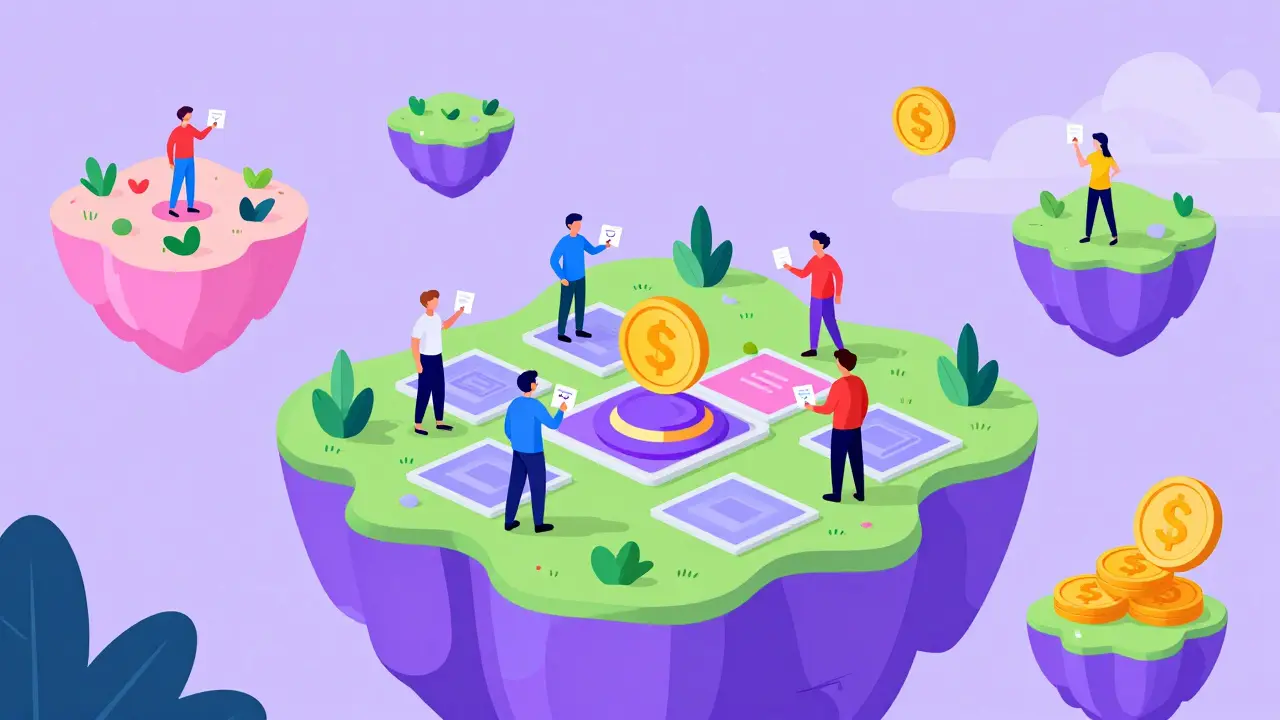
In virtual worlds, tokens act as both currency and property rights. Decentraland (MANA) and The Sandbox (SAND) are the pioneers here. In Decentraland, MANA is used to buy LAND (virtual real estate), create avatars, and trade wearables. You can’t participate in the economy without MANA. Similarly, SAND is used to purchase land, create games, and trade NFTs within The Sandbox. These tokens are structurally irreplaceable because they are the only medium of exchange accepted in these closed digital societies.
A more recent example is EarthMeta (EMT). Analysis from 2025 highlighted EMT as a structurally necessary token for its ecosystem. Cities within EarthMeta cannot be bought, traded, or governed without EMT. Staking EMT doesn’t just yield interest; it grants ownership rights, such as free city NFTs. This ties the token directly to tangible assets within the game, making it essential for any serious participant.
Exchange and Wallet Ecosystems
Finally, some utility tokens are tied to specific platforms. Binance Coin (BNB) is the native token of the Binance ecosystem. Holding BNB reduces trading fees on the Binance exchange, pays for transaction fees on BNB Chain, and grants access to token sales on Binance Launchpad. It’s a discount card and a key combined into one coin.
Best Wallet ($BEST) emerged in 2025 as another example. $BEST provides holders with lower transaction fees and early access to new features within the Best Wallet app. While smaller than BNB, it demonstrates the same principle: use the token to get better service from the platform you already use.
How to Spot a True Utility Token
Not every token claiming to be "utility" is created equal. Here’s how to tell the difference between a token with real utility and one that’s just marketing fluff:
- Structural Necessity: Ask yourself, "If I removed this token, would the platform still work?" If the answer is yes, it’s likely not a true utility token. Successful examples like ETH and LINK break if the token disappears.
- Closed-Loop Economy: Does the token circulate within the ecosystem? Users should earn the token by providing value (liquidity, data, staking) and spend it to consume value (fees, access, goods).
- Governance Rights: Does holding the token give you a voice? Governance tokens like UNI and ONDO allow holders to shape the future of the protocol, which adds intrinsic value beyond speculation.
- Real-World Anchors: Tokens like XRP and HBAR solve problems outside of crypto, such as banking inefficiencies or enterprise data management. This broadens their potential user base.
What is the difference between a utility token and a security token?
A utility token provides access to a product or service, like paying for gas on Ethereum. A security token represents ownership in an asset, like a stock or bond, and promises profit from the efforts of others. Regulatory bodies like the SEC scrutinize security tokens more heavily because they fall under investment laws.
Why are utility tokens considered safer than meme coins?
Meme coins derive value purely from community sentiment and hype. If the trend dies, the value drops to zero. Utility tokens have underlying demand because they are needed to use a platform. Even if the price fluctuates, the token retains functional value as long as the platform exists.
Can I earn passive income with utility tokens?
Yes, many utility tokens offer staking rewards. For example, you can stake ETH to help secure the Ethereum network and earn more ETH. Similarly, staking SOL or SUSHI can generate yields based on network activity or protocol fees.
Is Chainlink (LINK) only used for cryptocurrency prices?
No. While price feeds are its most famous use case, Chainlink provides data for weather conditions, sports results, random number generation, and real-world asset tokenization. Any smart contract that needs external data can use Chainlink.
Which utility token is best for beginners?
Ethereum (ETH) is often recommended for beginners because it has the largest ecosystem, highest liquidity, and clearest utility. Understanding how ETH works as gas for transactions helps build a foundation for understanding other utility tokens.