Imagine having some of the cheapest electricity on the planet, yet facing a government that can shut down your entire business with a single decree. That is the daily reality for those attempting crypto mining Venezuela style. The Venezuelan government hasn't just legalized mining; they've tried to swallow the entire industry, turning a decentralized technology into a state-managed utility. But between the grand promises of a "digital economy" and the actual experience of miners on the ground, there is a massive, chaotic gap.
The Machinery of State Control
To understand how Venezuela manages its digital assets, you have to look at the agencies pulling the strings. For years, the central hub was SUNACRIP is the National Superintendence of Cryptocurrencies, the primary regulatory body tasked with overseeing the creation, circulation, and use of cryptoassets in Venezuela. It wasn't always this way. The journey started with the 2017 launch of the Petro, a state-backed coin that largely failed to gain global traction but served as a blueprint for government intervention.
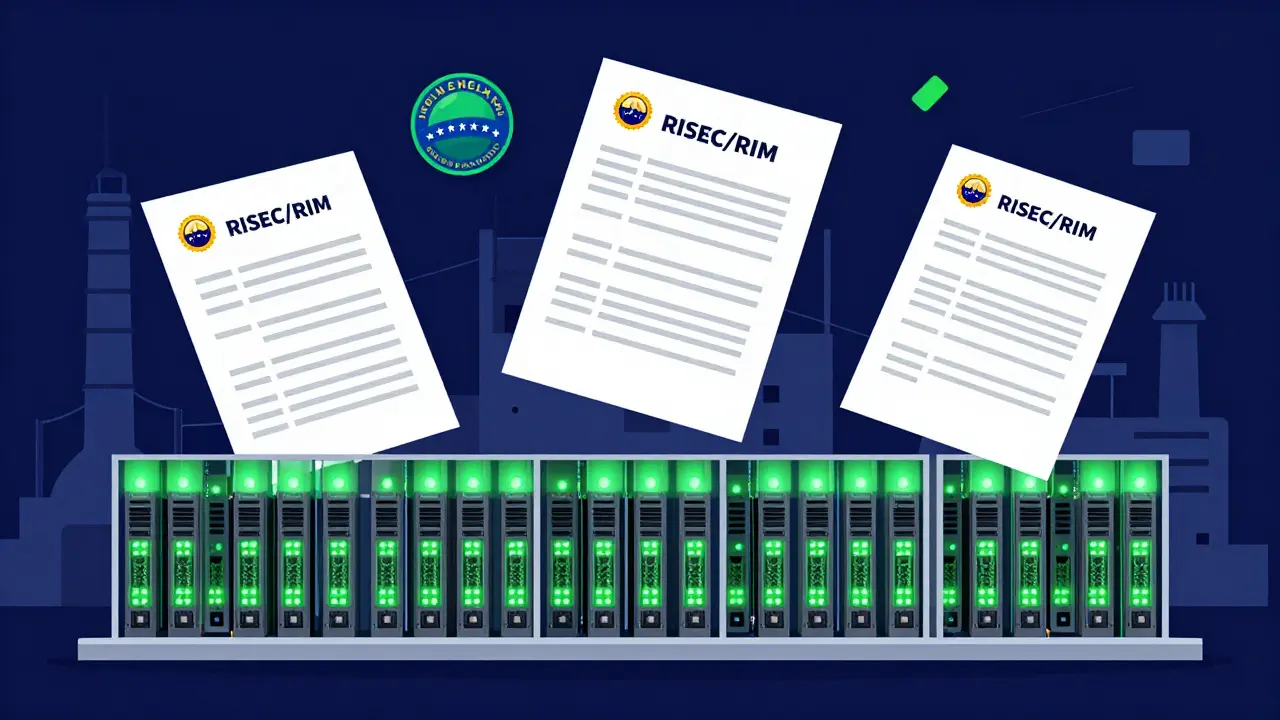
If you want to mine legally in Venezuela, you can't just plug in a rig and start hashing. You are required to register with either the Comprehensive Registry of Cryptoactive Services (RISEC) or the Comprehensive Registry of Miners (RIM). These aren't just simple forms; the bureaucratic process often takes between 90 and 120 days. To even qualify, you need to prove you have an electrical capacity of at least 500kW, provide full identity verification, and register every single piece of hardware you own.
The National Mining Pool: A Double-Edged Sword
The most aggressive tool in the government's kit is the National Mining Pool (NMP) is a state-mandated infrastructure that requires authorized miners to route their computing power through a centralized government system to distribute rewards. On paper, it sounds like an efficient way to organize national resources. In practice, it's a bottleneck.
Miners who operate outside the NMP face severe penalties, while those inside often struggle with technical glitches. Reports from the field suggest that the NMP's connectivity issues and inconsistent reward distributions have slashed operational efficiency by 15% to 20% compared to independent pools. It's a classic trade-off: you get subsidized power, but you give up your autonomy and a chunk of your profit to a state-run server.
| Attribute | State-Licensed Mining | Independent/Grey Market |
|---|---|---|
| Electricity Cost | ~$0.03/kWh (Subsidized) | Varies (Higher/Risky) |
| Legal Status | Authorized by SUNACRIP | Illegal/Unregulated |
| Reward Path | National Mining Pool (NMP) | Direct/Private Pools |
| Risk Level | Bureaucratic/Corruption Risk | Police Raids/Seizures |
The Energy Paradox
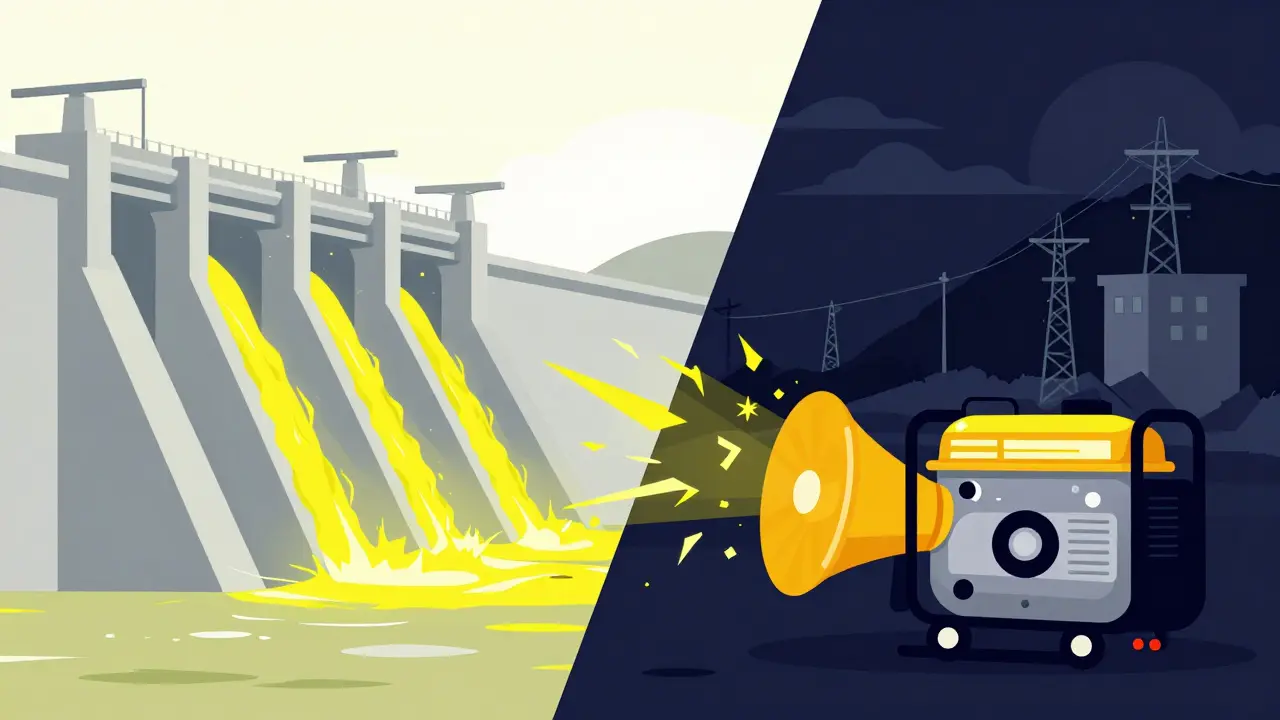
Venezuela sits on a goldmine of hydroelectric power, which is why the government is so obsessed with controlling mining. When global electricity costs for mining average between $0.08 and $0.12 per kWh, Venezuela's $0.03 rate is an incredible competitive advantage. However, cheap power is useless if the lights aren't on.
The state's grip on the grid is shaky. In 2023, miners reported enduring 40 to 60 hours of power outages every single month. This forced many to spend an extra 25% of their capital on backup generators just to keep their machines from crashing. This creates a strange irony: the government uses "excessive energy consumption" as a reason to ban or restrict mining, yet the grid itself is too fragile to support the very industry the state claims to lead. At its peak, licensed centers used about 10% of the country's total electricity, making the sector a convenient scapegoat whenever the national grid failed.
Corruption and the 'Operational Paralysis'
If you're looking for a stable regulatory environment, Venezuela is not it. The entire system nearly collapsed in March 2023. A massive corruption investigation involving the oil industry led to the suspension of SUNACRIP's operations. Suddenly, the people in charge of the licenses and the mining pools were under investigation for fraud.
This created a period of "operational paralysis." Imagine being a business owner whose only point of contact with the government vanishes overnight. Around 300 licensed entities found their operations disrupted as facilities were abruptly closed. While the government attempted to reorganize in March 2024-even bringing in the private sector via CAVEMCRIP is a private sector association designed to provide a regulatory role and a bridge between crypto miners and the Venezuelan state. -the trust is gone. The gap between what the law says and how the law is actually enforced remains wide and unpredictable.

Beyond Mining: The Shift to Stablecoins and Banking
While the state tries to control the *production* of crypto, the *usage* of it has moved far beyond government reach. Hyperinflation has pushed roughly 70% of the population toward stablecoins to save their money. The government, realizing it can't stop the tide, is now trying to pivot. Through the Conexus initiative, Venezuela is working on a blockchain-based interbank network.
The goal is ambitious: by December 2025, the government plans to allow traditional banks to custody, transfer, and exchange Bitcoin is the first decentralized cryptocurrency, used in Venezuela both as a hedge against inflation and a tool for remittances. and other stablecoins directly for customers. This would be a massive shift from fighting miners to integrating crypto into the formal banking sector. Yet, with international sanctions and ongoing political turmoil, these deadlines often feel more like aspirations than actual plans.
Is it Actually Profitable to Mine in Venezuela?
From a pure numbers perspective, the low electricity cost makes it tempting. But you have to factor in the "instability tax." When you add the cost of backup power, the loss of efficiency from the National Mining Pool, and the risk of your facility being closed during the next government purge, the margins shrink.
For the bold, it's a high-risk, high-reward gamble. For the cautious, the environment is a nightmare. The state wants the revenue and the control, but it cannot provide the basic infrastructure-stable power and a predictable legal system-necessary for a healthy industry to grow. Until the administration provides a framework that doesn't disappear during a corruption probe, mining in Venezuela will remain a game of survival rather than a sustainable business.
Is crypto mining legal in Venezuela?
Yes, it is legal, but it is strictly regulated. To operate legally, miners must obtain a license from SUNACRIP and register with the Comprehensive Registry of Miners (RIM) or the Comprehensive Registry of Cryptoactive Services (RISEC). Operating without these licenses can lead to equipment seizure.
What is the National Mining Pool (NMP)?
The National Mining Pool is a state-mandated system that requires licensed miners to connect their hardware to a government-controlled pool. The state then manages the distribution of mining rewards, which is intended to centralize control over the creation of new digital assets.
Why are there so many bans on mining in Venezuela?
The government frequently cites "excessive energy consumption" as a reason for temporary bans. Because the national power grid is unstable, mining operations are often blamed for blackouts, making the industry an easy target for sudden regulatory crackdowns.
How does the cost of electricity in Venezuela compare to other countries?
Venezuela offers some of the lowest electricity rates in the world for miners, averaging around $0.03/kWh. This is significantly lower than the global average of $0.08 to $0.12/kWh, providing a strong theoretical incentive for mining.
Can Venezuelan banks offer crypto services?
The government is currently working toward this. Through the Conexus initiative, there are plans to allow banks to offer Bitcoin and stablecoin custody and exchange services starting in December 2025.