The PERA token from Pera Finance has been around since 2021, but there’s still a lot of confusion about whether there’s an active airdrop. If you’re searching for free PERA tokens right now, here’s the truth: there is no official airdrop running in 2026. Any website, social media post, or Discord channel claiming otherwise is likely a scam.
Pera Finance launched as a DeFi protocol built on Binance Smart Chain, focused on turning trading into a game. Instead of just staking tokens to earn rewards, they let traders earn PERA by competing in volume-based challenges on decentralized exchanges. Think of it like a leaderboard where the most active traders get paid - not from liquidity pools, but from their own trading activity.
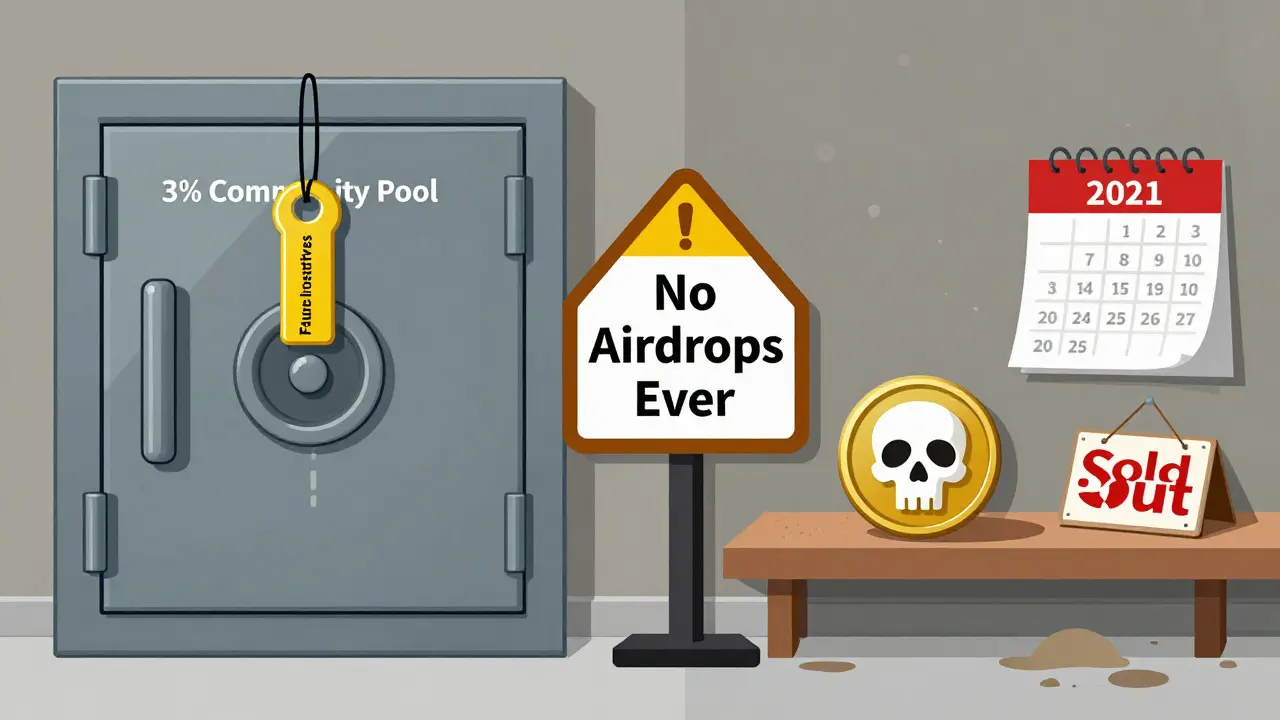
When PERA first launched in July 2021, the token price was $0.10. That’s not a typo. Today, it trades around $0.000144 - down over 99% from its starting point. The total supply is 125.35 million PERA, with about 104.62 million in circulation. The token was distributed through private sales, public sales, team allocations, and a 3% community pool. But that 3% wasn’t an airdrop. It was meant for future ecosystem growth, partnerships, or potential rewards - not direct giveaways to random wallets.
There’s no public record of Pera Finance ever running a traditional airdrop campaign. No signup forms, no Twitter retweet contests, no wallet snapshots. The only distribution happened during the 2021 token sale, where users bought PERA directly through Daomaker and Gate.io. If you didn’t buy then, you didn’t get any. And since then, the team has focused on building their protocol, not handing out free tokens.
Why People Think There’s an Airdrop
Scammers love to ride on the name of old projects. PERA’s name is short, sounds legit, and people still remember its early hype. Fake airdrop sites pop up every few months, asking you to connect your wallet, pay a small gas fee, or enter your seed phrase to "claim" PERA. These are 100% fraudulent. Once you connect your wallet, they drain it. No exceptions.
Another reason for the confusion? The name "Pera" is used by two different projects. One is Pera Finance (PERA token on BSC). The other is Pera Wallet, an Algorand-based wallet backed by Arrington Capital and the Algorand Foundation. They have nothing to do with each other. Some people mix them up and assume the wallet’s airdrops apply to the token - they don’t.
How PERA Token Actually Works
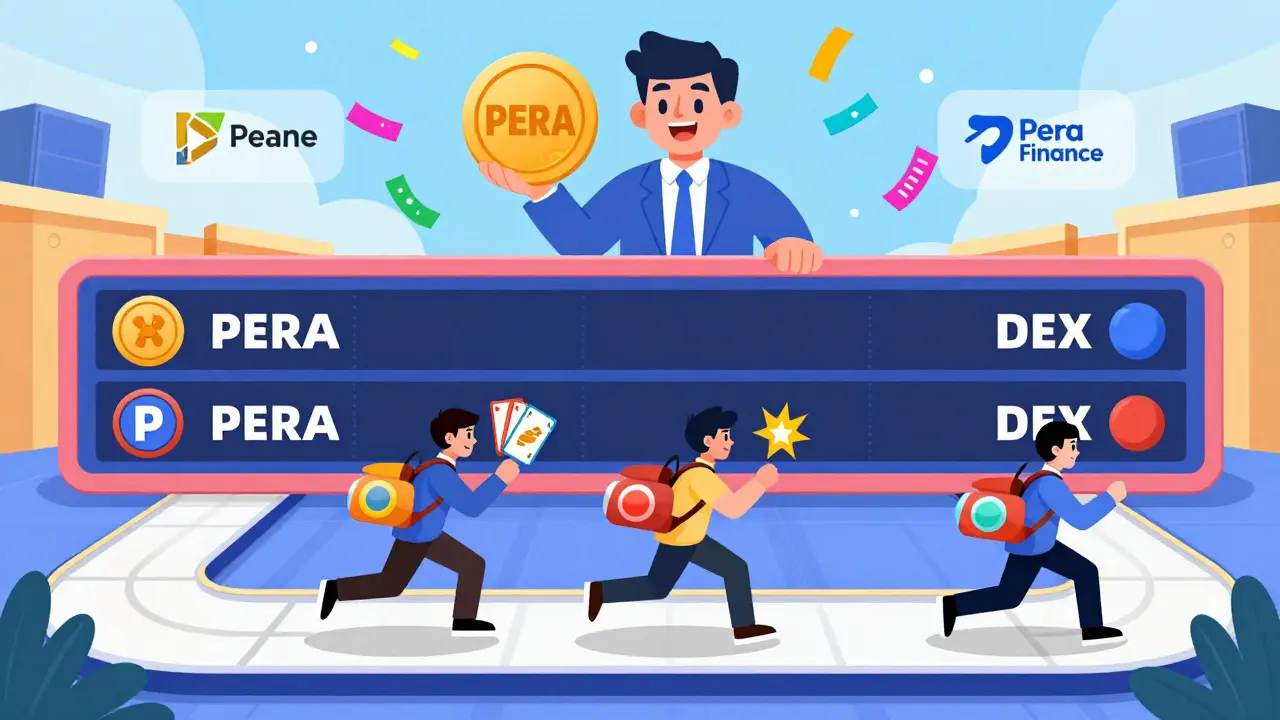
Pera Finance isn’t a typical DeFi platform. It doesn’t rely on liquidity mining or yield farming in the traditional sense. Instead, it uses something called "swap farming." Traders who swap tokens on supported DEXs earn PERA based on their trading volume. The more you trade, the more you earn - but only if you’re using Pera’s protocol.
For example, if you trade USDC for BNB on PancakeSwap through Pera’s interface, you’ll earn PERA rewards proportional to your trade size. The protocol tracks your activity and distributes tokens weekly. It’s not passive income - it’s performance-based. You have to trade. No trading? No rewards.
The protocol is modular. That means other DeFi apps can plug into Pera’s system to run their own trading competitions. A new DEX could launch a 7-day contest with $10,000 in PERA rewards for the top 10 traders. That’s the real innovation: turning trading into a game with real incentives.
Token Distribution Breakdown (2021 Launch)
Here’s how the original 125.35 million PERA tokens were split at launch:
- 28% - Private Sale (investors)
- 26% - Foundation (long-term development)
- 16% - Team (vested over 2 years)
- 13% - Seed Sale (early backers)
- 8% - Advisors
- 6% - Public Sale (IDO/IEO buyers)
- 3% - Community (for future incentives, not direct airdrops)
The public sale only made up 6% of the total supply - just 7.5 million tokens. Those sold out in under 24 hours. The 3% community allocation was never distributed as a one-time airdrop. It’s held in reserve for future use - like rewarding top traders, funding bounties, or supporting integrations with other chains.
Current Market Status and Volatility
As of January 2026, PERA is trading at $0.000144 USD. That’s down 41% over the last 90 days. It’s not dead - it’s still listed on CoinMarketCap and Binance, and the protocol still runs active trading competitions. But the token’s value has collapsed since its peak.
Some traders still use it for low-volume swaps because gas fees on BSC are cheap. Others hold it as a speculative bet that Pera Finance might relaunch or expand to another chain. But there’s no evidence of a price rebound coming soon. The 24-hour volume is under $50,000 - far from the hype days of 2021.
How to Stay Safe and Avoid Scams
If you’re looking for PERA, here’s how to avoid getting ripped off:
- Only visit the official site: perafinance.io (check the URL carefully - scammers use .xyz, .io, .cc)
- Never connect your wallet to any site claiming to give free PERA
- Don’t pay any gas fee to "unlock" tokens
- Ignore Telegram and Twitter accounts that DM you with "exclusive airdrop links"
- Use CoinMarketCap or CoinGecko to track real PERA price and trading pairs
The only legitimate way to get PERA today is to buy it on a supported exchange like PancakeSwap or Gate.io - and even then, liquidity is thin. Don’t expect to make money from it. Treat it like a speculative asset with high risk and low volume.
What’s Next for Pera Finance?
The team hasn’t announced any new tokenomics, airdrops, or major upgrades since 2022. Their last public update was in late 2023, mentioning they were exploring integrations with other chains like Polygon and Arbitrum. But nothing concrete has happened.
Without a clear roadmap or community-driven development, the project is in limbo. The smart contracts still work. The trading competitions still run. But there’s no marketing, no new features, and no airdrops planned.
If you’re waiting for free PERA tokens, you’ll be waiting forever. The only tokens you’ll get are the ones you buy - and even then, you’re buying into a fading project.