Imagine trying to buy a cup of coffee, but instead of using your bank card, you have to text a stranger, verify their identity through three different apps, and hope they don’t freeze your account after you send the money. That is the reality for many people engaging in peer-to-peer crypto trading in China today.
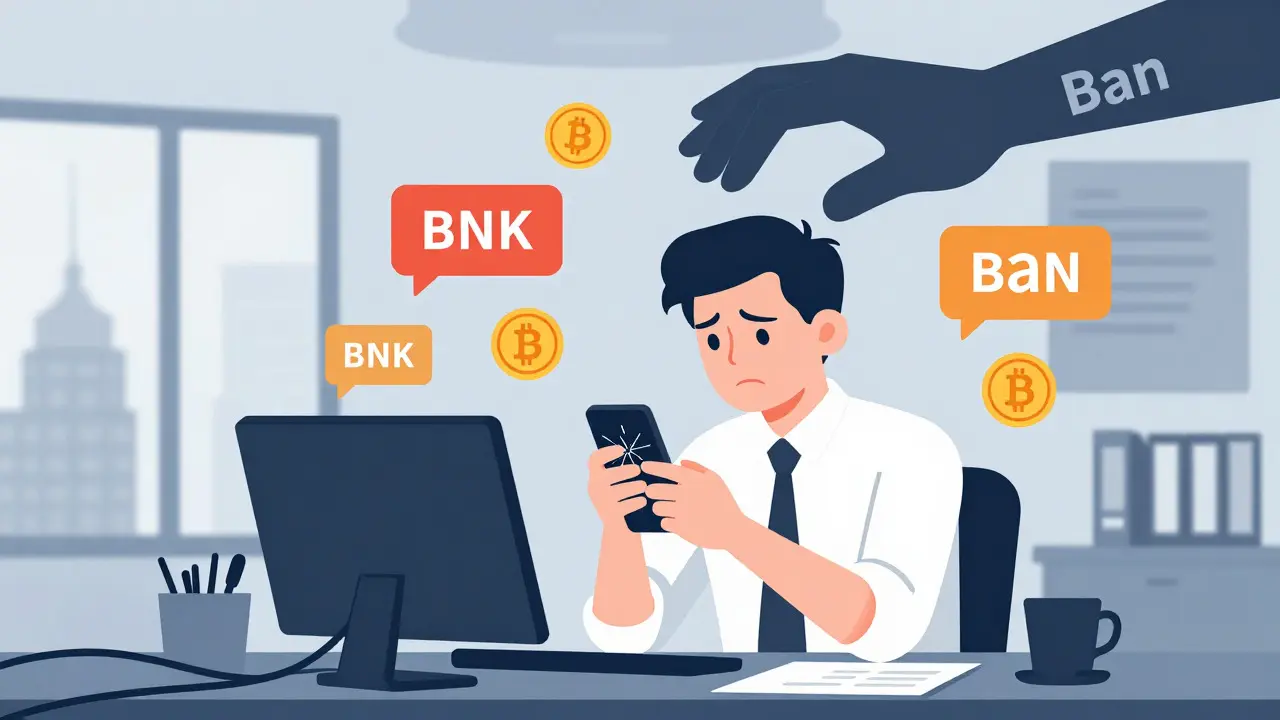
In September 2021, the People's Bank of China (PBOC) pulled the plug on almost all cryptocurrency activities. They banned exchanges, mining, and payments. The official reason? To stop financial crime and keep the economy stable. But if you think that stopped Chinese citizens from moving digital assets, you are mistaken. Instead of disappearing, the market went underground. It shifted from regulated platforms to a complex, high-risk web of direct transactions between individuals.
This isn't just about tech enthusiasts hoarding Bitcoin. It is about millions of people navigating a legal gray area where owning crypto is technically allowed, but trading it is heavily restricted. So, how does this system actually work in 2026? And what happens if you get caught?
The Legal Gray Area: Ownership vs. Trading
To understand why P2P trading survives, you first need to understand the law. This is where most beginners make fatal mistakes. They assume "ban" means "illegal to own." It doesn't.
Back in 2018, courts in Shenzhen, Hangzhou, and Shanghai made a crucial distinction. They ruled that cryptocurrencies like Bitcoin and Ethereum are "virtual property." This means Chinese citizens have a legal right to own them. You can hold them in a wallet without fear of immediate confiscation. However, the 2021 ban targeted the *infrastructure* of trading. Centralized exchanges were shut down or forced to leave China. Banks were ordered to block transfers to known crypto entities.
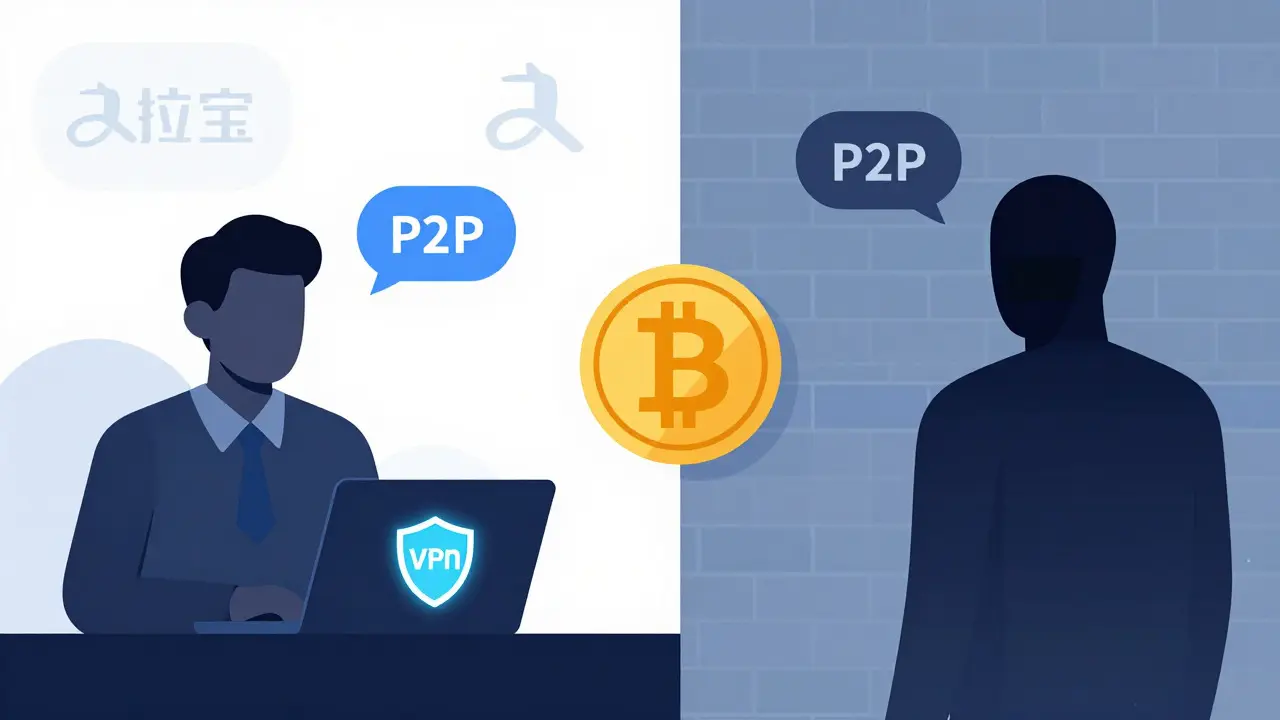
This created a paradox. You can own the asset, but you cannot easily buy or sell it through official channels. Enter Peer-to-Peer (P2P) trading. Since there is no central exchange to shut down, traders deal directly with each other. One person sends Chinese Yuan (CNY) via bank transfer or Alipay; the other releases cryptocurrency from an escrow service or private wallet. Because these transactions look like regular personal transfers to the banking system, they slip through the cracks-until they don't.
| Feature | Pre-2021 (Regulated) | Post-2021 (P2P Underground) |
|---|---|---|
| Platform Type | Centralized Exchanges (Huobi, OKX domestic interfaces) | Decentralized Apps, International P2P Platforms (Bisq, Paxful), Telegram Groups |
| Legal Status | Licensed and monitored | Gray market; ownership legal, trading restricted |
| Fees | Low (0.1% - 0.5%) | High (3% - 5% risk premium) |
| Risk Level | Low (platform guarantees funds) | Extreme (counterparty fraud, bank freezes) |
| Primary Asset | BTC, ETH, various altcoins | USDT (Tether) dominates due to stability |
How the Underground Market Actually Operates
If you walk into a traditional market, you see stalls. In the Chinese crypto underground, the "stalls" are encrypted chat groups and obscure websites. The ecosystem has adapted remarkably well to pressure, driven by two main factors: capital flight concerns and the sheer resilience of decentralized networks.
Data from Chainalysis showed that despite the ban, over $50 billion worth of cryptocurrency left East Asian accounts between 2019 and 2020 alone. This wasn't random speculation; it was capital seeking safety outside strict controls. Today, this demand fuels the P2P market. According to estimates, China still accounts for roughly 4-7% of global P2P transaction volume. That might sound small compared to its former 23% share, but in absolute numbers, it represents billions of dollars moving through backdoors every year.
So, how do traders avoid detection? It requires a specific set of tools and habits:
- Encrypted Communication: WeChat is too risky because it’s owned by Tencent, which cooperates with authorities. Traders use Telegram or Signal. They join groups with code names like "Blue Sky" or "Cloud Trading" to discuss rates and find partners.
- VPNs are Mandatory: The Great Firewall blocks access to international crypto sites like LocalBitcoins or Bisq. Users rely on robust Virtual Private Networks (VPNs) like NordVPN or ExpressVPN to mask their IP addresses.
- Stablecoin Dominance: Bitcoin is too volatile for daily trading. The currency of choice is USDT (Tether). It holds a 1:1 peg with the US Dollar, making it perfect for preserving value while bypassing capital controls.
- Transaction Splitting: Banks flag large transfers. A common rule of thumb is to keep transactions under 50,000 RMB. If you want to move more, you split it into multiple smaller trades across different days or accounts.
One user, identified as 'ShanghaiTrader88' in archived community forums, reported completing nearly 150 transactions totaling $170,000 since the ban. His secret? Using Alipay’s "friend transfer" feature, which often triggers fewer automated alerts than standard bank wires, and keeping every single trade below the 50,000 RMB threshold.
The High Cost of Risk: Fees, Fraud, and Freezes
There is no such thing as a free lunch in the shadow economy. The convenience of P2P trading comes with steep costs, both financial and operational.
First, look at the fees. Before the ban, trading fees on major exchanges were around 0.1% to 0.5%. Today, the "risk premium" pushes effective costs to 3% to 5%. Sellers charge higher prices because they know buyers have few alternatives. If you buy USDT on a P2P platform accessible in China, you are likely paying a significant markup over the actual dollar rate.
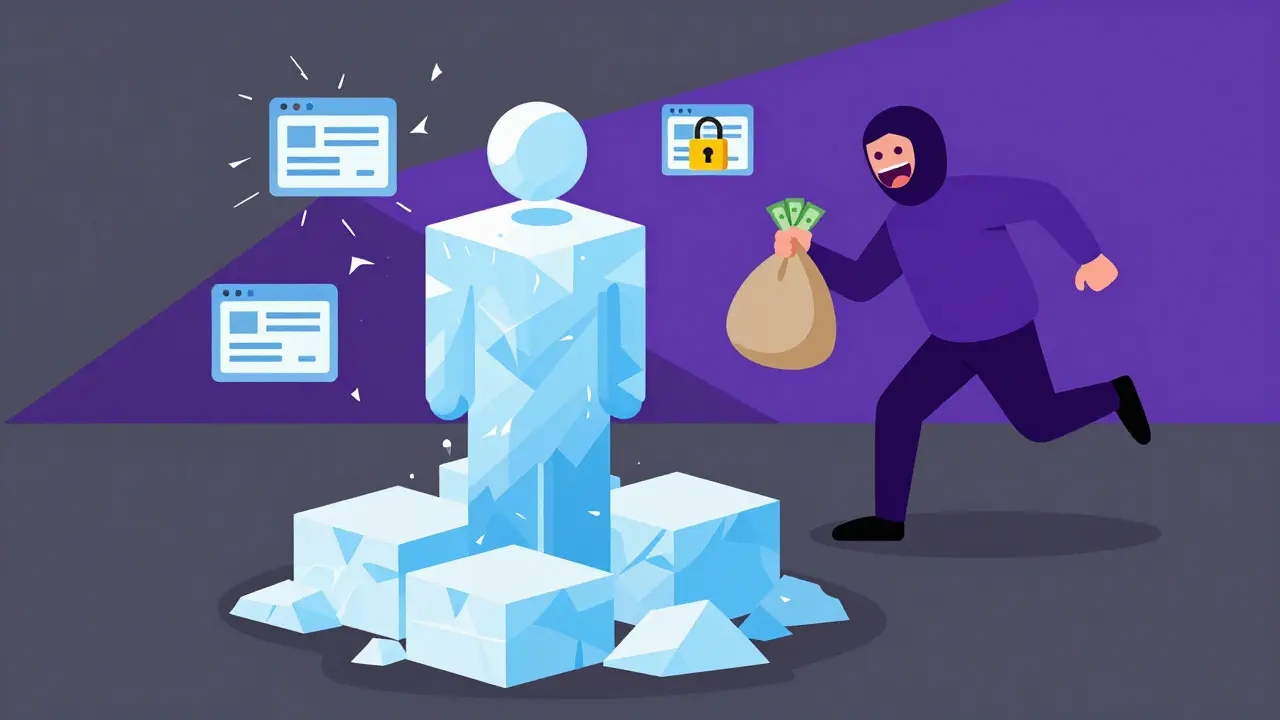
But fees are the least of your worries. The real danger is counterparty risk. On regulated exchanges, the platform holds your funds in escrow. In the underground P2P world, trust is fragile. Scams are rampant. A common tactic involves "flash freezing." Here is how it works:
- You agree to buy USDT from a seller.
- You send 100,000 RMB to their bank account.
- The seller releases the crypto.
- Immediately after, the seller reports the transaction as "fraudulent" to the police or the bank, claiming they were scammed by *you*.
- Your bank account gets frozen pending investigation. Your money is stuck, and your crypto is gone.
A survey by ForkLog in 2022 found that nearly 39% of users experienced sudden bank account freezes during P2P trades. Another user, 'BeijingCryptoLoser', lost $25,000 in a single scam where the counterparty sent fake screenshots of a completed bank transfer. When he checked his actual balance, the money had never arrived.
User satisfaction on platforms like Paxful has plummeted as a result. Ratings dropped from 4.3 stars in 2021 to 2.7 stars by late 2022, largely due to increased fraud incidents involving Chinese users. The lesson here is clear: if something looks too good to be true in the Chinese P2P market, it is almost certainly a trap.
Government Enforcement: The Cat and Mouse Game
The Chinese government is not sleeping. While they may not be able to stop every individual trade, they are tightening the net. The State Administration of Foreign Exchange (SAFE) investigated over 1,200 crypto-related cases in 2022, resulting in hundreds of convictions and fines exceeding $150 million.
In January 2023, the PBOC issued new guidelines (Notice No. 2023-017) specifically targeting "any form of decentralized transaction." This signaled a shift from just blocking exchanges to monitoring individual behavior. Banks now use AI-driven algorithms to scan for patterns typical of crypto trading: frequent small transfers, round-number amounts, and communications with known crypto-linked phone numbers.
However, enforcement has limits. As Dr. Henry Sanderson, an expert on Chinese finance, noted, the persistence of P2P trading shows the limitations of prohibition. It creates unmonitored activity rather than eliminating it. The IMF echoed this in a 2022 working paper, stating that while China eliminated formal markets, P2P trading demonstrates the fundamental challenge of regulating borderless technology.
Traders have responded with innovation. Some have turned to "crypto barter," exchanging USDT for physical goods like gold or luxury watches, which are then sold elsewhere. Others use Non-Fungible Tokens (NFTs) as a vehicle for value transfer, arguing that buying art is legal, even if the underlying purpose is moving wealth. These methods are cumbersome and expensive, but they show how desperate demand drives adaptation.
Who Is Actually Trading?
It is important to dispel the myth that only tech geeks are involved. A 2022 study by Peking University surveyed 1,200 crypto users in China. The profile of the average P2P trader is quite specific:
- Age: Mostly between 25 and 45 years old.
- Education: Higher education levels, often university graduates.
- Occupation: Urban professionals, entrepreneurs, and those with international business ties.
- Motivation: Capital preservation and diversification, not just speculation.
Many of these individuals have family abroad or businesses that require cross-border payments. With strict capital controls limiting how much money can leave the country legally, crypto offers a loophole. For them, the risk of a frozen account is outweighed by the benefit of accessing global markets. This demographic has the technical literacy to use VPNs and the financial resources to absorb occasional losses, making them the backbone of the current P2P ecosystem.
The Future Outlook: Will It Survive?
Looking ahead to 2026 and beyond, the consensus among analysts is cautious but realistic. Binance Research predicts that P2P trading will remain between 3-5% of global activity through 2025. HSBC Global Research argues that China cannot fully eliminate P2P trading without implementing even stricter capital controls that would damage legitimate business activity. The cost of total suppression is simply too high.
However, the environment will likely get harder. Expect more advanced blockchain surveillance tools from the government. We may see increased penalties for banks that fail to detect suspicious flows. For the average user, the learning curve will continue to steepen. Mastering the necessary operational security skills-using burner phones, rotating email addresses, verifying counterparties across multiple platforms-now takes 100-150 hours of dedicated effort, according to community guides.
The bottom line is that P2P crypto trading in China is not going away. It has evolved from a niche hobby into a sophisticated, albeit dangerous, parallel financial system. It thrives on the gap between the desire for financial freedom and the reality of state control. For those willing to take the risk, it remains open. For everyone else, it is a minefield best avoided.
Is it illegal to own cryptocurrency in China after the 2021 ban?
No, owning cryptocurrency is not strictly illegal. Courts have recognized crypto as "virtual property." However, trading it through centralized exchanges is banned, forcing users into the gray market of peer-to-peer (P2P) transactions, which carry significant regulatory risks.
What are the biggest risks of P2P crypto trading in China?
The primary risks include counterparty fraud (scammers taking your money without sending crypto), "flash freezing" of bank accounts by malicious sellers reporting false fraud claims, and high transaction fees (3-5%) compared to pre-ban rates. There is also the constant threat of government enforcement actions.
Which platforms do Chinese users use for P2P trading?
Users primarily rely on international platforms like LocalBitcoins, Paxful, and decentralized exchanges like Bisq. Many also use encrypted messaging apps like Telegram to connect with private sellers. Accessing these usually requires a reliable VPN to bypass the Great Firewall.
Why is USDT the most popular coin for P2P trading in China?
USDT (Tether) is preferred because it is a stablecoin pegged to the US Dollar. This reduces volatility risk during transactions. It allows users to preserve value and move capital across borders without the price swings associated with Bitcoin or Ethereum.
How can traders avoid having their bank accounts frozen?
Traders use several strategies: keeping transactions under 50,000 RMB to avoid automatic alerts, splitting large amounts into multiple smaller trades, using Alipay's "friend transfer" feature, and verifying counterparties thoroughly before sending funds. Despite these measures, freezes remain a common risk.
Will P2P crypto trading disappear in China soon?
Unlikely. Analysts predict it will persist at 3-5% of global volume. The demand for capital flight and diversification is strong, and decentralized networks are resilient. While enforcement is tightening, completely eradicating P2P trading would require overly restrictive capital controls that could harm the broader economy.