
Quick Summary
- Crypto is treated as an asset (property), not a currency, meaning Crypto taxation in Australia falls under Capital Gains Tax (CGT) for investors.
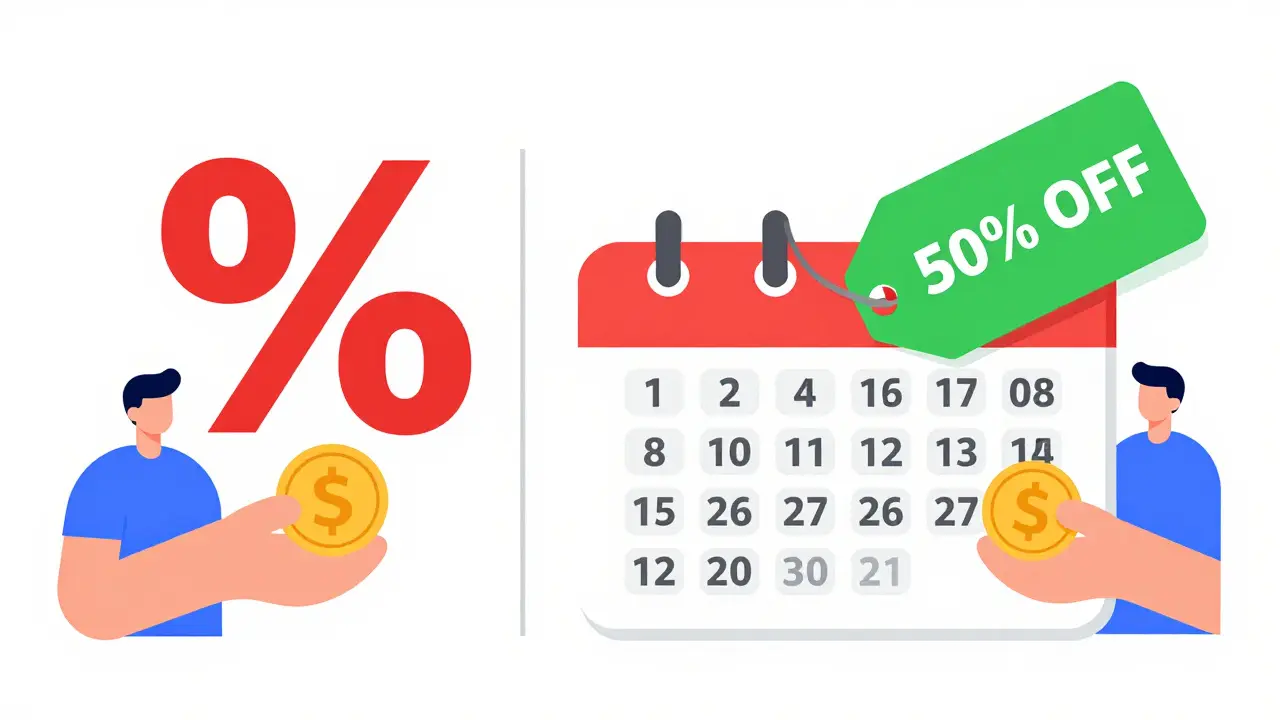
- Holding an asset for more than 12 months unlocks a 50% CGT discount.
- Tax rates vary from 0% to 45% based on your total annual income and the Medicare levy.
- Selling, swapping, or gifting crypto all trigger a taxable CGT event.
- Active traders may be classified as "carrying on a business," which removes the CGT discount.
The Core of CGT: Why Your Crypto is "Property"
In the eyes of the ATO, when you buy a coin, you aren't just swapping one currency for another. You are acquiring a CGT Asset. This means every time you move that asset-whether you sell it for cash, swap it for another token, or use it to buy a coffee-you are triggering a "disposal event." Most people think they only owe tax when they "cash out" to a bank account. That's a common and expensive mistake. If you trade 1 BTC for 20 ETH, you've technically sold your BTC and bought ETH. You must calculate the capital gain on that BTC at the exact moment of the trade, converting the value to Australian dollars (AUD).The 12-Month Rule: The "Hodler's" Advantage
If there is one rule to memorize, it's the 12-month holding period. Australia offers a massive incentive for long-term investing through the CGT Discount. If you hold your crypto for at least 366 days before selling, you only pay tax on half of your profit. Let's look at a real-world scenario. Suppose you bought some Solana (SOL) for $1,100 and paid a $100 exchange fee, making your total cost base $1,200. You sell it later for $2,000.- Held for 6 months: Your capital gain is $800. This entire amount is added to your taxable income for the year.
- Held for 14 months: Your capital gain is still $800, but you apply the 50% discount. Now, only $400 is added to your taxable income.
Calculating Your Gains and Losses
Tracking your "cost base" is where things get technical. Your cost base isn't just the purchase price; it includes the costs associated with acquiring the asset, such as brokerage fees or network charges.| Component | What it includes | Impact on Tax |
|---|---|---|
| Cost Base | Purchase price + transaction fees | Reduces total capital gain |
| Proceeds | Market value at time of sale/swap | The starting point for calculating gain |
| Capital Loss | Selling an asset for less than cost base | Offsets other capital gains |
Investor vs. Trader: Where the Line is Drawn
Not everyone gets the 50% discount. The ATO distinguishes between a casual investor and someone carrying on a business of trading. If you are day-trading with high frequency, using complex strategies, and treating crypto as your primary source of income, you might be classified as a trader. If you're labeled a trader, your profits are treated as ordinary income rather than capital gains. This means the 12-month discount is completely off the table. The ATO is increasingly targeting users with over 100 transactions per year to ensure they aren't incorrectly claiming the CGT discount. If you're clicking "buy" and "sell" every few hours, you're likely in the trader category.
The "Hidden" Tax Events: Fees, Airdrops, and Staking
CGT isn't the only way the ATO collects money from crypto users. There are "ordinary income" events that happen before you ever sell your coins.- Staking and Mining: When you receive rewards for staking or mining, these are treated as income at the market value on the day you receive them. This is separate from any CGT you pay later when you eventually sell those rewards.
- Airdrops: Generally, if you receive a token for free, it's considered income.
- The Transfer Fee Trap: This is a nuance many miss. If you pay a network fee (gas fee) using crypto, you are technically "disposing" of that small amount of crypto. This triggers a mini-CGT event for the fee itself.
Compliance and the Future of Reporting
Gone are the days when you could simply "forget" to mention your crypto. The ATO has entered into direct data-sharing agreements with major Australian exchanges like Swyftx and CoinSpot. They now have a clear view of who is trading and in what volumes. Because calculating CGT for hundreds of trades is a nightmare, most people have moved away from spreadsheets. Using dedicated crypto tax software has become the standard. These tools sync with your exchange APIs and automatically calculate the cost base for each single unit of coin, which is the ATO's preferred method of accounting.Does the $18,200 tax-free threshold apply to crypto?
Yes. Your net capital gains from crypto are added to your other income (like your salary). If your total combined income is below the $18,200 threshold, you generally won't pay tax on those gains.
What happens if I gift my crypto to a friend?
Gifting is considered a disposal event. You are treated as if you sold the crypto at its current market value. You will need to calculate the capital gain (or loss) at the time of the gift and report it on your tax return.
Can I claim crypto as a "Personal Use Asset" to avoid tax?
It's very difficult. To qualify as a personal use asset, you must have acquired the crypto primarily for personal use (like buying a specific item), and the cost must be under $10,000. If you bought it as an investment to make money, the ATO will reject this classification.
How do I handle losses from a defunct project or scam?
If your coins become worthless or are stolen, you may be able to claim a capital loss. However, you usually need to prove the asset has no value (e.g., the project officially shut down) before you can record the loss to offset other gains.
When is the deadline for reporting crypto taxes in Australia?
For individual taxpayers, the deadline to lodge your tax return is typically October 31st for the financial year that ended on June 30th.