Spot trading might look simple: buy an asset, wait for the price to go up, sell, and pocket the profit. But in reality, the biggest reason traders lose money isn’t because they picked the wrong coin - it’s because they didn’t manage risk at all. Without a clear plan for what to do when things go south, even the most promising trade can wipe out weeks of gains in minutes. Spot trading means buying and selling assets like Bitcoin, Ethereum, or even stablecoins at their current market price, with immediate settlement. That speed is powerful, but it also means there’s no time to panic - you need a system in place before you even click "Buy".
Why Risk Management Isn’t Optional
Think of risk management like a seatbelt. You don’t wear it because you expect to crash. You wear it because crashes happen - even when you’re driving carefully. In spot trading, the market doesn’t care how confident you are. A single tweet, a regulatory announcement, or a whale moving millions can send prices plunging in seconds. Without protection, you’re not trading - you’re gambling. The goal isn’t to avoid losses entirely. That’s impossible. The goal is to make sure no single loss can kill your account. Traders who last five years don’t have magic instincts. They have rules. And those rules start with three core principles: protect your capital, control your emotions, and stay consistent.Position Sizing: Don’t Bet the Farm
One of the most overlooked rules in spot trading is how much you risk on a single trade. Too much, and one bad call wipes out half your balance. Too little, and you’ll never grow. The sweet spot? Risk no more than 1-2% of your total trading capital on any one trade. Let’s say you have $10,000 in your account. If you risk 2%, that’s $200 per trade. If the price moves against you, you lose $200 - painful, but survivable. If you risk 20% instead, one loss takes out $2,000. Two losses? You’re down 40%. That’s not trading. That’s suicide. This isn’t theory. It’s math. Studies of thousands of retail traders show that those who stick to 1-2% risk per trade are 5x more likely to remain profitable after six months. The math doesn’t lie. You can afford to lose 10 trades in a row if each one only costs 2%. But if each loss costs 20%, you’ll be out of the game after five bad trades.Stop-Loss Orders: Your Automatic Safety Net
A stop-loss is a preset price at which your trade automatically closes. It’s the only thing that stops you from staring at your screen at 3 a.m., hoping a coin will bounce back. You set it before you enter. You don’t change it after the market moves. And you never, ever ignore it. For example, you buy Bitcoin at $70,000. You believe it’ll hit $75,000. But you also know the market can drop 5% in an hour. So you set your stop-loss at $66,500 - a 5% drop. If it hits that level, you’re out. No hesitation. No emotion. Just a clean exit. Many beginners think stop-losses are for losers. Wrong. They’re for smart traders. The market doesn’t reward courage. It rewards discipline. A stop-loss turns fear into a mechanical response. You don’t have to be right on every trade. You just have to survive them.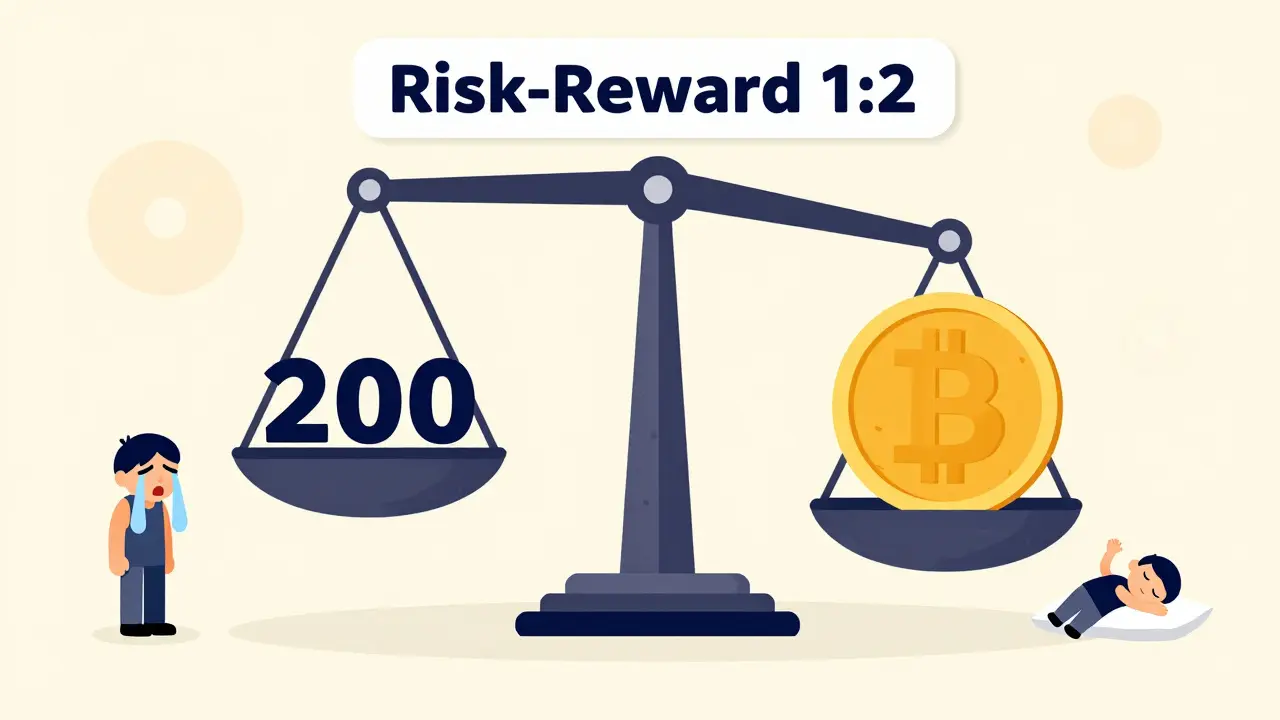
Diversification: Don’t Put All Your Coins in One Wallet
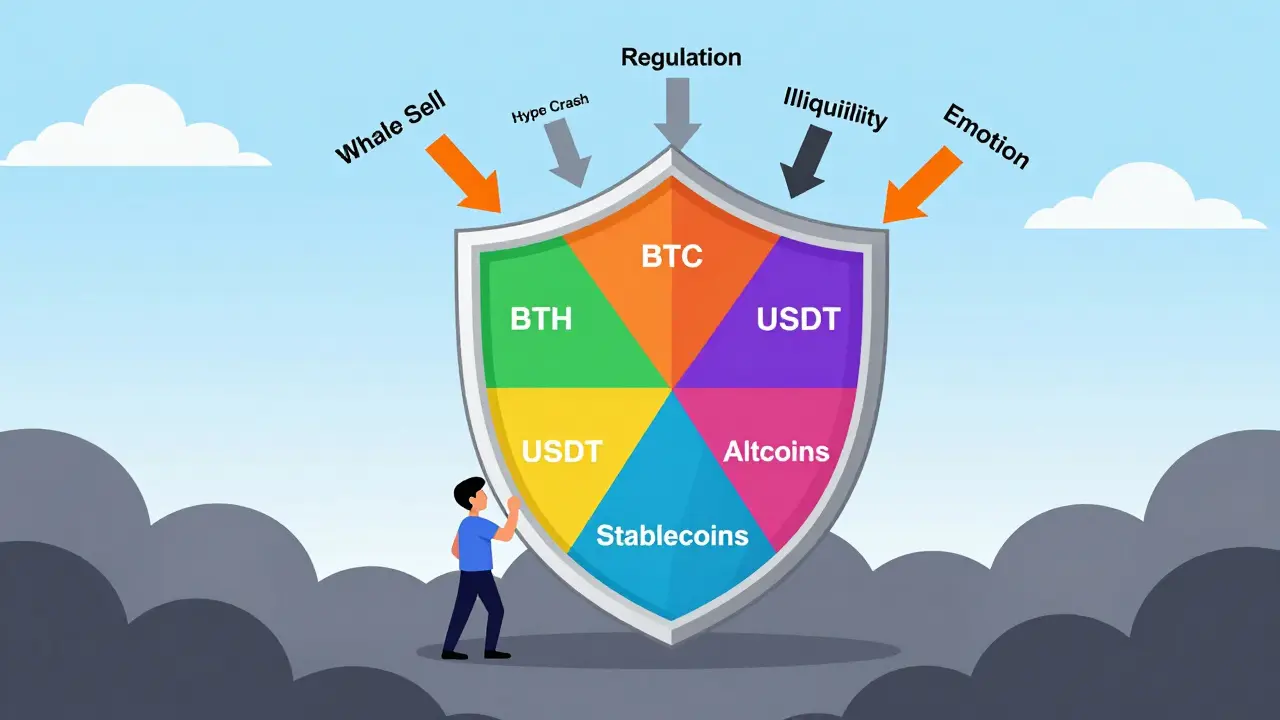
Holding only Bitcoin because “it’s the OG” is a recipe for disaster. What if Bitcoin drops 30% in a week? What if a new Layer-1 chain steals its momentum? Your whole portfolio tanks. Diversification doesn’t mean buying every coin on CoinMarketCap. It means spreading your risk across different types of assets. For example:- 50% in top-5 cryptocurrencies (BTC, ETH, SOL, ADA, XRP)
- 30% in stablecoins (USDT, USDC) for liquidity and safety
- 15% in mid-cap altcoins with strong fundamentals
- 5% in experimental tokens or new projects
Technical Analysis: Reading the Market’s Mood
Spot trading isn’t about news or hype. It’s about patterns. The market moves because people buy and sell in predictable ways. Technical analysis helps you see those patterns before they happen. Two tools are essential: Support and resistance levels - These are price zones where buying or selling pressure has historically stopped the market. If Bitcoin keeps bouncing off $68,000, that’s support. If it keeps failing at $73,000, that’s resistance. Trade near support to buy. Trade near resistance to sell. RSI (Relative Strength Index) - This indicator shows if an asset is overbought (above 70) or oversold (below 30). When RSI hits 75 and the price keeps rising, it’s a warning sign. The market might be overheated. When RSI drops to 25 and starts climbing, it might mean a reversal is coming. Don’t buy just because RSI is low. Wait for the price to confirm the move. You don’t need 10 indicators. You need two or three you understand deeply. Overloading your chart just creates noise.Liquidity Matters More Than You Think
Ever tried selling a rare NFT and waited 48 hours for a buyer? That’s illiquidity. In spot trading, illiquid assets cause slippage - the difference between the price you expected and the price you actually got. If you try to sell 10 BTC of a low-volume coin, the market might not have enough buyers. You’ll get filled at 5% below your target. That’s a hidden loss. Stick to high-liquidity assets:- Bitcoin (BTC)
- Ethereum (ETH)
- USDT, USDC
- Top 10 coins by daily volume
Emotional Control: The Silent Killer
The biggest risk in spot trading isn’t volatility. It’s you. FOMO buys you at the top. Fear sells you at the bottom. Both are emotional reactions. And both destroy accounts. Here’s how to fix it:- Write down your trading plan before every trade: entry, stop-loss, target, position size.
- Use a trading journal. Log every trade - why you made it, what you felt, what happened.
- Take breaks. If you’re stressed, angry, or excited, step away. Trade when you’re calm.
- Set daily loss limits. If you lose 5% of your capital in one day, stop trading. No exceptions.
Review and Adapt: No Strategy Is Permanent
Markets change. What worked last month might fail next week. Regulatory shifts, new tech, macroeconomic events - they all reshape the landscape. Set a weekly review:- Which trades worked? Why?
- Which ones failed? Was it bad luck, or a flawed plan?
- Did you stick to your risk rules?
- Did you ignore a stop-loss? Why?
Final Rule: Risk-Reward Balance
Every trade should have a clear risk-reward ratio. That means: how much can you lose vs. how much can you gain? Aim for at least a 1:2 ratio. That means if you risk $100, you expect to make $200. If you risk $500, you should have a target of $1,000. You don’t need to win every trade. If you win 4 out of 10 trades with a 1:2 ratio:- Losses: 6 trades × $100 = $600
- Wins: 4 trades × $200 = $800
- Net profit: $200
What’s the biggest mistake new spot traders make?
They skip risk management entirely. They focus on finding the next 10x coin, ignore stop-losses, risk 20% of their capital on a single trade, and let emotions drive decisions. This leads to quick, painful losses. The best traders aren’t the smartest - they’re the most disciplined.
Can I use leverage in spot trading?
No. Spot trading means buying and selling assets with your own funds - no borrowing, no margin. Leverage is used in futures or margin trading, which is a different, riskier game. If you’re new, avoid leverage entirely. Stick to spot trading until you’ve mastered risk management without it.
How do I set a stop-loss level?
Look at recent price action. If a coin has bounced off $50,000 three times, that’s strong support. Place your stop-loss just below that - say, $49,800. This gives room for normal price swings but cuts you off if the support breaks. Don’t use arbitrary percentages. Use market structure.
Is diversification necessary if I only trade Bitcoin?
Yes. Even Bitcoin can drop 40% in a month due to macro events, exchange hacks, or regulatory news. Holding only Bitcoin is like putting all your money in one stock. Diversification means spreading risk across assets that don’t move in perfect sync - like Bitcoin, Ethereum, stablecoins, and even gold-backed tokens. It’s not about predicting winners. It’s about surviving losers.
How often should I review my risk strategy?
At least once a week. Markets change fast. A strategy that worked in January might fail in March. Review your trades, your stop-losses, your position sizes. Ask: Did I follow my plan? Did I let emotion override logic? Adjust based on data, not feelings.