Imagine waking up one morning to find your digital wallet contains two different cryptocurrencies. That’s exactly what happened to thousands of users during the Bitcoin Cash fork in August 2017. One moment they held Bitcoin; the next, they held both Bitcoin and a new coin called BCH. This wasn’t magic-it was a blockchain fork.
Forks are the most dramatic events in cryptocurrency history. They happen when developers change the rules of a network, causing it to split into two separate paths. Some splits are minor updates that keep everyone on the same page. Others are violent divorces that create entirely new currencies with their own communities, values, and price tags. Understanding these splits isn't just trivia; it helps you grasp why some coins survive while others vanish into obscurity.
What Exactly Is a Blockchain Fork?
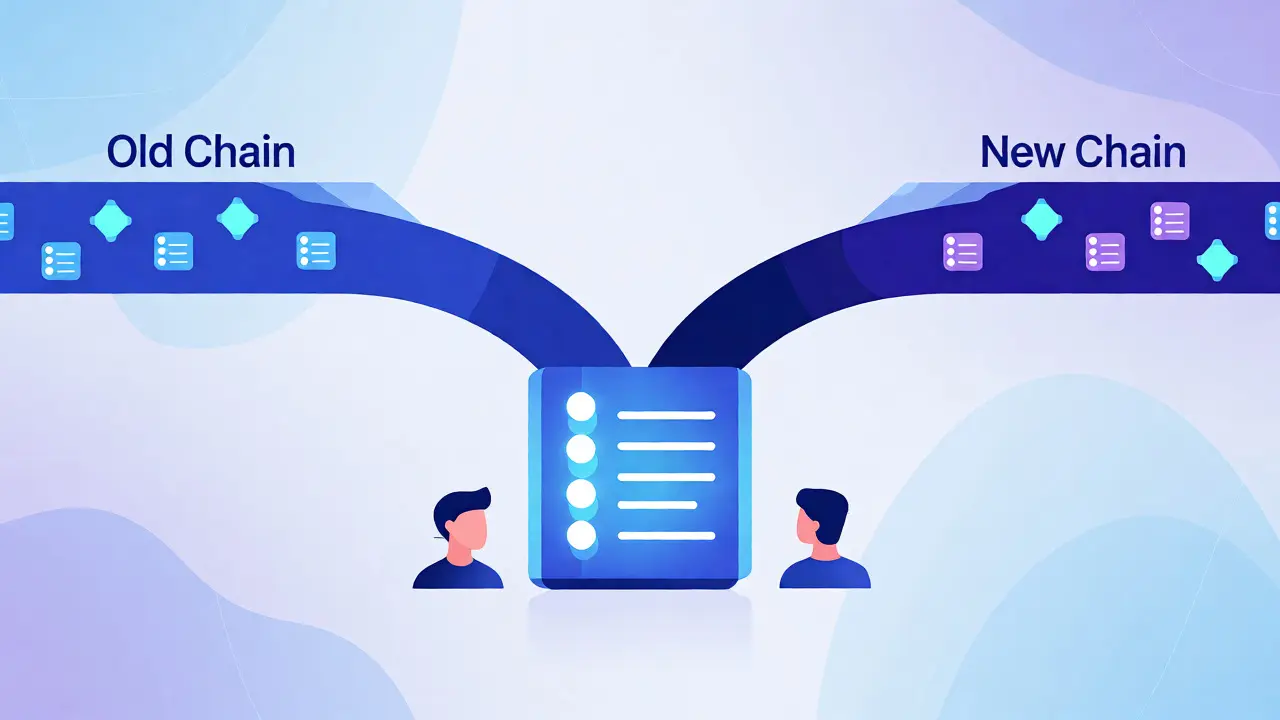
To understand forks, you need to think of a blockchain as a shared ledger maintained by thousands of computers (nodes). Everyone must agree on the rules for adding new entries. When those rules change, you get a fork.
There are two main types, and the difference matters for your wallet:
- Soft Forks: These are backward-compatible upgrades. Old software still works with the new rules, though it might miss out on new features. Think of it like updating an app-older versions still run, but newer ones have extra functions. The Segregated Witness (SegWit) update on Bitcoin is a prime example.
- Hard Forks: These are non-compatible changes. If you don’t update your software, you’re left behind on the old chain. This creates two separate blockchains with identical histories up to the split point, but different futures from then on. Ethereum Classic was born this way.
Why do people fork? Usually, it’s about scaling, security, or philosophy. Developers want faster transactions, cheaper fees, or different governance models. Sometimes, it’s just greed or ego driving the split.
The Bitcoin Civil War: Scaling vs. Philosophy
Bitcoin has had over 100 forks since its inception, but only a handful changed the landscape. The biggest battle was the "Block Size Debate." For years, Bitcoin’s 1MB block limit caused slow transactions and high fees. One group wanted to increase the size to make payments cheap and fast. Another group wanted to keep blocks small to preserve decentralization, pushing scaling solutions to a second layer.
This ideological clash led to several failed attempts before the big one:
- Bitcoin XT & Classic: Early attempts to raise the block size limit to 8MB and 2MB respectively. Both failed because miners and users didn’t adopt them quickly enough.
- Bitcoin Unlimited: Let miners choose their own block size. It never gained significant traction.
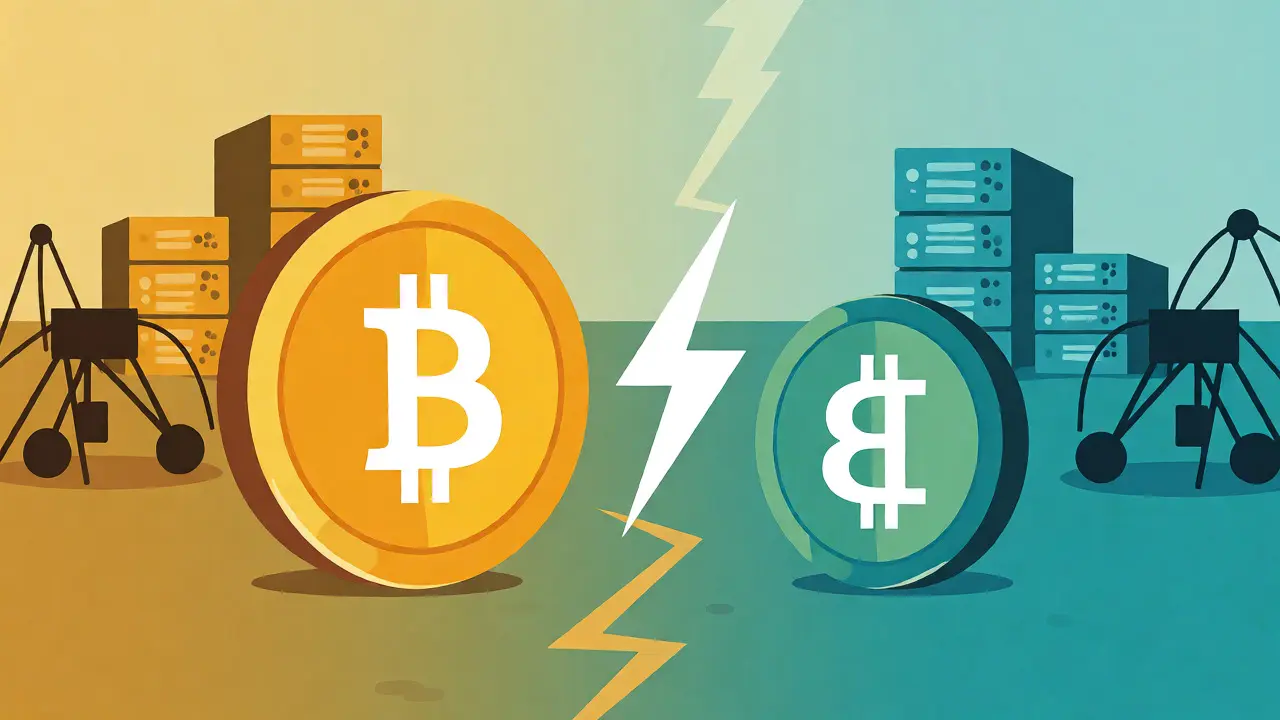
- Bitcoin Cash (BCH): The winner of the first round. On August 1, 2017, at block 478,558, BCH split from Bitcoin with an 8MB block size. Backed by major players like Roger Ver and Jihan Wu, it became the fourth-largest crypto overnight.
But the drama didn’t end there. In November 2018, Bitcoin Cash itself split again. This time, it was between supporters of larger blocks (BSV) and those who preferred smaller, more efficient blocks (BCHABC, later renamed back to BCH). This created Bitcoin Satoshi Vision (BSV), championed by Craig Wright, who claimed to be Satoshi Nakamoto. BSV eventually spawned another token, eCash (XEC), through a massive 1:1,000,000 redenomination.
| Fork Name | Date | Key Change | Status Today |
|---|---|---|---|
| SegWit | Aug 2017 | Separated signature data (Soft Fork) | Integrated into Bitcoin Core |
| Bitcoin Cash | Aug 2017 | Increased block size to 8MB+ | Active, top-tier asset |
| Bitcoin Gold | Oct 2017 | Changed mining algorithm to Equihash | Niche presence |
| Bitcoin SV | Nov 2018 | Split from BCH for larger blocks | Controversial, lower market cap |
Ethereum’s Existential Crisis: Code Is Law?
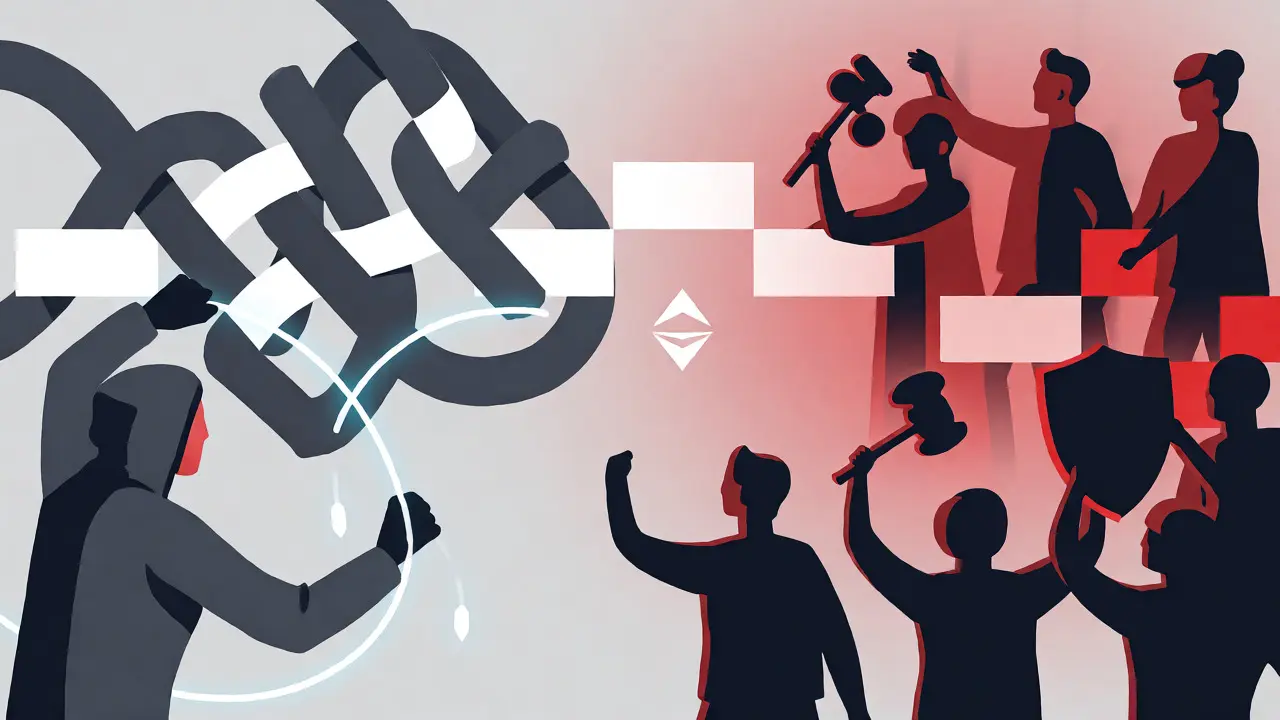
If Bitcoin’s forks were about technical scaling, Ethereum’s were about ethics. The most famous event remains the DAO Hack and subsequent fork. In June 2016, a vulnerability in a decentralized autonomous organization (The DAO) allowed hackers to drain $50 million worth of Ether. Since blockchain transactions are supposed to be immutable, many argued the money should stay stolen. But Vitalik Buterin and the majority felt the theft was a bug, not a feature.
The community voted to roll back the chain to before the hack. This required a hard fork. About 90% of the network accepted the rollback, creating modern Ethereum (ETH). The remaining 10% refused to alter history, sticking with the original chain, which became Ethereum Classic (ETC). Their motto? "Code is law." Even if the code had a bug, the transaction stands.
Ethereum continues to fork regularly, but these are now planned upgrades rather than contentious splits. The Merge in September 2022 transitioned Ethereum from Proof-of-Work to Proof-of-Stake, cutting energy use by 99.95%. More recently, the Shanghai upgrade enabled staked ETH withdrawals. These show how mature the process has become: coordinated, technical, and rarely controversial.
Other Notable Splits That Shaped the Market
Not every fork makes headlines, but some quietly created entire ecosystems.
Litecoin is technically the oldest successful fork. Created by Charlie Lee in October 2011, it copied Bitcoin’s code but changed the hashing algorithm to Scrypt and reduced block times to 2.5 minutes. Unlike later forks driven by conflict, Litecoin was a friendly experiment. It survived because it offered a distinct utility: faster, cheaper payments for everyday purchases.
Bitcoin Gold (BTG) tried to democratize mining. By switching from SHA-256 to Equihash, it aimed to allow regular GPU users to mine, breaking the dominance of ASIC rigs. While it distributed 1 BTG for every BTC held, it struggled to maintain hash power and user interest, fading into the background despite its noble intent.
How Forks Impact Your Wallet
So, what happens to your coins when a fork hits? If you hold your keys in a hardware wallet or a non-custodial wallet, you usually get the new coins automatically. You’ll see a balance appear for the new token. However, if your coins are on an exchange, you’re at their mercy. Exchanges decide whether to support the fork, list the new token, or freeze deposits and withdrawals.
A major risk is replay attacks. During the Bitcoin Cash fork, some users sent funds on the new chain, but the transaction was also valid on the old chain. This meant their money moved twice, effectively doubling the spend. Always check your exchange’s policy before a scheduled fork.
Here’s a quick checklist for surviving a fork:
- Identify the date: Mark the block height and date on your calendar.
- Move off exchanges: If you want full control, withdraw to a private wallet before the snapshot.
- Backup your keys: Ensure you have your seed phrase safe in case you need to import keys into a new wallet.
- Wait for stability: Don’t rush to trade immediately after the split. Networks can be unstable for hours or days.
The Future of Forks: From Conflict to Coordination
The era of chaotic, ideological splits seems to be winding down. Modern forks are increasingly technical upgrades planned months in advance. Ethereum’s roadmap is clear: Dencun, Prague, and beyond. Bitcoin’s Taproot upgrade in 2021 improved privacy without splitting the chain.
Why the shift? Because fragmentation hurts liquidity. Investors prefer assets with strong, unified networks. When chains split, hash rate and capital disperse, making both sides weaker. We’re seeing a trend toward interoperability instead of division. Instead of forking to create a new coin, projects build bridges to connect existing ones.
However, risks remain. Client bugs can delay forks, as seen with Ethereum’s Shanghai upgrade requiring a last-minute fix. And as long as humans govern these protocols, disagreements will persist. The next big fork might not be about block size or gas limits, but about AI integration or quantum resistance.
What is the difference between a hard fork and a soft fork?
A soft fork is a backward-compatible update where older nodes still accept new blocks, though they may not validate all new rules. A hard fork is a permanent divergence from the previous version of the blockchain, where any node running the old software will reject new blocks, effectively creating two separate chains.
Do I automatically receive new coins after a fork?
If you hold your own private keys, yes, you typically receive an equal amount of the new coin. If your coins are on an exchange, it depends on the exchange's policy. Some list the new token, some credit it, and others ignore it entirely.
Why did Bitcoin Cash fork from Bitcoin?
The primary reason was the debate over scaling. Bitcoin Cash proponents believed increasing the block size (to 8MB initially) was the best way to handle more transactions and lower fees. Bitcoin Core developers preferred keeping blocks small and using Layer 2 solutions like the Lightning Network.
What was the DAO hack?
The DAO was a venture fund built on Ethereum. In 2016, hackers exploited a coding flaw to steal $50 million worth of ETH. The community voted to hard fork the chain to reverse the theft, leading to the creation of Ethereum Classic for those who opposed altering the blockchain's history.
Are all blockchain forks bad?
No. Many forks are essential for protocol improvements. Soft forks often enhance security or efficiency without controversy. Hard forks can introduce necessary innovations, such as Ethereum's Merge to Proof-of-Stake, which drastically reduced energy consumption.